Learning Center for Tax and Financial Insights

Stay updated with clear, actionable articles on tax rules, deadlines, deductions, and financial decisions that impact individuals and businesses.

No items found.

January 2020 Individual Due Dates

January 2 - Time to Call For Your Tax Appointment - January is the beginning of tax season. If you have not made an appointment to have your taxes prepared, we encourage you to do so before the calendar becomes too crowded.January 10 - Report Tips to Employer - If you are an employee who works for tips and received more than $20 in tips during December, you are required to report them to your employer on IRS Form 4070 no later than January 10.January 15 - Individual Estimated Tax Payment Due - It’s time to make your fourth quarter estimated tax installment payment for the 2019 tax year.

Explore More
No items found.

January 2020 Business Due Dates

January 15 - Employer’s Monthly Deposit Due - If you are an employer and the monthly deposit rules apply, January 15 is the due date for you to make your deposit of Social Security, Medicare and withheld income tax for December 2019. This is also the due date for the nonpayroll withholding deposit for December 2019 if the monthly deposit rule applies. Employment tax deposits must be made electronically (no paper coupons), except employers with a deposit liability under $2,500 for a return period may remit payments quarterly or annually with the return.January 15 - Farmers and Fishermen - Pay your estimated tax for 2019 using Form 1040-ES. You have until April 15 to file your 2019 income tax return (Form 1040 or Form 1040-SR). If you don't pay your estimated tax by January 15, you must file your 2019 return and pay any tax due by March 2, 2020, to avoid an estimated tax penalty.January 31 - 1099-MISCs Due to Service Providers & the IRS - If you are a business or rental property owner and paid $600 or more to individuals (other than employees) as nonemployee compensation during 2019, you are required to provide Form 1099 to those workers by January 31. “Nonemployee compensation” can mean payments for services performed for your business or rental by an individual who is not your employee, commissions, professional fees and materials, prizes and awards for services provided, fish purchases for cash, and payments for an oil and gas working interest. In order to avoid a penalty, copies of the 1099s also need to be sent to the IRS by January 31, 2020. The 1099s must be submitted on optically scannable (OCR) forms. This firm prepares 1099s in OCR format for submission to the IRS with the 1096 submittal form. This service provides both recipient and file copies for your records. A business or individual who is required to file 250 or more information returns (i.e., 1099s among others) must file those forms electronically. Please call this office for preparation assistance. January 31 - Form 1098 and Other 1099s Due to Recipients - Form 1098 (Mortgage Interest Statement) and Forms 1099, other than 1099-MISC when box 7 is used, are also due to recipients by January 31. The IRS’ copy is not due until February 28, 2020, or April 1, 2020 if electronically filed. These 1099s may be reporting the following types of income: Dividends and other corporate distributions Interest Amounts paid in real estate transactions Rent Royalties Amounts paid in broker and barter exchange transactions Payments to attorneys Payments of Indian gaming profits to tribal members Profit-sharing distributions Retirement plan distributions Original issue discount Prizes and awards Medical and health care payments Debt cancellation (treated as payment to debtor)

Explore More
Personal Finance

Your Guide to Using 529 College Savings Plans

When it comes to saving for your child’s future college expenses, 529 college savings plans are one of the most popular options — and for good reason. These plans allow you to tuck away money for future tuition expenses without taking a hit from taxes. To make the most of this tax-advantaged plan, however, there is a lot to learn, and every state is a bit different in their policies and procedures. To help you get started in deciding if this option is right for you, here’s a rundown on the details about 529 college savings plans. Plan Options When choosing the 529 college savings plan, you have two options: prepaid tuition or savings investment plans. While both cover higher education expenses, they go about it in different ways. Although it is being phased out in many states, the prepaid tuition plan (if available) allows you to pay ahead for college, locking in the current tuition rate. Since tuition rises about three percent every year, this is a great way to make the most of your available funds. Since this option only covers tuition, not other qualified expenses like books, it has fallen out of favor in recent years. Also complicating matters is the fact that the pre-pay plan only allows you to select colleges and universities in your state. To cover the full gamut of expenses in college, there is the 529 savings investment plan as an alternative. This option allows you to securely tuck money away not just for tuition, but also room and board, books, and fees. The plan also can cover attendance at any college or university, including some out of the country. Up to $10,000 in tuition expenses for private schools at the elementary and secondary school levels can also be covered. For that reason, the flexibility of the 529 savings investment plan has been steadily winning out over the prepaid option. No matter which one you pick, you will be able to deposit pre-tax funds up to your state’s limit each year. Investment Strategies When using tax-deferred 529 college savings plans, there are many different investment strategies to use in helping your balance grow year after year. The age-based strategy is the most popular as it starts out strong and becomes more and more conservative as your child’s college years approach. If that arrangement does not work best for your finances, however, then customizing it to fit is the best route. You can go with a static contribution each month, for example, keeping the payments the same until your child is ready to go off to college. Alternatively, you can deposit a set percentage of your income, increasing your contributions as your household income levels rise. Maximum Contributions 529 plans allow taxpayers to put away larger amounts of money, limited only by the contributor’s gift tax concerns and the contribution limits of the intended plan. There are no limits on the number of contributors, and there are no income or age limitations. The maximum amount that can be contributed per beneficiary (the intended student) is based on the projected cost of college education and will vary between the states’ plans. Some states base their maximum on an in-state four-year education, but others use the cost of the most expensive schools in the U.S., including graduate studies. Multiple individuals can each contribute up to the gift tax limit each year without being subjected to gift tax reporting. This limit is $15,000 for 2019 and 2020, and it is periodically adjusted for inflation. A special rule allows contributors to make up to five years of contributions in advance (for a total of $75,000 in 2019 and 2020). 529 College Savings Plan Fees While helpful to those saving for college, 529 plans do have some fees to think about, including maintenance and investment charges. Where allowed, in-state deductions can usually offset these fees, keeping account upkeep expenses to a minimum. If you decide to have a financial advisor help you establish and maintain the plan, you will need to pay for their services as well. Their service fees may be based on an hourly rate or they could charge a percentage of your assets in the fund each year. Steep penalties can also occur if you elect to withdraw funds for a non-qualified reason. A charge of up to 10 percent can apply to early withdrawals, as the plans are designed to only cover qualified education expenses for the named beneficiary. For that reason, all children will need their own 529 college savings plan, which helps ensure they have money for college, and you are not hit with hefty fees. Deciding If a 529 College Savings Plan Is Right for You Since policies can differ greatly from state to state, it is important to look at the features, benefits, and restrictions of the plans offered by your state. The most important differentiators to look at are the minimum contribution levels and tax benefits offered to in-state contributors. Questions about the implications of 529 plans or other college savings options? Contact our office today for more information.

Explore More
No items found.

Repairing Your Business's Bad Credit Score

The creditworthiness of your business is measured by its credit score. This number is issued by Dun & Bradstreet, Experian, Equifax, and FICO SBSS, and is an essential reflection of your company’s payment reliability and timeliness. Why is Your Business Credit Score Important? Your company’s overall financial health is of key importance to any lenders, creditors, and trade partners with whom you wish to do business. Those partners need to be able to trust in your ability to provide the good or services that you are promising: to pay back any loans you may apply for. Your financial health can also be a determination of the terms that you are able to negotiate with lenders. Ultimately, your business credit score is the main way third parties can measure your company’s financial health. It’s typically used by lenders, creditors, and trade partners during various business transactions, such as applying for business loans, leasing, winning contracts, doing business with vendors or suppliers, obtaining net terms with trade partners, and even getting better interest and payment rates for instruments such as business contracts and mortgages. Businesses in possession of strong credit scores have a much better chance of obtaining the capital that they need to grow compared to those with weak credit scores. Many lenders have minimum credit score requirements in place, and businesses that cannot meet that threshold will be unable to secure the loan that they seek. Even if your business has a credit score that exceeds that threshold, the stronger your credit score, the more advantageous the interest rate or repayment terms you are likely to have extended to you. Business credit scores are also used as a gauge by suppliers and others who will need to rely on you to pay them in a timely manner. Vendors, landlords, and other stakeholders with whom you will have a financial relationship will look to your past performance with others as an indication of how you are likely to treat them. Have a weak credit score? Even if these trade partners agree to do business with you, they are likely to include terms that will protect their own interests and be less advantageous to you. How to Interpret Business Credit Scores Unlike personal FICO credit scores which can reach as high as 850, business credit scores generally only go as high as 100, and can fall as low as 0. As is true in so many other types of grading systems, the higher the score, the better the credit rating is considered to be, though different credit rating agencies have different levels at which they bestow the value judgment of being “good.” For Equifax a credit score of 90 or above is considered good while Experian considers 7 or above good. Dun & Broadstreet bestows the term “good” on scores of 80 or above, while FICO SBSS (whose highest scoring ranges well above 100) considers a score of 140 or more a good rating. The higher a business’s credit score, the better their chance of obtaining loans or positive trade terms with vendors and suppliers. This is because the high score reflects a history of making payments on a timely basis rather than being late or delinquent. Can You Fix A Bad/Thin Business Credit Score? Having a low business credit score can be a reflection of several possible factors, including having filed for bankruptcy, having liens against your business, having a poor repayment history filled with delinquent payments or non-payments. In addition to having a bad score, businesses that don’t have a significant history of payments have credit scores that are termed “thin.” When you’re applying for a loan, having either a bad business credit score or a thin credit score can work against you. Lenders are unlikely to provide advantageous terms to businesses with a poor history of repayment, and even if your business is simply new and doesn’t have much of a record of either timely payments or delinquencies, many lenders will be hard pressed to take a leap of faith on you. Whichever situation you find yourself in, it will be well worth your time to either build a credit history or repair your poor credit. There are ways to do both. Here are several steps you can take that can have a significant impact. 1. Keep your Business and Personal Finances Separate You are not your business and your business is not you. Therefore, you should keep separate accounts for your company and for your personal use. Doing so will not only help you keep track of transactions and obligations for each, but will also help prevent any mistakes that you make (i.e. delinquent payments) from affecting either your business credit score or your personal credit score. 2. Don’t Fall Behind On Your Bills When your business makes a purchase or agrees to pay for a service, holding up your end of the bargain and paying in full (and on time) reflects on your business in a number of ways. Early payments will boost your credit score and be welcomed by trade partners, while delinquent payments will negatively impact your business’s credit score and have a negative impact on your reputation in general. 3. Develop A Strong Relationship With Your Vendors Keep in mind that your vendors and suppliers are the ones who report on-time or early payments to the credit bureaus as well as late payments. The better your business relationship with those partners, the more likely that they will report your positive actions and the less likely that they will report delinquencies. 4. Maintain a Low Credit Utilization Ratio Building credit as a business is done in much the same way as building personal credit: by establishing a history. One of the fastest ways to build a positive business credit report and score is to obtain a business credit card; however, use it sparingly and stay below 33% of your available credit. 5. Keep Your Eye on Your Numbers Credit reports change constantly, and it is essential that you keep your eye on it to make sure that it is an accurate reflection of your payment history. If you find a mistake you should act quickly to dispute the error within the framework provided by the bureau that is publishing the mistake. 6. Add More Credit Options Businesses that have either thin or bad credit can build their reputation by establishing additional lines of credit through a secured business credit card. These vehicles are backed by a deposit, making them easy to get and an excellent way to improve your business’s history (as long as you make your payments promptly). Positive Credit Scores for Future Success Having a solid, positive credit score for your business is more than just a report card. It is what can make the difference in your company’s future opportunities for growth. A business’s credit report should be nurtured, and this can be done by remaining organized and dedicated to making on-time or early payments, but for those who have made mistakes, it is not too late to repair and rebuild.

Explore More
No items found.

Still Dealing with 2019 in QBO? Clearing the Way for 2020

It would be great if you could have closed out 2019 knowing that you were all caught up with your accounting work. You sent all your invoices, paid all your bills, and wrapped everything up with a series of reports and a proverbial bow. Unfortunately, December rarely goes that way. You’re making last-minute adjustments for your taxes. Dealing with the holiday rush if you’re a retailer. Handling end-of-year employee issues, trying to make your monthly sales quotas, and doing something special to make your customers feel appreciated at this time of year. On top of your daily accounting work, you’re feeling pressure in December to get a clear picture of your finances for the entire year. Then the holidays hit, and suddenly you’re ringing in the New Year without having had time for that. Here are five things you can do clean up 2019 and make way for 2020. 1. Create two critical A/R reports: Accounts Receivable Aging Summary and Open Invoices. This may make you feel both better and worse. On the bright side, you’ll know where you stand in terms of who owes you what and how big the problem is. On the other hand, you may find it disheartening to see how many payments are past due. These reports are easy to find. Click Reports in the left vertical pane and scroll down to Who owes you. The Open Invoices report can show you quickly who’s past due. Now would be an excellent time, too, to develop some strategies to be proactive and keep your accounts receivable more up to date in 2020. We’d be happy to sit down with you and help you with this difficult task. 2. Create two critical A/P reports: Accounts Payable Aging Summary and Unpaid Bills. Add “Stay Current with Bills” to your list of 2020 goals. But first, you have to see where you stand right now. Click Reports again and scroll down to What you owe. Who is responsible for paying bills? If it’s you, maybe it’s time to hand over that task to someone without your managerial responsibilities who can make it a priority. 3. Create statements for all customers who are past due.

Explore More
No items found.

Congress Passes Last-Minute Tax Changes

Article Highlights: Discharge of Qualified Principal Residence Indebtedness Mortgage Insurance Premiums Above-the-Line Deduction for Qualified Tuition and Related Expenses Medical AGI Limits Residential Energy (Efficient) Property Credit Employer Credit for Paid Family and Medical Leave Maximum Age Limit for Traditional IRA Contributions Penalty-Free Pension Withdrawals in Case of Childbirth or Adoption Increase in Age for Required Minimum Pension Distributions Difficulty of Care Payments Qualifying for IRA Contributions Expansion of Sec. 529 Plan Uses Required Distributions Modified for Inherited IRAs and Retirement Plans Increase in Penalty for Failure to File Major Change to Kiddie Tax Rules Congress, at almost the last minute, has passed a large number of tax changes, including retirement plan issues that will become effective in 2020, as well as extensions through 2020 of a number of tax provisions that had expired or were about to end. The list of changes is quite large, so we have only included those that are most likely to affect individual tax returns. Here is a run-down on some of the new tax provisions: TAX EXTENDERS The tax changes retroactively revive a number of provisions that had previously expired or were going to at the end of 2019, and extend them through 2020. So, review them carefully to see if any of them provide you with an opportunity to amend your return for a refund. Discharge of Qualified Principal Residence Indebtedness – When an individual loses his or her principal residence to foreclosure, abandonment, or short sale or has a portion of their loan forgiven under the HAMP mortgage-reduction plan, they will generally end up with cancellation-of-debt (COD) income. COD income is equal to the amount of debt on the home that is forgiven by the lender. To the extent that the mortgage debt becomes COD income, it is taxable income unless the taxpayer can exclude it based on specific provisions in the tax code. After the housing market crash a few years back, Congress added the qualified principal residence COD exclusion, which allowed taxpayers to exclude up to $2 million ($1 million if married filing separately) of COD income, to the extent it was discharged debt used to acquire the home, termed acquisition debt. Equity debt was not eligible for the exclusion. However, equity debt is deemed to be discharged first, thus limiting the exclusion if both equity and acquisition debt are involved in the transaction. This COD exclusion was temporarily added in 2007, was extended, and then expired at the end of 2017. Under the current legislation, the exclusion for qualified principal residence indebtedness is retroactively extended through 2020. Thus, if you paid taxes on principal residence COD income in 2018, be sure to call attention to that fact so your return can be amended for a refund. Mortgage Insurance Premiums – For tax years 2007 through 2017, taxpayers could deduct the cost of premiums for mortgage insurance on a qualified personal residence as an itemized deduction. The premiums were deducted as home mortgage interest on Schedule A. To be deductible: The premiums must have been paid in connection with acquisition debt (note: acquisition debt includes refinanced acquisition debt). The mortgage insurance contract must have been issued after Dec. 31, 2006. It must be for a qualified residence (first and second homes). The deductible amount of the premiums phases out ratably by 10% for each $1,000 by which the taxpayer’s adjusted gross income (AGI) exceeds $100,000 (10% for each $500 by which a married separate taxpayer’s AGI exceeds $50,000). Qualified mortgage insurance means mortgage insurance provided by the: Dept. of Veterans Affairs (VA), Federal Housing Administration (FHA), or Rural Housing Services (RHS), as well as Private mortgage insurance. This deduction was previously allowed through 2017 and has retroactively been extended through 2020. Above-the-Line Deduction for Qualified Tuition and Related Expenses – An above-the-line deduction for qualified tuition and related expenses for higher education has been available since 2002 and was previously extended through 2017. For purposes of the higher education expense deduction, “qualified tuition and related expenses” has the same definition as for the American Opportunity and Lifetime Learning credits for higher education expenses – that is, with certain exceptions, tuition and fees paid for an eligible student (the taxpayer, the taxpayer’s spouse, or a dependent) at an eligible higher education institution. The deduction – up to $2,000 or $4,000, depending on AGI – is not allowed for joint filers with an AGI of $160,000 or more ($80,000 for other filing statuses), except no deduction is allowed for taxpayers using the married filing separate status. The phase-out amounts are not inflation-adjusted. The same expenses can’t be used for both an education credit and the tuition and fees deduction. This deduction was previously allowed through 2017 and has retroactively been extended through 2020. Medical AGI Limits – For 2017 and 2018, individuals could claim an itemized deduction for unreimbursed medical expenses, to the extent that such expenses exceeded 7.5% of their AGI. For post-2018 years, the percent of AGI has been increased to 10%. The provision retroactively extends the lower threshold of 7.5% through 2020. Residential Energy (Efficient) Property Credit – This non-refundable credit has been available in one form or another since 2006 and through 2017, with credit amounts varying from 10% to 30% and the maximum credit ranging from $500 to $1,500. Most recently, the credit percentage was 10%, with a lifetime credit amount limited to $500. This credit is best described as an energy-saving credit since it applies to improvements to the taxpayer’s existing primary home to make it more energy efficient. Generally, it applies to insulation, storm windows and doors, and certain types of energy-efficient roofing materials, energy-efficient central air-conditioning systems, water heaters, heat pumps, hot water systems, circulating fans, etc.The recent legislation extends this credit through 2020, with a lifetime credit cap of $500. Caution: The lifetime credit extends to returns going all the way back to 2006.

Explore More
No results found.
Thank you! Your submission has been received!
Oops! Something went wrong while submitting the form.

Want tax & accounting tips & insights?Sign up for our newsletter.

Thank you! Your submission has been received!
Oops! Something went wrong while submitting the form.

Why Work With Us?

We combine deep tax expertise, financial strategy, and practical business insight to help you manage complexity, stay compliant, and make confident financial decisions.
A dollar sign, representing financial advice or discussion at NR CPAs & Business Advisors.

Experienced CPA and Enrolled Agent Leadership

Guidance led by licensed professionals with deep expertise in tax strategy, compliance, and complex financial matters.
White bar chart with an upward arrow on green circular background representing growth or progress at NR CPAs &. Business Advisors

Support for Growing Businesses and Startups

We understand the financial challenges of growth stage businesses and provide structured guidance to support expansion.
A white hand holding a dollar symbol and ascending bar chart on a green circular background representing financial growth or investment at NR CPAs & Business Advisors..

Strategic Financial Advisory

Our team helps you evaluate financial decisions with greater clarity, supported by practical insights and long term planning.

Fractional CFO Support

Access experienced financial leadership without the commitment and cost of hiring a full time Chief Financial Officer.

Proactive Tax Planning Approach

We focus on identifying tax opportunities throughout the year rather than reacting only during filing season.

Clear and Reliable Financial Reporting

Accurate financial statements and reporting that help you better understand performance and make informed decisions.
White IRS building icon with pillars and a dollar sign above on a green circular background.

Professional IRS Representation

Experienced support in resolving IRS notices, disputes, and compliance matters while protecting your financial interests.

Personalized Client Focus

Every client receives thoughtful attention and tailored financial solutions based on their specific needs and business goals.
Financial matters often involve important decisions. Working with experienced advisors can help you approach them with greater clarity and confidence in your choices.

Need Help With Your Tax or Financial Decisions?

Discuss your situation with our advisors to get clear guidance on tax planning, IRS matters, and the financial decisions ahead.
Business consulting at NR CPAs & Business Advisors.

Request Your Consultation

Fill out the form to discuss your tax concerns, financial questions, or advisory needs with our team. We will review your details and respond shortly.

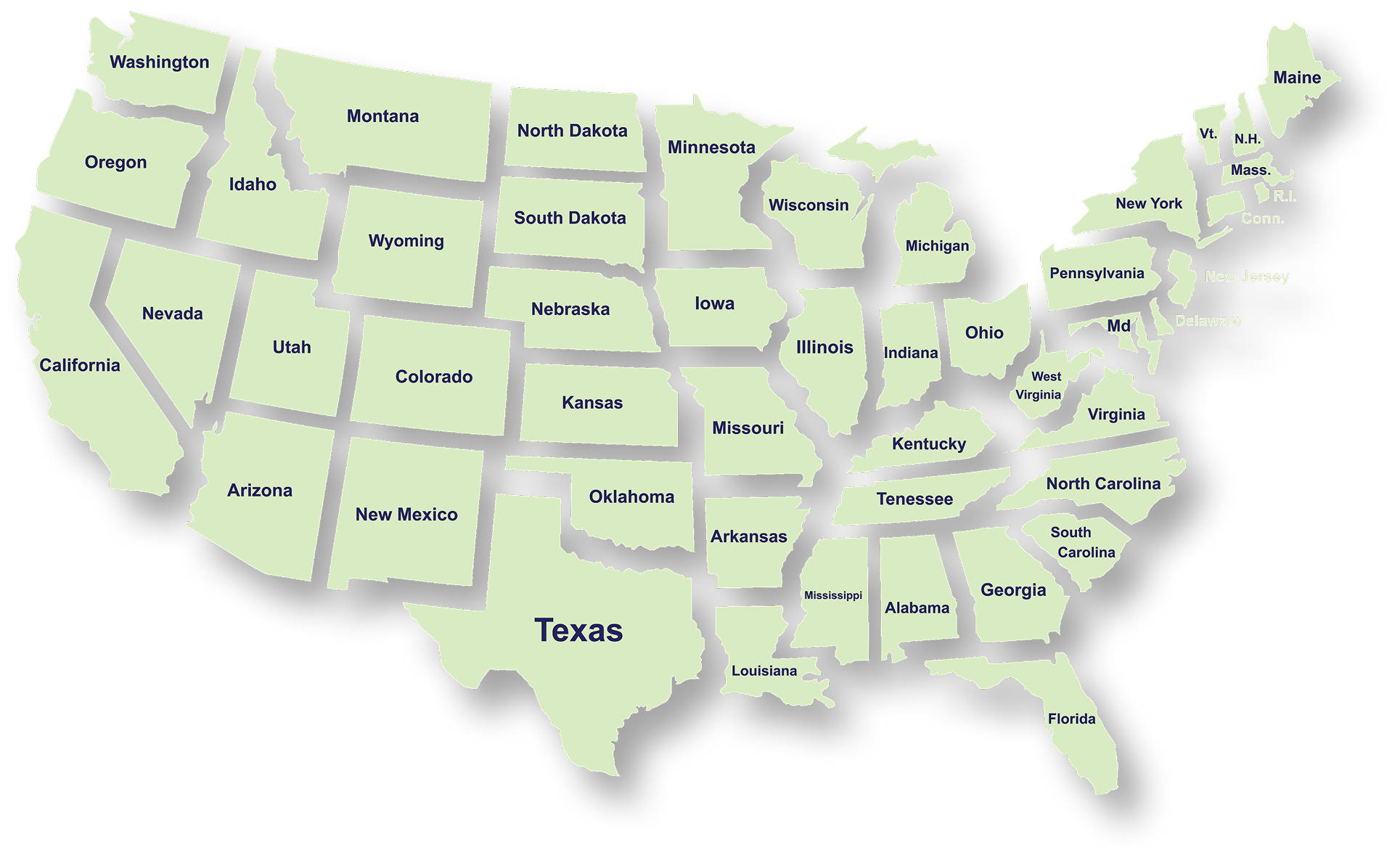
Serving Businesses & Individuals Across USA

We handle accounting, tax filing, and planning with defined timelines and accurate reporting for businesses and individuals across all states.

Frequently Asked Questions

What services does NR CPAs & Business Advisors provide?
What is tax planning and why is it important for businesses?
How can a Virtual CFO help my business?
When should a business consider IRS tax resolution services?
What financial statements does a business typically need?
How can startup advisory services help new businesses?
What is strategic business planning?
What is a Virtual Family Office and who can benefit from it?