Learning Center for Tax and Financial Insights

Stay updated with clear, actionable articles on tax rules, deadlines, deductions, and financial decisions that impact individuals and businesses.

No items found.

Tips Every Self-Employed Individual Should Know About Self-employment Tax

Explore More
No items found.

Flat Tax Fever? States Ramp Up 2025 Income Tax Overhauls

Many U.S. states are considering or implementing flat income tax systems. These policies apply a single tax rate to all taxpayers regardless of income. While supporters say these reforms simplify tax codes and spur economic growth, critics argue they disproportionately benefit the wealthy and jeopardize state revenue. With South Carolina making national headlines with its new proposal, the state-level flat tax conversation has entered a new phase.South Carolina’s 3.99% Flat Tax Proposal Sparks National AttentionSouth Carolina is the latest state to float a major overhaul to its income tax structure. In April 2025, state lawmakers advanced a proposal to reduce the current top marginal rate of 6.4% to a flat 3.99% by 2027. “We’re trying to send a message that South Carolina is open for business,” House Speaker Murrell Smith told the Associated Press. The bill includes provisions to automatically lower the rate further—down to 2.49%—if state revenue projections exceed expectations.Supporters in the Palmetto State say this will increase competitiveness with low-tax neighbors like Florida and Tennessee, neither of which imposes state income taxes. Critics, however, caution that flattening the tax code could mean less revenue for public services and education.A Broader Trend Across Red and Purple StatesOther states are currently mulling similar transitions. In Missouri, lawmakers passed legislation exempting capital gains from the state income tax, a move that could significantly reduce state revenue. In Montana, Governor Greg Gianforte signed House Bill 337 in April 2025, which lowers the state's top income tax rate to 5.65% in 2026 and 5.4% in 2027, while expanding eligibility for lower tax brackets and doubling the earned income tax credit.Oklahoma Governor Kevin Stitt and legislative leaders announced a budget agreement that includes a 0.25% cut to the state income tax and a consolidation of income tax brackets, setting a path toward potential elimination of the income tax. In Alabama, legislators are considering tax reforms, including reducing the state grocery tax from 4% to 3% in 2023. Discussions about further tax relief measures, including a flat rate, are ongoing. Indiana, which already has a flat income tax, is in the process of reducing its rate from 3.15% to 2.9% by 2027. Lawmakers are now considering accelerating those cuts or making them permanent.

Explore More
No items found.

Understanding the Proposed Tax Legislation: A Cautionary Approach to Tax Planning

In recent months, legislative activity in Congress has spurred considerable discussion around the proposed One Big Beautiful Bill Act (OBBBA). This article explores the key components of the OBBBA House and Senate versions of the tax bill as deciphered from various Congressional documents and highlights the importance of cautious tax planning given the potential changes in the legislation by the time it is reconciled in Congress.Key ProvisionsBoth houses of Congress have proposed several changes aimed at extending and enhancing tax benefits introduced under the Tax Cuts and Jobs Act (TCJA), which was enacted in 2017. Most of the TCJA changes are scheduled to expire at the end of 2025. Here’s a summary of some key provisions:Permanent Extension of the Increased Standard Deduction and Changes to Tax Rates: Proposals seek to make the standard deductions, which were increased under the TCJA, permanent. Furthermore, temporary enhancements are slated for 2025 through 2028, with an additional increase of $1,000 for individuals, $1,500 for heads of household, and $2,000 for married couples. The TCJA also temporarily modified the tax rates and brackets, including dropping the top rate from 39.6% to 37%, and indexed the bracket thresholds for inflation. The 2025 legislation would make permanent the TCJA’s income tax brackets and modifies the indexing methodology.Senior Bonus Deduction: Under current law, up to 85% of Social Security benefits could be taxable, depending on the recipient’s other sources and amounts of income. The legislation aims to reduce the taxation of Social Security benefits for years 2025 through 2028 by providing those age 65 and older an additional $4,000 or $6,000 standard deduction amount, reduced when modified adjusted gross income exceeds $150,000 for married couples ($75,000 for others).Adjustment to the Qualified Business Income Deduction (QBI): The bill proposes increasing the QBI deduction, sometimes referred to as the Sec 199A deduction, from 20% to 23% and making these changes permanent. The phase-in limitation mechanics are revised for simplification.Estate and Gift Tax Exemption Enhancements: The unified estate and gift tax exemption will see a permanent increase to an inflation-indexed $15 million.Child Tax Credit Modifications: Scheduled enhancements temporarily increase the child tax credit from $2,000 to $2,200 or $2,500 per qualifying child through 2028 before reverting to $2,000, starting in 2029. Additional modifications pertain to indexing, refundability, and Social Security number reporting.Saver's Credit Adjustments: Modifications to the Saver's Credit are geared towards encouraging more savings among lower- and middle-income families. The law establishes a permanent inclusion of contributions made to ABLE accounts for the beneficiary who is the account's designated recipient, effectively treating these contributions similarly to those made to more traditional retirement accounts.“No” Tax on Overtime: The legislation creates an above-the-line deduction for overtime premium pay. Both the House and Senate bills limit the deduction in different ways to lower income taxpayers.“No” Tax on Tips: The tax bill introduces a new above-the-line tax deduction for qualified tips received by individuals working in occupations where tipping is customary. The tips must be voluntarily given, not negotiated, and determined solely by the customer. The deduction is not allowed to highly compensated individuals.Reinstatement of Bonus Depreciation: A full reinstatement of the 100% first-year depreciation deduction is proposed for business property placed in service between 2025 and 2030.Increased State and Local Tax (SALT) Deduction Limit: This is a bone of contention between the House and Senate, with proposals making the SALT deduction as high as $30,000 but phasing out the increase over the existing $10,000 limit for higher-income taxpayers. These changes would be permanent. This expansion is substantial, as it can potentially aid numerous taxpayers previously limited by the TCJA's deduction cap.No Tax on Car Loan Interest: Would allow taxpayers to deduct up to $10,000 in interest paid on auto loans for vehicles assembled in the U.S. for years 2025 through 2028. The deduction would phase out for taxpayers with an AGI of $100,000 ($200,000 for married individuals filing jointly).Termination of Clean Vehicle Credits: The legislation would terminate the tax credit for purchasing both new and previously owned clean vehicles after 2025. There is an exception for manufacturers that have not sold 200,000 new clean vehicles as of December 31, 2025, to qualify for the credit in 2026.Termination of Residential Solar Credit: The legislation would terminate the tax credit for solar electric, solar water heating, fuel cell, small wind energy, geothermal heat pump, and battery storage property generally after 2025.Termination of Energy Efficient Home Improvement Credit: The legislation would terminate the 30% tax credit for household energy efficient improvements.Termination of Certain Deductions: The deduction for personal exemptions is permanently repealed. The new law would make permanent the current restrictions on miscellaneous itemized deductions.

Explore More
No items found.

Video Tips: The Deadline Is Coming for Taxpayers Living Abroad

Taxpayers who are U.S. citizens or residents living and working outside the United States and Puerto Rico receive an automatic 2-month extension to file their federal income tax return. For the 2024 tax year, this means their filing deadline is June 17, 2025 (since June 15 falls on a Sunday). However, interest will accrue on any unpaid taxes from the original due date, April 15, even if the taxpayer qualifies for the extension.

Explore More
No items found.

Don’t Ignore Household Employee Payroll Tax Rules

Article Highlights:Household EmployeesTax AvoidanceForm 1099-KFiling 1099sCorrect ProceduresW-2s, Payroll Taxes and ReportingOvertime Hourly Pay or SalarySeparate PayrollsIf you hire a domestic worker to provide services in or around your home, you probably have a tax liability that you don’t know about – or one that you do know about but are ignoring. Either situation can come back to bite you. When the worker is your employee, your liability includes both withholding and paying payroll taxes as well as issuing a W-2 after the close of the year.Sure, it is a lot easier simply to pay your worker in cash so as to avoid federal and state payroll taxes – and all the paperwork that goes with them. Your domestic worker will likely be fully cooperative with a cash deal because he or she can also avoid paying taxes. However, if the IRS or your state employment department finds out about these payments, the result could be very unpleasant for you. Some families may be paying their household help via a third-party payment processor such as PayPal, Venmo, etc. Beginning for the 2023 tax year these payment processors must begin reporting those payments (on Form 1099-K) when the total for the year exceeds $600. Not everyone who performs services in or around your home is classified as an employee. For instance, a plumber or electrician who makes repairs in your home will generally be a licensed contractor; the government does not classify contractors as employees. On the other hand, the IRS has conclusively ruled that nannies, housekeepers, senior caregivers, some gardeners and various other domestic workers are employees of the people for whom they work. It makes no difference if you have a written contract with the worker; similarly, the number of hours worked, and the amount paid do not matter. You are probably thinking, “Wait a minute” – perhaps ¬¬everyone you know pays in cash, and none of them has paid payroll taxes or issued a W-2 for a household employee. However, if a worker gets injured on your property or if you dismiss the worker under less-than-amicable circumstances, it’s a pretty sure bet that your household employee will be the first one to throw you under the bus by reporting you to the state labor board or by filing for unemployment compensation. Generally, an unemployment insurance claim form requires the worker to list all employers and wage amounts to get benefits. That, in turn, creates a letter audit to collect state employment taxes and a referral to the IRS to collect federal employment taxes (FICA and FUTA).Some individuals try to circumvent the payroll issue by treating a household employee as an independent contractor, incorrectly issuing the household employee a Form 1099-NEC. The easiest way to comply with the law, both federal and state, is to engage a payroll company to make the payroll payments and take care of the paperwork and required filings. If you are a do-it-yourselfer, here are the correct actions you should take for domestic employees:Obtain a Federal Employer Identification Number (FEIN), which you will use in lieu of your Social Security Number when filing the required reporting forms. Note: If, as the owner of a sole proprietorship business, you already have a FEIN, you should use that number instead of requesting a separate one as a household employer. Obtain a state ID number for unemployment insurance and state tax withholdings.Withhold Social Security and Medicare taxes from the employee’s pay if it exceeds the annual threshold ($2,600 for 2023).Withhold income tax from the employee if requested by the worker and if you agree to do so.File state employment tax returns as required – generally quarterly (although beware that some states require monthly returns) – and make the required deposits for state employment taxes.Prepare a W-2 for the employee and a W-3 transmittal; file them by the end of January.File Schedule H with your federal individual income tax return and pay all the federal payroll and withholding taxes (i.e., the federal taxes that you withheld from the employee’s pay, plus your matching share of Social Security and Medicare taxes plus federal unemployment tax, which is entirely your responsibility). Limited exception: If you operate a sole proprietorship with employees, you may include the payroll taxes of your household workers with those of the business’s employees, but you cannot take a business deduction for those taxes. Generally, it is better to keep the personal and business reporting separate.

Explore More
No items found.

Domestic Abuse Survivors: A Path to Financial Recovery

Explore More
No results found.
Thank you! Your submission has been received!
Oops! Something went wrong while submitting the form.

Want tax & accounting tips & insights?Sign up for our newsletter.

Thank you! Your submission has been received!
Oops! Something went wrong while submitting the form.

Why Work With Us?

We combine deep tax expertise, financial strategy, and practical business insight to help you manage complexity, stay compliant, and make confident financial decisions.
A dollar sign, representing financial advice or discussion at NR CPAs & Business Advisors.

Experienced CPA and Enrolled Agent Leadership

Guidance led by licensed professionals with deep expertise in tax strategy, compliance, and complex financial matters.
White bar chart with an upward arrow on green circular background representing growth or progress at NR CPAs &. Business Advisors

Support for Growing Businesses and Startups

We understand the financial challenges of growth stage businesses and provide structured guidance to support expansion.
A white hand holding a dollar symbol and ascending bar chart on a green circular background representing financial growth or investment at NR CPAs & Business Advisors..

Strategic Financial Advisory

Our team helps you evaluate financial decisions with greater clarity, supported by practical insights and long term planning.

Fractional CFO Support

Access experienced financial leadership without the commitment and cost of hiring a full time Chief Financial Officer.

Proactive Tax Planning Approach

We focus on identifying tax opportunities throughout the year rather than reacting only during filing season.

Clear and Reliable Financial Reporting

Accurate financial statements and reporting that help you better understand performance and make informed decisions.
White IRS building icon with pillars and a dollar sign above on a green circular background.

Professional IRS Representation

Experienced support in resolving IRS notices, disputes, and compliance matters while protecting your financial interests.

Personalized Client Focus

Every client receives thoughtful attention and tailored financial solutions based on their specific needs and business goals.
Financial matters often involve important decisions. Working with experienced advisors can help you approach them with greater clarity and confidence in your choices.

Need Help With Your Tax or Financial Decisions?

Discuss your situation with our advisors to get clear guidance on tax planning, IRS matters, and the financial decisions ahead.
Business consulting at NR CPAs & Business Advisors.

Request Your Consultation

Fill out the form to discuss your tax concerns, financial questions, or advisory needs with our team. We will review your details and respond shortly.

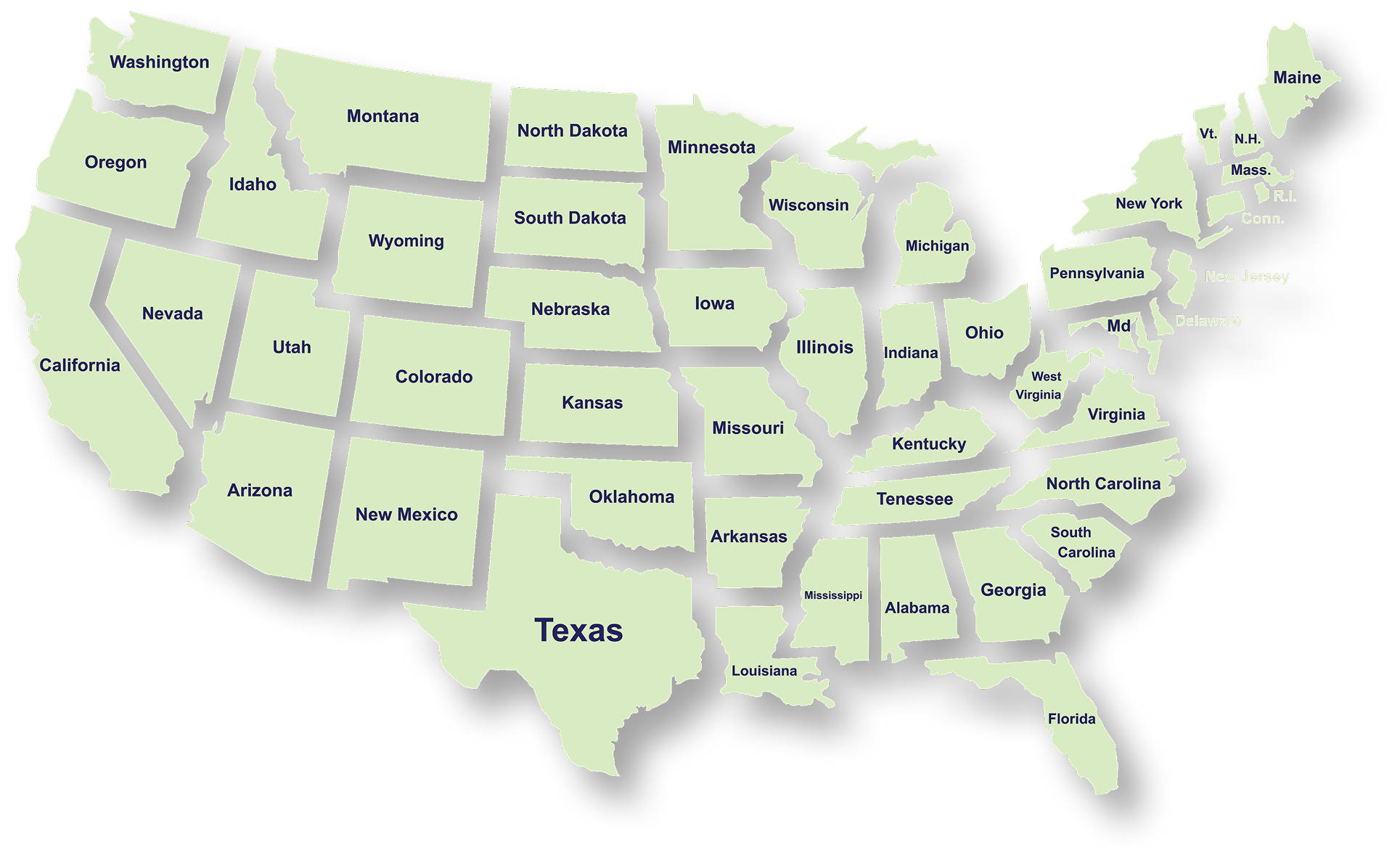
Serving Businesses & Individuals Across USA

We handle accounting, tax filing, and planning with defined timelines and accurate reporting for businesses and individuals across all states.

Frequently Asked Questions

What services does NR CPAs & Business Advisors provide?
What is tax planning and why is it important for businesses?
How can a Virtual CFO help my business?
When should a business consider IRS tax resolution services?
What financial statements does a business typically need?
How can startup advisory services help new businesses?
What is strategic business planning?
What is a Virtual Family Office and who can benefit from it?