Learning Center for Tax and Financial Insights

Stay updated with clear, actionable articles on tax rules, deadlines, deductions, and financial decisions that impact individuals and businesses.

No items found.

Cybersecurity: The Financial Crescendo of Ignoring Digital Threats

Explore More
No items found.

Relief Options for Spouses Treated Unfairly on Joint Returns

Explore More
No items found.

April 2025 Individual Due Dates

April 10 - Report Tips to EmployerIf you are an employee who works for tips and received more than $20 in tips during March, you are required to report them to your employer on IRS Form 4070 no later than April 10. Your employer is required to withhold FICA taxes and income tax withholding for these tips from your regular wages. If your regular wages are insufficient to cover the FICA and tax withholding, the employer will report the amount of the uncollected withholding in box 8 of your W-2 for the year. You will be required to pay the uncollected withholding when your return for the year is filed.April 15 - Taxpayers with Foreign Financial InterestsA U.S. citizen or resident, or a person doing business in the United States, who has a financial interest in or signature or other authority over any foreign financial accounts (bank, securities or other types of financial accounts), in a foreign country, is required to file Form FinCEN 114. The form must be filed electronically; paper forms are not allowed. The form must be filed with the Treasury Department (not the IRS) no later than April 15, 2025, for 2024. An extension of time to file of up to 6 months is automatically allowed. This filing requirement applies only if the aggregate value of these financial accounts exceeds $10,000 at any time during 2024. Contact our office for additional information and assistance filing the form. April 15 - Individual Tax Returns Due File a 2024 income tax return (Form 1040 or 1040-SR) and pay any tax due. If you want an automatic six-month extension of time to file the return, please call this office.Caution: The extension gives you until October15, 2025, to file your20241040 or 1040-SR return without being liable for the late filing penalty. However, it does not avoid the late payment penalty; thus, if you owe money, the late payment penalty can be severe, so you are encouraged to file as soon as possible to minimize that penalty. Also, you will owe interest, figured from the original due date until the tax is paid. If you have a refund, there is no penalty; however, you are giving the government a free loan, since they will only pay interest starting 45 days after the return is filed. Please call this office to discuss your individual situation if you are unable to file by the April 15 due date.April 15 - Household Employer Return Due If you paid cash wages of $2,700 or more in 2024 to a household employee, you must file Schedule H. If you are required to file a federal income tax return (Form 1040 or 1040-SR), file Schedule H with the return and report any household employment taxes. Report any federal unemployment (FUTA) tax on Schedule H if you paid total cash wages of $1,000 or more in any calendar quarter of 2023 or 2024 to household employees. Also, report any income tax that was withheld for your household employees. For more information, please call this office. April 15 - Estimated Tax Payment Due (Individuals)It’s time to make your first quarter estimated tax installment payment for the 2025 tax year. Our tax system is a “pay-as-you-earn” system. To facilitate that concept, the government has provided several means of assisting taxpayers in meeting the “pay-as-you-earn” requirement. These include:Payroll withholding for employees;Pension withholding for retirees; andEstimated tax payments for self-employed individuals and those with other sources of income not covered by withholding.When a taxpayer fails to prepay a safe harbor (minimum) amount, they can be subject to the underpayment penalty. This penalty is equal to the federal short-term rate plus 3 percentage points, and the penalty is computed on a quarter-by-quarter basis.Federal tax law does provide ways to avoid the underpayment penalty. If the underpayment is less than $1,000 (the “de minimis amount”), no penalty is assessed. In addition, the law provides "safe harbor" prepayments. There are two safe harbors:

Explore More
No items found.

April 2025 Business Due Dates

April 15 - C-CorporationsFile a 2024 calendar year income tax return (Form 1120) and pay any tax due. If you need an automatic 6-month extension of time to file the return, file Form 7004, Application for Automatic Extension of Time to File Certain Business Income Tax, Information and Other Returns, and deposit what you estimate you owe. Filing this extension protects you from late filing penalties but not late payment penalties, so it is important that you estimate your liability and deposit it using the instructions on Form 7004.April 15 - Social Security, Medicare and Withheld Income TaxIf the monthly deposit rule applies, deposit the tax for payments in March.April 15 - Non-Payroll WithholdingIf the monthly deposit rule applies, deposit the tax for payments in March.April 15 - C-CorporationsThe first installment of 2025 estimated tax of a calendar year corporation is due.April 15 - Fiduciary ReturnsLast day to timely file a 2024 calendar year fiduciary return (Form 1041, U.S. Income Tax Return of Estates and Trusts) or file an extension. April 30 - Social Security, Medicare and Withheld Income TaxFile Form 941 for the first quarter of 2025. Deposit or pay any undeposited tax under the accuracy of deposit rules. If your tax liability is less than $2,500, you can pay it in full with a timely filed return. If you deposited the tax for the quarter in full and on time, you have until May 12 to file the return.

Explore More
No items found.

Florida’s Tax Showdown: The Push to Eliminate Property Taxes and What It Means for Residents

Florida is at the center of a heated tax policy debate that could fundamentally reshape how the state collects revenue. Lawmakers are considering a proposal to eliminate property taxes and replace them with a significantly higher sales tax, a move that has sparked strong opinions from both supporters and critics. As Governor Ron DeSantis signals openness to such a shift, the discussion has intensified over the potential economic impact on Florida’s businesses, homeowners, and consumers.The proposal raises major questions about fairness and feasibility. While eliminating property taxes could provide relief to homeowners, a dramatic increase in sales tax—potentially doubling or more—could disproportionately affect lower-income residents, who spend a higher percentage of their earnings on everyday goods and services. Additionally, experts warn that Florida’s tourism-driven economy could take a hit if visitors balk at significantly higher sales tax rates. With both economic and political implications at stake, the debate is far from settled.The Proposal: Swapping Property Taxes for a Higher Sales TaxThe idea of eliminating property taxes in Florida is not new, but recent discussions have brought it back into the spotlight. A proposal led by Florida lawmakers aims to remove property taxes—currently a crucial funding source for local governments and schools—and replace them with a dramatically increased sales tax.According to a study by the Florida Policy Institute, doing away with property taxes could mean increasing the state’s sales tax rate from its current 6% to over 14% in order to generate equivalent revenue. The institute warns that such a shift could disproportionately impact lower-income residents and renters who would see a higher cost of living but wouldn’t benefit from property tax savings.The DeSantis FactorGovernor Ron DeSantis has not officially endorsed the proposal but has indicated his willingness to explore it further. When asked about eliminating property taxes, DeSantis responded, “We have a lot of options on the table to ensure Florida remains tax-friendly, but we also have to be mindful of unintended consequences,” CBS Miami reports.His remarks suggest that while he sees potential benefits, there is also caution about how such a dramatic tax shift would impact residents, particularly in a state where tourism and consumer spending play a critical role in the economy. DeSantis, who has built his political brand on fiscal conservatism, is likely weighing the long-term implications of such a move, including potential backlash from both business owners and middle-class Floridians. Additionally, with a possible presidential run in 2028, any major tax overhaul in Florida could become a key talking point in national discussions about conservative economic policy. Whether DeSantis ultimately supports the proposal may depend on further economic studies and how the public reacts to the idea of significantly higher sales taxes.How Would This Affect Florida Residents?For homeowners, eliminating property taxes would mean no longer having to pay thousands of dollars per year in property levies. However, for renters and lower-income individuals who don’t own property, a higher sales tax could prove burdensome. With Florida already experiencing high inflation in key sectors like housing and groceries, an additional tax on everyday purchases could strain household budgets.Nick Papantonis from WFTV highlighted concerns that shifting the tax burden onto consumers might not be as beneficial as proponents claim. “The idea sounds great for homeowners, but what about those living paycheck to paycheck? The last thing struggling families need is higher taxes on essential goods,” he wrote.

Explore More
No items found.

Navigating the Complexities of Estimated Tax Payments to Avoid Underpayment Penalties

Tax planning is a crucial aspect of financial management, yet it often remains underutilized by many taxpayers. One area that frequently causes confusion and potential financial strain is the management of estimated tax payments and the associated penalties for underpayment. Understanding the intricacies of estimated safe harbors, the requirement for payments to be made ratably, and the strategies to mitigate penalties can significantly impact a taxpayer's financial health. This article delves into these topics, offering insights into how taxpayers can navigate these challenges effectively.Understanding Underestimated Penalties - Underpayment penalties can catch taxpayers off guard, especially when they fail to meet the required estimated tax payments. The IRS imposes these penalties to encourage timely tax payments throughout the year, rather than a lump sum at the end. The penalty is essentially an interest charge on the amount of tax that should have been paid during the year but wasn't. This penalty can be substantial, especially for those with fluctuating incomes or those who experience a significant increase in income without adjusting their estimated payments accordingly.Estimated Payment Safe Harbors - To avoid underpayment penalties, taxpayers can rely on safe harbor rules. These rules provide a guideline for the minimum amount that must be paid to avoid penalties. Generally, taxpayers can avoid penalties if their total tax payments equal or exceed:90% of the current year's tax liability or100% of the prior year's tax liability.However, for high-income taxpayers with an adjusted gross income (AGI) over $150,000, the safe harbor threshold increases to 110% of the prior year's tax liability.Ratable Payments Requirement - One critical aspect of estimated tax payments is the requirement for these payments to be made ratably throughout the year. This means that taxpayers should aim to make equal payments each quarter to avoid penalties. However, income is not always received evenly throughout the year, which can complicate this requirement. For instance, if a taxpayer receives a significant portion of their income in the later part of the year, they may find themselves underpaid for earlier quarters, leading to penalties.Uneven Quarters and Computing Penalties - The challenge of uneven income can be addressed by understanding how penalties are computed. The IRS calculates penalties on a quarterly basis, meaning that underpayments in one quarter cannot be offset by overpayments in a later quarter. This can be particularly problematic for those with seasonal or sporadic income. To mitigate this, taxpayers can use IRS Form 2210, which allows them to annualize their income and potentially reduce or eliminate penalties by showing that their income was not received evenly throughout the year.

Explore More
No results found.
Thank you! Your submission has been received!
Oops! Something went wrong while submitting the form.

Want tax & accounting tips & insights?Sign up for our newsletter.

Thank you! Your submission has been received!
Oops! Something went wrong while submitting the form.

Why Work With Us?

We combine deep tax expertise, financial strategy, and practical business insight to help you manage complexity, stay compliant, and make confident financial decisions.
A dollar sign, representing financial advice or discussion at NR CPAs & Business Advisors.

Experienced CPA and Enrolled Agent Leadership

Guidance led by licensed professionals with deep expertise in tax strategy, compliance, and complex financial matters.
White bar chart with an upward arrow on green circular background representing growth or progress at NR CPAs &. Business Advisors

Support for Growing Businesses and Startups

We understand the financial challenges of growth stage businesses and provide structured guidance to support expansion.
A white hand holding a dollar symbol and ascending bar chart on a green circular background representing financial growth or investment at NR CPAs & Business Advisors..

Strategic Financial Advisory

Our team helps you evaluate financial decisions with greater clarity, supported by practical insights and long term planning.

Fractional CFO Support

Access experienced financial leadership without the commitment and cost of hiring a full time Chief Financial Officer.

Proactive Tax Planning Approach

We focus on identifying tax opportunities throughout the year rather than reacting only during filing season.

Clear and Reliable Financial Reporting

Accurate financial statements and reporting that help you better understand performance and make informed decisions.
White IRS building icon with pillars and a dollar sign above on a green circular background.

Professional IRS Representation

Experienced support in resolving IRS notices, disputes, and compliance matters while protecting your financial interests.

Personalized Client Focus

Every client receives thoughtful attention and tailored financial solutions based on their specific needs and business goals.
Financial matters often involve important decisions. Working with experienced advisors can help you approach them with greater clarity and confidence in your choices.

Need Help With Your Tax or Financial Decisions?

Discuss your situation with our advisors to get clear guidance on tax planning, IRS matters, and the financial decisions ahead.
Business consulting at NR CPAs & Business Advisors.

Request Your Consultation

Fill out the form to discuss your tax concerns, financial questions, or advisory needs with our team. We will review your details and respond shortly.

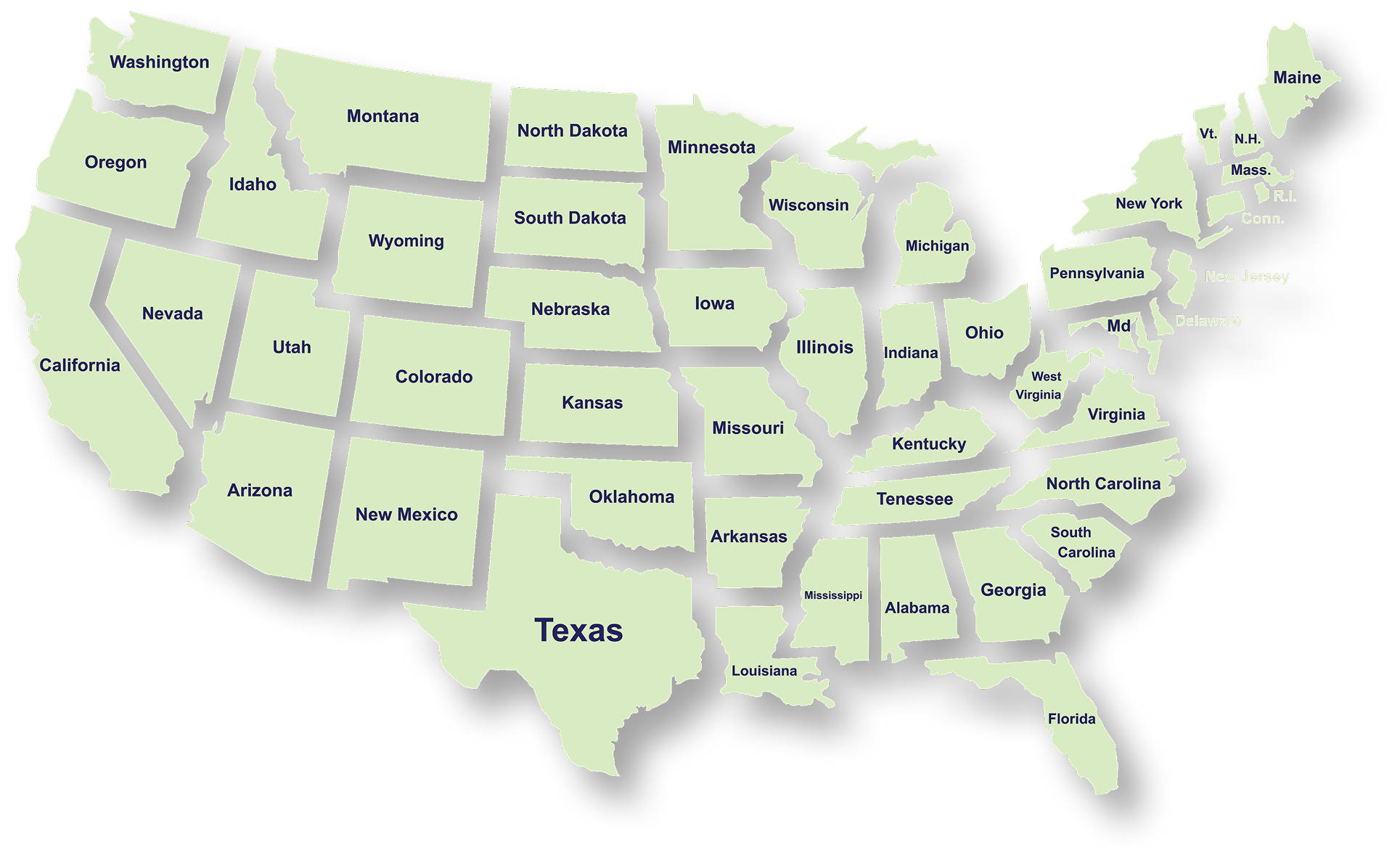
Serving Businesses & Individuals Across USA

We handle accounting, tax filing, and planning with defined timelines and accurate reporting for businesses and individuals across all states.

Frequently Asked Questions

What services does NR CPAs & Business Advisors provide?
What is tax planning and why is it important for businesses?
How can a Virtual CFO help my business?
When should a business consider IRS tax resolution services?
What financial statements does a business typically need?
How can startup advisory services help new businesses?
What is strategic business planning?
What is a Virtual Family Office and who can benefit from it?