Learning Center for Tax and Financial Insights

Stay updated with clear, actionable articles on tax rules, deadlines, deductions, and financial decisions that impact individuals and businesses.

No items found.

Video: The Difference Between a Tax Credit and Tax Deduction.

This video will detail the important difference between tax deductions and tax credits. In general, a deduction reduces taxable income, whereas a credit reduces the tax itself. Watch to learn more. .embed-container { position: relative; padding-bottom: 56.25%; height: 0; overflow: hidden; max-width: 100%; } .embed-container iframe, .embed-container object, .embed-container embed { position: absolute; top: 0; left: 0; width: 100%; height: 100%; }

Explore More
No items found.

Should You Have an Identity Protection PIN?

Article Highlights: Taxpayer First Act Taxpayer Notification when a SSN is Fraudulently Used Purpose of an IP PIN Obtaining an IP PIN Is an IP PIN Right for You? With the passage of the Taxpayer First Act in mid-2019, the Treasury Department (i.e., the IRS) is required to establish a program to issue an identity protection pin (IP PIN) to any U.S. resident who requests one. For each calendar year beginning after the date of enactment, the IRS must also expand the issuance of IP PINs to individuals residing in such states as the IRS deems appropriate, provided that the total number of states served by the program continues to increase. Often, identity theft and refund fraud victims may be unaware that their identity has been used fraudulently, or when they are aware, they may not be fully informed of the outcome of their case. The Taxpayer First Act addresses this situation by requiring that the IRS notify a taxpayer if it determines any of the following: there has been any suspected unauthorized use of a taxpayer’s identity or of that of the taxpayer’s dependents; if an investigation has been initiated and its status; whether the investigation substantiated any unauthorized use of the taxpayer’s identity; and whether any action has been taken (such as a referral for prosecution). Furthermore, when an individual is charged with a crime, the IRS must notify the victim as soon as possible, giving the victim the ability to pursue civil action against the perpetrators. An IP PIN is a six-digit number assigned by the IRS to eligible taxpayers. This pin helps prevent the misuse of taxpayers’ SSNs on fraudulent federal income tax returns. The IP PIN was originally established several years ago to aid taxpayers whose SSNs had been used to file a fraudulent return or if a taxpayer’s SSN had been compromised and there was concern it could be used to file a fraudulent return. Recently, as a result of the Taxpayer First Act, the IRS has opened the IP PIN system to a variety of taxpayers. In addition to taxpayers whose SSNs the IRS has determined are compromised for tax-filing purposes, IP PINs now are available to those who filed their federal tax return last year as a resident of Florida, Georgia, the District of Columbia, Michigan, California, Maryland, Nevada, Delaware, Illinois, or Rhode Island or received an IRS letter inviting them to “opt-in” to get an IP PIN.

Explore More
No items found.

Deducting the Costs of Modifications for Senior-Proofing a Home

Article Highlights Improvements for Medical Care or Treatment Improvements That Increase the Home’s Value Improvements That Do Not Increase the Home’s Value Medical AGI Limitations While Americans may argue about any number of hot-button political topics, there’s no disagreement on one issue: the country’s population is aging…fast. According to the Social Security Administration, 10,000 baby boomers a day are reaching the age of 65. Many individuals, for either themselves or an older family member, are senior-proofing their homes – adding grab bars in showers, modifying stairways, widening hallways to accommodate a wheelchair, and other projects to make the home safer and more accessible for older occupants. If you are planning to make such home improvements, you may be wondering whether any of the costs will be tax-deductible. Generally, the costs of home improvements are not deductible except to offset home gain when the home is sold. But a medical expense deduction may be claimed when the primary purpose of the home modification is for a medical reason. The tax law says that deductible medical expenses are those paid for the “diagnosis, cure, mitigation, treatment, or prevention of disease, and the costs for treatments affecting any part or function of the body.” So, if you are making the modification because you, your spouse, or a dependent has a medical need for doing so, then the modification expense may be deductible as a medical expense, but only to the extent that it exceeds any resulting increase in the property’s value. For example, a doctor recommends that a taxpayer with severe arthritis have daily hydrotherapy. The taxpayer has a hot tub installed at a cost of $21,000. A certified home appraiser determined the hot tub addition increased the home’s value by $20,000. The taxpayer’s medical deduction for installing the hot tub will only be $1,000. The other $20,000 of expenses will increase the home’s basis, meaning that it will add to the home’s cost and will offset the sales price when the home is sold. While the tax rules don’t require a prescription from a doctor for most medically related home modifications, the taxpayer, if questioned by the IRS, needs to be able to demonstrate how the expenditure is related to his or her medical care or that of a spouse or dependent. And having a letter from the individual’s doctor that explains the type of modifications that would be medically beneficial would help to prove a medical need. Not all improvements result in an increased home value. In fact some, such as lowering cabinets for an occupant confined to a wheelchair, could actually decrease the home’s resale value.

Explore More
No items found.

3 Common Personal Income Tax Problems & How to Respond

Tax problems aren't just a worry that hang over people's heads from January through April every year. Many of them go far beyond the numbers that you report, and they can require additional evidence that your bank statements and paychecks can't provide. Additionally, the IRS isn't the only source of those problems: state tax authorities are hungry for revenue, and if you divide your time among different states, you may find it difficult to establish nexus and may even have to file taxes in multiple states. Below are some of the most common personal income tax issues people are likely to face. 1. You didn't make (or underpaid) estimated tax payments. Self-employment is the most common cause of this. When you're used to having taxes withheld from your paychecks at work, it can be a shock to have to pay taxes yourself. You can end up owing not just a large amount of self-employment and income taxes, but also penalties for not making tax payments on time. Estimates must be deposited quarterly, or you will face an underpayment penalty. If your total tax due when you go to file is under $1,000, you won't have to worry about getting smacked with an underpayment penalty. However, it's a good idea to set aside at least 25%-30% of your income for estimated tax payments and commit to paying this amount every month if quarterly taxes are too complicated to figure out. Other situations like freelancing on the side or rental income while you're still employed can also cause you to fall short at tax time, so make sure to have extra taxes withheld from your paycheck if you don't want to make estimated payments. State tax payments also shouldn't be neglected. 2. You didn't correctly file state tax returns after moving. Moving to a state with little or no income taxes like Nevada or Florida can be appealing if your bank account feels squeezed in high-tax states like New York or California. Many people divide their time between multiple states for work or personal reasons, and if it's not just a two- or three-week creative retreat or corporate assignment, it can make nexus difficult to determine in some cases. With the prospect of a lower tax burden becoming even more appealing, it seems logical to just move to the tax-haven state you've been eyeing. But even after you file for a change of address with the postal service, change your voter registration, and get recognized as a resident by your new state, the high-tax state that you left is likely to also still treat you as one. Typically, you must spend at least 183 days of the year in the other state and maintain a primary residence there. Simply having property in another state won't do if the rest of your family doesn't also live and wait there for you after your work or travel. Where you spend time outside of work also matters because where you sleep every night is ultimately what counts. If your move is indeed permanent and your residency is valid, you may have to file a part-year resident tax return for the final months you stayed in the old state. You won't need to worry about it for following years, but keep track of how many days were spent in each state before and after moving day. 3. You neglected to file state income tax returns as a nonresident. If you have business or rental income in another state, you may be required to file state tax returns as a nonresident. If this income is significant, it can end up producing a large tax bill if you're unprepared. If you have an out-of-state job, chances are that your payroll provider may also be incorrectly withholding taxes for the appropriate state and/or city. In concentrated regions like the tri-state area, especially for New York City and Philadelphia residents, ensure that city taxes are being correctly withheld if you are a resident, and that withholding curtails if that is no the longer the case. There are usually reciprocity agreements among states and municipalities in areas where state lines cross, but you should carefully check to make sure you don't owe nonresident taxes in addition to what you owe your home state. Failure to make tax payments on time, and to the right agency, are income tax problems that are often overlooked and can quickly spiral out of control. To avoid these issues and many more, contact our office so we can consult you on your state and local taxation, as well as rules for establishing nexus.

Explore More
No items found.

Are Solar-Powered Batteries the Answer to Power Outages?

Article Highlights: Wildfires Planned Power Outages Solar Batteries Solar Tax Credit Over the past few years, several wildfires have been blamed on power lines downed during periods of low humidity and gusty winds, which typically occur in the fall. The 2018 Camp fire, sparked by downed power lines, was the deadliest in California history, claiming 85 lives and causing more than an estimated $16 billion in damages. Wind events can last for days, and the loss of power for extended periods can result in spoiled food and other inconveniences for homeowners who lack other power sources. Planned power outages are already being implemented by some utility companies and may become commonplace in the future, since gusty weather comes every year, and power companies must consider their financial liabilities if a downed line sparks a wildfire. As a result, homeowners and businesses in fire-prone areas will need to be proactive in planning for these emergency power outages and decide whether they need to provide themselves alternate power sources during outages or just ride out the powerless periods. Of course, alternate power sources come with a price tag, which will play into that decision. Even if you do not live in a wildfire-prone area, you may be in an area that is susceptible to power outages and may want to consider alternate power sources for during outages. Businesses can, of course, write off the cost of providing themselves alternate power sources, but the tax law doesn’t allow homeowners to deduct the costs of a generator or other outage-mitigation measures. However, one tax credit applies to homeowners who install solar power property, and that credit extends to batteries that are charged solely by solar power. (1) Even if you only have a standard solar power system without a battery back-up, you will still lose power during an outage because of how most panels are connected to the electric grid. However, if you have a battery incorporated into your solar system, your home can run off the solar energy stored in your battery when there is a power outage. Homeowners who already have a solar installation can add a storage battery and qualify for the solar credit for the cost of the battery.(1)

Explore More
No items found.

Don't Overlook These Essential Small Business Tax Credits

At their core, tax credits are a very particular type of benefit designed to offset the actual tax liability associated with SMBs around the country. This isn't the same thing as a tax deduction, which lowers that business's actual income. Tax credits are typically offered to incentivize everything from hiring more workers in order to stimulate the economy to making meaningful contributions to specific industries. While certain tax credits are obvious, others are decidedly less so. This is why proper tax planning is essential as a small business owner — you need to be proactive about getting every last penny that is owed to you. There are a number of essential small business tax credits in particular that you'll definitely want to take advantage of when tax season rolls around. The General Business Tax Credit As the name suggests, this is something of a "kitchen sink" tax credit made up of a number of smaller, individual credits. Collectively, they are designed to act as a way to motivate savvy business owners such as yourself to participate in certain activities. If you purchased a qualified electric vehicle for your business, branched out into a new market, or retained a certain number of employees, you may very well be qualified. Paid Family and Medical Leave This particular tax credit is relatively new, having only just been authorized in 2017. Again, it's intended to act as motivation — this time, so that small business owners will provide paid leave to all employees who themselves are covered by the Family and Medical Leave Act. Employees that qualify are entitled to up to 12 weeks of totally unpaid, job-projected leave — all while still retaining access to their group health benefits as well. Note that this is something that happens every year. The credit itself is equal to a percentage of the wages that an employer pays to those qualified employees while they're on leave for things like unexpected medical emergencies or even giving birth. The Alternative Motor Vehicle Credit This credit is a sizable one of up to $8,000, so it is absolutely in your own best interest to claim it if you qualify. As the name suggests, it's a way to incentivize small business owners to purchase an "alternative fuel source" vehicle. Note that the cars that fall into this category would be those that use hydrogen fuel-cell technology, not hybrids or electric vehicles since those are still considered to be "traditional" types of fuel. Yes, the list of qualified vehicles is currently small — but that doesn't mean it won't expand in the future, and the credit itself is still worth keeping an eye on. Credits for Qualified Research Expenses Depending on the specific type of small business you're running, you may have to engage in a significant amount of research and development in order to better serve your own customers. The United States government would like to encourage you to do as much of that as possible, which is how the qualified research expenses credit (otherwise known as the "Increasing Research Activities Credit") came into being. In order to qualify for this credit, you need to engage in domestic research and development for the purposes of things like certification testing, environmental testing, developing or applying for patents, prototype and model development, and more. Research associated with the development of new or even improved products, processes, and formulas would also qualify. This credit can cover up to 20% of all of your related expenses that fall under this umbrella. The New MarketsCredit Last but not least, we have the New Markets Credit — one designed to encourage investment in Community Development Enterprises and Community Development Financial Institutions, otherwise known as CDEs and CDFIs, respectively. These are the types of organizations that assist lower income communities around the country and, obviously, they need all the help they can get. The vast majority of all qualified projects involve either purchasing, renovating or constructing real estate in areas that have a 20% poverty rate or with median family incomes that don't exceed 80% of that of the larger area. This means building or renovating hospitals, for example, or industrial buildings that go on to create jobs. Note that while all of these small business tax credits are critical, they represent just a small fraction of those that may be available to you. For the complete list, be sure to review the IRS' official website devoted to that very topic. As always, you should also enlist the help of a qualified tax professional to prepare your business taxes as well. Not only can we help ensure you're taking full advantage of these and other critical credits, but we can also help you avoid the types of costly mistakes that small business owners and the self-employed often make when they attempt to do everything themselves. Contact our office for more information today.

Explore More
No results found.
Thank you! Your submission has been received!
Oops! Something went wrong while submitting the form.

Want tax & accounting tips & insights?Sign up for our newsletter.

Thank you! Your submission has been received!
Oops! Something went wrong while submitting the form.

Why Work With Us?

We combine deep tax expertise, financial strategy, and practical business insight to help you manage complexity, stay compliant, and make confident financial decisions.
A dollar sign, representing financial advice or discussion at NR CPAs & Business Advisors.

Experienced CPA and Enrolled Agent Leadership

Guidance led by licensed professionals with deep expertise in tax strategy, compliance, and complex financial matters.
White bar chart with an upward arrow on green circular background representing growth or progress at NR CPAs &. Business Advisors

Support for Growing Businesses and Startups

We understand the financial challenges of growth stage businesses and provide structured guidance to support expansion.
A white hand holding a dollar symbol and ascending bar chart on a green circular background representing financial growth or investment at NR CPAs & Business Advisors..

Strategic Financial Advisory

Our team helps you evaluate financial decisions with greater clarity, supported by practical insights and long term planning.

Fractional CFO Support

Access experienced financial leadership without the commitment and cost of hiring a full time Chief Financial Officer.

Proactive Tax Planning Approach

We focus on identifying tax opportunities throughout the year rather than reacting only during filing season.

Clear and Reliable Financial Reporting

Accurate financial statements and reporting that help you better understand performance and make informed decisions.
White IRS building icon with pillars and a dollar sign above on a green circular background.

Professional IRS Representation

Experienced support in resolving IRS notices, disputes, and compliance matters while protecting your financial interests.

Personalized Client Focus

Every client receives thoughtful attention and tailored financial solutions based on their specific needs and business goals.
Financial matters often involve important decisions. Working with experienced advisors can help you approach them with greater clarity and confidence in your choices.

Need Help With Your Tax or Financial Decisions?

Discuss your situation with our advisors to get clear guidance on tax planning, IRS matters, and the financial decisions ahead.
Business consulting at NR CPAs & Business Advisors.

Request Your Consultation

Fill out the form to discuss your tax concerns, financial questions, or advisory needs with our team. We will review your details and respond shortly.

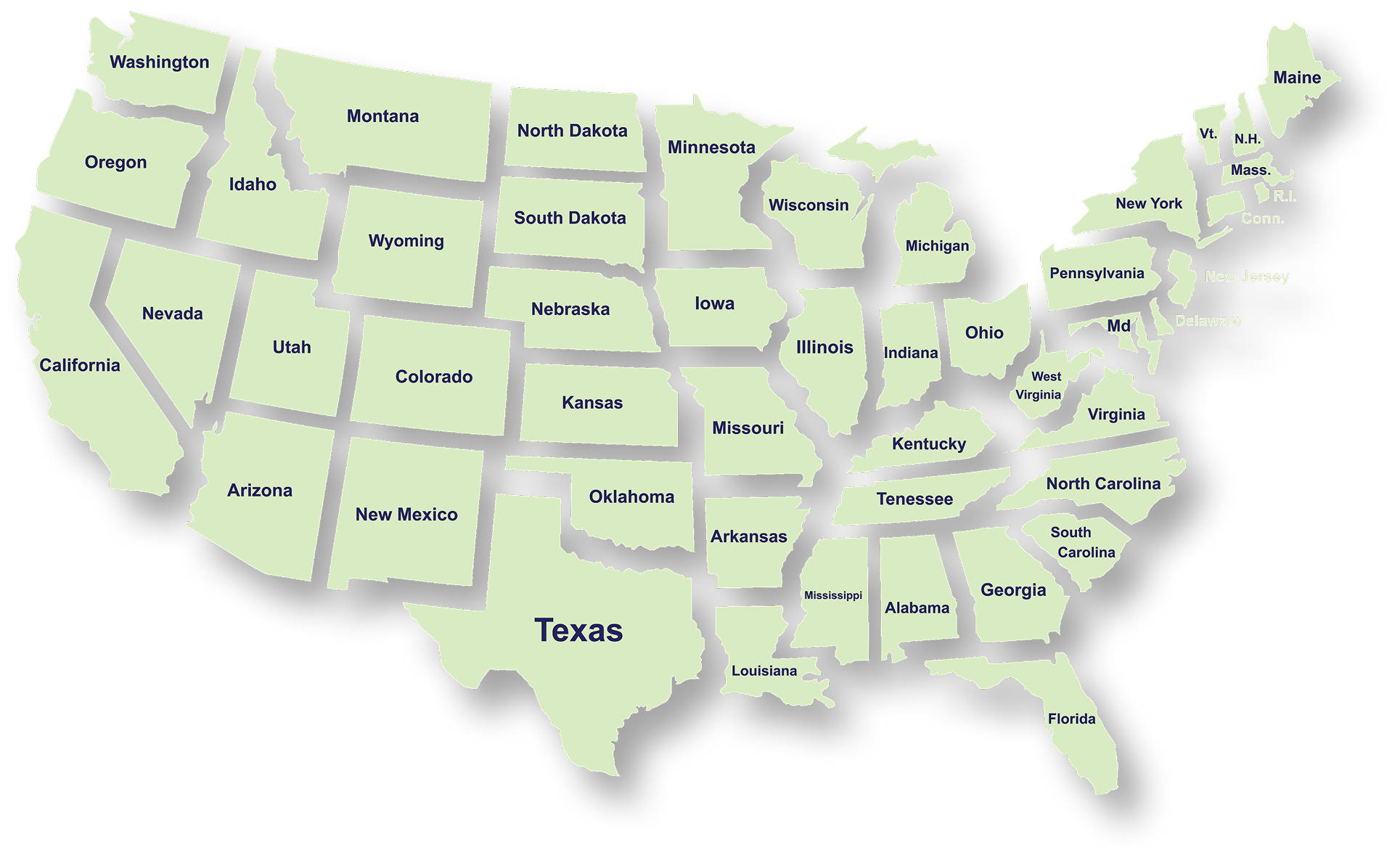
Serving Businesses & Individuals Across USA

We handle accounting, tax filing, and planning with defined timelines and accurate reporting for businesses and individuals across all states.

Frequently Asked Questions

What services does NR CPAs & Business Advisors provide?
What is tax planning and why is it important for businesses?
How can a Virtual CFO help my business?
When should a business consider IRS tax resolution services?
What financial statements does a business typically need?
How can startup advisory services help new businesses?
What is strategic business planning?
What is a Virtual Family Office and who can benefit from it?