Learning Center for Tax and Financial Insights

Stay updated with clear, actionable articles on tax rules, deadlines, deductions, and financial decisions that impact individuals and businesses.

No items found.

Securing Europe's Breadbasket: EU's Bold Move on Russian Grain Tariffs

In a move aimed at safeguarding its markets and supporting Ukraine, the European Commission (EU) has proposed a tariff increase on grain imports from Russia and Belarus. The proposal, issued on March 22, 2024, seeks to address several pressing concerns and challenges the European Union faces.European Union President Ursula von der Leyen spoke about the necessity of the tariffs, stating, "We propose the imposition of tariffs on these Russian imports to mitigate the growing risk to our markets and our farmers." She also noted the EU's commitment to upholding global food security while supporting Ukraine amidst the ongoing conflict that began when Russia invaded Ukraine in February 2022.The proposed tariffs have several objectives:Market Stability: The tariffs aim to prevent market destabilization in the EU by curbing potential surges in Russian grain imports, a concern voiced by the EU farming community.Combat Illicit Trade: The tariffs seek to address the issue of Russian grain exports allegedly stolen from Ukrainian territories, which have sometimes been mislabeled as 'Russian'. By imposing tariffs, the EU aims to make this illicit trade unprofitable.Economic Pressure: Additionally, the tariffs aim to hinder Russia's ability to finance its military actions in Ukraine by cutting off a significant revenue stream derived from grain exports to the EU.The proposed measures extend to Belarus, given its close ties to Russia and its support for the Ukrainian conflict. By including Belarus in the tariff increase, the EU aims to prevent circumvention of the tariffs through Belarusian channels.It's important to note that the proposed tariffs will not disrupt global grain supplies, as the transit of grain through the EU to other countries will remain unaffected. This reaffirms the EU's commitment to promoting food security globally, particularly in developing nations.

Explore More
No items found.

Proving Noncash Charitable Contributions

Article Highlights:Noncash Charitable ContributionsEstablishing Donation ValueFair Market ValueDocumentation RequirementsAppraisal Requirements Tax legislation passed in late 2017 nearly doubled the standard deduction for years 2018 through 2025, and now about 90% of individuals filing a tax return are taking advantage of the higher standard amount and are not itemizing their deductions. For the 10% of filers still itemizing, one of the most common tax-deductible charitable contributions that can be claimed is the donation of household goods and used clothing to qualified charities.The major complication of this type of contribution is establishing the dollar value of the item contributed as of the date of the contribution. According to the tax code, this is the fair market value (FMV), which is defined as the value that a willing buyer would pay a willing seller for the item.FMV is not always easily determined and varies significantly based upon the condition of the item donated. For example, compare the condition of an article of clothing you purchased and only wore once to that of one that has been worn many times. The almost new one certainly will be worth more, but if the hardly worn item had been purchased a few years ago and had become grossly out of style, the more extensively used piece of clothing could be worth more. In either case, the clothing article is still a used item, so its value cannot be anywhere near as high as the original cost. Determining this value is not an exact science. The IRS recognizes this issue and, in some cases, requires the value to be established by a qualified appraiser.Remember that when establishing FMV, any value you claim can be challenged by the IRS in an audit and that the burden of proof is with you (the taxpayer), not with the IRS. For substantial noncash donations, it might be appropriate for you to visit a local charity’s thrift shop or even a consignment store to get an idea of the FMV of used items. Online research may be another way of determining the value if you can find a comparable item for sale. But be careful when using items being auctioned, since the starting price may not be the same as the final sale price.The next big issue is documenting your contribution. Many taxpayers believe that the doorknob hanger left by the charity’s pickup driver is sufficient proof of a donation. Unfortunately, that is not the case, as a United States Tax Court case (Kunkel T.C. Memo 2015-71) pointed out. In that case, the court denied the taxpayer’s charitable contributions, which were based solely upon doorknob hangers left by the drivers who picked up the donated items for the charities. The court stated that “these doorknob hangers are undated; they are not specific to petitioners; they do not describe the property contributed; and they contain none of the other required information.”The IRS requires the following documentation for noncash contributions based on the total value of the donation:Deductions of Less Than $250 - When claiming a noncash contribution with a value under $250, you must keep a receipt from the charitable organization that shows:1.The name of the charitable organization,2. The date and location of the charitable contribution, and3. A reasonably detailed description of the property.Note: You are not required to have a receipt if it is impractical to get one (for example, if you left the property at a charity’s unattended drop site). Deductions of At Least $250 But Not More Than $500 - If you claim a deduction of at least $250 but not more than $500 for a noncash charitable contribution, you’ll need to keep an acknowledgment of the contribution from the qualified organization. If the deduction includes more than one contribution of $250 or more, either a separate acknowledgment for each donation or a single acknowledgment that shows the total contribution is required. The acknowledgment(s) must be written and must include:1. The name of the charitable organization,2. The date and location of the charitable contribution,3. A reasonably detailed description of any property contributed (but not necessarily its value), and4. Whether the qualified organization gave you any goods or services because of the contribution (other than certain token items and membership benefits).If the charitable organization provided you goods and/or services, the acknowledgement must include a description and a good faith estimate of the value of those goods or services. If the only benefit received was an intangible religious benefit (such as admission to a religious ceremony) that generally is not sold in a commercial transaction outside the donative context, the acknowledgment must say so, and in this case, the acknowledgment does not need to describe or estimate the value of the benefit.

Explore More
No items found.

Video Tips: Owe Taxes and Can’t Pay?

Individuals have many options when they cannot pay their tax liability by the April due date, including setting up an IRS payment plan, making a payment by credit card, tapping a retirement plan, and borrowing money from a friend or relative. Each option has negative implications, and some have substantial fees, penalties and/or interest.

Explore More
No items found.

Drug & Alcohol Addiction Treatments May Be Tax Deductible

Article Highlights:Potential medical deductionsMedical dependentsDivorced parentsMedical AGI limitationsA taxpayer is allowed an itemized deduction for medical expenses paid during the taxable year and not compensated by insurance or otherwise for medical care of the taxpayer or the taxpayer’s spouse, dependent, or medical dependent.Alcoholism and drug addiction are treated as medical ailments for tax purposes. People with addictions often cannot quit on their own; addiction is an illness that requires treatment. Generally, treatment expenses are tax deductible as itemized deduction medical expenses. Possible deductible expenses include the costs of:DoctorsPrescribed medicationsLaboratory testingPsychological servicesTreatment programsInpatient treatment at a therapeutic center for alcoholism or drug abuse, including meals and lodging furnished as necessary incident to the treatmentCounselingBehavioral therapiesTo claim these expenses for someone other than the taxpayer, the person must have been the taxpayer’s dependent or spouse either at the time that the medical services were provided or at the time that the expenses were paid.Medical Dependent – Tax law does include a special provision that allows medical expenses to be deducted for an individual who does not meet all the requirements to qualify as a dependent. A person generally qualifies as a “medical” dependent for purposes of the medical expense itemized deduction if:That person lived with the taxpayer for the entire year as a member of the household (temporary absence to obtain medical treatment is an exception) OR is related to the person,That person was a U.S. citizen or resident or a resident of Canada or Mexico for some part of the calendar year in which the tax year began, andThe taxpayer provided over half of that person’s total support for the calendar year.The medical expenses of any person who meets these qualifications may be included even if he or she cannot be claimed as a dependent on the taxpayer’s return.Thus, the dependent’s age and income are not limiting factors in determining whether an individual is a dependent for purposes of deducting their medical expenses.For example, suppose an adult child has an addiction problem. Even though the child is an adult and generates an income, a parent may still be able to deduct medical expenses that he or she pays for the adult child if the three requirements above are met. The parent must pay the medical service providers directly and not just give the money to the dependent to pay the bills.

Explore More
No items found.

5 Steps You Should Take Every Time You Open QuickBooks

When it comes to managing your small business finances, establishing a consistent routine is important. This is especially true when using QuickBooks, a powerful accounting software system that can help you stay organized and make informed decisions about your finances daily. Here are five key steps you should take every time you open QuickBooks:1. Look at the Income TrackerStart each QuickBooks session by taking a look at the Income Tracker. Located under the Customers tab, the Income Tracker provides a quick overview of the status of your receivables. With colored bars indicating various transaction types and dollar totals, you can easily monitor unbilled sales orders, unpaid invoices, and overdue payments. Use the options to create invoices, receive payments, and perform batch actions to simplify customer billing and other payments you are owed.2. Review Snapshots for InsightsNext, check QuickBooks' Snapshots feature to gain valuable insights into your company's financial health. Explore the Company and Payments Snapshots to analyze key metrics and identify trends. Additionally, charts and tables allow you to easily assess business performance over time and proactively address any issues you may not have previously noticed.3. Monitor Inventory LevelsIf your business involves selling products, monitoring inventory levels should be a major part of your day-to-day workflow. Utilize QuickBooks' Inventory Stock Status by Item report to track stock levels, set reorder points, and anticipate shortages. By adjusting reorder points as needed in real-time, you can avoid sellouts and ensure seamless operations.

Explore More
No items found.

How Coverdell and 529 Education Savings Plans Differ

Article HighlightsCoverdell Education Savings AccountsQualified State Tuition Programs (Sec 529 plans)Savings Contribution LimitsGift Tax IssuesThe tax code provides two primary advantageous ways of saving for your children’s education. We frequently get questions about the differences between the programs and about which program is best suited for a family’s particular needs.The Coverdell Education Savings Account and the Qualified Tuition Plan (frequently referred to as a Sec 529 Plan) are similar; neither provides tax-deductible contributions, but both plans’ earnings are tax-free if used for allowable expenses, such as tuition. Therefore, with either plan, the greatest benefit is derived by making contributions to the plan as soon as possible—even the day after a child is born—to accumulate years of investment earnings and maximize the benefits. However, that is where the similarities end, and each plan has a different set of rules.Coverdell Savings Accounts only allow a total annual maximum contribution of $2,000. The contributions can be made by anyone, including the beneficiary, so long as the contributor’s adjusted gross income is not high enough to phase out the allowable contribution. (The phase-out threshold is $190,000 for married contributors filing jointly and $95,000 for others.) Unless the beneficiary of the account is a special needs student, the funds must be withdrawn prior to age 30. The funds can be used for kindergarten through post-secondary education. Allowable expenses generally include tuition; room, board, and travel expenses required to attend school; books; and other supplies. Tutoring for special needs students is also allowed. Funds can be rolled over from one beneficiary to another in the same family. Although the funds can be used starting in kindergarten, the chances are that not enough of earnings will have been accumulated by that time to provide any significant tax benefit.Section 529 Plans come in two types, allowing taxpayers to either save funds in a tax-free account to be used later for eligible education costs, or to prepay tuition for qualified universities. Typically, funds contributed to the college savings plan are invested in some sort of savings vehicle – generally mutual funds. Many of these plans offer stock funds when a child is quite young, which will then be transferred to more conservative investments (like bond funds) as the child gets closer to college age. As with any investment, there are no guarantees of growth and the plans are subject to the normal investment risks, even though state governments sponsor them. A big plus for these plans is they are not geared towards in-state schools or a specific institution but meant to be applied to whichever school a child chooses to attend.

Explore More
No results found.
Thank you! Your submission has been received!
Oops! Something went wrong while submitting the form.

Want tax & accounting tips & insights?Sign up for our newsletter.

Thank you! Your submission has been received!
Oops! Something went wrong while submitting the form.

Why Work With Us?

We combine deep tax expertise, financial strategy, and practical business insight to help you manage complexity, stay compliant, and make confident financial decisions.
A dollar sign, representing financial advice or discussion at NR CPAs & Business Advisors.

Experienced CPA and Enrolled Agent Leadership

Guidance led by licensed professionals with deep expertise in tax strategy, compliance, and complex financial matters.
White bar chart with an upward arrow on green circular background representing growth or progress at NR CPAs &. Business Advisors

Support for Growing Businesses and Startups

We understand the financial challenges of growth stage businesses and provide structured guidance to support expansion.
A white hand holding a dollar symbol and ascending bar chart on a green circular background representing financial growth or investment at NR CPAs & Business Advisors..

Strategic Financial Advisory

Our team helps you evaluate financial decisions with greater clarity, supported by practical insights and long term planning.

Fractional CFO Support

Access experienced financial leadership without the commitment and cost of hiring a full time Chief Financial Officer.

Proactive Tax Planning Approach

We focus on identifying tax opportunities throughout the year rather than reacting only during filing season.

Clear and Reliable Financial Reporting

Accurate financial statements and reporting that help you better understand performance and make informed decisions.
White IRS building icon with pillars and a dollar sign above on a green circular background.

Professional IRS Representation

Experienced support in resolving IRS notices, disputes, and compliance matters while protecting your financial interests.

Personalized Client Focus

Every client receives thoughtful attention and tailored financial solutions based on their specific needs and business goals.
Financial matters often involve important decisions. Working with experienced advisors can help you approach them with greater clarity and confidence in your choices.

Need Help With Your Tax or Financial Decisions?

Discuss your situation with our advisors to get clear guidance on tax planning, IRS matters, and the financial decisions ahead.
Business consulting at NR CPAs & Business Advisors.

Request Your Consultation

Fill out the form to discuss your tax concerns, financial questions, or advisory needs with our team. We will review your details and respond shortly.

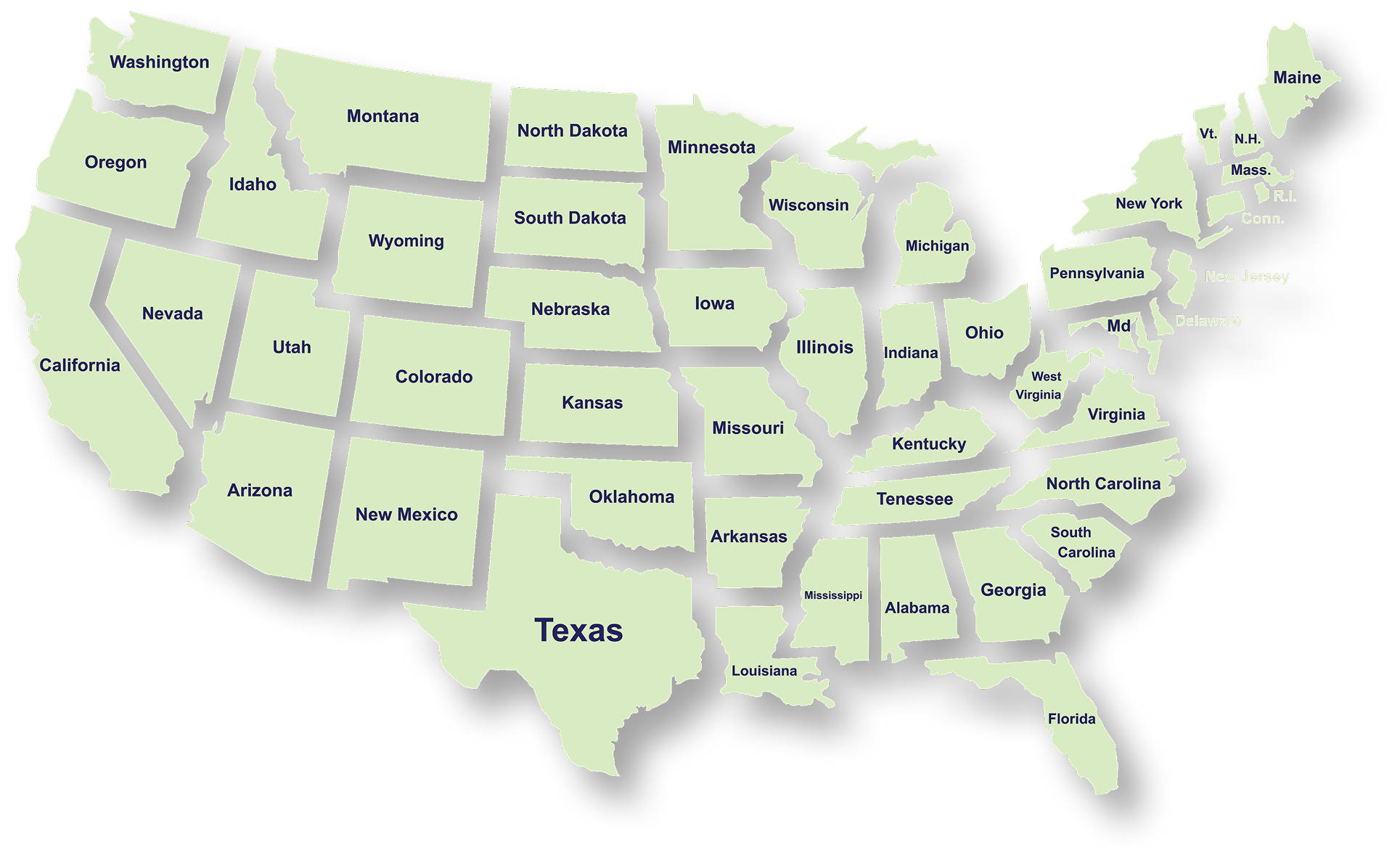
Serving Businesses & Individuals Across USA

We handle accounting, tax filing, and planning with defined timelines and accurate reporting for businesses and individuals across all states.

Frequently Asked Questions

What services does NR CPAs & Business Advisors provide?
What is tax planning and why is it important for businesses?
How can a Virtual CFO help my business?
When should a business consider IRS tax resolution services?
What financial statements does a business typically need?
How can startup advisory services help new businesses?
What is strategic business planning?
What is a Virtual Family Office and who can benefit from it?