Learning Center for Tax and Financial Insights

Stay updated with clear, actionable articles on tax rules, deadlines, deductions, and financial decisions that impact individuals and businesses.

No items found.

Many Farmers and Fishers Face March 1 Tax Deadline

Article Highlights:Special March 1, 2024, Due DateQualifying Farmer or Fisher DefinitionSpecial Dates for Maine and MassachusettsDisaster Area Extended Due DatesExtensionsFarmers and fishers who chose to forgo making 2023 estimated tax payments by January must generally file their 2023 federal income tax return and pay all taxes due by Friday, March 1, 2024.The special March 1, 2024, deadline allows farmers and fishers to avoid any estimated tax penalties. Though several tax-payment options are available, a taxpayer can use a quick, easy and free option to pay from their bank account by using their IRS Online Account or schedule payments in advance using IRS Direct Pay.The special deadline applies to anyone who qualifies as a farmer or fisher and did not make an estimated tax payment by Jan. 16, 2024. Those who made a qualifying payment by Jan. 16, 2024, can wait until the regular April 15, 2024, deadline to file and still avoid estimated tax penalties. The deadline is April 17, 2024, in Maine and Massachusetts.

Explore More
No items found.

Video Tips: Explore Charity Volunteer Tax Breaks

Although no tax deduction is allowed for the value of services performed for a qualified charity or federal, state or local governmental agency, some deductions are permitted for out-of-pocket costs incurred while performing the services. Check out this video to learn more about Charity Volunteer Tax Breaks.

Explore More
No items found.

Checking the Status of Your Federal Tax Refund Is Easy

Article Highlights: Your federal tax refund status can be checked online. E-file refunds are generally issued within 21 days of filing. Direct deposit provides the quickest refunds. If your 2018 federal return has already been filed and you are due a refund, you can check the status of your refund online. “Where’s My Refund?” is an interactive tool on the IRS website at IRS.gov. Whether you have opted for direct deposit into one account, split your refund among several accounts, or asked the IRS to mail you a check, “Where’s My Refund?” will give you online access to your refund information nearly 24 hours a day, 7 days a week. If you e-file, you can get refund information within 24 hours after the IRS has acknowledged receipt of your return. Generally, refunds for e-filed returns are issued within 21 days. If you file a paper return, your refund information will be available within four weeks. When checking the status of your refund, have your federal tax return handy. To access your personalized refund information, you must enter: Your Social Security number (or Individual Taxpayer Identification Number); Your filing status (single, married filing joint return, married filing separate return, head of household, or qualifying widow(er)); and The exact refund amount shown on your tax return.

Explore More
No items found.

Education Credits Aren’t Just for Children’s Tuition

Article Highlights: Overview Eligible Education Expenses Credit Qualifications American Opportunity Credit Lifetime Learning Credit Qualifications Who Gets the Credit If you think that education credits are just for sending your children to college, think again; the credits are available to you, your spouse (if you are married), and your dependents. Even if you or your spouse only attend school part time, you still may qualify for a tax credit. There are two education-related tax credits available: the American Opportunity Tax Credit (AOTC) and the Lifetime Learning Credit (LLC). For either credit, the student must be enrolled in an eligible educational institution for at least one academic period (semester, trimester or quarter) during the year. An eligible educational institution is any accredited public, nonprofit, or proprietary postsecondary institution that can participate in the U.S. Department of Education’s student aid programs. The credits phase out for higher-income taxpayers who are married filing jointly (MFJ) or who are unmarried. Those who are married filing separately (MFS) do not qualify for either credit. Eligible Expenses – The following table defines the eligible and ineligible expenses that are used in determining the education expenses. This table illustrates the differences between expenses that qualify for the AOTC and the LLC. ELIGIBLE EDUCATION EXPENSES EXPENSE NOTES AOTC LLC Computer If needed for attendance at the educational institution. See Notes No Computer Software If needed for attendance at the educational institution. Sports, games, hobbies only if educational in nature. See Notes No Course Materials and Supplies For the LLC only if purchased from the institution as a condition of attendance. Yes See Notes Equipment Required for enrollment or attendance. Yes No Fees Required for enrollment or attendance. Yes Yes Fees, Non-Academic Only if they are required to attend. Yes Yes Fees, Student Activity Paid to the educational institution. Yes Yes Internet Service If needed for attendance at the educational institution. Yes No Travel Expenses - No No Tuition: Higher Education - Yes Yes Tuition: Hobby, sports, games, non-credit courses. If part of student’s degree program for AOTC and LLC. For LLC if required to acquire or improve job skills. See Notes See Notes

Explore More
No items found.

Video Tips: Home Office Deduction – Are You Eligible?

Amidst the increasing prevalence of remote work, the allure of a home office tax deduction grows stronger. However, understanding the qualifications and calculations involved can be complex. Delve deeper into this topic by watching the accompanying video.

Explore More
No items found.

Don’t Overlook Business Beneficial Ownership Reporting

Article HighlightsCorporate Transparency Act (CTA)Financial Crimes Enforcement Network (FinCEN)Companies Required to Report Beneficial Ownership InformationExemptions From Reporting RequirementWho is a Beneficial OwnerWho Is a Company Applicant of a Reporting Company?Definition of Substantial ControlFiling Due DatesPenaltiesUpdatesSmall Entity Compliance GuideHow Does a Company File a BOI ReportIn the ever-evolving landscape of business regulations, the Corporate Transparency Act (CTA), passed as part of the National Defense Authorization Act for Fiscal Year 2021, introduces new reporting requirements for businesses in the United States, specifically focusing on beneficial ownership. This reporting starts in 2024, and it is something you need to be aware of and take action on if yours is a reporting company.The CTA aims to combat illicit activities such as money laundering, tax fraud, and terrorism financing by increasing transparency in the ownership structures of companies. It requires corporations, limited liability companies (LLCs), and similar entities to report their beneficial owners to the Financial Crimes Enforcement Network (FinCEN).What Is FinCEN? - The Financial Crimes Enforcement Network (FinCEN) is a bureau of the U.S. Department of the Treasury. Established in 1990, FinCEN's primary role is to safeguard the financial system from illicit use, combat money laundering, and promote national security through the collection, analysis, and dissemination of financial intelligence.FinCEN works closely with law enforcement agencies, intelligence agencies, financial institutions, and regulatory entities. It implements and enforces compliance with certain parts of the Bank Secrecy Act, including the requirement for financial institutions to report suspicious activities that might signify money laundering, tax evasion, or other financial crimes.FinCEN also plays a crucial role in fighting terrorism by tracking and cutting off sources of funding for terrorist activities. It achieves this by analyzing financial transactions and sharing this information with domestic and international partners.Companies Required to Report Beneficial Ownership Information (BOI) to FinCEN - There are two types of reporting companies:Domestic reporting companies - corporations, limited liability companies, and any other entities created by the filing of a document with a secretary of state or any similar office in the United States. This includes single member LLCs.Foreign reporting companies - entities (including corporations and limited liability companies) formed under the law of a foreign country that have registered to do business in the United States by the filing of a document with a secretary of state or any similar office.Exemptions From Reporting Requirement - The Corporate Transparency Act exempts 23 types of entities from the beneficial ownership information reporting requirement. Carefully review the qualifying criteria of the exemptions before concluding that your company is exempt. For more detail see BOI_Small_Compliance_Guide.v1.1-FINAL.pdf (fincen.gov)Certain types of securities reporting issuers. A U.S. governmental authority. Certain types of banks. Federal or state credit unions as defined in section 101 of the Federal Credit Union Act.Bank holding company as defined in section 2 of the Bank Holding Company Act of 1956, or any savings and loan holding company as defined in section 10(a) of the Homeowners’ Loan Act.Certain types of money transmitting or money services businesses. Any broker or dealer, as defined in section 3 of the Securities Exchange Act of 1934, that is registered under section 15 of that Act (15 U.S.C. 78o).Securities exchanges or clearing agencies as defined in section 3 of the Securities Exchange Act of 1934, and that is registered under sections 6 or 17A of that Act.Certain other types of entities registered with the Securities and Exchange Commission under the Securities Exchange Act of 1934. Certain types of investment companies as defined in section 3 of the Investment Company Act of 1940, or investment advisers as defined in section 202 of the Investment Advisers Act of 1940.Certain types of venture capital fund advisers. Insurance companies defined in section 2 of the Investment Company Act of 1940.State-licensed insurance producers with an operating presence at a physical office within the United States, and authorized by a State, and subject to supervision by a state’s insurance commissioner or a similar official or agency.Commodity Exchange Act registered entities. Any public accounting firm registered in accordance with section 102 of the Sarbanes-Oxley Act of 2002.Certain types of regulated public utilities.Any financial market utility designated by the Financial Stability Oversight Council under section 804 of the Payment, Clearing, and Settlement Supervision Act of 2010.Certain pooled investment vehicles.Certain types of tax-exempt entities. Entities assisting a tax-exempt entity described in (14) above.Large operating companies with at least 20 full-time employees, more than $5,000,000 in gross receipts or sales, and an operating presence at a physical office within the United States. The subsidiaries of certain exempt entities. Certain types of inactive entities that were in existence on or before January 1, 2020, the date the Corporate Transparency Act was enacted.Many of these exempt entities are already regulated by federal and/or state government, and many already disclose their beneficial ownership information to a governmental authority.Who is a Beneficial Owner – A beneficial owner, as defined by the CTA, is an individual who exercises substantial control (see definition below) over a company or owns or controls at least 25% of the ownership interests of that company. There can be multiple beneficial owners for a single company. The CTA excludes certain entities from this requirement, such as publicly traded companies, banks, credit unions, and certain regulated entities, among others.The information to be reported includes each beneficial owner's full legal name, date of birth, current residential or business street address, and a unique identifying number from an acceptable identification document, such as a passport or driver’s license. This information must be updated within 30 days of any change in beneficial ownership.Non-compliance with the CTA can result in hefty fines and potential imprisonment. Therefore, it is crucial for businesses to understand their obligations under this new law and take the necessary steps to comply.The CTA represents a significant shift in U.S. corporate law, and its impact will be far-reaching. While it aims to enhance corporate transparency and combat illicit activities, it also imposes new administrative burdens on small and medium-sized businesses.Companies will need to devote resources to identify their beneficial owners, collect the required information, and report it to FinCEN. They will also need to ensure that this information is kept up to date, which could require ongoing monitoring and reporting efforts.Moreover, the CTA raises privacy concerns. Although FinCEN is required to keep the reported information confidential, it can be disclosed in certain circumstances, such as in response to a request from law enforcement agencies.Who Is a Company Applicant of a Reporting Company?Per FinCEN Q&A Section E- There can be up to two individuals who qualify as company applicants:The individual who directly files the document that creates, or first registers, the reporting company; andThe individual that is primarily responsible for directing or controlling the filing of the relevant document.No reporting company will have more than two company applicants. If only one person was involved in filing the relevant document, then only that person should be reported as a company applicant.When must a company applicant be reported:Only reporting companies formed or registered on or after January 1, 2024, will have to report their company applicants.Companies created or registered before January 1, 2024, do not have to report their company applicants.

Explore More
No results found.
Thank you! Your submission has been received!
Oops! Something went wrong while submitting the form.

Want tax & accounting tips & insights?Sign up for our newsletter.

Thank you! Your submission has been received!
Oops! Something went wrong while submitting the form.

Why Work With Us?

We combine deep tax expertise, financial strategy, and practical business insight to help you manage complexity, stay compliant, and make confident financial decisions.
A dollar sign, representing financial advice or discussion at NR CPAs & Business Advisors.

Experienced CPA and Enrolled Agent Leadership

Guidance led by licensed professionals with deep expertise in tax strategy, compliance, and complex financial matters.
White bar chart with an upward arrow on green circular background representing growth or progress at NR CPAs &. Business Advisors

Support for Growing Businesses and Startups

We understand the financial challenges of growth stage businesses and provide structured guidance to support expansion.
A white hand holding a dollar symbol and ascending bar chart on a green circular background representing financial growth or investment at NR CPAs & Business Advisors..

Strategic Financial Advisory

Our team helps you evaluate financial decisions with greater clarity, supported by practical insights and long term planning.

Fractional CFO Support

Access experienced financial leadership without the commitment and cost of hiring a full time Chief Financial Officer.

Proactive Tax Planning Approach

We focus on identifying tax opportunities throughout the year rather than reacting only during filing season.

Clear and Reliable Financial Reporting

Accurate financial statements and reporting that help you better understand performance and make informed decisions.
White IRS building icon with pillars and a dollar sign above on a green circular background.

Professional IRS Representation

Experienced support in resolving IRS notices, disputes, and compliance matters while protecting your financial interests.

Personalized Client Focus

Every client receives thoughtful attention and tailored financial solutions based on their specific needs and business goals.
Financial matters often involve important decisions. Working with experienced advisors can help you approach them with greater clarity and confidence in your choices.

Need Help With Your Tax or Financial Decisions?

Discuss your situation with our advisors to get clear guidance on tax planning, IRS matters, and the financial decisions ahead.
Business consulting at NR CPAs & Business Advisors.

Request Your Consultation

Fill out the form to discuss your tax concerns, financial questions, or advisory needs with our team. We will review your details and respond shortly.

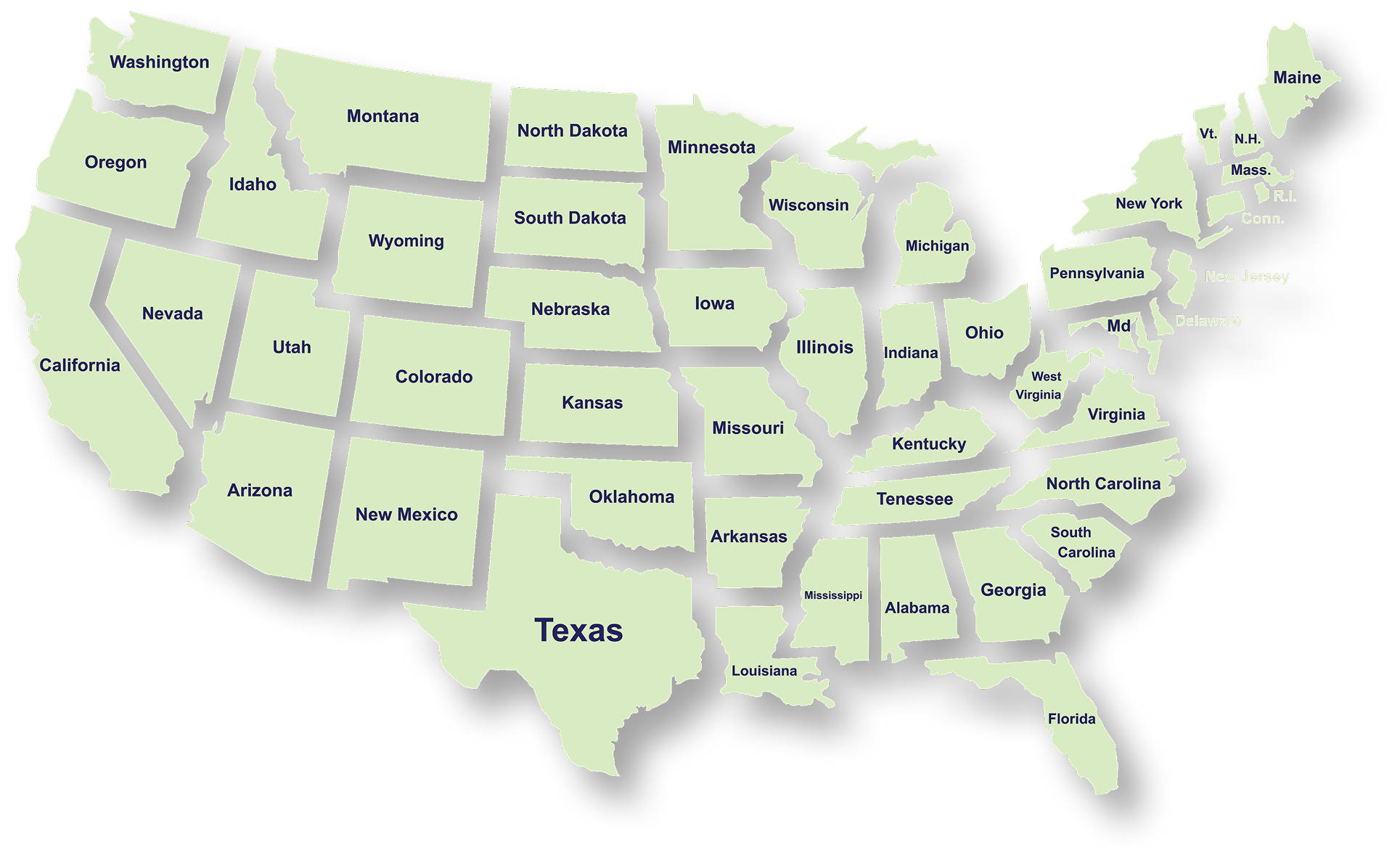
Serving Businesses & Individuals Across USA

We handle accounting, tax filing, and planning with defined timelines and accurate reporting for businesses and individuals across all states.

Frequently Asked Questions

What services does NR CPAs & Business Advisors provide?
What is tax planning and why is it important for businesses?
How can a Virtual CFO help my business?
When should a business consider IRS tax resolution services?
What financial statements does a business typically need?
How can startup advisory services help new businesses?
What is strategic business planning?
What is a Virtual Family Office and who can benefit from it?