Learning Center for Tax and Financial Insights

Stay updated with clear, actionable articles on tax rules, deadlines, deductions, and financial decisions that impact individuals and businesses.

No items found.

Don’t Miss Out on Your Employer’s Flexible Spending Benefits

Article Highlights:Health Flexible Spending Arrangement (FSA)Benefits of an FSAQualifying for an FSAContributions to an FSAAmount of ContributionDistributions From an FSAQualified Care ExpensesQualified Medical ExpensesUse-It-or-Lose-It A health Flexible Spending Arrangement (FSA) allows employees to be reimbursed for medical expenses. FSAs are usually funded through voluntary salary reduction agreements with your employer. No federal income tax or employment (Social Security and Medicare) taxes are deducted from your contribution and the employer may also contribute. Generally, you must designate how much you want to contribute at the beginning of the plan year. Unfortunately, self-employed persons aren’t eligible for FSAs, and employers aren’t required to sponsor FSAs.Unlike contributions to and distributions from HSAs that must be reported on your Form 1040, there are no income tax return reporting requirements for FSAs.Benefits of an FSA – Employees may enjoy several benefits from having an FSA.Contributions made by the employer can be excluded from the employee’s gross income.Contributions made by the employee are excluded from the employee’s gross income.No employment or federal income taxes are deducted from the contributions.Reimbursements are tax free if paid for qualified medical expenses, which includes many over-the-counter items.The maximum employee contribution for 2024 is $3,200.Qualifying for an FSA - Health FSAs are employer-established benefit plans. These may be offered in conjunction with other employer-provided benefits as part of a cafeteria plan. Employers have flexibility to offer various combinations of benefits in designing their plans. Contributions to an FSA- You contribute to your FSA by, at the beginning of the plan’s year, electing an amount to be voluntarily withheld from your pay by your employer. This is sometimes called a “salary reduction agreement.” The employer may also contribute to your FSA if specified in the plan. Amount of Contribution-For 2024, salary reduction contributions to a health FSA can’t be more than $3,200 a year (or any lower amount set by the plan). This amount is indexed for inflation and may change from year to year.Generally, contributed amounts that aren’t spent by the end of the plan year are forfeited (to the employer). However, there are possible exceptions. For this reason, it is important to base your contribution on a reasonable estimate of the qualifying health care expenses you expect to have during the year.Distributions from an FSA - Generally, distributions from a health FSA must be paid only to reimburse you for qualified medical expenses you incurred during the period of coverage and documented by a third party. You must be able to receive the maximum amount of reimbursement, and the maximum amount you can receive tax free is the total amount you elected to contribute to the health FSA for the year.Some employers provide debit cards, credit cards, and stored value cards to be used to reimburse participants in a health FSA. If the use of these cards meets certain substantiation methods, you may not have to provide additional information to the health FSA.Qualified Care Expenses - Qualified medical expenses are those specified in the plan that would generally qualify for the Schedule A medical and dental expenses itemized deduction.Qualified medical expenses are those incurred by the following persons.The employee and employee’s spouse.All dependents the employee claims on the employee’s tax return.Any person you could have claimed as a dependent on the employee’s return except that:a. The person filed a joint return.b. The person had gross income of $5,050 or more (this number is annually adjusted for inflation and was $4,700 in 2023); orc. The employee, or spouse if filing jointly, could be claimed as a dependent on someone else’s tax return for the tax year.Your child under age 27 at the end of your tax year.

Explore More
No items found.

Healthcare Considerations for Boomers in Retirement

Baby Boomers – the largest generation in America by the numbers – are approaching their golden years. This means that many are beginning to look ahead to a healthy and secure retirement as they put their years in the workforce behind them. One of the critical aspects of Boomer retirement planning is healthcare. In this comprehensive guide, we will delve into the importance of healthcare planning, explore Medicare options, break down supplemental insurance choices, and discuss long-term care considerations. Furthermore, we will provide valuable insights into managing healthcare costs effectively – a major concern for those who are looking forward to staying active well into their senior years.I. The Significance of Healthcare Planning in Retirement:Retirement marks a significant life transition, and with it comes the need for careful healthcare planning. Boomers are not just retiring from work but also transitioning into a new phase of life where healthcare needs often become more prominent. Even basic healthcare tasks, like managing cholesterol levels and maintaining a healthy weight, can become more challenging as a person ages. Proactive planning can make it easier for the Baby Boomer generation to enjoy years of healthy, happy retirement living.Takeaway: Early healthcare planning is a cornerstone for a comfortable retirement.II. Navigating Medicare Options:Understanding Medicare is essential for everyone nearing retirement age. Medicare involves multiple components — Part A (Hospital Insurance), Part B (Medical Insurance), Part C (Medicare Advantage), and Part D (Prescription Drug Coverage) – which can lead to confusion for retirees. It is wise for all Boomers to speak to a Medicare expert to learn how this healthcare coverage works, enabling them to make informed decisions about their healthcare coverage.Takeaway: Familiarity with Medicare options empowers retirees to make well-informed choices.III. Supplemental Insurance:While Medicare provides essential coverage, it may not cover all medical expenses incurred in retirement. Supplemental insurance, often referred to as Medigap, plays a crucial role in filling the gaps left by Medicare. Different plans have different eligibility criteria, so Baby Boomers need to do their research to select coverage that best suits their individual or familial needs.Remember, every family is unique, so the Medigap coverage that was right for your friends or family members might not be right for you. This is especially true if you have unique health needs, like a doctor’s order for regular medical massages or mental healthcare needs.

Explore More
No items found.

Video Tips: Claim Your Recovery Rebate Credits Before the Deadlines

The IRS is issuing a reminder to individuals who may be eligible for the Recovery Rebate Credit to submit their tax returns and secure their funds before the deadline.Most of those who qualify for the Economic Impact Payments, which are part of the COVID-19 tax relief measures, have already obtained them or have claimed them via the Recovery Rebate Credit. The cut-off dates for filing a return and claiming the credits for 2020 and 2021 are set for May 17, 2024, and April 15, 2025, respectively.

Explore More
No items found.

February 2024 Individual Due Dates

February 2 - Tax AppointmentIf you don’t already have an appointment scheduled with this office, you should call to make an appointment that is convenient for you. February 12 - Report Tips to EmployerIf you are an employee who works for tips and received more than $20 in tips during January, you are required to report them to your employer on IRS Form 4070 no later than February 12. Your employer is required to withhold FICA taxes and income tax withholding for these tips from your regular wages. If your regular wages are insufficient to cover the FICA and tax withholding, the employer will report the amount of the uncollected withholding in box 8 of your W-2 for the year. You will be required to pay the uncollected withholding when your return for the year is filed.February 15 - Last Date to Claim Exemption from WithholdingIf you are an employee who claimed an exemption from income tax withholding last year on the Form W-4 you gave your employer, you must file a new Form W-4 by this date to continue your exemption for another year.

Explore More
No items found.

February 2024 Business Due Dates

February 12 - Non-Payroll TaxesFile Form 945 to report income tax withheld for 2023 on all nonpayroll items. This due date applies only if you deposited the tax for the year in full and on time.February 12 - Social Security, Medicare and Withheld Income Tax File Form 941 for the fourth quarter of 2023. This due date applies only if you deposited the tax for the quarter in full and on time.February 12 - Certain Small EmployersFile Form 944 to report Social Security and Medicare taxes and withheld income tax for 2023. This due date applies only if you deposited the tax for the year in full and on time.February 12 - Farm employers File Form 943 to report Social Security and Medicare taxes and withheld income tax for 2023. This due date applies only if you deposited the tax for the year timely, properly, and in full.February 12 - Federal Unemployment TaxFile Form 940 for 2023. This due date applies only if you deposited the tax for the year in full and on time.February 15 - All BusinessesThe following information statements are due to recipients to whom certain payments were made during2023: Form 1099-B (Proceeds from Broker and Barter Exchange Transactions), Form 1099-S (Proceeds from Real Estate Transactions) and Form 1099-MISC(Miscellaneous Income) if substitute payments are reported in Box 8 or gross proceeds paid to an attorney are reported in Box 10. With consent of the recipient, the 1099 can be issued electronically.February 15 - Social Security, Medicare and Withheld Income TaxIf the monthly deposit rule applies, deposit the tax for payments in January.February 15 - Non-Payroll WithholdingIf the monthly deposit rule applies, deposit the tax for payments in January.February 16 - Payroll Withholding

Explore More
No items found.

Qualified Small Business Stock: Do You Qualify for Its Taxable Gain Exclusion?

Article Highlights: Sec1202 - Qualified Small Business Stock (QSBS) Exclusion Periods & Exclusion Percentages Maximum Exclusions Strategies Shareholder Qualifications Corporate Level Requirements Retaining QSBS Status Employee Benefits State Taxation Conversions of an Existing Business Rollovers IRC Sec 1202, Qualified Small Business Stock (QSBS) gain exclusion, provides a significant tax planning strategy. Sec 1202 was enacted in 1993 to encourage investment in small businesses. It allows individuals to avoid paying taxes on up to 100% of the taxable gain recognized on the sale of qualified small business stock (QSBS) of a C corporation. Whether a new business, or rethinking your existing business structure, Sec 1202 could be right for you. While this tax strategy is designed to be a benefit to small business owners, some larger businesses can qualify. The benefits of Sec 1202 are a permanent exclusion of gain rather than a deferral of gain like many other tax benefits. However, qualifying as QSBS can be complex so it’s important to seek professional assistance. The following is only an overview of the qualifications for this tax benefit. When Section 1202 was originally enacted it allowed 50% of the gain from selling QSBS to be excluded. It was not initially popular, and the exclusion was increased to 75% and then later to 100%. Thus, there are three time periods when the qualifying stock is purchased with the corresponding gain exclusions as illustrated in the following table: Stock Issued Sec 1202 Exclusion Beginning Date Ending Date Percentage 8/11/1993 2/18/2009 50% 2/19/2009 9/27/2010 75% 9/28/2010 Continuing 100% So, individuals acquiring QSBS qualified small business stock September 28, 2010, or later that was originally issued after August 10, 1993, can avoid paying taxes on up to 100% of the taxable gain recognized on the sale of the QSBS. And even though it’s framed as a small business tax incentive, a business can be quite large and still qualify as a “small business” for this purpose. If the QSBS was acquired after September 27, 2010, the qualified stockholder could permanently exclude up to $10 million of the gain on sale of the stock or 10 timestheir aggregate adjusted basis of the QSBS. Example: Assuming an exclusion of $10 million and based on a 23.8% federal tax rate (made up of the 20% capital gains tax rate plus the 3.8% net investment income tax) and a 6% assumed state income tax rate, a qualifying stockholder could potentially save $2.98 million ($10 million x 29.8%) in federal and state taxes. Of course, this is true only if the stockholder’s state also permits the gain to be excluded. For stock issued after August 10, 1993 and acquired between 1993 and 2010, the amount of gain that avoids taxation can be 50% or 75%, depending on when the stock was acquired. Maximum Exclusion for QSBS Acquired After Sept 27, 2010 (100% Exclusion) For stock issued after Aug. 10, 1993 and acquired after September 27, 2010, the gain exclusion is the greater of: 10 million - The $10 million is a cumulative limitation and is reduced by the amount of eligible gain excluded in previous sales of QSBS with respect to each corporation. 10X basis limitation - The 10X basis limitation allows a taxpayer to exclude up to 10 times their basis of the QSBS sold in a given tax year, regardless of the number of QSBS sales or the amount of gain the taxpayer previously excluded. Example: A QSBS holder, Sebastian, was originally issued the stock on January 15, 2016, in exchange for a cash payment of $3 million. Sebastian subsequently sold the stock on October 10, 2023, for $23 million, resulting is a $20 million gain. Since the stock is QSBS under Sec 1202, Sebastian can exclude the greater of $10 million or 10 times his initial basis of $3 million or $30 million (10 x $3 million). Thus, Sebastian can exclude the entire $20 million gain, paying no federal tax on the gain. Strategies – There are strategies based upon the circumstances of each sale that require careful consideration when applying either the $10M cumulative exclusion limitation or the 10X basis limitation. Basis Limitation Can Exceed $10M Cumulative Exclusion – A taxpayer who has a large basis in QSBS should consider the benefit of their QSBS basis when planning a sale. Using the 10X basis limitation on a sale of QSBS with high basis may provide a gain exclusion that exceeds the amount available under the cumulative limitation. The basis of any QSBS the taxpayer still owns or sold in previous years is not considered. This is significant when some shares have greater basis than others or are sold over time. Sales Over 2 or More Years – Taxpayers can use the $10M cumulative exclusion in year one and the 10X basis limitation in subsequent years. Or as an alternative, use the $10M cumulative exclusion on the sale of shares with a lower basis and the 10X basis limitation on higher-basis shares. Computing the Exclusion for QSBS Subject to the 50% or 75% Exclusion For QSBS stock subject to the50% and 75% exclusions, first, the $10 million cumulative limitation or the 10X basis limitation is applied to determine the amount of eligible gain resulting from the sale. Next, the actual amount of gain excludable is determined by multiplying that eligible gain by the appropriate 50% or 75% limitation. Seven percent of the 50% or 75% excluded Sec 1202 gain is treated as a tax preference for alternative minimum tax purposes. However, for dispositions of qualified Sec 1202 stock issued after September 27, 2010, and held for over 5 years, the excluded gain (100%) does not count as a preference item. (Code Sec. 1202(a)(4)) Requirements to Qualify for Section 1202 Gain Exclusion Stock must meet eight requirements to qualify for Section 1202 benefits. Following is an overview of each of these requirements. A. Shareholder-level Requirements 1. Eligible Shareholder - The stock must be held, directly or indirectly, by an eligible shareholder. Eligible shareholders are non-corporate shareholders including individuals, trusts, and estates. Suppose the shareholder is a partnership or S corporation. In that case, the gain may still qualify, but there are additional requirements that must be met for non-corporate owners of the pass-through entity to claim the benefits of Section 1202. Only U.S. taxpayers qualify for the Sec 1202 benefits. 2. Holding Period - The stock must be held for more than five years before it’s disposed. Generally, the holding period of the stock begins on the date the stock was issued. Suppose stock was issued in exchange for non-cash property. In that case, the Section 1202 holding period still begins on the exchange date even if the holding period for general tax purposes carries over. If the stock is issued from the conversion of debt or the exercise of stock options or warrants, the holding period doesn’t begin until the conversion or exercise. Additionally, some hedging transactions can disqualify stock from Section 1202 treatment. In determining whether a shareholder has met the five-year requirement, a shareholder can “tack on” previous holding periods if the stock was inherited, received as a gift, in a distribution from a partnership, or in certain stock conversions or exchange. 3. Original issuance of stock - The taxpayer must have acquired the stock on original issuance after Aug. 10, 1993. Consequently, the stock must be purchased from the company, rather than another shareholder. However, the stock doesn’t have to be issued as a part of the initial incorporation. Stock received as compensation for services provided to the corporation meets this requirement (see more on this later). However, stock that’s received in exchange for other stock can sometimes qualify, although it’s subject to additional requirements. In certain situations, stock can be treated as having been received at original issuance even when the shareholder is not the original owner of the shares. When stock is received via a gift, at death, or as a distribution from a partnership, the stock is treated as having been received by the transferee in the same manner as the transferor. Thus, if the stock was acquired by the transferor at original issuance, the transferee will be treated as having done the same. In other words, the holding period of the original owner is tacked on to the subsequent owner. For stock distributed from a partnership to a partner, to meet the definition of QSB stock in the hands of the partner: (1) the stock must have been QSB stock in the partnership's hands (ignoring the five-year holding period requirement), (2) the partner must have been a partner from the date the partnership acquired the stock through the date of the distribution, and (3) the partner cannot treat stock the partnership distributed as QSB stock to the extent the partner's share of the distributed stock exceeds the partner's interest in the partnership at the time the partnership acquired the stock.

Explore More
No results found.
Thank you! Your submission has been received!
Oops! Something went wrong while submitting the form.

Want tax & accounting tips & insights?Sign up for our newsletter.

Thank you! Your submission has been received!
Oops! Something went wrong while submitting the form.

Why Work With Us?

We combine deep tax expertise, financial strategy, and practical business insight to help you manage complexity, stay compliant, and make confident financial decisions.
A dollar sign, representing financial advice or discussion at NR CPAs & Business Advisors.

Experienced CPA and Enrolled Agent Leadership

Guidance led by licensed professionals with deep expertise in tax strategy, compliance, and complex financial matters.
White bar chart with an upward arrow on green circular background representing growth or progress at NR CPAs &. Business Advisors

Support for Growing Businesses and Startups

We understand the financial challenges of growth stage businesses and provide structured guidance to support expansion.
A white hand holding a dollar symbol and ascending bar chart on a green circular background representing financial growth or investment at NR CPAs & Business Advisors..

Strategic Financial Advisory

Our team helps you evaluate financial decisions with greater clarity, supported by practical insights and long term planning.

Fractional CFO Support

Access experienced financial leadership without the commitment and cost of hiring a full time Chief Financial Officer.

Proactive Tax Planning Approach

We focus on identifying tax opportunities throughout the year rather than reacting only during filing season.

Clear and Reliable Financial Reporting

Accurate financial statements and reporting that help you better understand performance and make informed decisions.
White IRS building icon with pillars and a dollar sign above on a green circular background.

Professional IRS Representation

Experienced support in resolving IRS notices, disputes, and compliance matters while protecting your financial interests.

Personalized Client Focus

Every client receives thoughtful attention and tailored financial solutions based on their specific needs and business goals.
Financial matters often involve important decisions. Working with experienced advisors can help you approach them with greater clarity and confidence in your choices.

Need Help With Your Tax or Financial Decisions?

Discuss your situation with our advisors to get clear guidance on tax planning, IRS matters, and the financial decisions ahead.
Business consulting at NR CPAs & Business Advisors.

Request Your Consultation

Fill out the form to discuss your tax concerns, financial questions, or advisory needs with our team. We will review your details and respond shortly.

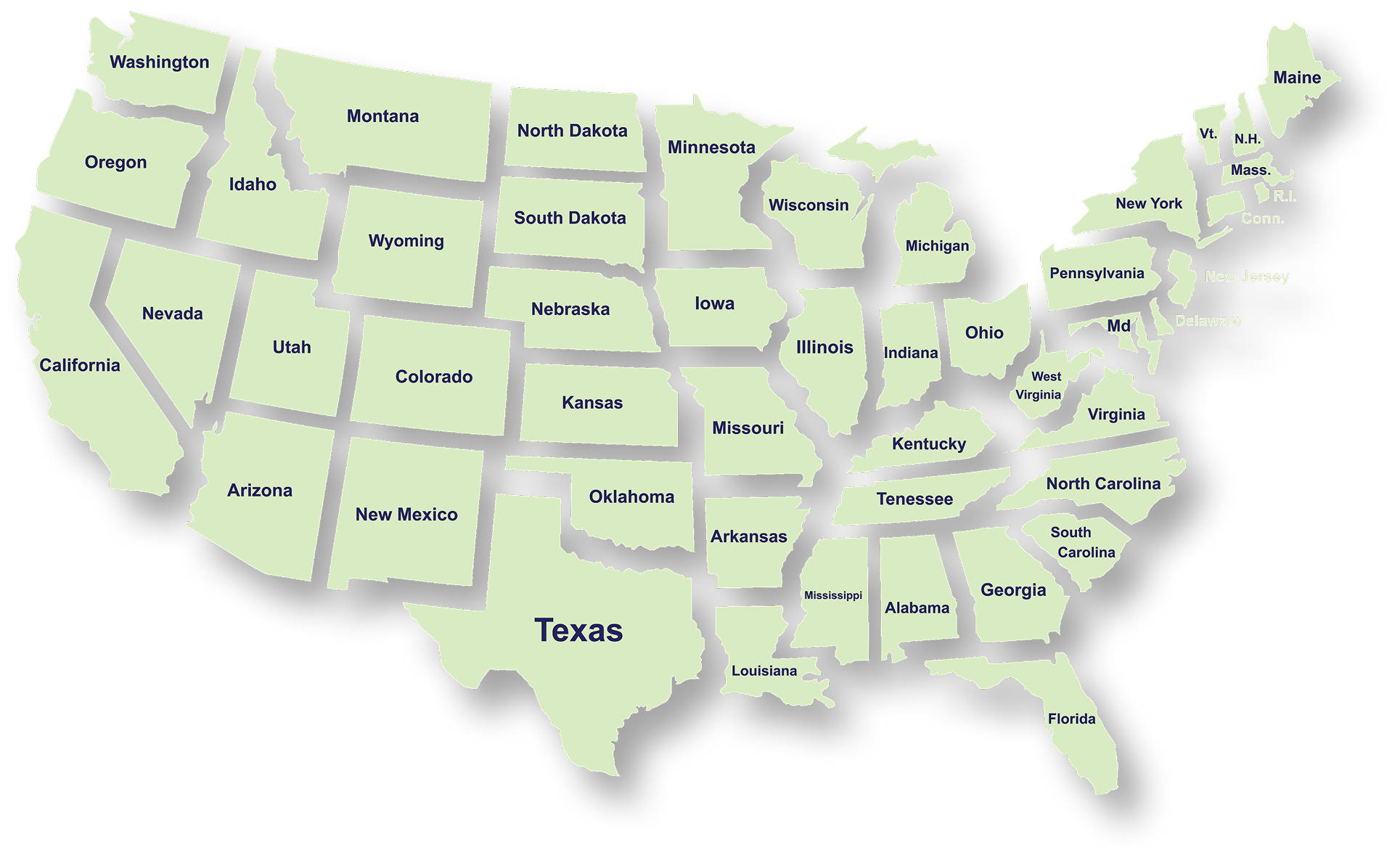
Serving Businesses & Individuals Across USA

We handle accounting, tax filing, and planning with defined timelines and accurate reporting for businesses and individuals across all states.

Frequently Asked Questions

What services does NR CPAs & Business Advisors provide?
What is tax planning and why is it important for businesses?
How can a Virtual CFO help my business?
When should a business consider IRS tax resolution services?
What financial statements does a business typically need?
How can startup advisory services help new businesses?
What is strategic business planning?
What is a Virtual Family Office and who can benefit from it?