Learning Center for Tax and Financial Insights

Stay updated with clear, actionable articles on tax rules, deadlines, deductions, and financial decisions that impact individuals and businesses.

No items found.

2023 Tax Deduction Finder & Problem Solver

To get ready for your tax appointment, we use tax organizers to help us identify missing tax deductions and get you more organized before your appointment. We update the tax organizer annually to make sure you are compliant with the latest tax law changes.The 2023 individual tax organizer is provided in three configurations to assist you in collecting relevant tax information needed to properly prepare your tax return. Access any of the three versions by double-clicking on the underlined title links below. The organizers can be downloaded to your computer where you can fill and save the information until you have completed collecting all of your information. After you have completed it, please forward the organizer (printed or digitally) to our office for immediate service. If you have an office appointment, you can print it out and bring it with you to the meeting. A word of caution: you can fill the organizers online and print them out. However, if you close the file, your data will not be saved unless the form is saved to your computer.Once the completed organizer has been received, you will be contacted by phone, fax or e-mail with any questions, comments, or suggestions. If you e-mail our office advising us that you have sent your tax materials, we will notify you of their receipt.2023 Basic Organizer – This organizer is suitable for clients that are not itemizing their deductions and DO NOT have rental property or self-employment expenses.2023 Basic Organizer plus Itemized Deductions – This organizer is suitable for clients that are itemizing their deductions and DO NOT have rental property or self-employment expenses.2023 Full Organizer – This organizer includes the information included in the basic organizer, plus entries for itemized deductions, rental properties and self-employment expenses.2023 Business Organizer – Use this organizer for partnerships and incorporated business entities.2022 Prior Year Individual Organizer - If you are filing your 2022 return late, please use this organizer.

Explore More
No items found.

Video Tips: Protect Your Documents In Preparation for Disasters

Taxpayers can begin getting ready for a disaster with a preparedness plan that includes securing and duplicating essential documents, creating lists of property, and knowing where to find information if needed. In the aftermath of a disaster, having the updated documents and other information readily available can help victims apply for the relief available from the IRS and other agencies. Disaster assistance and emergency relief may help taxpayers and businesses recover financially from the impact of a disaster, especially when the federal government declares their location to be a major disaster area.

Explore More
No items found.

Ticket Sale Profit Tax Liabilities: Lessons From Taylor Swift

In the whirlwind world of entertainment, scoring tickets to hot events like Taylor Swift's highly anticipated Eras Tour can feel like striking gold. With demand soaring, some savvy individuals have seized the opportunity to turn concerts like Taylor’s into profitable ventures. However, what many may not realize is that selling tickets at a profit comes with its own set of tax implications.The Profitable Pursuit: Ticket Reselling as a BusinessWhen you delve into the business of selling tickets or merchandise, whether it's for Taylor Swift's latest tour or other high-demand events like college football bowl games or the Super Bowl, you're essentially entering the realm of entrepreneurship. In the eyes of the IRS, the profits earned from these transactions constitute income and should be reported on your tax return.If this is an established business for you, reporting your income and expenses becomes a matter of filling out Schedule C (Profit or Loss from Business) on your tax return. This includes not only the revenue from ticket sales but also any associated costs or expenses incurred in the process.A Lesson from Messi: Merchandise ResellingIt's not just tickets that can lead to taxable gains. Consider the example of sports memorabilia, particularly in the context of celebrated athletes like Lionel Messi. If you've acquired merchandise with the intent of reselling it for a profit, the IRS views this as a business activity. Accordingly, you'll need to report your income and expenses related to the sale on Schedule C.Iconic sports merchandise, like an El Clásico jersey worn by Messi, commands huge prices among collectors who regularly peruse the resale market. An auction saw Messi's historic jersey change hands for an astounding $450,000. This sale illustrates the wild demand for one-of-a-kind sports memorabilia linked to legendary athletes.

Explore More
No items found.

Accountable Plans: A Win-Win for Employers and Employees

Article Highlights:Accountable Plan Overcoming Tax Cuts and Jobs Act LimitsBenefits From an Employers Point of ViewBenefits From an Employees Point of View IRS CriteriaBasic Plan WordingPlan CustomizationAs an employer or an employee one intricacy of tax laws and regulations that often goes unnoticed is the concept of Accountable Plans. These plans, when implemented correctly, can provide significant tax benefits for both employers and employees.Under the Tax Cuts and Jobs Act (TCJA) signed into law by President Trump in 2017, the rules for deducting employee business expenses changed significantly. Prior to the TCJA, employees could potentially deduct unreimbursed business expenses as miscellaneous itemized deductions on their personal income tax returns.However, for tax years 2018 through 2025, the TCJA suspended the ability for employees to deduct unreimbursed business expenses as an itemized deduction. This includes expenses such as local business transportation and away-from-home travel expenses.An accountable plan provides a way around the TCJA deduction restrictions. Accountable plans are reimbursement or allowance arrangements that meet the criteria set by the IRS. These plans allow employers to reimburse employees for business-related expenses without the reimbursement being considered taxable income. There are benefits for both employer and employee:From an Employer's Perspective - The benefits for employers are twofold. First, reimbursements under an Accountable Plan are not subject to payroll taxes. This means employers can save on their share of FICA (Social Security and Medicare) taxes, which can add up to substantial savings. Second, these reimbursements are deductible as business expenses, further reducing the company's taxable income.From an Employee's Perspective - For employees, reimbursements under an Accountable Plan are not considered taxable income. This means they do not have to report these reimbursements on their income tax returns. There’s also no FICA tax withholding for the reimbursement received by the employee. As a result there’s significant tax savings for employees, especially those who frequently incur business-related expenses.However, to qualify for these benefits, the plan must meet three criteria set by the IRS:Business Connection: The expenses must be incurred while performing services as an employee.Substantiation: Employees must provide their employers with documentary evidence of these expenses within a reasonable time.Returning Excess Amounts: If an allowance exceeds the substantiated expenses, the excess must be returned within a reasonable time.Accountable Plans can be a win-win for both employers and employees. They provide a way for employers to reimburse employees for business-related expenses without increasing their tax liability. At the same time, employees can receive these reimbursements tax-free, leading to significant tax savings.

Explore More
No items found.

Navigating the Impact of Rising Interest Rates on Personal Finances

As the current 30-year mortgage rate hovers at 8%, and the 10-year treasury approaches 5%, it's crucial to understand the implications of rising interest rates on personal finances. Depending on your life stage and financial situation, these changes can bring both benefits and challenges. By incorporating effective tax planning strategies, you can mitigate the impact of increased expenses and retain more of your hard-earned money.1. Making Sense of Fed Rate IncreasesWith the Federal Reserve's decision to increase interest rates, the effects on individual finances vary significantly. Big spenders may feel the squeeze as borrowing costs rise, while savers and those with prudent financial habits stand to benefit.2. Credit Card Rates: A Closer LookFor many, credit cards are an integral part of managing day-to-day expenses. With rising interest rates, it's natural to wonder if credit card rates will follow suit. In most cases, credit card interest rates are variable, meaning they're influenced by broader economic conditions. As the Fed raises rates, credit card interest may inch upward, potentially impacting monthly balances for those who carry them.To mitigate this, consider paying down high-interest credit card debt or exploring lower-interest alternatives. Additionally, shopping around for cards with favorable terms can help you stay ahead of potential rate hikes.

Explore More
No items found.

Obscure and Overlooked Tax Deductions, Credits, and Benefits

Article Highlights:Low Income Year· Limitation on Tax Itemized Deduction· State Income Tax RefundSocial Security Taxes DeductionNOL CarryoverMilitary Reservist Travel ExpensesChild’s Private School ExpensesStudent-Loan InterestHome Energy Improvement CreditHome Solar CreditClean Vehicle CreditGambling LossesLive in a State Without a State Income Tax?Spousal IRAReinvested DividendsWorthless StockLifetime Learning CreditCharity Volunteer Tax BreaksSelf-Employed Travel ExpensesSelf-Employed Health Insurance DeductionSummer CampMedical DependentIncome in Respect of a Decedent (IRD)As tax time approaches, here are some tax issues that taxpayers frequently overlook, ranging from obscure deductions to overlooked tax credits and benefits. Of course, not everything can be included since the tax law has grown significantly in complexity, and it would take a thick book to list everything. But besides what you are probably accustomed to, here are over 20 issues you may not be aware of and that can save you tax dollars. Low Income Year– If you are having a low-income year, there are tax strategies you can take advantage of, including the following:Capital Gains Rates – Capital gain tax rates are zero for taxpayers with low income, so if you sell stock or other property at a profit in an otherwise low-income year you might be able to benefit from the zero tax rate.Roth Conversions – A low-income year may present an opportunity to convert some of your traditional IRA funds to a Roth IRA for a low amount of tax.Limitation on Tax Itemized Deduction– The tax code limits the itemized deductions for state and local taxes to $10,000. Several states have developed work-a-rounds to circumvent that limitation. If you reside in a state that has developed a work-a-round and the total you paid of your state income tax (or state sales tax) and property taxes, substantially exceeds the $10,000 limit, you may wish to consider participating in your state’s program.State Income Tax Refund –For those who took the standard deduction on their 2022 federal return, your state income tax refund received in 2023 is not taxable income. If you itemized your deductions, then the state tax was a federal tax deduction, and to the extent you received a tax benefit from the deduction, the state tax refund you received in 2023 is federally taxable. However, in many cases, the entire refund will be tax-free if you were subject to the alternative minimum tax (AMT) for 2022, the deductible amount was reduced by the $10,000 limit on tax deductions, or part of the deduction pushed your deductions over the standard deduction threshold. Although the Form 1099-G shows the entire amount of the refund, not all of it may be taxable, so you do not want to report more than necessary.If you owed state income tax on your 2022 return and paid that tax during 2023, then that tax payment can be added to your state tax deduction for 2023, subject to the $10,000 limit for state and local taxes.Social Security Taxes Deduction – If you are self-employed, you can deduct half of the self-employment tax (Social Security and Medicare tax) that you are liable for on your 2023 net profits. You don’t have to itemize on a Schedule A to take the deduction because it is an adjustment to income.NOL Carryforward – There is no longer an NOL (net operating loss) carryback (except for farmers), so don’t overlook a carryforward from a prior year which can be used indefinitely until used up. However, for post-2020 tax years to which an NOL is carried, the amount of taxable income for that year that can be offset by NOLs arising in years after 2017 is limited to the lesser of:The aggregate of the NOL carryovers to that year, plus the NOL carrybacks to that year, or80% of the taxable income computed without regard to the NOL deduction for the year.The 80% limitation does not apply to losses that arose in years before 2018.Military Reservist Travel Expenses – Armed forces reservists who travel more than 100 miles away from home and stay overnight in connection with service as a member of a reserve component can deduct their travel expenses as an adjustment to gross income (they don’t have to itemize deductions). Unreimbursed expenses for the reservist’s transportation, meals (subject to the 50% limit), and lodging qualify for the above-the-line deduction, but the deduction is limited to the amount that the federal government pays its employees for travel expenses – i.e., the general federal government per diem rate for lodging, meals, and incidental expenses applicable to the locale as well as the standard mileage rate (65.5 cents per mile for 2023) for car expenses plus parking, ferry fees, and tolls.Child’s Private School Expenses – If your child is attending a private school, up to $10,000 per year of Sec. 529 college savings plan funds can be used to pay tuition for kindergarten through grade 12. However, tapping your college savings plan for these expenses may be detrimental to your overall long-term savings plan to pay for college tuition.Student-Loan Interest– If parents pay back a non-dependent child’s student loans, the IRS treats the transactions as if the money were a gift to the child and the child made the payment. Thus, the child is deemed as having paid any interest included in the payment and can deduct it as student-loan interest, which is deductible without having to itemize deductions, up to the annual limit of $2,500. However, the deduction may be phased out depending on the amount of the taxpayer’s modified adjusted gross income.Home Energy Improvement Credit - This tax benefit goes all the way back to 2006, providing a tax credit for making energy-saving improvementsto a taxpayer’s home. This tax credit was supposed to expire after 2021, but has been extended and enhanced by 2022 legislation.Prior to 2023, the credit had a lifetime cap of $500, which many taxpayers had taken advantage of at some time in the previous 16 years, while others could not remember if they had used the entire lifetime credit during those years. As a result, with a lifetime tax benefit of only $500, and a small credit rate of only 10%, the credit had become less of a motivator for taxpayers to make energy saving improvements to their homes and was frequently disregarded.The enhancements to this credit create a meaningful incentive for taxpayers to make energy-saving improvements to their homes. The credit now has an annual limit of $1,200 and an increased credit rate of 30%. Home Solar Credit - The Inflation Reduction Act gave new life to the federal tax credit for the purchase and installation costs of residential solar-power systems and battery systems. The credit will now not begin to phase out until 2033 and will continue to be 30% until then.The Inflation Reduction Act of 2022 amended the tax code by adding and defining the term “qualified battery storage technology expenditure.” This change clarifies that for expenditures made after December 31, 2022, battery storage technology which is installed in connection with a dwelling unit in the United States that is used as a residence by the taxpayer, and has a capacity of not less than 3 kilowatt hours, will now qualify for the credit.Home residents who already have a solar installation can add a storage battery and/or expand their existing capacity and qualify for the additional solar credit.Clean Vehicle Credit – The qualifications for the electric vehicle credit have gotten more restrictive, but now do include both new and used vehicles.New Clean Vehicles – To determine which new vehicles qualify and the amount of the credit, consult with the U.S. Department of Energy website. To be eligible for the credita vehicle’s manufacturer’s suggested retail price (MSRP) must be less than $80,000 for vans, pickups. and SUVs, and $55,000 for others. Another qualification requirement is that the buyer’s modified adjusted gross income cannot exceed $300,000 for married taxpayers filing jointly and surviving spouses. For those filing with the head of household status the limit is $225,000, and for all others it is $150,000.Pre-Owned Clean Vehicles - To determine which pre-owned vehicles qualify consult with the IRS index of qualified manufacturers and previously owned clean vehicles. The credit is the lesser of $4,000 or 30% of the vehicle's sale price, and the vehicle must be purchased from a dealer for a price not exceeding $25,000.For this credit the buyer’s modified adjusted gross income cannot exceed $150,000 for married taxpayers filing jointly and surviving spouses. For those filing head of household, the limit is $112,500 and for all others it is $75,000.Dealer Report – For both credits, the dealer selling the vehicle is required to provide the buyer with a report, a copy of which goes to the IRS, that includes the amount of the available credit, the vehicle identification number, and other details.

Explore More
No results found.
Thank you! Your submission has been received!
Oops! Something went wrong while submitting the form.

Want tax & accounting tips & insights?Sign up for our newsletter.

Thank you! Your submission has been received!
Oops! Something went wrong while submitting the form.

Why Work With Us?

We combine deep tax expertise, financial strategy, and practical business insight to help you manage complexity, stay compliant, and make confident financial decisions.
A dollar sign, representing financial advice or discussion at NR CPAs & Business Advisors.

Experienced CPA and Enrolled Agent Leadership

Guidance led by licensed professionals with deep expertise in tax strategy, compliance, and complex financial matters.
White bar chart with an upward arrow on green circular background representing growth or progress at NR CPAs &. Business Advisors

Support for Growing Businesses and Startups

We understand the financial challenges of growth stage businesses and provide structured guidance to support expansion.
A white hand holding a dollar symbol and ascending bar chart on a green circular background representing financial growth or investment at NR CPAs & Business Advisors..

Strategic Financial Advisory

Our team helps you evaluate financial decisions with greater clarity, supported by practical insights and long term planning.

Fractional CFO Support

Access experienced financial leadership without the commitment and cost of hiring a full time Chief Financial Officer.

Proactive Tax Planning Approach

We focus on identifying tax opportunities throughout the year rather than reacting only during filing season.

Clear and Reliable Financial Reporting

Accurate financial statements and reporting that help you better understand performance and make informed decisions.
White IRS building icon with pillars and a dollar sign above on a green circular background.

Professional IRS Representation

Experienced support in resolving IRS notices, disputes, and compliance matters while protecting your financial interests.

Personalized Client Focus

Every client receives thoughtful attention and tailored financial solutions based on their specific needs and business goals.
Financial matters often involve important decisions. Working with experienced advisors can help you approach them with greater clarity and confidence in your choices.

Need Help With Your Tax or Financial Decisions?

Discuss your situation with our advisors to get clear guidance on tax planning, IRS matters, and the financial decisions ahead.
Business consulting at NR CPAs & Business Advisors.

Request Your Consultation

Fill out the form to discuss your tax concerns, financial questions, or advisory needs with our team. We will review your details and respond shortly.

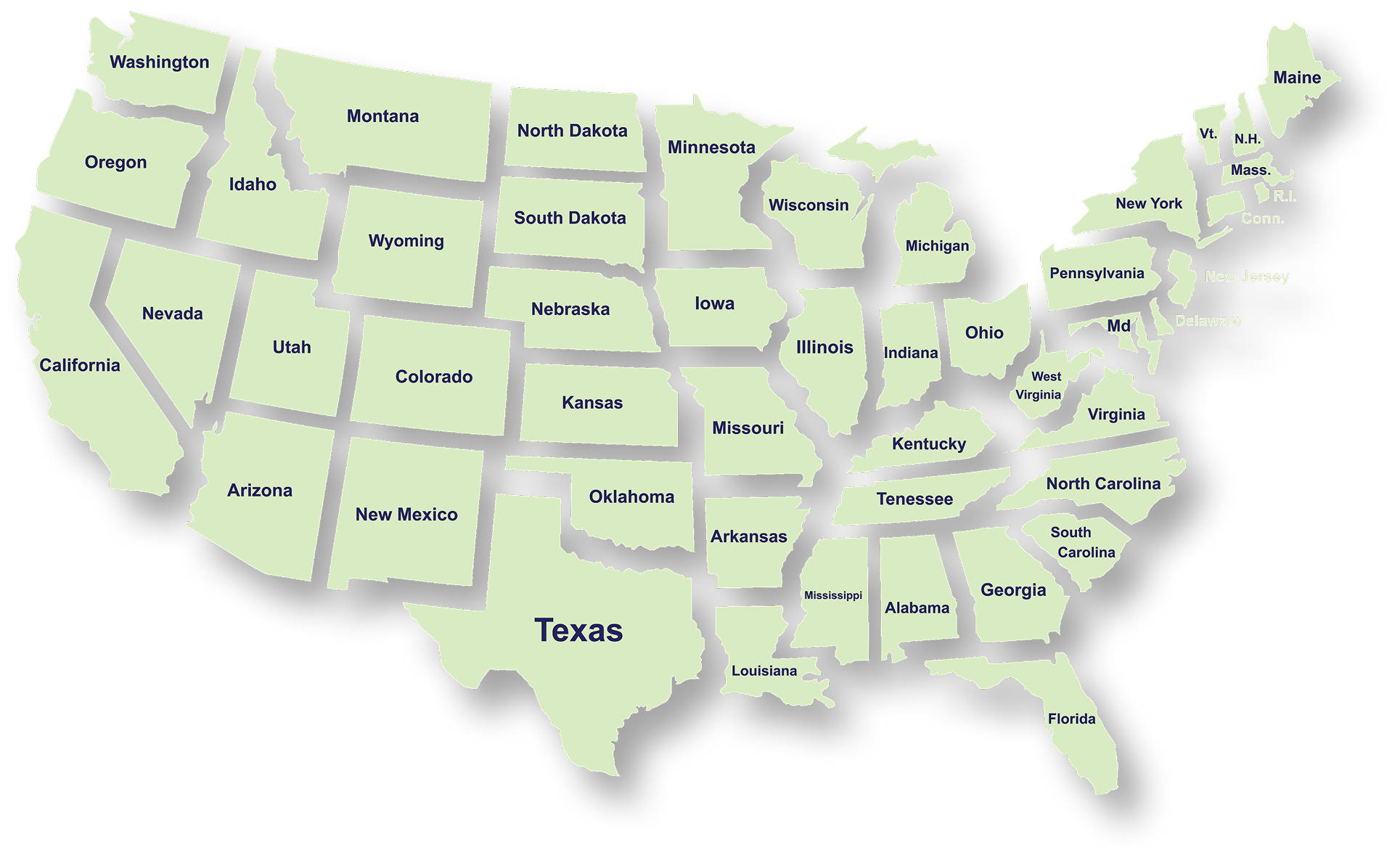
Serving Businesses & Individuals Across USA

We handle accounting, tax filing, and planning with defined timelines and accurate reporting for businesses and individuals across all states.

Frequently Asked Questions

What services does NR CPAs & Business Advisors provide?
What is tax planning and why is it important for businesses?
How can a Virtual CFO help my business?
When should a business consider IRS tax resolution services?
What financial statements does a business typically need?
How can startup advisory services help new businesses?
What is strategic business planning?
What is a Virtual Family Office and who can benefit from it?