Learning Center for Tax and Financial Insights

Stay updated with clear, actionable articles on tax rules, deadlines, deductions, and financial decisions that impact individuals and businesses.

No items found.

Your Entrepreneur Start-Up Guide: The Best Practices to Help Motivate Success

Ask any experienced entrepreneur and they will tell you that the difference between running a business and running a successful business is massive. To truly give yourself the best chance of success, and to help achieve your overall goals in the most effective ways possible, there are a number of key best practices you'll want to keep in mind along the way.The Importance of a Well-Laid PlanBy far, the number one best practice that all successful entrepreneurs lean into has to do with developing not just a business idea, but a thorough, actionable business plan.Anybody can come up with a business idea - countless people do it on a daily basis. Let's say you have an idea for a great new product and there's nothing really like it in the marketplace right now. Great - what next?How are you going to procure the materials needed to bring that product to life? What design challenges are you going to need to overcome? How big is your market, who are your current competitors, and what does your ideal potential customer look like? These are all the types of questions that you need to answer before you even think about saying that you "run a business."In five years, if your goal is to open a brick-and-mortar retail location, how do you connect where you want to be with where you currently are? How many employees will you need to make that happen? Where will your initial capital investment come from? Forget five years from now - what does the next fiscal quarter look like?An actionable business plan breaks the entire process down into a series of smaller, more manageable steps and helps you accomplish your goals more organically.Listen to Your CustomersAnother key thing that early-stage entrepreneurs need to understand in particular has to do with the idea that you should always listen to your customers and your marketplace whenever possible.If you're trying to bring a great new product or service into the world, at a certain point the genesis of that idea is out of your hands. It could be an objectively great product but if the market isn't there, it isn't going to be a success. But if the market is telling you in unison that "this would be better if you changed X, Y, or Z elements" or that they would buy it if "it had A, B, or C features," it is absolutely in your best interest to at least take that all into consideration.Even though you're an entrepreneur, you are not the ultimate authority on what your business does and how it does it. Your customers have opinions that they are more than willing to share. Being willing to listen to them is often what propels successful entrepreneurs ahead of the pack.

Explore More
No items found.

Nvidia Wasn't Born an AI Juggernaut, But It Certainly Did Become One

If you've been paying attention to the news recently, you're no doubt well aware that artificial intelligence is a topic of much discussion. Thanks largely due to the launch of ChatGPT and the potentially disruptive implications of what this topic can do, it's everywhere. The FTC recently announced that it's investigating whether ChatGPT itself harms consumers. Much of Hollywood is currently on strike due to, in part, concerns about the implications of AI on their jobs. The list goes on and on.But while much of the discussion has centered around companies like OpenAI, there is one name that isn't getting as much attention that likely should: Nvidia. What began life as a "capable" manufacturer of computer graphics adapters in the early 1990s has long since ballooned into a legitimate dominant force in the world of artificial intelligence. But where did Nvidia come from, and how did they get to the position they are currently in? The answers to those questions require you to keep some essential things in mind.An Ascent to Industry LeaderJust a year after Nvidia was originally founded, it formed a strategic partnership with a company called SGS-Thompson. The goal was clear: Nvidia wanted to expand its manufacturing capacity in a dramatic way. This allowed them to co-market and sell the then-revolutionary RIVA128ZX, a 3D-capable graphics processor that would change the face of computing.One year after that, Nvidia would design and release its first product of its own: the NV1. Computer gaming aficionados over a certain age will remember this time fondly. The card itself was marketed as the "Diamond Edge 3D" and it became an incredibly sought-after item. It offered both 2D and 3D graphics, along with state-of-the-art (again, for the era) quadratic textured mapping.It's also important to keep in mind that the early 1990s was arguably the golden era of fighting games with titles like "Street Fighter" and "Mortal Kombat" selling millions of copies. This is part of what led Sega to build their "Virtual Fighter" game using Nvidia's own graphics technology.This trend continued throughout the remainder of the 1990s, further cementing the company's reputation. If you remember a technology called Direct3D and Microsoft's DirectX drivers, you have Nvidia to thank for them. DirectX is still shipped with all versions of the Microsoft Windows operating system to this day.At the turn of the century, Nvidia released its first line of integrated graphics products with the launch of the nForce. When you consider the simultaneous explosion of personal computing and high-speed Internet connections, it makes sense that these concepts are intrinsically linked. It was also then that Nvidia hit over $1 billion in revenue and was added to the S&P 500.By 2002, Nvidia had shipped over 100 million products and was named the fastest-growing company in the United States.

Explore More
No items found.

Employee or Independent Contractor – A Primer for Employers and Employees

Article Highlights:Distinguishing Employee and Independent ContractorState LegislationFederal GuidelinesPartnersAdvantages of Independent Contractor StatusForm SS-8SE TaxForm 8919Penalties for Misclassifying WorkersIRS’ Voluntary Classification Settlement ProgramIt is not uncommon for employers to misclassify employees as independent contractors, either to intentionally avoid their withholding and tax responsibilities or because they are not aware of the laws regarding the issue. Misclassifying a worker can have significant ramifications for both the employer and the worker in terms of how much each pays in income, Social Security, and Medicare taxes, among others. Worker misclassification is a perennial issue for the Internal Revenue Service and state taxing authorities due to the perception that many employers are not properly classifying their workers. This article looks at several issues regarding this matter.The general distinction, of course, is that an employee is an individual who works under the direction and control of an employer, and an independent contractor is a business owner or contractor who provides services to others.Whether an individual is an employee or an independent contractor is governed by both federal law and state law. It has always been a complicated issue at both the federal and state levels, and the state and federal guidelines often differ. However, because of the significant payroll tax revenues involved, the states are generally more aggressive in classifying workers as employees.In recent years several states, including California, Massachusetts and New Jersey, have adopted the so-called ABC test, which is a broad means of determining a worker’s status as either an employee or a contractor by considering three factors. If a worker passes all three, then he or she is an independent contractor. The tests are: (A) That the worker is free from the hirer’s control and direction, in connection with the performance of the work, both under the contract for the performance of such work and in fact;(B) That the worker performs work outside the usual course of the hiring entity’s business; and(C) That the worker is customarily engaged in an independently established trade, occupation, or business of the same nature as the work performed for the hiring entity. To determine whether a worker is an independent contractor or an employee, the IRS examines the relationship between the worker and the business and considers all evidence regarding control and independence. This evidence falls into the following three categories: (1) Behavioral control covers whether the business has the right to direct or control how the work is done through instructions, training, or other means. Employees are generally given instructions on when and where to work, what tools to use, where to purchase supplies, what order to follow, and so on.(2) Financial control covers whether the business has the right to control the financial and business aspects of the worker’s job. This includes the extent to which the worker has unreimbursed business expenses; the extent of his or her investment in the facilities being used; the extent to which his or her services are made available to the relevant market; how he or she is paid; and the extent to which he or she can realize a profit or incur a loss.(3) Type of relationship includes any written contracts that describe the relationship the parties intended to create; the extent to which the worker is available to perform services for other, similar businesses; whether the business provides the worker with employee-type benefits, such as insurance, a retirement plan, vacation pay, or sick pay; the permanency of the relationship; and the extent to which the worker’s services are a key aspect of the company’s regular business. If the business has the right to not only control or direct what is to be done but also how it is to be done, then the workers are most likely employees. On the other hand, if the company can direct or control only the result of the work done, and not the means and methods of accomplishing the result, then the workers are probably independent contractors.One situation for which there is no uncertainty as to classification relates to a partner in a partnership. The IRS has long held that a bona fide member of a partnership is not an employee of the partnership, and a partner who devotes time and energy to conducting the partnership's trade or business, or who provides services to the partnership as an independent contractor, is considered self-employed and is not an employee.

Explore More
No items found.

August 2023 Individual Due Dates

August 10 - Report Tips to EmployerIf you are an employee who works for tips and received more than $20 in tips during July, you are required to report them to your employer on IRS Form 4070 no later than August 10. Your employer is required to withhold FICA taxes and income tax withholding for these tips from your regular wages. If your regular wages are insufficient to cover the FICA and tax withholding, the employer will report the amount of the uncollected withholding in box 8 of your W-2 for the year. You will be required to pay the uncollected withholding when your return for the year is filed.Weekends & Holidays:If a due date falls on a Saturday, Sunday or legal holiday, the due date is automatically extended until the next business day that is not itself a legal holiday. Disaster Area Extensions:Please note that when a geographical area is designated as a disaster area, due dates will be extended. For more information whether an area has been designated a disaster area and the filing extension dates visit the following websites:

Explore More
No items found.

August 2023 Business Due Dates

August 10 - Social Security, Medicare, and Withheld Income TaxFile Form 941 for the second quarter of 2023. This due date applies only if you deposited the tax for the quarter in full and on time.August 15 - Social Security, Medicare, and Withheld Income TaxIf the monthly deposit rule applies, deposit the tax for payments in July.August 15 - Nonpayroll WithholdingIf the monthly deposit rule applies, deposit the tax for payments in July.Weekends & Holidays:If a due date falls on a Saturday, Sunday or legal holiday, the due date is automatically extended until the next business day that is not itself a legal holiday. Disaster Area Extensions:Please note that when a geographical area is designated as a disaster area, due dates will be extended. For more information whether an area has been designated a disaster area and the filing extension dates visit the following websites:

Explore More
No items found.

What You Should Know About the Chart of Accounts in QuickBooks Online

It works in the background as a critical element of QuickBooks Online. Understanding the role of the Chart of AccountsThere are still many millions of small businesses that won’t use accounting software. Expenses may be an issue for some of them, as well as hesitation to change the way they manage their money. The number one reason for this reticence, though, maybe the mistaken notion that you have to have a good understanding of the accounting process in order to use an online solution.If you’ve already been using QuickBooks Online, you know this isn’t true. The site was designed for businesspeople, not accountants. It does all of the official bookkeeping in the background while you work with familiar language and processes. Still, there are a few elements that may be foreign to you.The Chart of Accounts is one of these. You don’t have to do anything with it—in fact, we suggest that you don’t—but you’ll encounter it when you work with some transactions and records and reports.Your Accounting BackboneThe Chart of Accounts is simply a list of financial categories that is used to track your company’s financial data. QuickBooks Online creates one for you that’s based on the business type and industry you chose when you were setting up your company data file. You can access it through an icon on your home page or by clicking the gear icon in the upper right of the page. A section of QuickBooks Online’s Chart of Accounts Some people call the Chart of Accounts the “backbone” of your accounting system. We think it’s more like the nervous system. When you feel a pain in your big toe, for example, you can identify the nerve that’s involved. And when an account is assigned to a record or transaction, you can trace it to a specific element of your overall financial picture. So when you create an invoice, for example, you know you can find it in your accounts receivable (A/R) register. Inventory items are actually assigned to multiple accounts by default.QuickBooks Online knows where to route data that you’ve entered. Please don’t change these accounts without checking with us first.What’s In the Chart of Accounts?As you can see in the above image, your chart of accounts contains columns for Name, Account Type, and Detail Type. Accounts feed into one of two QuickBooks Online financial reports, either Balance Sheet or Profit & Loss. These are reports that the site can generate automatically, but we recommend you let us create and interpret them for you. They’re not as easy to understand as an accounts payable aging report, for example.QuickBooks Online automatically determines which Account Type should be assigned to an account. Balance Sheet accounts have opening balances. They include:

Explore More
No results found.
Thank you! Your submission has been received!
Oops! Something went wrong while submitting the form.

Want tax & accounting tips & insights?Sign up for our newsletter.

Thank you! Your submission has been received!
Oops! Something went wrong while submitting the form.

Why Work With Us?

We combine deep tax expertise, financial strategy, and practical business insight to help you manage complexity, stay compliant, and make confident financial decisions.
A dollar sign, representing financial advice or discussion at NR CPAs & Business Advisors.

Experienced CPA and Enrolled Agent Leadership

Guidance led by licensed professionals with deep expertise in tax strategy, compliance, and complex financial matters.
White bar chart with an upward arrow on green circular background representing growth or progress at NR CPAs &. Business Advisors

Support for Growing Businesses and Startups

We understand the financial challenges of growth stage businesses and provide structured guidance to support expansion.
A white hand holding a dollar symbol and ascending bar chart on a green circular background representing financial growth or investment at NR CPAs & Business Advisors..

Strategic Financial Advisory

Our team helps you evaluate financial decisions with greater clarity, supported by practical insights and long term planning.

Fractional CFO Support

Access experienced financial leadership without the commitment and cost of hiring a full time Chief Financial Officer.

Proactive Tax Planning Approach

We focus on identifying tax opportunities throughout the year rather than reacting only during filing season.

Clear and Reliable Financial Reporting

Accurate financial statements and reporting that help you better understand performance and make informed decisions.
White IRS building icon with pillars and a dollar sign above on a green circular background.

Professional IRS Representation

Experienced support in resolving IRS notices, disputes, and compliance matters while protecting your financial interests.

Personalized Client Focus

Every client receives thoughtful attention and tailored financial solutions based on their specific needs and business goals.
Financial matters often involve important decisions. Working with experienced advisors can help you approach them with greater clarity and confidence in your choices.

Need Help With Your Tax or Financial Decisions?

Discuss your situation with our advisors to get clear guidance on tax planning, IRS matters, and the financial decisions ahead.
Business consulting at NR CPAs & Business Advisors.

Request Your Consultation

Fill out the form to discuss your tax concerns, financial questions, or advisory needs with our team. We will review your details and respond shortly.

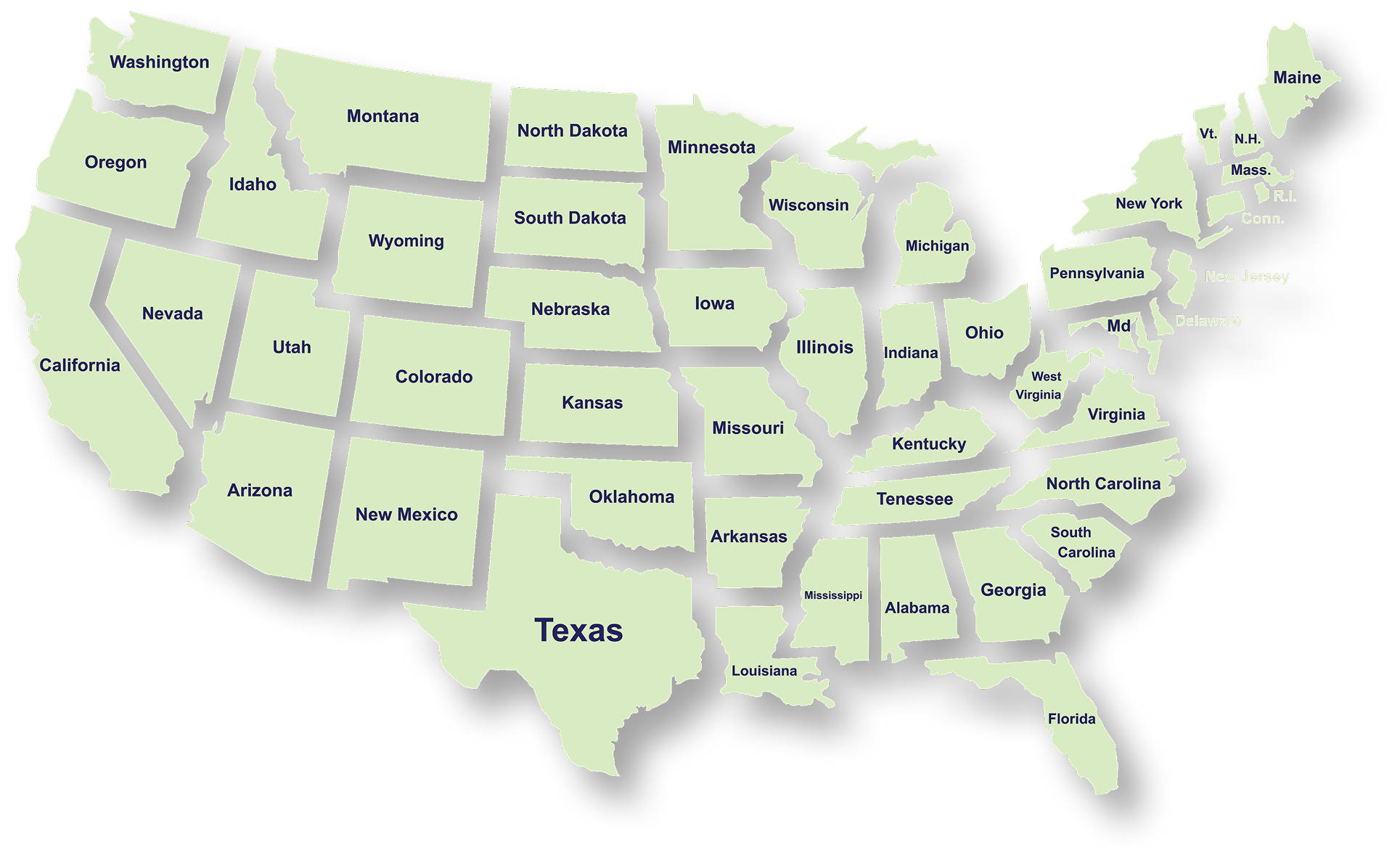
Serving Businesses & Individuals Across USA

We handle accounting, tax filing, and planning with defined timelines and accurate reporting for businesses and individuals across all states.

Frequently Asked Questions

What services does NR CPAs & Business Advisors provide?
What is tax planning and why is it important for businesses?
How can a Virtual CFO help my business?
When should a business consider IRS tax resolution services?
What financial statements does a business typically need?
How can startup advisory services help new businesses?
What is strategic business planning?
What is a Virtual Family Office and who can benefit from it?