Learning Center for Tax and Financial Insights

Stay updated with clear, actionable articles on tax rules, deadlines, deductions, and financial decisions that impact individuals and businesses.

No items found.

Can a Self-Employed Taxpayer Mix Business and Pleasure During Foreign Travel and Still Get a Tax Deduction?

Article Highlights:100% BusinessPrimarily VacationPrimarily BusinessSpecial CircumstancesForeign Conventions, Seminars, and MeetingsCruise ShipsSpousal Travel ExpensesNote: the business expenses discussed in this article – both foreign and domestic – are not deductible by employees during years 2018 through 2025. However, they are available to self-employed individuals.When a self-employed individual makes a business trip outside of the U.S. and the trip is 100% devoted to business, all of the ordinary and necessary business travel expenses are deductible, just as if the business trip were within the U.S.On the other hand, if the trip also incorporates a vacation, then special rules determine the deductibility of the travel expenses to and from the destination; when the other business travel expenses, such as lodging, meals, local travel, and incidentals can be deducted; and when they must be allocated. So, whether you are just visiting Canada, Mexico, a Caribbean island or traveling to Europe or even more exotic locales, here are some travel tax pointers: Primarily Vacation – If your travel is primarily for vacation and you spend only a few hours attending professional seminars or meeting with foreign business colleagues, then none of the expenses you incurred in traveling to and from the general business location are deductible. Other travel expenses must be allocated on a day-by-day basis, and only the business portion is deductible.Primarily Business – If your trip is primarily for business and meets one of the conditions listed below, then the expenses incurred in traveling to and from the foreign business destination are deductible in full (same as for travel within the U.S.).(1) The travel outside the U.S. is for a period of one week or less (seven consecutive days, excluding the departure day but including the day of return). In addition, all other ordinary and necessary travel expenses are fully deductible.(2) Less than 25% of your total time outside the U.S. is spent on non-business activities. In addition, all other ordinary and necessary travel expenses are fully deductible. (If 25% or more of the total time is spent on non-business activities, then a day-by-day allocation of all travel expenses between personal and business activities is necessary, and only the business portion is deductible.)(3 ) You can establish that a personal vacation or holiday was not a major consideration. In addition, all other ordinary and necessary travel expenses are fully deductible.(4) You did not have “substantial control” over arranging the trip. In addition, all other ordinary and necessary travel expenses are fully deductible.Since a self-employed person generally has substantial control over arranging business trips, self-employed individuals usually won’t be able to meet this condition. When determining what constitutes business and non-business time, business days include days en route to or from the business destination by a reasonably direct route without interruption; days when actual business is transacted; weekends or standby days that fall between business days; and days when business was to have been transacted but was canceled due to unforeseen circumstances.Nonbusiness days are days you spent on nonbusiness activities as well as weekends, holidays, and other standby days that fall at the end of the business activity, if you remained at the business destination for personal reasons.Foreign Conventions, Seminars, or Meetings – No deduction for your travel expenses to attend a convention, seminar, or similar meeting held outside of the North American area is allowed unless you establish that: 1. The meeting is directly related to the active conduct of your trade or business and2. It is “as reasonable” for the meeting to be held outside of North America as it is withinthe North American area.

Explore More
No items found.

New Employee Onboarding Best Practices: Factors to Consider for Success

According to one recent study, replacing an employee who has left your business can cost between 50% to 60% of that person's salary. This is why it's virtually always more expensive to hire a new person than it is to simply retain one of your existing workers. If you're replacing someone who makes about $100,000 per year, it could cost between $50,000 and $60,000 just to get someone new in the door - and that's before they've had a chance to start working.If you need a single statistic that underlines the importance of employee onboarding, let it be that one.Salaries are a huge part of the costs incurred when running a business, yes - but they're also not the only expense of a high turnover. Not only does it delay the ability of your team to drive revenue, but it also significantly hurts employee morale in the long run.Thankfully, you can take several steps during the employee onboarding process today that will help pave the way for success tomorrow.The Age of Pre-Boarding is Upon UsTruly, one of the most important things to understand about all of this is that it's never too early to start preparing someone for their first day on the job. In recent years, many businesses have begun to engage in this prior to the start of the official "onboarding" process.This is known as pre-boarding, and it can involve a number of things such as:Sending a new hire a welcome kit, which can include merchandise like t-shirts with company branding, a laptop or other assets that they'll need once they get started, and more. If nothing else, you'll know that they A) have access to certain tools, and B) you'll have already begun making them feel like they belong.Sending "what to expect" messages. This is a great way to get someone's expectations in order as early on in the process as possible. Let them know who they'll be interacting with on their first day, for example, and what items they should bring with them.Conduct team introductions. For someone to be at their best, they need to feel like they're contributing to the larger whole. To get to that point, you'll want to introduce new hires to team members even before they begin onboarding in earnest.

Explore More
No items found.

Video Tips: Selling a Home? Consider These Potential Tax Benefits

Many people move during the summer. Taxpayers who are selling their home may qualify to exclude from their income all or part of any gain from the sale when filing their tax return.

Explore More
No items found.

Why It's Never Too Early to Start a Savings Account for Your Children

Parents - especially new ones - are always looking for new ways to improve the lives of their children. Surprisingly, one of the most effective opportunities that people also often overlook has to do with starting a savings account for that child as early as they're capable of doing so.On the one hand, no - it's probably not a good idea to give a young child in particular unrestricted access to a bank account filled with money. But that's not the topic under discussion. By starting a savings account for your kids early on in their lives, you put things like compounding interest to work for them (and you). Not only that, but you begin to lay the building blocks of a larger financial education that will serve them well for years to come.The Impact of Compounding InterestWhile terms like "compounding interest" may sound complicated, the idea at the heart of them is anything but. It simply means that any investment you make will generate interest, which means that the investment grows over the next period of time.For the sake of example, let's say you open a high-yield savings account for your child when they turn 10 years old. You contribute $60 per month like clockwork or about $15 per week. At an interest rate of 1.5% compounded daily, that account will have $6,205 in it by the time the child turns 18 - all thanks to the magic of compounding interest.Note that if you open that same account up at birth and make those same contributions, that number climbs to $15,085.Things get even more impressive if you open a dedicated investment account, which typically has an annual return of about 7%. Here, if you'd made that same $60 per month contribution, the child would have $7,829 by the time they turn 18. Open the same account when they're born and continue to make the same contribution and that number climbs to $26,337. If you fund it even more the growth is substantial. All this is because of the major benefits that compounding interest brings with it. When your interest earns its own interest, soon the idea of generating a substantial return on your investment becomes something of a self-fulfilling prophecy. At that point, the momentum of the account should motivate you to keep contributing. It will also represent an excellent educational opportunity for your family to show your child just what can happen when they put the money they're earning to work for them.

Explore More
No items found.

Relief For Some 2023 IRA RMDs

Article Highlights:IRA Owners Turning 72 in 2023.Required Minimum Distribution Not Required Until April 1, 2025.60-Day Rollover PeriodRollover Period Extended Until September 30, 2023.On July 14, 2023, the IRS issued Notice 2023-54 announcing that traditional IRA owners who will attain age 72 in 2023 (that is, individuals born in 1951) will have to take their first required minimum distribution (RMD) by April 1, 2025, rather than April 1, 2024.This delay in the required beginning date means that these IRA owners (who, prior to enactment in late December 2022 of the SECURE 2.0 Act, would have been required to take minimum distributions from their IRAs for 2023) will have no RMD due from their IRAs for 2023. Thus, the first distribution for these IRA owners that will be treated as an RMD will be a distribution made for 2024, not 2023.The significance of this for an individual having their 72nd birthday in 2023 is that IRA distributions in 2023 mischaracterized as 2023 RMDs will be eligible to be rolled back into their IRA account. Thus, the portion of the distribution that is redeposited will avoid tax in 2023. Tax law doesn’t allow RMDs to be rolled over, so this is why the IRS is identifying these distributions as mischaracterized RMDs and eligible for rollover.

Explore More
No items found.

Is Hobby Income Taxable? Are Hobby Losses Deductible?

Article Highlights:Hobby IncomeForm 1099-KHobby ExpensesHobby LossesHobby Tax ReportingNot-for-Profit RulesDetermining FactorsTrade or Business PresumptionSelf-Employment TaxAre you involved in a hobby that you not only enjoy but that produces income? If so, you may have wondered whether the income is taxable, how the tax law treats hobby-related expenses, and if a net loss is tax deductible. Also to consider is if there’s a net profit, has your hobby now become a business?Most individuals don’t get involved in a hobby intending to make money from it. But if they do, the tax law says that the hobby income must be reported on their tax return. The IRS has depended on the honesty of hobbyists to include the income on their income tax returns. However, it was relatively easy for individuals to avoid including miscellaneous income from hobbies when their only sources of sales of their products were word-of-mouth sales, flea market sales and such – generally cash transactions with no paper trail.Nowadays, many individuals sell the merchandise they make as a hobby through online e-commerce sites such as Etsy, eBay, Amazon and others. Congress decided that to rein in unreported income, these sites and third-party payers such as credit and debit card issuers, PayPal, and similar companies should report to the IRS the income received by the selling individuals each year. After a delay implementation of the new rules, IRS has said that starting with tax year 2023, Form 1099-K is to be used to report sales of $600 or more, regardless of the number of transactions. Hobbyists will need to be sure the income shown on the 1099-K is included on Schedule 1 of Form 1040, or otherwise explain why the income isn’t taxable.Expenses related to a hobby are considered personal expenses which aren’t tax deductible. (Prior to changes included in the Tax Cuts and Jobs Act of 2017, hobbyists were able to deduct expenses up to the amount of their hobby income as a miscellaneous itemized deduction on Schedule A, but this deduction isn’t allowed through 2025.) Thus, hobby income is reported on Schedule 1 of the hobbyist’s 1040 and no expenses are deductible.Some hobbyists try to get a tax deduction for their hobby expenses by treating their hobby as a trade or a business. By disguising hobbies as a trade or business, and if the hobby expenses exceed the hobby income, they think they can report a deductible business loss. But the tax code includes rules that do not permit losses for not-for-profit activities such as hobbies.So, what distinguishes a business from a hobby? The IRS considers a number of factors when making the judgment. No single factor is decisive, but all must be considered together in determining whether an activity is for profit. These factors are: (1) Is the activity carried out in a businesslike manner? Maintaining complete and accurate records for the activity is a definite plus for a taxpayer, as is a business plan that formally lays out the taxpayer’s goals and describes how the taxpayer realistically expects to meet those expectations.(2) How much time and effort does the taxpayer spend on the activity? The IRS looks favorably at substantial amounts of time spent on the activity, especially if the activity has no great recreational aspects. Full-time work in another activity is not always a detriment if a taxpayer can show that the activity is regular; time spent by a qualified person hired by the taxpayer can also count in the taxpayer’s favor.

Explore More
No results found.
Thank you! Your submission has been received!
Oops! Something went wrong while submitting the form.

Want tax & accounting tips & insights?Sign up for our newsletter.

Thank you! Your submission has been received!
Oops! Something went wrong while submitting the form.

Why Work With Us?

We combine deep tax expertise, financial strategy, and practical business insight to help you manage complexity, stay compliant, and make confident financial decisions.
A dollar sign, representing financial advice or discussion at NR CPAs & Business Advisors.

Experienced CPA and Enrolled Agent Leadership

Guidance led by licensed professionals with deep expertise in tax strategy, compliance, and complex financial matters.
White bar chart with an upward arrow on green circular background representing growth or progress at NR CPAs &. Business Advisors

Support for Growing Businesses and Startups

We understand the financial challenges of growth stage businesses and provide structured guidance to support expansion.
A white hand holding a dollar symbol and ascending bar chart on a green circular background representing financial growth or investment at NR CPAs & Business Advisors..

Strategic Financial Advisory

Our team helps you evaluate financial decisions with greater clarity, supported by practical insights and long term planning.

Fractional CFO Support

Access experienced financial leadership without the commitment and cost of hiring a full time Chief Financial Officer.

Proactive Tax Planning Approach

We focus on identifying tax opportunities throughout the year rather than reacting only during filing season.

Clear and Reliable Financial Reporting

Accurate financial statements and reporting that help you better understand performance and make informed decisions.
White IRS building icon with pillars and a dollar sign above on a green circular background.

Professional IRS Representation

Experienced support in resolving IRS notices, disputes, and compliance matters while protecting your financial interests.

Personalized Client Focus

Every client receives thoughtful attention and tailored financial solutions based on their specific needs and business goals.
Financial matters often involve important decisions. Working with experienced advisors can help you approach them with greater clarity and confidence in your choices.

Need Help With Your Tax or Financial Decisions?

Discuss your situation with our advisors to get clear guidance on tax planning, IRS matters, and the financial decisions ahead.
Business consulting at NR CPAs & Business Advisors.

Request Your Consultation

Fill out the form to discuss your tax concerns, financial questions, or advisory needs with our team. We will review your details and respond shortly.

Serving Businesses & Individuals Across USA

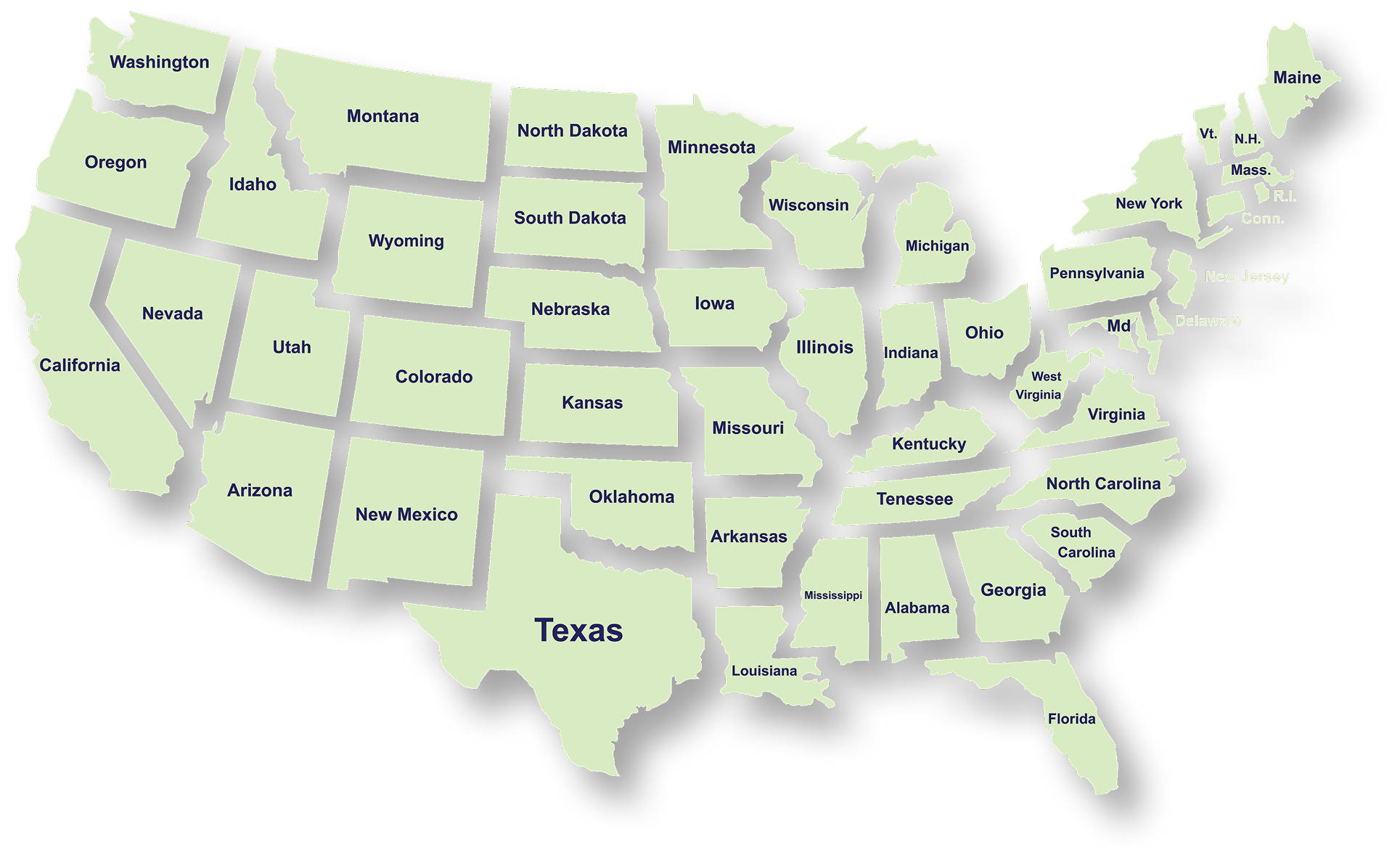
We handle accounting, tax filing, and planning with defined timelines and accurate reporting for businesses and individuals across all states.

Frequently Asked Questions

What services does NR CPAs & Business Advisors provide?
What is tax planning and why is it important for businesses?
How can a Virtual CFO help my business?
When should a business consider IRS tax resolution services?
What financial statements does a business typically need?
How can startup advisory services help new businesses?
What is strategic business planning?
What is a Virtual Family Office and who can benefit from it?