Learning Center for Tax and Financial Insights

Stay updated with clear, actionable articles on tax rules, deadlines, deductions, and financial decisions that impact individuals and businesses.

No items found.

Video Tips: Another Good Reason to Get Your Tax Refund by Direct Deposit

According to the Financial Crimes Enforcement Network (FinCEN) there is a nationwide surge in check fraud schemes targeting the U.S. Mail. FinCEN reports that there were over 680,000 suspicious activity reports (SARs) related to check fraud in 2022; almost double the 2021 number.

Explore More
No items found.

Tax Exempt Organization Filing Deadline Approaching

Article Highlights:Information FilingDue DatesCalendar Year NonprofitsFiscal Year NonprofitsWhich Form To FileExtension of Time to FileLate Filing PenaltyFailure To File For 3 YearsState Filing RequirementsMost organizations exempt from income tax under section 501(a) must file an annual information return or submit an annual electronic notice (Form 990-N), depending upon the organization's gross receipts and total assets.Due Date – The due date depends upon whether the nonprofit’s accounting year is a calendar year or fiscal year. If you are not sure, the fiscal year can be found printed on the upper right section of the IRS Determination Letter, listed as “Accounting Period Ending.”Calendar Year Nonprofits have a filing due date of May 15th unless that date falls on a Saturday, Sunday, or a holiday in which case the due date becomes the next business day. Calendar year filers report their activities occurring January 1 through December 31.Fiscal Year Nonprofits have a due date of the 15th day of the fifth month after the organization’s fiscal year ends. Fiscal years are those that encompass 12 months with the last month being other than December. As an example, if the nonprofit’s fiscal year ends the 31st of July, the filing deadline would be December 15. However, like calendar year filers, if the due date falls on a Saturday, Sunday, or a holiday, the due date becomes the next business day.Which Form To File - Not all nonprofits file the same document. Which one needs to be filed depends upon the nonprofit’s total annual revenue. There are four different versions:Caution: All returns by exempt organizations are required to be filed electronically.Form 990-N. Most small tax-exempt organizations that have an annual reporting requirement can satisfy the requirements by submitting Form 990-N, Electronic Notice (e-Postcard). For those tax-exempt organizations that are not Required to File Form 990 or Form 990-EZ, Form 990-N is submitted electronically from the IRS website; there are no paper forms.Small tax-exempt organizations generally are eligible to file Form 990-N to satisfy their annual reporting requirement if their annual gross receipts are normally $50,000 or less.An organization eligible to submit Form 990-N can instead choose to file Form 990 or Form 990-EZ to satisfy its annual reporting requirement.Form 990-EZ. This form is meant for mid-sized nonprofits with annual gross receipts totaling between $50,000 and $200,000. A condensed version of the full Form 990, Form 990-EZ is about four pages long when printed.Form 990. Only the largest nonprofits with more than $200,000 in annual gross receipts need to complete the full Form 990, which is about 12 pages long.Form 990-PF. All private foundations are required to use this version, regardless of annual gross receipts. Form 990-PF is 13 pages long and includes information specific to foundations about grantmaking and relationships with other 501(c)(3) organizations.

Explore More
No items found.

Saving for Retirement: How Much Do You Really Need?

It doesn't matter what age you are or how long it will be until you retire - most people spend at least a little time wondering how much money they'll need to save to continue to live the lifestyle they want after they've left the workforce. Having said that, understanding what you'll need and actually achieving that goal are two entirely different things.Given the fact that the stock market is currently down overall, not to mention that there is uncertainty in the economy, major inflation, and other financial stress to deal with, it's natural for people of all ages to worry if they have enough money put away to successfully retire on. Thankfully, simply removing that uncertainty and coming up with a concrete (and most importantly realistic) number can help a lot of those worries go away.Therefore, if you truly want to make sure that you're saving enough money for retirement, there are a number of important things to keep in mind.Retirement Planning: Breaking Things DownAs a way to get started, there are a few different techniques that you can use to determine how much money you'll need in retirement.One is referred to by professionals as "The Final Multiple." As a rule of thumb, this will be about 10 to 12 times your current annual income when you get to be retirement age. If you retire at 67 and you're making $100,000 per year, for example, this method tells us that you would need at least $1 million to maintain that which you are used to.If you're nowhere near the age of retirement but want to get started as soon as possible, you can also use what is referred to as "The Pacing Angle." This tells us that if you start saving at 30, for example, by the time you hit age 40 you should have about three times the current amount that you make put away for retirement. So to continue with the same example of someone making $100,000 per year, this tells us that over a decade you should have about $300,000 put away.You could also use what is sometimes referred to as the "Seamless Transition." This means that by the time you retire, you should have at least enough put away to replace between 60% and 100% of the amount of money you were making at the time you left the workforce. So if you were making $100,000 per year at the time you retired, you should have enough put away to give you between $60,000 and $100,000 per year to live off of.

Explore More
No items found.

Video Tips: Asking the Question: Where's My Refund?

Once people complete and file their tax return, many of them eagerly await any refund they may be owed. No matter how a taxpayer plans to use their tax refund, it helps to know when to expect it.

Explore More
No items found.

Eldercare Can Be a Medical Deduction

Article Highlights:Incapable of Self-CareAssisted-Living FacilitiesMeals and LodgingHome CareNursing ServicesCaregiver AgenciesHousehold EmployeesEmployee Retirement PlanBecause people are living longer now than ever before, many individuals are serving as care providers for elderly loved ones (such as parents or spouses) who cannot live independently. Such individuals often have questions regarding the tax ramifications associated with the cost of such care. For these individuals, the cost of such care may be deductible as a medical expense. Of course, any eligible deduction would be claimed by the person receiving the care if he or she is the one who pays the expenses. If someone else is paying the costs, that person may qualify to claim the deduction as explained below for “Medical Dependent.”Incapable of Self-Care – A person is considered incapable of self-care if, as a result of a physical or mental defect, that person is incapable of fulfilling his or her own hygiene or nutritional needs or if that person requires full-time care to ensure his or her own safety or the safety of others.Assisted-Living Facilities – Generally, the entire cost of care at a nursing home, home for the aged, or assisted-living facility is deductible as a medical expense, provided that the person who lives at the facility is primarily there for medical care or is incapable of self-care. This includes the entire cost of meals and lodging at the facility. On the other hand, if the person is living at the facility primarily for personal reasons, then only the expenses that are directly related to medical care are deductible, and the cost of meals and lodging is not a deductible medical expense. Home Care – A common alternative to nursing homes is in-home care, in which day helpers or live-in caregivers provide care within the home. The services that these caregivers provide must be allocated into (nondeductible) household chores and (deductible) nursing services. These nursing services need not actually be provided by a nurse; they simply must be the same services that a nurse would normally provide (e.g., administering medication, bathing, feeding, and dressing). If the caregivers also provide general housekeeping services, then the portion of their pay that is attributable to household chores is not deductible.The emotional and financial aspects of caring for a loved one can be overwhelming, and as a result, caregivers often overlook their burdensome tax and labor-law obligations. Sadly, these laws provide for no special relief from these tasks. Is the Caregiver an Employee? – Because of the way that labor laws are written, it is important to determine if an in-home caregiver is an employee. The answer to this question can be very subjective. Caregivers’ services can be obtained in a number of ways:Agency-provided caregivers are employees of the agency, which handles all the responsibilities of an employer. Thus, loved ones do not have any employment-tax or payroll-reporting responsibilities; however, such caregivers generally come at a substantially higher cost than others. Household workers are typically classified as employees and are subject to Social Security and Medicare taxes. The employer is responsible for withholding the employee’s share of these taxes and paying the employer’s share of payroll taxes. Fortunately for these employers, the special rules for household employees greatly simplify the payroll-withholding and income-reporting requirements. Any resulting federal payroll taxes are paid annually in conjunction with the employer’s individual 1040 tax return. Federal income-tax withholding is not required unless both the employer and the employee agree to do so. However, the employer is still required to issue a W-2 to the employee and to file that form with the federal government. The employer also must obtain federal and state employer ID numbers for reporting purposes. Some states have special provisions for the annual reporting and payment of state payroll taxes; these may be like the federal requirements. Other states have no special provisions and the household employee must be treated the same as an employee of a business.Household employers may find it easier to engage a payroll service that is knowledgeable in household employees, often referred to as Nanny Payroll Services, to handle the hassles of payroll and associated reporting paperwork. The employer’s portion of all employment taxes (Social Security, Medicare, and both federal and state unemployment taxes) related to deductible medical expenses are also deductible as a medical expense.

Explore More
No items found.

Reconstructing Individual Tax Records

Article HighlightsAdvance Preparedness Cloud StorageCopies of Returns or Return TranscriptsRecords of Personal Residence and Real PropertyVehiclesPersonal PropertyBusiness RecordsHurricanes, fires, floods, tornadoes and other unanticipated events can all destroy tax records and require taxpayers to reconstruct financial records lost during such a tragedy or disaster. Individuals will need these records to prove any deductible tax loss from such events, for insurance reimbursement or to get federal assistance in case of a disaster. Advance Preparedness – If you are reading this article prior to having a documents reconstruction problem, then you might consider digitizing important documents and storing them offsite in a secure location, such as a bank safe deposit box, or in a cloud storage service. This also includes your family photos and videos that might be destroyed in a tragedy or disaster, especially if your home or business is in an area prone to disasters. Many of your records may already be stored in digital format by your bank, investment broker and other online services that you already use.For those records and documents not already digitized, the IRS suggests the following steps taxpayers can take to reconstruct their records: Copies of Returns or Return Transcripts - Taxpayers who need to replace copies of their tax returns can usually obtain copies from their tax preparer. Alternately they can obtain return transcripts or copies of their past federal returns from the IRS. Return transcripts show most line items from an original Form 1040 tax return, along with any forms and schedules. The IRS can provide return transcripts for the current and three prior tax years. A return transcript doesn't show changes made after the original return was filed. Tax return transcripts usually meet the needs of most lending institutions offering mortgages. Taxpayers who need return transcripts can get them by:Visiting the Get Transcript tool on IRS.gov.Ordering transcripts by phone by calling 800-908-9946 and following the prompts.Requesting transcripts of previous years’ returns by mail by filing a Form 4506-T, Request for Transcript of a Tax Return. Requesting copies of past returns by mail by filing Form 4506, Request for Copy of Tax Return. Where the records are being requested as the result of a declared disaster write the appropriate disaster designation, such as “CA WILDFIRES,” in red letters across the top of Forms 4506-T and 4506 to expedite processing and to waive the normal user fee.Note. The primary spouse on a joint return must make the request when getting copies of returns by mail or by phone.Taxpayers should check with their state tax agency for the procedure to obtain copies of past years’ state returns.Records of Personal Residence and Real Property - Real property, also called real estate, is land as well as generally anything built on, growing on, or attached to land.Take photographs or videos as soon after the disaster as possible. This helps establish the extent of the damage.Contact the title company, escrow company or bank that handled the purchase of the home to get copies of appropriate documents. Real estate brokers may also be able to help.Use the current property tax statement for land-versus-building ratios if available. If they are not available, owners can usually get copies from the county assessor’s office.Establish a basis or fair market value of the home by reviewing comparable sales within the same neighborhood. This information can be found by contacting an appraisal company or visiting a website that provides home valuations.Check with the mortgage company for copies of appraisals or other information they may have about cost or fair market value in the area.Review insurance policies, as they usually list the value of a building, establishing a base figure for replacement value insurance. For details on how to reach the insurance company, check with the state insurance department. If improvements were made to the home, contact the contractors who did the work to see if records are available. If possible, get statements from the contractors verifying their work and cost.o Get written accounts from friends and relatives who saw the house before and after any improvements. See if any of them have photos taken at get-togethers.o If there is a home improvement loan, get paperwork from the institution that issued the loan. The amount of the loan may help establish the cost of the im-provements.For inherited property, check court records for probate values. If a trust or estate existed, contact the attorney who handled the estate or trust.If no other records are available, check the county assessor’s office for old records that might address the value of the property.

Explore More
No results found.
Thank you! Your submission has been received!
Oops! Something went wrong while submitting the form.

Want tax & accounting tips & insights?Sign up for our newsletter.

Thank you! Your submission has been received!
Oops! Something went wrong while submitting the form.

Why Work With Us?

We combine deep tax expertise, financial strategy, and practical business insight to help you manage complexity, stay compliant, and make confident financial decisions.
A dollar sign, representing financial advice or discussion at NR CPAs & Business Advisors.

Experienced CPA and Enrolled Agent Leadership

Guidance led by licensed professionals with deep expertise in tax strategy, compliance, and complex financial matters.
White bar chart with an upward arrow on green circular background representing growth or progress at NR CPAs &. Business Advisors

Support for Growing Businesses and Startups

We understand the financial challenges of growth stage businesses and provide structured guidance to support expansion.
A white hand holding a dollar symbol and ascending bar chart on a green circular background representing financial growth or investment at NR CPAs & Business Advisors..

Strategic Financial Advisory

Our team helps you evaluate financial decisions with greater clarity, supported by practical insights and long term planning.

Fractional CFO Support

Access experienced financial leadership without the commitment and cost of hiring a full time Chief Financial Officer.

Proactive Tax Planning Approach

We focus on identifying tax opportunities throughout the year rather than reacting only during filing season.

Clear and Reliable Financial Reporting

Accurate financial statements and reporting that help you better understand performance and make informed decisions.
White IRS building icon with pillars and a dollar sign above on a green circular background.

Professional IRS Representation

Experienced support in resolving IRS notices, disputes, and compliance matters while protecting your financial interests.

Personalized Client Focus

Every client receives thoughtful attention and tailored financial solutions based on their specific needs and business goals.
Financial matters often involve important decisions. Working with experienced advisors can help you approach them with greater clarity and confidence in your choices.

Need Help With Your Tax or Financial Decisions?

Discuss your situation with our advisors to get clear guidance on tax planning, IRS matters, and the financial decisions ahead.
Business consulting at NR CPAs & Business Advisors.

Request Your Consultation

Fill out the form to discuss your tax concerns, financial questions, or advisory needs with our team. We will review your details and respond shortly.

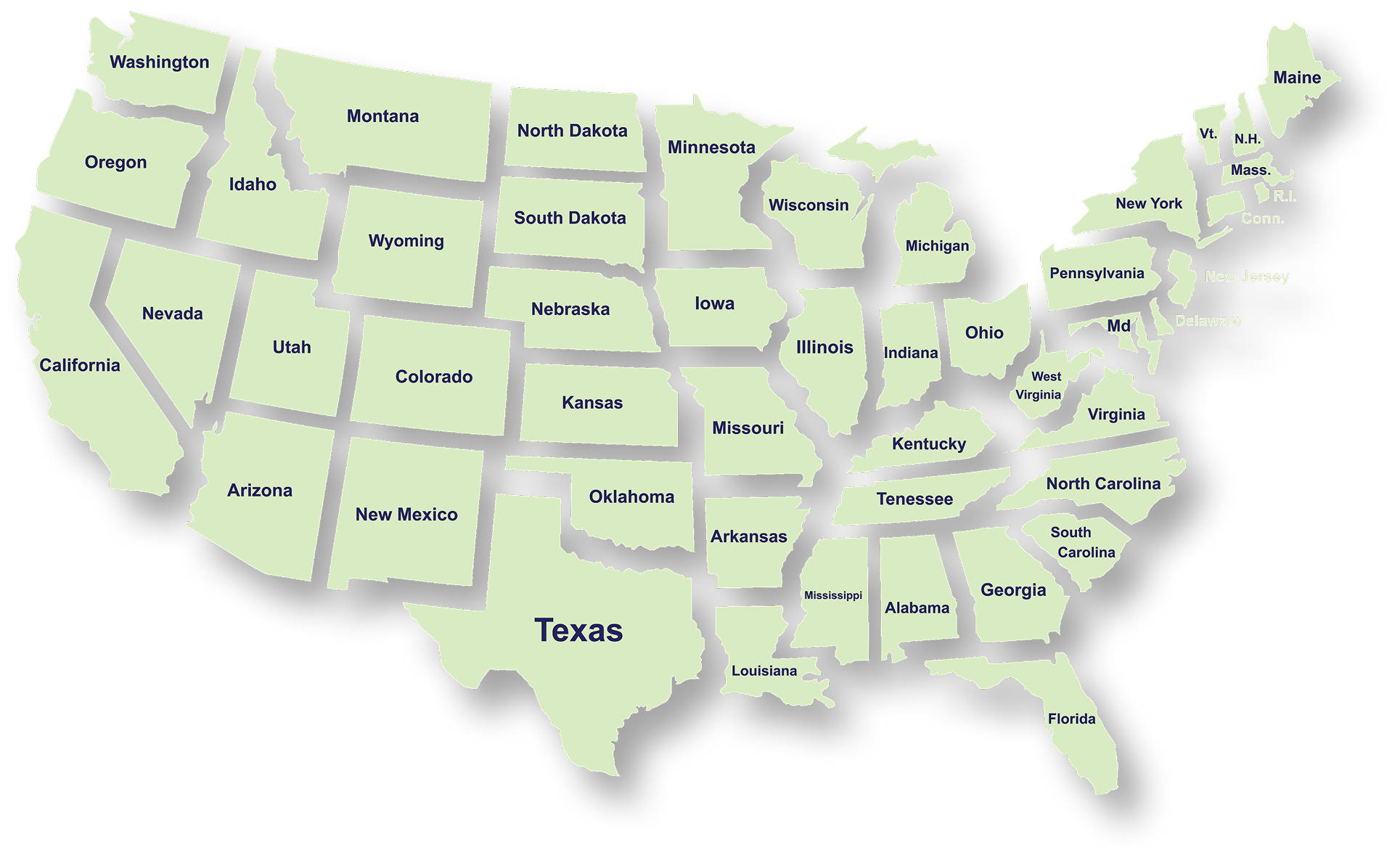
Serving Businesses & Individuals Across USA

We handle accounting, tax filing, and planning with defined timelines and accurate reporting for businesses and individuals across all states.

Frequently Asked Questions

What services does NR CPAs & Business Advisors provide?
What is tax planning and why is it important for businesses?
How can a Virtual CFO help my business?
When should a business consider IRS tax resolution services?
What financial statements does a business typically need?
How can startup advisory services help new businesses?
What is strategic business planning?
What is a Virtual Family Office and who can benefit from it?