Learning Center for Tax and Financial Insights

Stay updated with clear, actionable articles on tax rules, deadlines, deductions, and financial decisions that impact individuals and businesses.

No items found.

Consequences of Filing Married Filing Separate

Article HighlightsReasons to File SeparateFiling ThresholdCommunity Property State IncomeJoint & Several LiabilitySocial Security Benefits Taxation ThresholdCapital Loss LimitationSec 179 LimitationRental Loss LimitationTraditional IRARoth IRASavings Bond Interest ExclusionHigher Education InterestStandard DeductionStandard Deduction vs Itemized DeductionsMedicare PremiumsHome Mortgage InterestSALT LimitationAlternative Minimum Tax (AMT)Tax RatesChild & Dependent Care CreditEarned Income Tax Credit (EITC)Adoption Tax CreditElderly & Disabled Tax CreditRetirement (Saver’s) CreditTax WithholdingEstimated Tax AllocationEstimated Tax High Income Safe HarborPremium Tax CreditAutomatic 2-month Extension When Out of the CountryMarried taxpayers generally have the option to file a joint tax return or separate returns, a filing status commonly referred to as married filing separate (MFS). If you are married and you and your spouse are filing separate returns, or are considering doing so, you should read this article before making that decision. Depending on whether the taxpayers are residents of a separate or community property state, their separate returns may include just the income and eligible expenses of each filer or a percentage of their combined income and expenses. Couples choose the MFS option for a variety of reasons:They want to avoid the joint and several liability for the tax from a joint tax return. Joint and several liability is a legal term for a responsibility that is shared by two or more parties to a lawsuit. A wronged party may sue any or all of them, and collect the total damages awarded by a court from any or all of them.They have children from a prior marriage and want to keep finances separate.They only want to keep their taxes separate.The marriage is tenuous.The taxpayers are separated and don’t want to cooperate in filing a joint return.One spouse might get a larger refund by filing separately (the other will pay more).They think they can save money by filing separate returns, and a variety of other reasons.The fact of the matter is that tax laws are carefully written to keep married taxpayers from filing separately to manipulate the tax laws to their benefit. The following is a list of the more commonly encountered tax disadvantages – some might call them tax penalties –when filing as MFS. Unless otherwise noted the amounts shown are for 2023: Filing Threshold – For all filing statuses except MFS the income threshold where a return must be filed is equal to the standard deduction for that filing status. For an MFS return the filing threshold is $5.Community Property State Income – Unlike most states where each spouse claims their own earned income on an MFS return, in community property states the earned income is evenly split between the spouses. However, FICA payroll withholding, self-employment tax, and IRA contributions apply separately to the spouse who earned the income.Joint & Several Liability – On a joint return both spouses can be held responsible for payment of the tax, while the spouses filing as MFS are only responsible for payment of the tax on their individual MFS returns. Social Security Benefits Taxation Threshold – Social Security (SS) income is not taxable until taxpayers filing married joint have modified AGI (MAGI) that exceeds a threshold of $32,000. MAGI is regular AGI (without Social Security income) plus 50% of their Social Security income plus tax-exempt interest income, and plus certain other infrequently encountered additions. However, the threshold is zero for taxpayers filing as MFS. Thus taxpayers filing as MFS are taxed on 85% of every dollar of SS income.Capital Loss Limitation –Where married couples filing jointly can annually deduct up to $3,000 of capital losses, those filing as MFS can only deduct up to $1,500.Sec 179 Limitation – Taxpayers can elect to expense the cost of qualifying property used in the active conduct of a trade or business. The portion of the cost not expensed under Sec 179 is depreciable. The maximum amount that can be expensed is inflation adjusted annually and is $1,160,000 for 2023 (up from 1,080,000 in 2022). For MFS taxpayers the annual maximum amount must be allocated between the spouses.Rental Loss Limitation – Generally, most taxpayers cannot deduct rental losses. However, there is a special rule that allows a deduction of aggregate losses from rental real estate activities up to $25,000 per year for taxpayers who are an active participant in the activity. It means that the taxpayer must participate in management decisions, and at least arrange for others to provide the necessary services such as repairs. However, this special allowance only applies to lower income taxpayers with an AGI, without regard to passive losses, of $150,000 or less. In addition the $25,000 loss allowance begins to phase out 50 cents for each $1 of income over $100,000. Thus the allowance is fully phased out for joint filers when the AGI exceeds $150,000. Phase out applies to gross income without considering passives, taxable Social Security benefits, or deductions for IRA. Taxpayers filing as MFS must live apart the entire year or they get no relief under this rule. If they lived apart all year, the allowance is $12,500, and phase out begins at income of $50,000Traditional IRA – For taxpayers filing joint returns, a Traditional IRA is tax deductible except that the deductibility is phased out for higher income taxpayers who are active participants in an employer retirement plan. Where both spouses are active participants in an employer retirement plan the deductibility of IRA contribution in 2023 phases out for AGIs between $116,000 and $136,000. Where only one spouse is an active participant the phase out is between $218,000 and $228,000. However, for those filing MFS the phaseout is between $0 and $9,999.

Explore More
No items found.

What You Need to Know About Converting an S Corp to a C Corp

The type of business that you're running has major implications in virtually all areas of your operations, especially when it comes to federal taxes. An S Corporation (or S Corp for short) is one that passes corporate income, losses, deductions, and credits to its shareholders. A C Corporation (or C Corp for short) is one where the owners are taxed separately from the business itself.Having said that, just because you chose one type of legal structure at the outset of your business doesn't mean that you have to live with that decision for the remainder of your career. Converting from an S Corp to a C Corp is possible, but it's a process that requires you to keep a few key things in mind along the way.The S Corp and C Corp Conversion Process: Breaking Things DownGenerally speaking, converting from an S Corp to a C Corp is something that happens for a few key reasons. Sometimes, it's voluntary. Maybe a corporation wants to broaden its investor base, or its leaders have their eyes set on going public in the future. Sometimes, an S Corp is terminated by law, causing it to automatically transition into a C Corp. In this context, the corporation may have failed to meet its eligibility requirements, or it has earnings, profits, and passive investment income that is greater than 25% of its gross income for three consecutive years.If yours is a business that falls into the former category, know that you need to start this process by March 15 of the current tax year. Once shareholders agree to the change, things will move along fairly quickly.For starters, you need to file what is called a "Revocation of S Corporation Status" with the IRS Service Center. You'll need to do this where you filed for an S Corp in the first place. On the document, you'll give critical information like the name of the corporation, the tax ID number that you're currently using, the total number of outstanding shares that you have, and more.

Explore More
No items found.

February 2023 Individual Due Dates

February 3 - Tax AppointmentIf you don’t already have an appointment scheduled with this office, you should call to make an appointment that is convenient for you.February 10 - Report Tips to EmployerIf you are an employee who works for tips and received more than $20 in tips during January, you are required to report them to your employer on IRS Form 4070 no later than February 10. Your employer is required to withhold FICA taxes and income tax withholding for these tips from your regular wages. If your regular wages are insufficient to cover the FICA and tax withholding, the employer will report the amount of the uncollected withholding in box 8 of your W-2 for the year. You will be required to pay the uncollected withholding when your return for the year is filed.

Explore More
No items found.

February 2023 Business Due Dates

February 10 - Non-Payroll TaxesFile Form 945 to report income tax withheld for 2022 on all nonpayroll items. This due date applies only if you deposited the tax for the year in full and on time.February 10 - Social Security, Medicare and Withheld Income Tax File Form 941 for the fourth quarter of 2022. This due date applies only if you deposited the tax for the quarter in full and on time.February 10 - Certain Small EmployersFile Form 944 to report Social Security and Medicare taxes and withheld income tax for 2022. This due date applies only if you deposited the tax for the year in full and on time.February 10 - Farm employers File Form 943 to report Social Security and Medicare taxes and withheld income tax for 2022. This due date applies only if you deposited the tax for the year timely, properly, and in full.February 10 - Federal Unemployment TaxFile Form 940 for 2022. This due date applies only if you deposited the tax for the year in full and on time.February 15 - All BusinessesThe following information statements are due to recipients to whom certain payments were made during 2022: Form 1099-B (Proceeds from Broker and Barter Exchange Transactions), Form 1099-S (Proceeds from Real Estate Transactions) and Form 1099-MISC (Miscellaneous Income) if substitute payments are reported in Box 8 or gross proceeds paid to an attorney are reported in Box 10. With consent of the recipient, the 1099 can be issued electronically.February 15 - Social Security, Medicare and Withheld Income TaxIf the monthly deposit rule applies, deposit the tax for payments in January.February 15 - Payroll WithholdingEmployers begin withholding for employees who claimed exemption from withholding in 2022 but have not provided a W-4 (or W-4(SP)) to continue the exemption for 2023. February 15 - Last Date to Claim Exemption from WithholdingIf you are an employee who claimed an exemption from income tax withholding last year on the Form W-4 you gave your employer, you must file a new Form W-4 by this date to continue your exemption for another year.

Explore More
No items found.

Video Tips: 2023 RMD Age Updates

As part of the SECURE 2.0 Act the age to start taking required minimum distributions from traditional individual retirement plans and 401(k)s rises to 73 for 2023 and to 75 a decade later, giving accounts more time to grow in value. Penalties for not taking RMDs are substantially reduced.

Explore More
No items found.

Want to Relieve Stress in 2023? Start Building Your Emergency Fund

Maybe you're one of the people who went through mass layoffs in virtually all industries in 2022. Maybe you've made a New Year's resolution to become more financially stable in 2023. You might even be worried that this is the year that the economy will truly enter into the recession that many have predicted for quite some time.Regardless, many surveys have shown that most Americans are living paycheck to paycheck and don't have any type of a "rainy day fund" at all. In fact, one estimate puts it at roughly three out of every five people. Naturally, this can cause quite a bit of stress - especially given the general unpredictability of everything going on in the world.Thankfully, all hope is not lost. If you want to relieve stress, the most important step you can take is to start building your emergency fund as soon as you're able to - and it's a lot more straightforward of a process than you might think.Constructing Your Emergency Fund: Breaking Things DownThe first part of constructing your emergency fund comes by way of the realization that you are very much not alone.As stated, a significant number of people are currently living paycheck to paycheck. But that also includes nearly half of people who are earning six figures or more. Part of this has to do with the consistent level of inflation that has been eroding wage gains for quite some time. Another major contributing factor has to do with how real average hourly wage earnings are down approximately 3% from a year ago.No matter the reason, it's something that a lot of people out there are focusing on - particularly when it comes to their New Year's resolutions. Another recent study indicated that about 31% of people said that they were going to increase their emergency savings in 2023. This beat out other important financial-related matters like buying a new car, saving to buy a home, or hosting the wedding that they've always dreamed of.To actually get to the point where you can start to build up that emergency savings fund, there are a few key things to keep in mind. For starters, you should take advantage of any opportunity to reduce your monthly bills. Obviously, you should go through and cut everything you don't explicitly need. You may like having multiple streaming services, but if you only use one in particular you can easily get rid of the others without necessarily feeling like you're losing out on anything.

Explore More
No results found.
Thank you! Your submission has been received!
Oops! Something went wrong while submitting the form.

Want tax & accounting tips & insights?Sign up for our newsletter.

Thank you! Your submission has been received!
Oops! Something went wrong while submitting the form.

Why Work With Us?

We combine deep tax expertise, financial strategy, and practical business insight to help you manage complexity, stay compliant, and make confident financial decisions.
A dollar sign, representing financial advice or discussion at NR CPAs & Business Advisors.

Experienced CPA and Enrolled Agent Leadership

Guidance led by licensed professionals with deep expertise in tax strategy, compliance, and complex financial matters.
White bar chart with an upward arrow on green circular background representing growth or progress at NR CPAs &. Business Advisors

Support for Growing Businesses and Startups

We understand the financial challenges of growth stage businesses and provide structured guidance to support expansion.
A white hand holding a dollar symbol and ascending bar chart on a green circular background representing financial growth or investment at NR CPAs & Business Advisors..

Strategic Financial Advisory

Our team helps you evaluate financial decisions with greater clarity, supported by practical insights and long term planning.

Fractional CFO Support

Access experienced financial leadership without the commitment and cost of hiring a full time Chief Financial Officer.

Proactive Tax Planning Approach

We focus on identifying tax opportunities throughout the year rather than reacting only during filing season.

Clear and Reliable Financial Reporting

Accurate financial statements and reporting that help you better understand performance and make informed decisions.
White IRS building icon with pillars and a dollar sign above on a green circular background.

Professional IRS Representation

Experienced support in resolving IRS notices, disputes, and compliance matters while protecting your financial interests.

Personalized Client Focus

Every client receives thoughtful attention and tailored financial solutions based on their specific needs and business goals.
Financial matters often involve important decisions. Working with experienced advisors can help you approach them with greater clarity and confidence in your choices.

Need Help With Your Tax or Financial Decisions?

Discuss your situation with our advisors to get clear guidance on tax planning, IRS matters, and the financial decisions ahead.
Business consulting at NR CPAs & Business Advisors.

Request Your Consultation

Fill out the form to discuss your tax concerns, financial questions, or advisory needs with our team. We will review your details and respond shortly.

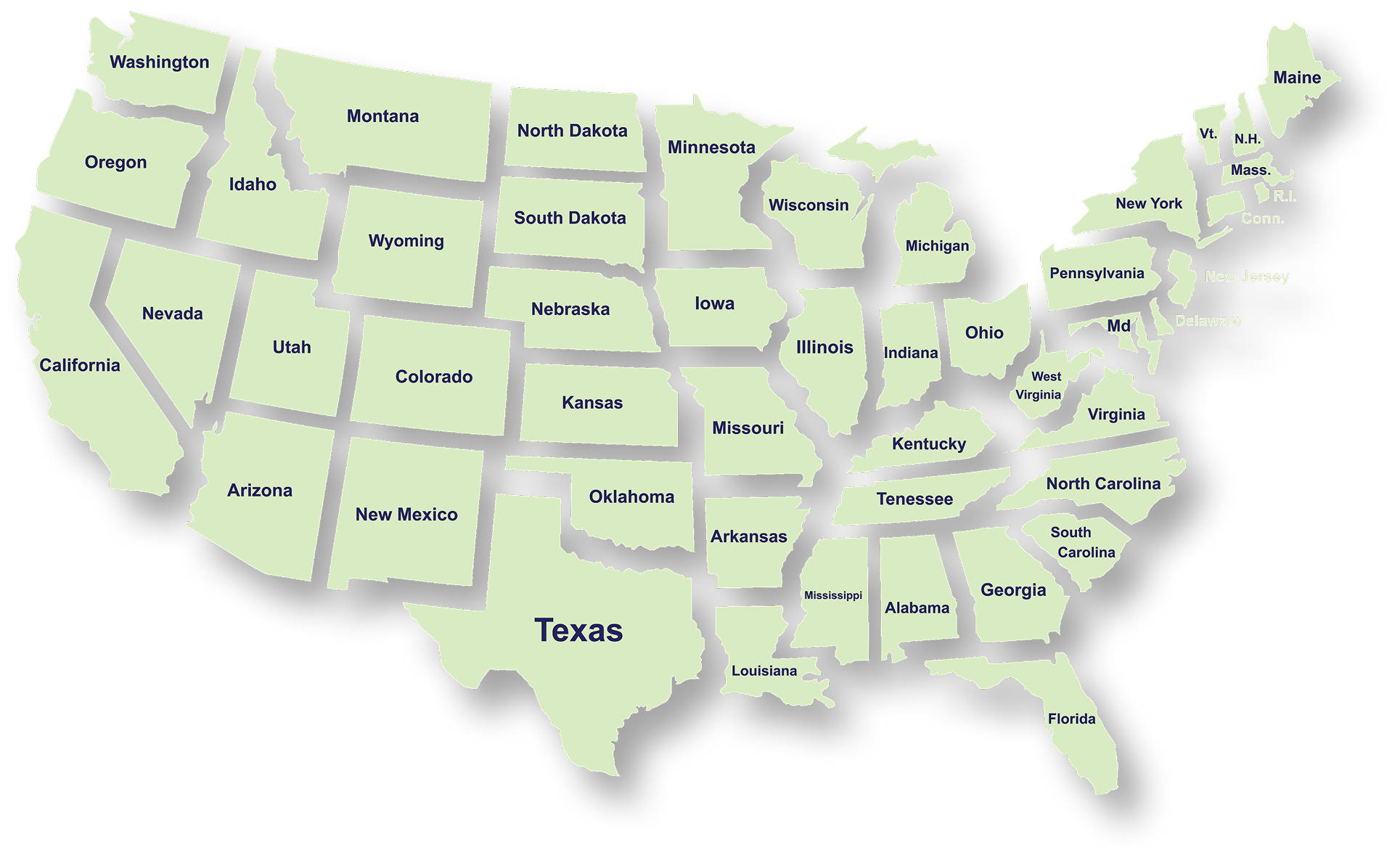
Serving Businesses & Individuals Across USA

We handle accounting, tax filing, and planning with defined timelines and accurate reporting for businesses and individuals across all states.

Frequently Asked Questions

What services does NR CPAs & Business Advisors provide?
What is tax planning and why is it important for businesses?
How can a Virtual CFO help my business?
When should a business consider IRS tax resolution services?
What financial statements does a business typically need?
How can startup advisory services help new businesses?
What is strategic business planning?
What is a Virtual Family Office and who can benefit from it?