Learning Center for Tax and Financial Insights

Stay updated with clear, actionable articles on tax rules, deadlines, deductions, and financial decisions that impact individuals and businesses.

No items found.

Video Tips: Donating to Charities through IRAs

In most cases, distributions from a traditional Individual Retirement Account are taxable in the year the account owner receives them but there are some exceptions. A qualified charitable distribution is one of the few exceptions. A QCD is a nontaxable distribution made directly by the trustee of an IRA to organizations that are eligible to receive tax-deductible contributions. QCDs can’t occur from Simplified Employee Pension plans and Savings Incentive Match Plan for Employees IRAs.

Explore More
No items found.

Sec 529 College Savings Plan Features and Tax Benefits

Article Highlights:Who Can Contribute?How Much Can Each Individual Contribute?Makeup ContributionsMaximum Plan ContributionsTax Free AccumulationEligible Expenses (Qualified Distributions)Non-qualified DistributionsBe MindfulDirect Payment of TuitionCoordination With Education Credits A common question parents have is, “How might I save for a child’s post-secondary education in a tax-beneficial way?” The answer depends on how much the education is expected to cost and how much time is left until the child heads off to college or a university or enters an apprenticeship program. The tax code provides a tax-beneficial plan to save for college expenses referred to as a Sec 529 Plan (named after the section of the tax code that authorizes the plan). These plans are also referred to Qualified Tuition Plans and are sponsored and run by the 50 states and the District of Columbia. There are two types of 529 plans: education savings plans and prepaid tuition plans.Who Can Contribute? There are no limits on the number of contributors, and there are no income or age limitations. Thus the parents, grandparents, rich uncles and aunts, and although not very likely, even the next-door neighbors, can contribute to the student’s Sec 529 Plan. How Much Can Each Individual Contribute? That depends upon each person’s financial situation and the gift tax. Gift tax is currently 40% of the amount gifted but there two exclusions: A lifetime gift and estate tax exclusion, which is annually adjusted for inflation, and is $12.92 million for 2023 (up from 12.06 million for 2022), andAn annual gift tax exemption per gift recipient which is periodically inflation-adjusted and is $17,000 for 2023 (up from $16,000 in 2022). Meaning an individual can give $17,000 (or whatever the amount is for the year) to any number of individuals without incurring any gift tax. For example, grandpa can give $17,000 to each of his six grandchildren in 2023 gift-tax free. Most individuals will not use any of the $12.06 million ($12.92 million in 2023) lifetime gift tax exclusion, which then can be used to reduce the value of their estate subject to the 40% estate tax when they pass away. Plus the lifetime exclusion is subject to partisan politics and could be increased or reduced in the future. It was $5.46 million in 2017 before being increased by the Tax Cuts and Jobs Act for years 2018 through 2025. In most cases, contributors to a 529 Plan limit the amount they give to the Plan to the annual gift tax exclusion ($17,000 for 2023). However, the tax code allows an individual to contribute 5 years’ worth of 529 Plan contributions in one year. Thus for example, in 2023 an individual could contribute $85,000 (5 x $17,000) without any gift tax consequences, but if that individual makes any additional contributions (except for makeup amounts) within the subsequent four years, those additional contributions would eat into their lifetime gift and estate tax exclusion. After the conclusion of the five-year period, the individual can resume making contributions either annually or with another 5 years’ worth. The advantage to making the 5-year contributions is larger upfront appreciation. Makeup Contributions – Because the annual gift exclusion amount is inflation-adjusted, anyone who exercised the 5-year option and the annual gift exclusion amount increased during that 5-year period can contribute an amount equal to the increase. The following is a hypothetical example: Lee contributed $75,000 (5 x $15,000) to his granddaughter Whitney’s Sec 529 plan in 2019 when the annual exclusion was $15,000. The exclusion continued to be $15,000 for 2020 and 2021. In 2022 it increased to $16,000 and to $17,000 in 2023. Lee can make a $1,000 catch-up contribution for 2020 when the exclusion increased to $16,000 and a $2,000 catch-up in 2023 when the exclusion increased to $17,000. Maximum Plan Contributions – Although there are no restrictions on how much an individual can contribute annually, other than the gift tax considerations, the maximum amount that can be contributed per beneficiary (the intended student) is based on the projected cost of college education and will vary between the states’ plans. Some states base their maximum on the projected costs of an in-state four-year education, but others use the cost of the most expensive schools in the U.S., including graduate studies. According to Savings for College.com the 2022 amounts range from $235,000 to $550,000. Generally, additional contributions cannot be made once an account reaches the state’s maximum level, but that doesn’t prevent the account from continuing to grow. Although there is no Federal tax deduction for contributing to a 529 Plan, some states do allow a deduction. Go to maximum account contribution for details by state. Go to State Income Tax Benefits for state income tax benefits.

Explore More
No items found.

Status Of The Biden Administration’s Student Loan Forgiveness

Article Highlights:• The Forgiveness Plan• Supreme Court• Qualifications• Tax Issues• Payment Moratorium• Current ApplicationsPresident Biden's student loan debt forgiveness plan was originally authorized by an executive order and announced on August 24, 2022. It subsequently hit a snag when two court cases put a hold on the plan, which was one of Biden’s campaign promises. The issue has since found its way to the Supreme Court, which will hear arguments about the case in February. Thus, the plan is on hold until the Supreme Court rules, which at the earliest will be in February. If the case is decided in the Administration’s favor, to qualify for forgiveness the loans must have been taken out before June 30, 2022, and the individual’s AGI must have been less than $125,000 in either 2020 or 2021. For married couples their AGI must have been less than $250,000 in 2020 or 2021. For Pell grant recipients the amount of the forgiveness is capped at the amount of the loan but not exceeding $20,000. For others who qualify the maximum amount is $10,000.

Explore More
No items found.

Wonder What a Tax Deduction Is Worth?

Article Highlights:Non-business deductionsTax bracketAbove-the-line deductionsItemized deductionsBusiness deductionsTax creditsIndividuals are always looking for tax deductions that can reduce their tax liability. But what is the actual tax benefit derived from a tax deduction? There is no straightforward answer because some deductions are “above the line”, others must be itemized, some must exceed a threshold amount before being deductible, and certain ones are not deductible for alternative minimum tax purposes, while business deductions can offset both income and self-employment tax. In other words, there are many factors to consider, and the tax benefits differ for everyone, depending on their particular situation and tax bracket.For most non-business deductions, the savings are based upon your tax bracket. For example, if you are in the 12% tax bracket, a $1,000 deduction would save you $120 in taxes. On the other hand, if you are in the 32% tax bracket, the $1,000 deduction will save you $320 in taxes. Even so, if your taxable income is close to transitioning into the next-lower tax bracket, the benefit will be lower.You also need to consider whether the deduction is allowed on your state return and what your state tax bracket is to determine the total tax savings. Currently, the maximum federal tax bracket is 37%, meaning the most benefit that can be derived from a $1,000 income tax deduction is $370. Some individuals justify making discretionary purchases just because they are tax-deductible. Even in the highest tax bracket, you are still paying $630 out of pocket ($1,000 − $370), so it does not make sense to incur a tax-deductible expense just for the tax deduction.Some deductions, such as IRA and self-employed retirement plan contributions, alimony, and student loan interest, are adjustments to income or what we call above-the-line deductions. These deductions, to the extent permitted by law, provide a dollar deduction for every dollar claimed. On the other hand, deductions that fall into the itemized category must exceed the standard deduction for your filing status before any benefit can be derived. In addition, medical deductions are reduced by 7.5% of your adjusted gross income (AGI), and most cash charitable deductions are limited to a maximum of 60% of your AGI. Under the tax reform that became effective in 2018, the deduction for state and local taxes is currently capped at $10,000 per year.The most beneficial deductions are business deductions that offset both income tax and, depending upon the circumstances, self-employment tax. For 2023, the self-employment tax rate is 12.4% of the first annually inflation adjusted $160,200 of net self-employment income plus 2.9% for the Medicare tax, with no cap. Contact this office for rates applicable to other years. Some high-income taxpayers may pay an additional 0.9% Medicare tax. For self-employed businesses with less than $160,200 of net income, the self-employment tax rate is 15.3%. Thus, for small businesses with profits of less than $160,200, the benefit derived from deductions generally will include the taxpayer’s tax bracket plus 15.3%. For example, for a taxpayer in the 24% tax bracket, the benefit could be as much as 39.3% (24% + 15.3%) of the deduction. If the deduction were $2,000, the tax savings could be as much as $806 or more, when the taxpayer’s state income tax bracket is included.

Explore More
No items found.

Video Tips: Employee Holiday Gifts May Be Taxable

It is a common practice this time of year for employers to give their employees gifts. Where a gift is infrequently offered and has a low fair market value, it would be treated as a de minimis fringe benefit. As such, it would be tax-free to the employee, and its cost is tax deductible by the employer.

Explore More
No items found.

Start Off on the Right Foot for the 2023 Tax Year

Article Highlights:W-4 UpdatesW-9 CollectionEstimated Tax PaymentsCharitable ContributionsRequired Minimum DistributionsGiftingRetirement-Plan ContributionsBeneficiariesReasonable CompensationBusiness-Vehicle MileageCollege-Tuition PlansIndividuals and small businesses should consider various ways of starting off on the right foot for the 2023 tax year.W-4 Updates – If you are employed, then your employer takes the information from your Internal Revenue Service (IRS) Form W-4 and applies it to the IRS’s withholding tables to determine the amount of income tax to withhold from your wages in each payroll period.If your 2022 refund or balance due turns out not to be the desired amount, you may want to consider adjusting your withholding based on your projected tax for 2023. If you need assistance, please call this office.W-9 Collection – If you are operating a business, then you are required to issue a Form 1099-NEC to each service provider to which you have paid at least $600 during a given year. It is a good practice to collect a completed W-9 form from every service provider (even if you are paying less than $600), as you may use that provider again later in the year and may have difficulty getting a W-9 after the fact—especially from providers that do not plan to report all of their income for the year.Estimated Tax Payments – If you are self-employed, then you prepay each year’s taxes in quarterly estimated payments by sending 1040-ES payment vouchers or making electronic payments. For the 2023 tax year, the first three payments are due on April 18, June 15, and September 15, 2023, and the final payment is due on January 16, 2024. Generally, these payments are based on the prior year’s taxable income; if you expect any significant changes in either income or deductions relative to the previous year, please contact this office for help in adjusting your payments accordingly.Charitable Contributions – If you marginally itemize your deductions, then you can employ the bunching strategy, which involves taking the standard deduction one year but itemizing your deductions in the next. However, you must make this decision early in the year so that you can make two years’ worth of charitable contributions in the bunching year.Required Minimum Distributions – Each year, if you are 73 (a recent law change increased it from 72 in 2022) or older, you must take a required minimum distribution from each of your retirement accounts or face a substantial penalty. By taking this distribution early in the year, you can ensure that you do not forget and accidentally subject yourself to penalties.Gifting – If you are looking to reduce your estate-tax exposure or if you just want to give some money to family members, know that each year, you can gift up to an inflation-adjusted amount, which for 2023 is $17,000, to each of an unlimited number of beneficiaries without affecting your lifetime estate-tax exclusion amount or paying a gift tax.

Explore More
No results found.
Thank you! Your submission has been received!
Oops! Something went wrong while submitting the form.

Want tax & accounting tips & insights?Sign up for our newsletter.

Thank you! Your submission has been received!
Oops! Something went wrong while submitting the form.

Why Work With Us?

We combine deep tax expertise, financial strategy, and practical business insight to help you manage complexity, stay compliant, and make confident financial decisions.
A dollar sign, representing financial advice or discussion at NR CPAs & Business Advisors.

Experienced CPA and Enrolled Agent Leadership

Guidance led by licensed professionals with deep expertise in tax strategy, compliance, and complex financial matters.
White bar chart with an upward arrow on green circular background representing growth or progress at NR CPAs &. Business Advisors

Support for Growing Businesses and Startups

We understand the financial challenges of growth stage businesses and provide structured guidance to support expansion.
A white hand holding a dollar symbol and ascending bar chart on a green circular background representing financial growth or investment at NR CPAs & Business Advisors..

Strategic Financial Advisory

Our team helps you evaluate financial decisions with greater clarity, supported by practical insights and long term planning.

Fractional CFO Support

Access experienced financial leadership without the commitment and cost of hiring a full time Chief Financial Officer.

Proactive Tax Planning Approach

We focus on identifying tax opportunities throughout the year rather than reacting only during filing season.

Clear and Reliable Financial Reporting

Accurate financial statements and reporting that help you better understand performance and make informed decisions.
White IRS building icon with pillars and a dollar sign above on a green circular background.

Professional IRS Representation

Experienced support in resolving IRS notices, disputes, and compliance matters while protecting your financial interests.

Personalized Client Focus

Every client receives thoughtful attention and tailored financial solutions based on their specific needs and business goals.
Financial matters often involve important decisions. Working with experienced advisors can help you approach them with greater clarity and confidence in your choices.

Need Help With Your Tax or Financial Decisions?

Discuss your situation with our advisors to get clear guidance on tax planning, IRS matters, and the financial decisions ahead.
Business consulting at NR CPAs & Business Advisors.

Request Your Consultation

Fill out the form to discuss your tax concerns, financial questions, or advisory needs with our team. We will review your details and respond shortly.

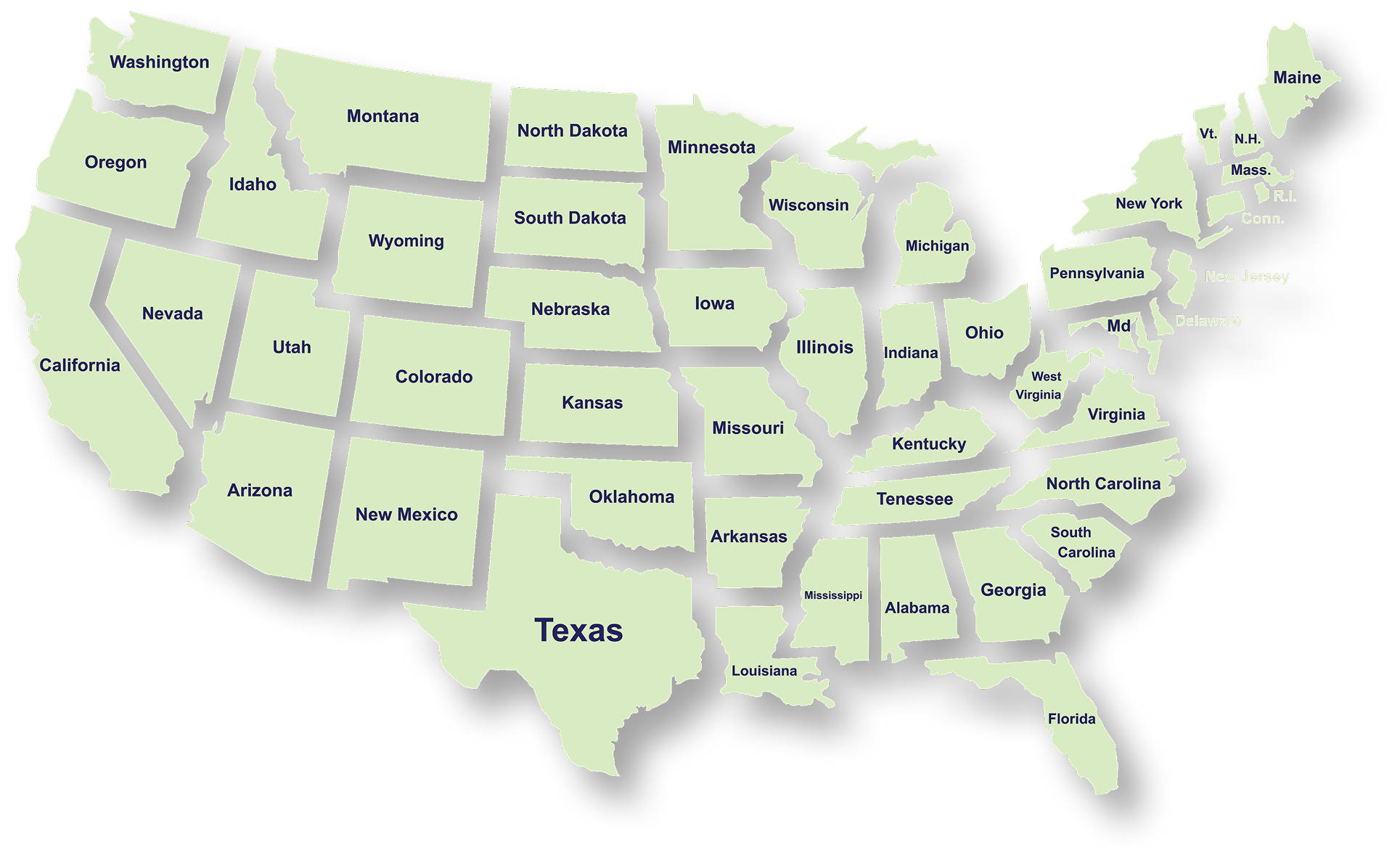
Serving Businesses & Individuals Across USA

We handle accounting, tax filing, and planning with defined timelines and accurate reporting for businesses and individuals across all states.

Frequently Asked Questions

What services does NR CPAs & Business Advisors provide?
What is tax planning and why is it important for businesses?
How can a Virtual CFO help my business?
When should a business consider IRS tax resolution services?
What financial statements does a business typically need?
How can startup advisory services help new businesses?
What is strategic business planning?
What is a Virtual Family Office and who can benefit from it?