Learning Center for Tax and Financial Insights

Stay updated with clear, actionable articles on tax rules, deadlines, deductions, and financial decisions that impact individuals and businesses.

No items found.

How to Manage Your Money During a Recession

According to one recent study, the probability of the United States experiencing a recession in the next year hit 96% in October 2022. If you needed a single statistic to outline the importance of paying attention to what is going on with the economy on a regular basis, let it be that one.A recession can impact many things, including your job, your business, and your ability to generate a stable income. But at the same time, it also demands the question - what do you do about the money you already have? How do you best manage your money during a recession to make sure that you come out unscathed - or at least, in as solid of a position as possible - on the other side? The answers to these questions are complicated, but they are within reach - they simply require you to keep a few key things in mind along the way.Managing Your Money in a Recession: Breaking Things DownExperts agree that by far, one of the most important steps that you can take to manage your money during a recession is to save up an emergency fund as soon as you're capable of doing so.If there was any major lesson taught to us by the COVID-19 pandemic, it's that one. In January 2020, few people could have predicted how drastically things would have changed just a few short months later. Suddenly, businesses found themselves closed without knowing when - or if - they'd be able to re-open again. Workers found themselves working from home, some without the capability to reasonably do so. Things changed seemingly overnight - proving that even when things seem like they're on solid footing, you truly never know what is right around the corner.If you're in a position where if you lose your job or if your income is cut in some way, you won't be able to cover your upcoming expenses like rent, a mortgage, or utilities, you need to start working to save up an emergency fund now. It may not last indefinitely, but at the very least it can buy you enough time to figure out exactly what you need to do next.Another viable way to manage your money during a recession is to not just invest in things that can be reasonably expected to increase in value over time but to diversify your investments over time. This is truly one of those situations where the old saying "don't put all your eggs in one basket" applies.

Explore More
No items found.

Looking Ahead to 2023 Taxes

Article Highlights:Solar CreditHome Backup Electric Storage Battery CreditHome Energy Improvement CreditResearch CreditClean Energy Vehicles (New and Used) CreditsStandard Deduction IncreaseIncreased Retirement Plan ContributionsOther Tax-Related Inflation AdjustmentsWith the holiday celebrations coming to an end, now is the time to take a look at the changes that will impact your 2023 tax return when you file it in 2024.Keeping up with the constantly changing tax laws can help you get the most benefit out of the laws and minimize your taxes. Many tax parameters, such as the standard deduction, contributions to retirement plans, and tax rates, are annually inflation adjusted, while some tax changes are delayed and take effect in future years. On top of all that, we have Congress considering the retroactive extension of some tax provisions that expired after 2021 or will expire at the end of 2022, as well as proposing new tax legislation. Here are some changes that might affect your 2023 tax return:Solar Credit Gets New Life – The solar credit is a percentage of the cost of a solar electric system installed on a taxpayer’s first or second residence located in the U.S. Before the passage of the Inflation Reduction Act the solar credit was being phased out by slowly reducing the credit percentage from 30% to 22% over several years, and the credit was scheduled to end after 2023. The Inflation Reduction Act give the credit new life by extending the credit through 2032 at 30% before phasing it out in years 2033 and 2034.Here are some of the issues about the credit you need to be aware of:Non-Refundable Credit - The credit is nonrefundable, meaning it can only reduce your tax liability to zero. However, the portion of credit that is not allowed because of this limitation may be carried to the next tax year and added to the credit allowable for that year.Maximum Credit – There is no specific maximum, however, and since it is not a refundable credit, the benefit may be spread over several years, and if not utilized by the time the credit is phased out, you may not get the benefit of the entire credit.Qualifying Property – Both a taxpayer’s main and secondary residence qualify for this credit.Who Gets the Credit? – It may come as a surprise, but you need not own the residence where the solar property is installed to qualify for the credit; you need only be a “resident” of the home. The tax code does not specify that an individual must own the home, only that it is their residence.When is the Credit Available? – The credit may be claimed on the tax return of the year during which the installation is completed.Leased Installations – When a solar installation is leased, the lessor gets the credit, not the home’s resident.As you can see, there is a lot to consider, and these are not all the issues that should be taken into account before making the final decision to install a solar system. Is it worth it, and is it the right financial move for you? Please call for a consultation before signing any contract to make sure a solar system is appropriate for you tax wise.Home Backup Electric Storage Battery - Emergency power outages imposed by utilities in fire prone areas during periods of high winds and low humidity, as well as in other disaster areas, can be a major inconvenience, especially for those that work from home, resulting in many taxpayers asking if storage batteries added to a solar installation would qualify for the credit.The tax code had been silent on whether storage batteries were eligible for the credit, although the IRS had issued a private ruling indicating that they would be allowed. The Inflation Reduction Act of 2022 amended the code by adding and defining the term “qualified battery storage technology expenditure.” Thus clarifying that for expenditures made after December 31, 2022, battery storage technology which meets the following requirements will qualify for the credit:(A) It is installed in connection with a dwelling unit in the United States that is used as a residence by the taxpayer, and(B) It has a capacity of not less than 3 kilowatt hours.Homeowners who already have a solar installation can add a storage battery and qualify for the solar credit for the cost of the battery.Home Energy Improvement Credit Is Enhanced - With the passage of the Inflation Reduction Act of 2022 the Home Energy Improvement Credit once again becomes a meaningful incentive for taxpayers to make energy-saving improvements to their homes. The new legislation did away with the minimal $500 lifetime limit by replacing it with a $1,200 annual limit and increased the credit rate from 10% to 30%.As before, under prior law, there are certain credit limits that apply to the various types of energy-saving improvements. Although not a complete list, the following are credit limits that apply to various energy-efficient improvements under the new law:$600 for credits with respect to residential energy property expenditures, windows, and skylights.$250 for any exterior door ($500 total for all exterior doors).$300 for residential qualified energy property expensesNotwithstanding these limitations, a $2,000 annual limit applies with respect to amounts paid or incurred for specified heat pumps, heat pump water heaters, and biomass stoves and boilers.The $1,200 credit amount is increased by up to $150 for the cost of a home energy audit.The new law adds Air Sealing Insulation as a creditable expense.However, the new law eliminates treatments of roofs as creditable after 2022.This credit is a nonrefundable personal tax credit and there are no credit carryover provisions, so if the credit is not fully utilized in the year of the home energy improvements it is lost. You may wish to consult with this office prior to making any energy-saving improvements to your home to ensure you will benefit from the tax credit.Research Credit – The Inflation Reduction Act enhanced the Research Credit for new businesses (generally, those that have been in business for 5 years or fewer) that have less than $5 million in gross receipts and that qualify for the research tax credit. These businesses can elect to use the credit to pay the employer’s share of its employees’ FICA withholding requirement (the 6.2% payroll tax).The research credit is equal to 20% of qualified research expenditures more than the established base amount. If using the simplified method, the research credit is equal to 14% of qualified research expenditures that total more than 50% of the company’s average research expenditures in the prior three years.Clean Vehicle CreditAfter 2022 and through 2032, this credit replaces the plug-in electric vehicle credit and makes significant changes as follows.Credit Amount – Is based upon two amounts (certified by the qualified manufacturer):Critical Minerals – Up to $3,750.Battery Components – Up to $3,750.Final Assembly Requirement - The final assembly of the vehicle must occur in North America.Not all Vehicles Will Qualify – Because of the critical mineral, battery, and final assembly requirements, only some vehicles will qualify for the credit. Noticeably missing are Toyota, Nissan, and Hyundai.Manufacturer's Suggested Retail Price Limitation - No credit is allowed for a vehicle with a manufacturer's suggested retail price more than $80,000 for vans, sport utility vehicles, and pickups and $55,000 for other vehicles.MAGI Limit – The credit is not allowed for high income taxpayers. No credit is allowed for any tax year if the lesser of the modified adjusted gross income (MAGI) of the taxpayer for the current tax year and the preceding tax year exceeds $300,000 for married individuals filing jointly and those qualifying as surviving spouse; $225,000 for head of household filers; and $150,000 for others.

Explore More
No items found.

How the Story of the Chrisley's Bank and Tax Fraud Ended With Them in Jail

The reality series "Chrisley Knows Best" first premiered on the USA Network in March 2014. It followed the lives of Georgia real estate professionals Todd Chrisley and his wife, Julie. Filmed in and around Atlanta, the show was an instant hit - after an initial first season of eight episodes, it would go on to run for another eight seasons between its original inception and 2022. Over the course of 197 episodes, it became a ratings hit and positioned the Chrisleys as legitimate professionals in the industry.Credit: Danielle Del Valle / Getty Images Entertainment via Getty ImagesThat is until they were eventually tried and convicted of federal charges for both bank fraud and tax evasion.It's true. In November 2022, the Chrisleys finished out a trial that would see them sentenced to 12 years for Todd and seven years for Julie. It was said that over the course of a decade, they had defrauded banks out of tens of millions of dollars. While doing so, they simultaneously evaded paying federal income taxes on the money they were making - including income directly related to their smash hit reality show.But what happened and why did it take so long to catch them? The answers to questions like those require you to keep a few key things in mind.The Chrisleys and the Federal Government: The Story So FarAccording to United States Attorneys, the original charges that the Chrisleys were brought up on are as follows:For 10 years, both Todd and Julie Chrisley knowingly and intentionally conspired to defraud community banks in and around the Atlanta, Georgia area.They did so successfully, obtaining more than $36 million in personal loans in the process.With the assistance of a former business partner, they submitted everything from false audit reports to invalid personal financial statements to the aforementioned community banks to obtain these loans.The money was not spent on their business efforts, as it was intended. Instead, they used it to buy fancy cars, high-end clothes, personal real estate, and more. They also used a significant portion of the funds to travel around the world.Whenever the balance on one of their old loans would come due, they would simply use the same means to take out a new one to pay it off - thus creating a vicious circle that, it turns out, they would never be able to escape from.

Explore More
No items found.

Video: IRS Reminds Those Over Age 72 to Start Withdrawals from IRAs and Retirement Plans to Avoid Penalties

The Internal Revenue Service today reminded those who were born in 1950 or earlier that funds in their retirement plans and individual retirement arrangements face important upcoming deadlines for required minimum distributions to avoid penalties.

Explore More
No items found.

January 2023 Individual Due Dates

January 3 - Time to Call For Your Tax Appointment -January is the beginning of tax season. If you have not made an appointment to have your taxes prepared, we encourage you to do so before the calendar becomes too crowded.January 10 - Report Tips to Employer -If you are an employee who works for tips and received more than $20 in tips during December, you are required to report them to your employer on IRS Form 4070 no later than January 10.

Explore More
No items found.

January 2023 Business Due Dates

January 3 - Payment of Employer Share of Social Security Tax from 2020 -If you are an employer that deferred paying the employer share of social security tax or the railroad retirement tax equivalent in 2020, the remaining 50% of the deferred amount of the employer share of social security tax is due by January 3, 2023. Any payments or deposits made before January 3, 2022, less amounts applied against the January 3, 2022, required payment, will be applied against the payment due by January 3, 2023.January 17 - Employer’s Monthly Deposit Due -If you are an employer and the monthly deposit rules apply, January 17 is the due date for you to make your deposit of Social Security, Medicare, and withheld income tax for December 2022. This is also the due date for the nonpayroll withholding deposit for December 2022 if the monthly deposit rule applies. Employment tax deposits must be made electronically (no paper coupons), except employers with a deposit liability under $2,500 for a return period may remit payments quarterly or annually with the return.January 17 - Farmers and Fishermen -Pay your estimated tax for 2022 using Form 1040-ES. You have until April 18 to file your 2022 income tax return (Form 1040 or Form 1040-SR). If you don't pay your estimated tax by January 17, you must file your 2022 return and pay any tax due by March 1, 2023, to avoid an estimated tax penalty. January 31 - 1099-NECs Due to Service Providers & the IRS -If you are a business or rental property owner and paid $600 or more to individuals (other than employees) as nonemployee compensation during 2022, you are required to provide Form 1099-NEC to those workers by January 31. “Nonemployee compensation” can mean payments for services performed for your business or rental by an individual who is not your employee, commissions, professional fees and materials, prizes and awards for services provided, fish purchases for cash, and payments for an oil and gas working interest. To avoid a penalty, copies of the 1099-NECs also need to be sent to the IRS by January 31, 2023. The 1099-NECs must be submitted on optically scannable (OCR) forms. This firm prepares 1099s in OCR format for submission to the IRS with the 1096 submittal form. This service provides both recipient and file copies for your records. A business or individual who is required to file 250 or more information returns (i.e., 1099s and W-2s among others) must file those forms electronically. Please call this office for preparation assistance. January 31 - Form 1098 and Other 1099s Due to Recipients - Form 1098 (Mortgage Interest Statement) and Forms 1099, including 1099-NEC (see above) are due to recipients by January 31. The IRS’ copy, other than for 1099-NECs, is not due until February 28, 2023, or March 31, 2023, if electronically filed. These 1099s may be reporting the following types of income:Dividends and other corporate distributionsInterestRentRoyaltiesPayments of Indian gaming profits to tribal membersProfit-sharing distributionsRetirement plan distributionsOriginal issue discountPrizes and awardsMedical and health care paymentsDebt cancellation (treated as payment to debtor)

Explore More
No results found.
Thank you! Your submission has been received!
Oops! Something went wrong while submitting the form.

Want tax & accounting tips & insights?Sign up for our newsletter.

Thank you! Your submission has been received!
Oops! Something went wrong while submitting the form.

Why Work With Us?

We combine deep tax expertise, financial strategy, and practical business insight to help you manage complexity, stay compliant, and make confident financial decisions.
A dollar sign, representing financial advice or discussion at NR CPAs & Business Advisors.

Experienced CPA and Enrolled Agent Leadership

Guidance led by licensed professionals with deep expertise in tax strategy, compliance, and complex financial matters.
White bar chart with an upward arrow on green circular background representing growth or progress at NR CPAs &. Business Advisors

Support for Growing Businesses and Startups

We understand the financial challenges of growth stage businesses and provide structured guidance to support expansion.
A white hand holding a dollar symbol and ascending bar chart on a green circular background representing financial growth or investment at NR CPAs & Business Advisors..

Strategic Financial Advisory

Our team helps you evaluate financial decisions with greater clarity, supported by practical insights and long term planning.

Fractional CFO Support

Access experienced financial leadership without the commitment and cost of hiring a full time Chief Financial Officer.

Proactive Tax Planning Approach

We focus on identifying tax opportunities throughout the year rather than reacting only during filing season.

Clear and Reliable Financial Reporting

Accurate financial statements and reporting that help you better understand performance and make informed decisions.
White IRS building icon with pillars and a dollar sign above on a green circular background.

Professional IRS Representation

Experienced support in resolving IRS notices, disputes, and compliance matters while protecting your financial interests.

Personalized Client Focus

Every client receives thoughtful attention and tailored financial solutions based on their specific needs and business goals.
Financial matters often involve important decisions. Working with experienced advisors can help you approach them with greater clarity and confidence in your choices.

Need Help With Your Tax or Financial Decisions?

Discuss your situation with our advisors to get clear guidance on tax planning, IRS matters, and the financial decisions ahead.
Business consulting at NR CPAs & Business Advisors.

Request Your Consultation

Fill out the form to discuss your tax concerns, financial questions, or advisory needs with our team. We will review your details and respond shortly.

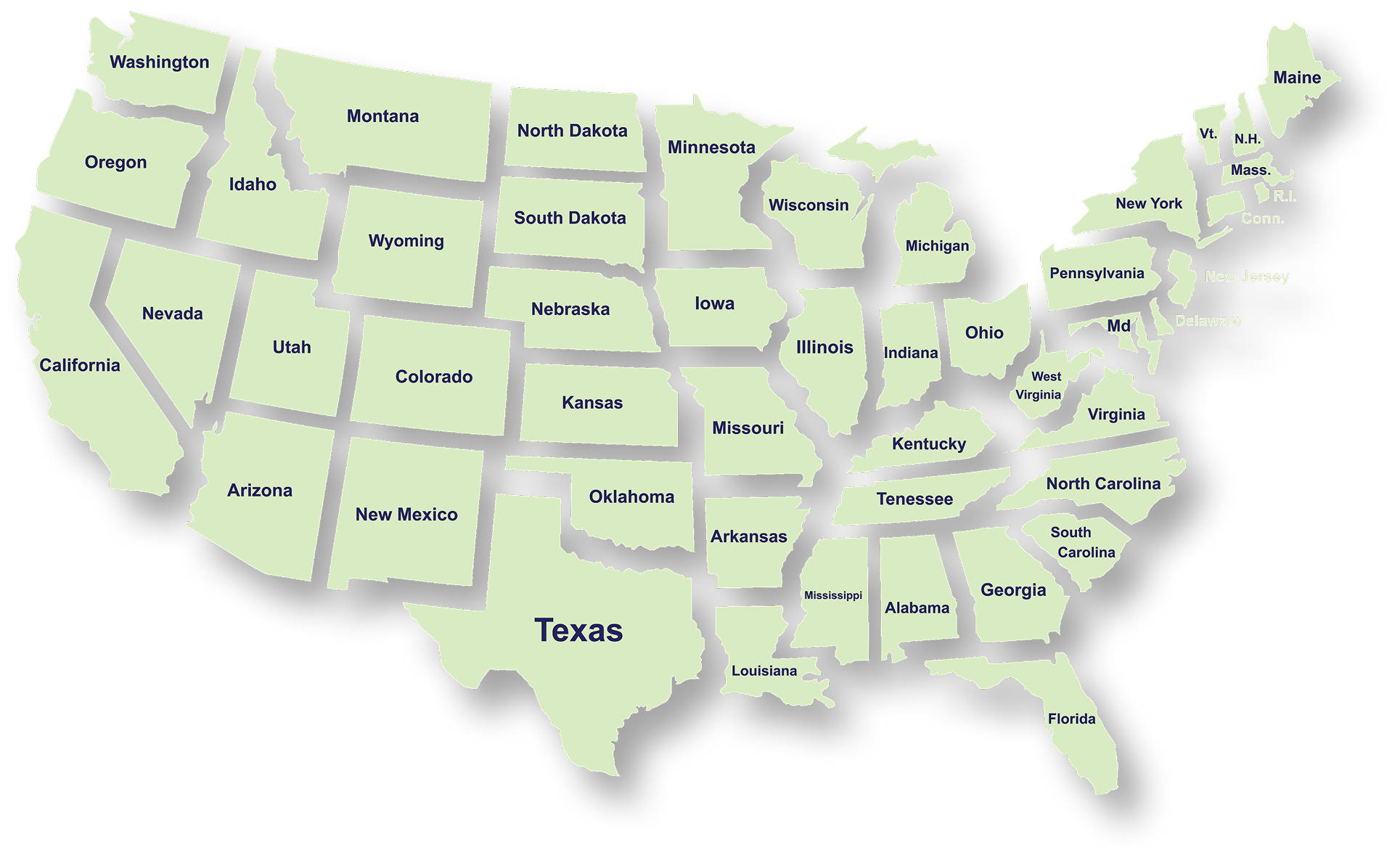
Serving Businesses & Individuals Across USA

We handle accounting, tax filing, and planning with defined timelines and accurate reporting for businesses and individuals across all states.

Frequently Asked Questions

What services does NR CPAs & Business Advisors provide?
What is tax planning and why is it important for businesses?
How can a Virtual CFO help my business?
When should a business consider IRS tax resolution services?
What financial statements does a business typically need?
How can startup advisory services help new businesses?
What is strategic business planning?
What is a Virtual Family Office and who can benefit from it?