Learning Center for Tax and Financial Insights

Stay updated with clear, actionable articles on tax rules, deadlines, deductions, and financial decisions that impact individuals and businesses.

No items found.

Video Tips: Giving Tuesday Is Coming; Now Is A Good Time to Review Tax Benefits for Charitable Giving

The Tuesday after Thanksgiving marks Giving Tuesday when many people choose to make charitable donations. People making charitable contributions on Giving Tuesday, or at any time during the year, should review whether their gift is tax-deductible.

Explore More
No items found.

2022 Tax Deduction Finder & Problem Solver

To get ready for your tax appointment, we use tax organizers to help us identify missing tax deductions and get you more organized before your appointment. We update the tax organizer annually to make sure you are compliant with the latest tax law changes.The 2022 individual tax organizer is provided in three configurations to assist you in collecting relevant tax information needed to properly prepare your tax return. Access any of the three versions by double-clicking on the underlined title links below. The organizers can be downloaded to your computer where you can fill and save the information until you have completed collecting all of your information. After you have completed it, please forward the organizer (printed or digitally) to our office for immediate service. If you have an office appointment, you can print it out and bring it with you to the meeting. A word of caution: you can fill the organizers online and print them out. However, if you close the file, your data will not be saved unless the form is saved to your computer.Once the completed organizer has been received, you will be contacted by phone, fax or e-mail with any questions, comments, or suggestions. If you e-mail our office advising us that you have sent your tax materials, we will notify you of their receipt.2022 Basic Organizer – This organizer is suitable for clients that are not itemizing their deductions and DO NOT have rental property or self-employment expenses.

Explore More
No items found.

Huge Increase in Scam Texts – Don’t Be a Victim

Article Highlights:ID Thieves Are Constantly After Your ID InformationThere Has Been an Exponential Increase in Text ScamsYour Phone Is Their TargetHow to Report Text and Phishing Scams to the Government.Taxpayers should be aware of the recent increase in IRS-themed texting scams aimed at stealing personal and financial information.So far in 2022, the IRS has identified thousands of fraudulent domains tied to multiple texting scams (known as smishing) targeting taxpayers. In recent months, IRS-themed smishing has increased exponentially.Smishing campaigns target mobile phone users, and the scam messages often look like they’re coming from the IRS, offering lures like fake COVID relief, tax credits or help setting up an IRS online account. Recipients of these IRS-related scams should not act on or respond to them but should report them to phishing@irs.gov as instructed below.In recent months, the IRS reports that smishing has reached an industrial scale and multiple large-scale smishing campaigns have delivered hundreds of thousands of IRS-themed messages in hours or a few days, far exceeding previous levels of activity.Lately the scam texts often ask taxpayers to click a link where phishing websites will try to collect their information or potentially send malicious code onto their phones. The IRS does not send emails or text messages asking for personal or financial information or account numbers. These messages should all be red flags for taxpayers.Beginning in the fall of 2020, the IRS observed an increase in reports of smishing scams requesting taxpayer personal and financial information. These smishing campaigns continued through the pandemic. The IRS has taken numerous steps to warn people of this ongoing threat, including posting of a video that everyone should watch about how to avoid IRS text message scams. If you have children and elderly family members with cell phones make sure they also watch that video.

Explore More
No items found.

IRS Finds a Cure for the Family Glitch

Article Highlights:ACA FeaturesPremium Tax CreditFamily GlitchIRS Cure for the Family GlitchAction May Be RequiredBackground - The Affordable Care Act (ACA) – also referred to as Obamacare) was enacted over 12 years ago, and one of its main features was the creation of government marketplaces (sometimes called exchanges) where Americans could purchase their health insurance if not covered by an affordable employer’s plan. Also included in the ACA was a new tax credit, the Premium Tax Credit (PTC), that could be used to offset some or all of the premiums for policies obtained through the marketplace. However, that law also contained what some have referred to as “the family glitch” that prevented some families from having access to a health insurance marketplace or taking advantage of the PTC. After more than a decade, the IRS has come up with regulations that will allow, in some cases, these family members to be eligible for the PTC. Premium Tax Credit – This is a refundable credit available to lower income taxpayers to help them offset the cost of purchasing their health insurance from a government health insurance marketplace. The credit, which is claimed on Form 1040, can instead be claimed in advance to reduce current premiums, which is what nearly all eligible individuals do. Not allowed to claim the PTC are employees that are offered minimum essential coverage under an employer-sponsored plan that is affordable. For 2023 affordable means that the employee’s share of the premiums doesn’t exceed 9.12% of the employee’s “household income.” The affordability percentage that was written into the law was 9.5% and is annually indexed. It was 9.61% for 2022.The Family Glitch - The original Premium Tax Credit regulations said that if an employer offers coverage for both the employee and the employee’s spouse, and the cost of the employee’s coverage does not exceed that year’s affordability percentage of the taxpayer’s household income, then no matter the cost of the spouse’s coverage the taxpayer will not be eligible for the PTC. The IRS’ interpretation at the time was that the affordability test is based upon the employee’s self-only coverage premiums for purposes of the percentage-of-household-income test, and if affordable for the employee, then the IRS considered it affordable for all members of the taxpayer’s tax family offered coverage under the employer plan. This regulation meant that if an individual’s coverage offered by an employer is considered affordable, then the individual is not eligible for a PTC. This outcome was dubbed the “family glitch.”

Explore More
No items found.

Important Information for S-Corp Shareholders and Partners of a Partnership

Article Highlights:Schedule K-2 and K-3 Filing RequirementsBackgroundFast Forward to the PresentDomestic Entity K-2/K-3 Filing ExceptionPartner or Shareholder NotificationWhere You Play a RoleForm 1116 – Foreign Tax Credit Filing ExceptionForm 1116 Exception Entity NotificationThere is an important issue related to filing the 2022 S-corporation (Form 1120-S) and partnership (Form 1065) tax returns that requires the cooperation of the shareholders and partners. Background: The IRS, for the 2021 tax year, without sufficient warning, introduced two new schedules for S-corporations and partnerships, the Schedules K-2 and K-3. These two schedules are supplemental schedules to the Schedule K-1 that provides shareholders and partners with information that is needed to prepare their individual tax returns (Form 1040). Problem is these two new schedules were designed to report all forms of foreign transactions not just the ones that applied to the particular entity and were dealt with on supplemental schedules in the past. In fact, these two new schedules are both about 20 pages in length, which in turn substantially increases the return preparation time and preparation costs. As you might imagine this change created quite an uproar in the tax preparation community last filing season, and as a result the IRS provided some filing relief for certain 2021 returns.Fast Forward to the Present – The IRS draft instructions for filing the 2022 S-corporation and partnership returns include two exceptions for filing the K-2 and K-3 Schedules for domestic S-corporations and partnerships. Unfortunately, and has become the norm for the IRS, the qualifications to use these exceptions are complicated.Domestic Entity Exception – To use the domestic entity exception to avoid filing the Schedules K-2 and K-3, the entity can only have minimal foreign activity which is limited to passive income upon which no more than $300 of foreign tax was paid or accrued and reported on a U.S. information return. In addition all direct partners and shareholders must be U.S. citizens, resident aliens or certain domestic estates and trusts.

Explore More
No items found.

What Is Business Cash Flow?

As the name suggests, cash flow is a term used to describe the money coming into and out of a business. Cash received - like money being paid to the business from its customers - would be inflow. Cash spent - like the funds being paid to vendor partners and other operational costs - would be outflow.Obviously, it's always important to have more money coming into your business than going out in most situations. But whether this is true is not the only factor you should be accounting for. Instead, it should be seen for what it really is - a metric that tells just one small part of a much larger story.The Ins and Outs of Business Cash Flow: Breaking Things DownOne of the reasons why keeping an eye on cash flow is so important is because it helps paint a vivid picture of a business's liquidity. The more liquid a company is, the more flexible it isA significant amount of positive cash flow relative to outflow indicates that a company's liquid assets are increasing. This is something that should happen naturally over time as a business continues to grow and scale. This doesn't just mean that they're comfortable when it comes to handling their financial obligations. They can take some of that money and strategically invest it back into the business itself where it can make the biggest impact.This type of positive cash flow also acts as a viable buffer against any uncertainty or even challenges that may develop. Case in point: everything that has been going on over the last few years with the still-ongoing COVID-19 pandemic. When the pandemic first hit in March 2020, businesses of all types found their doors suddenly closed. The ones that were able to survive to the point where they could re-open again - or at least remain afloat for as long as possible - were those that had liquidity through positive cash flow.In a larger sense, there are a few different types of cash flow to concern yourself with. Operating cash flow refers to the amount of money that a company is generating via everyday activities. Investment cash flow, as the name suggests, is income generated from investment actions like purchasing securities.Financing cash flow goes into more detail about how money is moving between a business and a number of other entities like investors, owners, and even creditors.Again, tracking business cash flow is all about the insight it generates. Not only does it allow you to keep the doors open because you know you have enough money to handle your obligations, but it also helps to meet your short and long-term goals for expansion as well. In essence, it helps those business leaders come up with the best possible plan for the future - which is also why this is something you need to be taking a look at on a regular basis.

Explore More
No results found.
Thank you! Your submission has been received!
Oops! Something went wrong while submitting the form.

Want tax & accounting tips & insights?Sign up for our newsletter.

Thank you! Your submission has been received!
Oops! Something went wrong while submitting the form.

Why Work With Us?

We combine deep tax expertise, financial strategy, and practical business insight to help you manage complexity, stay compliant, and make confident financial decisions.
A dollar sign, representing financial advice or discussion at NR CPAs & Business Advisors.

Experienced CPA and Enrolled Agent Leadership

Guidance led by licensed professionals with deep expertise in tax strategy, compliance, and complex financial matters.
White bar chart with an upward arrow on green circular background representing growth or progress at NR CPAs &. Business Advisors

Support for Growing Businesses and Startups

We understand the financial challenges of growth stage businesses and provide structured guidance to support expansion.
A white hand holding a dollar symbol and ascending bar chart on a green circular background representing financial growth or investment at NR CPAs & Business Advisors..

Strategic Financial Advisory

Our team helps you evaluate financial decisions with greater clarity, supported by practical insights and long term planning.

Fractional CFO Support

Access experienced financial leadership without the commitment and cost of hiring a full time Chief Financial Officer.

Proactive Tax Planning Approach

We focus on identifying tax opportunities throughout the year rather than reacting only during filing season.

Clear and Reliable Financial Reporting

Accurate financial statements and reporting that help you better understand performance and make informed decisions.
White IRS building icon with pillars and a dollar sign above on a green circular background.

Professional IRS Representation

Experienced support in resolving IRS notices, disputes, and compliance matters while protecting your financial interests.

Personalized Client Focus

Every client receives thoughtful attention and tailored financial solutions based on their specific needs and business goals.
Financial matters often involve important decisions. Working with experienced advisors can help you approach them with greater clarity and confidence in your choices.

Need Help With Your Tax or Financial Decisions?

Discuss your situation with our advisors to get clear guidance on tax planning, IRS matters, and the financial decisions ahead.
Business consulting at NR CPAs & Business Advisors.

Request Your Consultation

Fill out the form to discuss your tax concerns, financial questions, or advisory needs with our team. We will review your details and respond shortly.

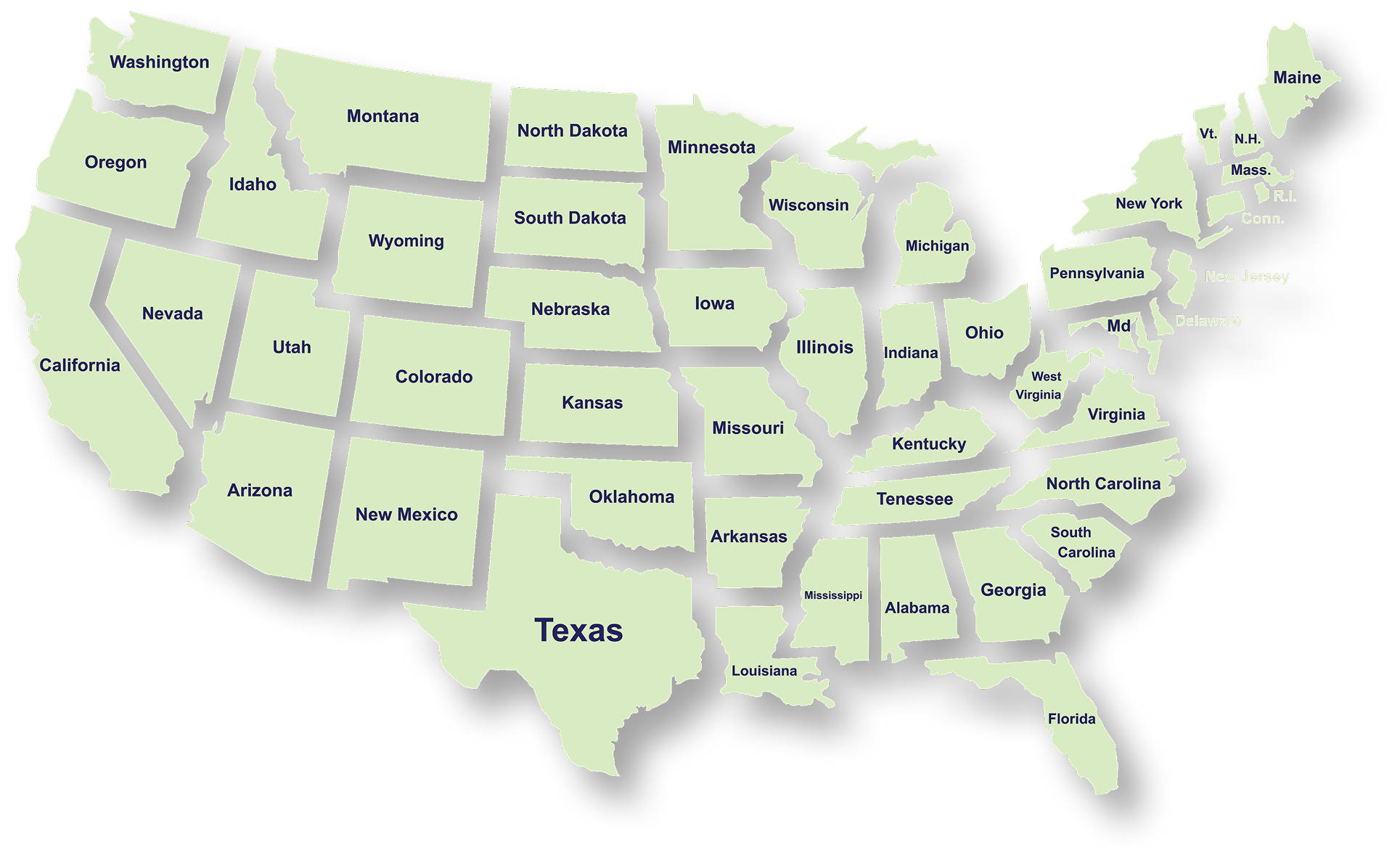
Serving Businesses & Individuals Across USA

We handle accounting, tax filing, and planning with defined timelines and accurate reporting for businesses and individuals across all states.

Frequently Asked Questions

What services does NR CPAs & Business Advisors provide?
What is tax planning and why is it important for businesses?
How can a Virtual CFO help my business?
When should a business consider IRS tax resolution services?
What financial statements does a business typically need?
How can startup advisory services help new businesses?
What is strategic business planning?
What is a Virtual Family Office and who can benefit from it?