Learning Center for Tax and Financial Insights

Stay updated with clear, actionable articles on tax rules, deadlines, deductions, and financial decisions that impact individuals and businesses.

No items found.

Tax Relief for Victims of Hurricane Ian

Article Highlights:Federal Disaster Declaration. Filing Dates Extended.Option as When to Declare the Disaster Loss.Records Located Within Disaster Area.Other Disaster Areas. The Federal government provides special tax law provisions to help taxpayers and businesses recover financially from the impact of a disaster, especially when the federal government declares their location to be a major disaster area as they have for Hurricane Ian. The following highlights the special tax provisions:Filing Due Dates Affected – October 17, 2022 – Is the extended due date for 2021 returns that are on a valid extension. This means individuals who had a valid extension to file their 2021 return due to run out on October 17, 2022, will now have until February 15, 2023, to file. However, because tax payments related to these 2021 returns were due on April 18, 2022, those payments are not eligible for this relief and late payment penalties will apply to any tax due on the return. January 17, 2023 – Is the filing due date for the 4th quarter estimated tax payment which now is not due until February 15, 2023.The February 15, 2023, deadline also applies to:o Quarterly payroll and excise tax returns normally due on October 31, 2022, and January 31, 2023.o Businesses with an original or extended due date also have the additional time including, among others, calendar-year corporations whose 2021 extensions run out on October 17, 2022. Similarly, tax-exempt organizations also have the additional time, including for 2021 calendar-year returns with extensions due to run out on November 15, 2022. In addition, penalties on payroll and excise tax deposits due on or after Sept. 23, 2022, and before Oct. 10, 2022, will be abated as long as the deposits are made by Oct. 10, 2022.Option as When to Declare the Disaster Loss – The IRS allows both individuals and businesses in a federally declared disaster to claim a disaster loss in either the current tax year or the previous tax year. Claiming the loss in the prior year allows taxpayers to get a faster tax refund for the disaster loss. So hurricane Ian losses can be claimed on either:The 2022 return orThe 2021 return by amending an already filed 2021 return or the unfiled 2021 that is currently on extension through October 17, 2022. That extension has been extended through February 15, 2023, as part of the disaster relief. However, careful consideration should be given to which year’s return will provide the greater tax benefit. Also, consider that claiming the loss on the 2021 where there would otherwise be a tax due can reduce or eliminate any late payment penalties.Be sure to write the FEMA declaration number – DR-4673-FL − on any return claiming a loss. See Publication 547 for details.

Explore More
No items found.

Vacation Home Rentals: How the Income Is Taxed

Article Highlights:Home never rentedHome rented for fewer than 15 daysHome rented for at least 15 days with minor personal useHome rented for at least 15 days with major personal useVacation home salesIf you have a second home in a resort area, or if you have been considering acquiring a second home or vacation home, and with summer just around the corner, you may have questions about how rental income is taxed for a part-time vacation-home rental. The applicable rental rules include some interesting twists that you should know about before you begin renting. Although some individuals prefer to never rent out their homes, others find such rentals to be a helpful way of covering the cost of the home. For a home that is rented out part-time, one of three rules must be considered, based on the length of the rental: Home Rented for Fewer Than 15 Days – If a property is rented out for fewer than 15 days in a year, the property is treated as if it were not rented out at all. The rental income is tax-free, and the interest and taxes paid on the home are still deductible as part of itemized deductions and within the usual limitations. In this situation, however, any directly related rental expenses (such as agent fees, utilities, and cleaning charges) are not deductible. This rule can allow for significant tax-free income, particularly when a home is rented as a filming location or during a major sports event such as the Super Bowl. Home Rented For At Least 15 Days with Minor Personal Use – In this scenario, the home is rented for at least 15 days, and the owners’ personal use of the home does not exceed the greater of 15 days or 10% of the rental time. The home’s use is then allocated as both a rental home and a second home. For example, if a home is used 5% of the time for personal use, then 5% of the interest and taxes on that home are treated as home interest and taxes; these costs may be deductible as itemized deductions. The other 95% of the interest and taxes, as well as 95% of the insurance, utilities, and allowable depreciation, count as rental expenses (in addition to 100% of the direct rental expenses). If the rental income less the expenses result in a loss, the loss is limited to $25,000 per year for a taxpayer with adjusted gross income (AGI) of $100,000 or less and is ratably phased out when AGI is between $100,000 and $150,000. Thus, if a taxpayer’s income exceeds $150,000, the rental loss cannot be deducted; it is carried forward until the home is sold or until there is rental profit in a future year or the taxpayer has gains from other passive activities that can be used to offset the loss. Home Rented For At Least 15 Days with Major Personal Use – In this scenario, a home is rented for at least 15 days, but the owner’s personal use exceeds the greater of 14 days or 10% of the rental time. With such major personal use, no rental-related tax loss is allowed. For example, consider a home that has personal use 20% of the time and is a rental for the remaining 80%. The rental income is first reduced by 80% of the combined taxes and interest. If the owner still makes a profit after deducting the interest and taxes, then direct rental expenses and certain other expenses (such as the rental-prorated portion of the utilities, insurance, and repairs) are deducted, up to the amount of the remaining income. If there is still a profit, the owner can take a deduction for depreciation, but this is also limited to the remaining profit. As a result, no loss is allowed, and any remaining profit is taxable. The interest and taxes from the personal use (20% in this example) are deducted as itemized deductions, which are subject to the normal interest and tax limitations.

Explore More
No items found.

ALERT: Tax-exempt Organization Information Returns Due by May 16, 2022

Article Highlights: Informational Return RequirementsDue DateElectronic Filing RequirementFiling ExtensionEven though organizations like charities and foundations may be tax-exempt, the IRS still requires them to file certain information every year. For many of these exempt organizations, the deadline to file their 2021 information return is Monday, May 16, 2022.

Explore More
No items found.

What Every Employee Needs to Know About 401(k) Savings

Are you familiar with 401(k) retirement funds? More and more employers are offering 401(k) plans as an employee benefit, and if you have the option and are not currently taking advantage of it, it may be time to rethink your savings strategy. Not only do these popular plans offer the advantage of using pre-tax dollars (and thus lowering your taxable income each year), but they are also a simple way to ensure that you’re putting away money regularly, without having to give it a thought once you’ve set up the plan.Employers can sign you up automatically in the 401(k) plan that they offer, but even if you have to opt into a plan, once you’ve done so the amount that you’ve elected will automatically be deducted from your paycheck and deposited into your retirement savings account. All you have to do is decide how much you want to set aside each week. The answer to that question is entirely up to you and should be based on what your goals are, as well as variables like your living expenses and your age. The closer you are to retirement age, the less time you have to save so you may want to bump up the amount that you deposit. Because the money that you invest will compound, the sooner you start investing the better. To give you an idea of how money can grow, consider the difference between investing $3,000 a year at an 8% annual return for 30 years – which would add up to $340,856 – versus only saving for 20 years, which would leave you with just $137,752. You also need to keep in mind that there is an annual maximum amount that you are permitted to contribute. Fortunately, that number increases each year. For 2022, the limit is $20,500. You’ll also want to consider whether your employer offers a match, and if so how much that match is. One of the advantages of the 401(k) type of account is that employers can match all or a portion of your contribution, but you need to make sure that you understand exactly how your individual program works. Some employers will only offer a match up to a certain point, and others will only match if you opt for a minimum percentage of your income. Most experts encourage employees to make sure that they are fully taking advantage of whatever match their employer is willing to contribute.

Explore More
No items found.

Corporate and LLC Structure Can Protect Sole Proprietors’ Assets

There are plenty of advantages to being your own boss, but that doesn’t mean that every decision is easy or straightforward. One of the first things you’ll have to decide is the type of business structure that is best for your situation. While selecting “sole proprietor” may seem like the path of least resistance, if you have personal assets at risk for your business’ debts and liabilities, it may make more sense to go with the more complicated route of electing to form as a C- or S-corporation, or even as a limited liability corporation (LLC).What is the difference between each? In a nutshell, if you set up as a C corporation – the preference of venture capital investors – you’ll have to pay taxes as both an individual and as a corporation. By contrast, both S corporations and LLCs have the advantage of a favorable pass-through tax treatment while still providing your personal assets with significant protection. No matter which entity you choose, you won’t find the process costly or complicated, and if you decide to switch at a later date you can do so easily. Still, it’s important to understand that filing a Certificate of Incorporation does not entirely protect you from personal liability. In order to provide yourself and your shareholders with the highest level of personal protection make sure that you do the following:Never use your personal name or the name of a shareholder on any official documents. Whether invoices, correspondence, or contracts, the official corporate name is the only appellation that should be used, and the word “inc.” or “corp.” should be included where corporate. This is the best way to ensure separate entity recognition. The same is true whenever signing on the company’s behalf. Only use the corporate name and include your title, as shown below:CORPORATION NAMEBy: ___________________________________Name and official title of the authorized signerMaintain entirely separate bank accounts for your personal funds and your corporate funds, as well as separate taxes. Corporate tax liabilities should be paid from corporate accounts and personal taxes from personal accounts; the same is true for shareholders.Assuming that you have corporate bylaws and other formalities, make sure that you follow all of them to a tee. This may include ensuring that meeting minutes are recorded, that the Board of Directors holds regular meetings, and that stock is issued.

Explore More
No items found.

From Homeless to Hero: The John Paul DeJoria Story

According to one recent study, there are more than 500,000 people living in homelessness in the United States as of 2022. If you needed a single statistic to underline what a significant issue this really is, let it be that one.In the distant past, one of them was a man named John Paul DeJoria. Born in 1944, he’s a businessman and entrepreneur based in the United States. He’s a noted philanthropist and, by all accounts, is a self-made billionaire. He co-founded the Paul Mitchell line of hair products and, along with the Patron Spirits Company, has certainly made quite an impact on a variety of industries.But it wasn’t always that way.The Journey of John Paul DeJoriaDeJoria was born in Los Angeles, California where, when he was just two years old, his parents went through a divorce. He began living with his mother who, unfortunately, wasn’t able to provide enough financial support for himself or his sibling. Not too long after that, DeJoria was sent to live in a foster home.DeJoria was a part of the California state foster system until the age of nine when his entrepreneurial spirit first began to develop. It was then that he started selling Christmas cards and newspapers in an effort to find some way – any way – to support his family.However, things weren’t necessarily on the way up quite yet.As is true with so many young people in this type of situation, DeJoria joined a street gang. He was an active participant for an unknown period of time while he attended night school. He only left the gang after his night school teacher urged him to – again underlining the importance of knowledgeable and compassionate educators in this country.After finally graduating, DeJoria was still on an uncertain path. He once again made a decision that is quite common for people in these environments – he joined the United States Navy. By this time, he wanted to go to college but had no way to pay for it himself so he spent two years in the Navy in order to get there.

Explore More
No results found.
Thank you! Your submission has been received!
Oops! Something went wrong while submitting the form.

Want tax & accounting tips & insights?Sign up for our newsletter.

Thank you! Your submission has been received!
Oops! Something went wrong while submitting the form.

Why Work With Us?

We combine deep tax expertise, financial strategy, and practical business insight to help you manage complexity, stay compliant, and make confident financial decisions.
A dollar sign, representing financial advice or discussion at NR CPAs & Business Advisors.

Experienced CPA and Enrolled Agent Leadership

Guidance led by licensed professionals with deep expertise in tax strategy, compliance, and complex financial matters.
White bar chart with an upward arrow on green circular background representing growth or progress at NR CPAs &. Business Advisors

Support for Growing Businesses and Startups

We understand the financial challenges of growth stage businesses and provide structured guidance to support expansion.
A white hand holding a dollar symbol and ascending bar chart on a green circular background representing financial growth or investment at NR CPAs & Business Advisors..

Strategic Financial Advisory

Our team helps you evaluate financial decisions with greater clarity, supported by practical insights and long term planning.

Fractional CFO Support

Access experienced financial leadership without the commitment and cost of hiring a full time Chief Financial Officer.

Proactive Tax Planning Approach

We focus on identifying tax opportunities throughout the year rather than reacting only during filing season.

Clear and Reliable Financial Reporting

Accurate financial statements and reporting that help you better understand performance and make informed decisions.
White IRS building icon with pillars and a dollar sign above on a green circular background.

Professional IRS Representation

Experienced support in resolving IRS notices, disputes, and compliance matters while protecting your financial interests.

Personalized Client Focus

Every client receives thoughtful attention and tailored financial solutions based on their specific needs and business goals.
Financial matters often involve important decisions. Working with experienced advisors can help you approach them with greater clarity and confidence in your choices.

Need Help With Your Tax or Financial Decisions?

Discuss your situation with our advisors to get clear guidance on tax planning, IRS matters, and the financial decisions ahead.
Business consulting at NR CPAs & Business Advisors.

Request Your Consultation

Fill out the form to discuss your tax concerns, financial questions, or advisory needs with our team. We will review your details and respond shortly.

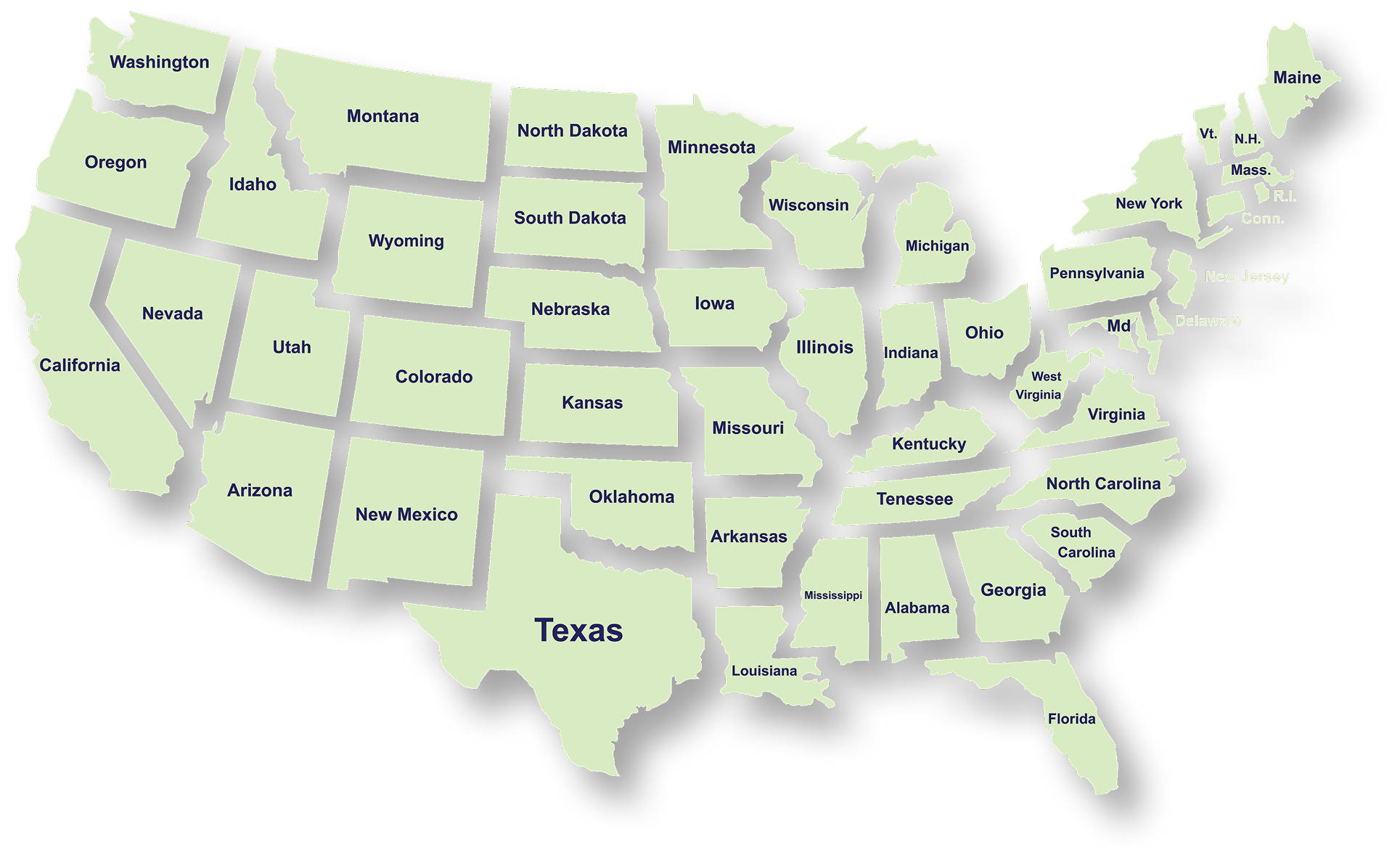
Serving Businesses & Individuals Across USA

We handle accounting, tax filing, and planning with defined timelines and accurate reporting for businesses and individuals across all states.

Frequently Asked Questions

What services does NR CPAs & Business Advisors provide?
What is tax planning and why is it important for businesses?
How can a Virtual CFO help my business?
When should a business consider IRS tax resolution services?
What financial statements does a business typically need?
How can startup advisory services help new businesses?
What is strategic business planning?
What is a Virtual Family Office and who can benefit from it?