Learning Center for Tax and Financial Insights

Stay updated with clear, actionable articles on tax rules, deadlines, deductions, and financial decisions that impact individuals and businesses.

No items found.

Video Tips: Tax Ramifications of Crowdfunding

When you're raising money for your project or business, it's important to be aware of the potential tax implications of your activities. Crowdfunding can be a great way to raise money, but there are a few things you should keep in mind. Watch this video for a brief discussion on how different types of crowdfunding may have different tax ramifications.

Explore More
No items found.

Sun Setting on Home Solar Power Tax Credits

Article Highlights:Non-Refundable Tax CreditOther IncentivesQualificationsFinancingWho Gets the CreditCredit TimingNewly Constructed HomesBatteriesIf you have been considering installing a solar electric system on your home and taking advantage of the lucrative federal tax credit, time is running out. Unless Congress extends the credit, it will no longer be available after 2023. The home solar tax credit is a very lucrative non-refundable federal tax credit for 26% (22% in 2023) of the cost of the system with no maximum. So for example, if the solar electric system cost you $20,000 and was placed in service in 2022, your tax credit would be $5,200 (26% of $20,000). A non-refundable tax credit offsets your tax liability, regular and alternative minimum, dollar for dollar, and any excess is added to any credit allowable in the subsequent year. For example, if your 2022 credit was $5,200 and your 2022 tax liability was $4,000, then $4,000 of the credit would go to pay off your 2022 tax liability and the remaining $1,200 would be added to your 2023 solar credit, if any, and used to reduce your 2023 tax liability. Many state and local governments and public utilities also offer incentives, such as rebates and tax credits, for investment in renewable energy property. When deciding whether to make a purchase, you should consider the available incentives and your cost savings for operating the system.Qualifications - To qualify for the credit, the equipment must be installed in a home that is in the U.S. and that you use as your residence. The credit can't be claimed for equipment that is used to heat a swimming pool or hot tub. If the equipment is used more than 20% for business purposes, only the expenses allocable to non-business use qualify for the credit. The credit covers both the cost of the hardware and the expenses of installing it, such as labor costs for on-site preparation, assembly, and installation of the equipment and for piping or wiring to connect it to your home. You claim the credit in the year in which the installation is completed. If you install the equipment in a newly constructed or reconstructed home, you claim the credit when you move in. Financing - Solar installation companies offer a variety of ways to pay for their systems other than cash. You could take out a loan, and if that loan were secured by your home, generally you would be able to deduct the interest on the loan. Another option is to lease the system, in which case you would not qualify for the solar credit, as the leasing agency would get the credit and the lease payments you make would not be deductible. In addition, for the lease option, you would have to deal with transferring the lease to the new owner should you decide to sell the home before the lease term is up. (This may entail you paying off the lease or the buyer assuming the debt before the sale can be finalized. Some buyers may not want to take on the additional obligation.) Another option is to allow the solar company to install the solar power system and then purchase the electricity from them. You would not be entitled to the solar credit under the latter arrangement.

Explore More
No items found.

Video Tips: A Quick Look at the Work Opportunity Tax Credit

The Work Opportunity Tax Credit (WOTC) is just one of the many tools available to help businesses find qualified candidates and reduce turnover. Employers who are facing a tight job market should definitely check out this valuable tax credit.

Explore More
No items found.

RMDs and IRA-to-Charity Distribution Provisions

Article HighlightsRequired Minimum Distributions Qualified Charitable DistributionQCD BenefitsFly In the Ointment Tax law requires individuals who have reached age 72 to begin taking minimum distributions from their traditional IRA accounts. These are referred to as a required minimum distribution or RMD. The RMD amount is the value of the IRA account on the last day of the prior year divided by the distribution period from the Uniform Lifetime Table, corresponding to the taxpayer’s attained age. For example, if an individual had their 75th birthday in the current year, the distribution period from the table is 24.6. If the balance in the IRA was $500,000 on the last day of the prior year, then the individual’s RMD for the current year would be $20,325 ($500,000/24.6). (The IRS develops the Table using mortality rate data and updated it effective with 2022 distributions.)Qualified Charitable Distributions - The tax law also permits individuals aged 70½ or over to transfer funds from their IRA accounts to charities in what is referred to as Qualified Charitable Distributions (QCDs). These QCDs are not taxable and where a taxpayer is also required to make required minimum distributions (RMDs), the QCDs count toward the RMD requirement. Thus, in our prior example, if the individual had transferred the $20,325 to a qualified charity in a QCD, the $20,325 would not have been taxable. QCDs are not limited to the RMDs. For those with large IRA balances QCDs can total up $100,000 per year. Neither are QCDs limited to a single transfer in a tax year so long as the total distributed does not exceed the $100,000 annual limit.Example: Anne wants to contribute to her church’s building fund, the American Cancer Society, and the American Red Cross in the same year. She can do that by having her IRA make separate direct transfers to each charity.It is important to remember that all individual’s Traditional IRAs are treated as one for purposes of determining an RMD and that all QCDs must be direct transfers by the IRA trustee to the charity. QCD Benefits – QCDs can provide significant tax benefits. Here is how this provision, if utilized, plays out on a tax return:(1) The IRA distribution is excluded from income. (2) The distribution counts toward the taxpayer’s RMD for the year; and (3) The distribution does NOT count as a charitable contribution deduction. At first glance, this may not appear to provide a tax benefit. However, by excluding the distribution, a taxpayer lowers his or her adjusted gross income (AGI), which helps for other tax breaks (or punishments) that are pegged at AGI levels, such as medical expenses if itemizing deductions, passive losses, taxable Social Security income, and so on. In addition, non-itemizers essentially receive the benefit of a charitable contribution to offset the IRA distribution.Fly In the Ointment – In the past the tax code did not permit contributions to IRAs by individuals once they reached age 70½, which coordinated with the prior age requirement to begin RMDs and the ability to make QCDs. The age restriction to contribute to IRAs has been eliminated, so now individuals may make IRA contributions at any age provided they have earned income.

Explore More
No items found.

What Do You Do If the IRS Wants to “Audit” Your Tax Return?

The word “audit” tends to strike fear in the hearts of American taxpayers, but the truth is that not every audit is a result of a problem, or that the Internal Revenue Service suspects you of wrongdoing. There are several reasons why the IRS might want to audit your taxes and financial information, and there are several steps that you can take to make the process as painless as possible.In light of an uptick in identity theft scams involving tax audits and returns, we want to take a moment before delving into this topic to stress that the IRS will never institute an audit process via telephone or email. Taxpayers are always alerted of an upcoming audit by U.S. mail.Reasons for IRS AuditsThough it is certainly true that some audits are generated by irregularities, the IRS can also request an audit to verify the information contained within your tax papers, to correct a simple mistake such as failing to attach a Schedule, or because the individual taxpayer has some kind of involvement with other taxpayers — such as business partners or investors — whose paperwork raised questions. You may even have been selected for audit as a result of a random selection process designed to gauge taxpayer returns to see how they compare to national norms.Different types of auditsThere are three types of audits conducted by the IRS. In all cases, the taxpayer will be notified of the review by mail.Correspondence audit – Generally a result of a low-level error or omission, the agency sends out information to the taxpayer referencing the mistake and requesting that revised information be submitted via mail.Office audit – This type of audit is more intimidating, as it requires the taxpayer to appear at an IRS office, bringing their documentation along with them. These audits are often the result of deductions or credits that are out of the norm, such as an unusually large medical expense deduction for which the agency requires documentation in the form of invoices and payment receipts.Field audit – The most intrusive of all audits, a field audit involves IRS agents coming to the taxpayer, usually visiting either their place of business or their home in order to review the tax return in detail.How to prepare for an auditReceiving notice of a tax audit will put a stutter in the step of even the most meticulous and upstanding taxpayer, but the nerves set off by the notice can easily be offset with the knowledge that you’ve kept good records and maintained copies of all pertinent documents. If you haven’t been keeping careful records, understand that in the face of an audit it will be up to you to prove that you deserve whatever deduction you’ve taken, so amend your ways and start keeping well-organized files of all financial statements, invoices, and receipts. Doing so will not only be a substantial help in case of an audit, but it will also be remarkably helpful should you need to assess your business’ health or put together a financial statement for potential investors or when applying for a loan.

Explore More
No items found.

Don’t Overlook Your Charitable Contributions

Article Highlights:Charitable Itemized DeductionsBunching DeductionsQualified Charitable DistributionsDonor-Advised Funds Volunteer ExpensesMisconceptionsHousehold Goods and Used ClothingDocumenting Charitable ContributionsYour charitable contributions include a wide variety of tax-saving opportunities, some you may not be aware of and some that are frequently overlooked. And there are some contributions that you may believe are deductible that really are not. Being knowledgeable of what is and is not a qualified charity, a qualified charitable contribution, and charitable giving strategies can go a long way towards maximizing your charitable tax deduction.To be deductible the contributions must be made to qualified charitable organizations, which generally only include U.S. nonprofit groups that are religious, charitable, educational, scientific, or literary in purpose, or that work to prevent cruelty to children or animals. You can ask any organization whether it is a qualified organization, and most will be able to tell you. You can also check by going to IRS.gov/TEOS. This online tool will enable you to search for qualified organizations.Also, to be able to deduct charitable contributions, one must itemize their deductions. This means that to achieve any tax benefit from your charitable donations, you cannot use the standard deduction, which for example is $12,950 for those filing single, $19,400 filing head of household and $25,900 for married individuals filing jointly for 2022. The standard deduction is adjusted annually for inflation. If the total of all your itemized deductions does not exceed the standard deduction amount for the year, then you are better off taking the standard deduction, but in doing so, you will get no tax benefit from your charitable contributions. Congress did revise the law to allow limited amounts of cash contributions made in 2020 and 2021 to be deducted without itemizing, but this was only a temporary provision and doesn’t apply in other years.Bunching – If your charitable deductions are not enough to bring your itemized deductions greater than your standard deduction, the bunching strategy may work for you. When employing the bunching strategy, a taxpayer essentially doubles up on as many deductions as possible in one year, with the goal of itemizing deductions in one year and then taking the standard deduction in the following year. Because charitable contributions are entirely payable at your discretion, they fit right into the bunching strategy. For example, if you normally tithe at your church, you could make your normal contributions throughout the current year and then prepay the entire subsequent year’s tithing in a lump sum in December of the current year, thereby doubling up on the church contribution in one year and having no charity deduction for church in the next year. Normally, charities are very active with their solicitations during the holiday season, giving you the opportunity to decide whether to make contributions at the end of the current year or simply wait a short time and make them after the end of the year. Be sure you get a receipt or acknowledgment letter from the organization that clearly shows the year when the contribution was made.As a rule, most taxpayers just wait until tax time to add up their potential deductions and then use the higher of the standard deduction or their itemized deductions. If you want to be more proactive, here are some strategies that might work for you. Qualified Charitable Distribution – If you are age 70.5 or older, you can make charitable contributions by transferring funds from your IRA account to a charity, which are referred to as qualified charitable distributions (QCDs). The only hitch here is the funds must be transferred directly from the IRA to the charity, meaning your IRA trustee will have to make the distribution to the charity. The tax rules don’t set a minimum amount that needs to be transferred but your IRA trustee may do so. The maximum of all such transfers is $100,000 per year, per taxpayer. Also note that distributions to private foundations and donor-advised funds don’t qualify for the QCD.Thus, this strategy allows you to make a charitable contribution without itemizing deductions; since these distributions are tax-free, you can’t also claim a deduction for them. Even better, QCDs also count toward your minimum required distribution for the year. Because QCDs are nontaxable, your AGI will be lower, and you can benefit from tax provisions that are pegged to AGI, such as the amount of Social Security income that’s taxable and the cost of Medicare B insurance premiums for higher-income taxpayers.Caution: Any IRA contributions made after reaching age 70.5 can diminish the tax benefits of this strategy. If any post-age 70.5 IRA contributions have been made, consult with this office before employing this strategy. If you decide to make a QCD, check with your IRA custodian on the IRA’s rules for how to request the QCD and be sure to give the IRA custodian ample time to complete the process if you are making the request toward the end of the year. Always get a written acknowledgment from the charity, for tax-reporting purposes. Donor-Advised Funds – Contributing to a donor-advised fund is a way to make a large (and generally deductible) charitable contribution in one year and put funds aside to satisfy the donor’s social obligations to make charitable contributions in future years, without incurring the expenses of setting up a private foundation and satisfying annual filing and other private foundation requirements. While generally considered a tax strategy for those with an unusually high income for the year, donor-advised funds are available to everyone, although most such funds set up through brokerages have minimum donation requirements, often $5,000–$25,000. Although they may bear the donor's name, donor-advised funds are not separate entities but are mere bookkeeping entries. They are components of a qualified charitable organization. A contribution to a charity's donor-advised fund may be deductible in the year when it is made if it isn't considered earmarked for a particular distributee. The charity must fully own the funds and have ultimate control over their distribution. To document the contribution, the taxpayer must get written acknowledgement from the fund's sponsoring organization that it has exclusive legal control over the contributed assets. Although the donor can advise the charity, which generally will follow the donor’s recommendations, the donor cannot have the power to select distributees or decide the timing or amounts of distributions. The charity must also ensure that all distributions from the fund are arm’s length and do not directly or indirectly benefit the donor.Example: Don and Shirley donate $25,000 to a donor-advised fund in one year. The $25,000 can be in the form of cash or even appreciated stock. Don and Shirley get a deduction for the full $25,000 as a charitable contribution on their return for the year of the contribution and can suggest the amounts of distributions from the donor-advised fund that should be made to various charities over a number of years. Thus, Don and Shirley achieve a large charitable contribution in one year that can be used to fund their charitable obligations over several years and can claim the $25,000 as an itemized deduction on their return for the year when they made the donation. They do not get a charitable contribution deduction when the funds are paid out from the fund to the various charities. Volunteer Expenses - If you volunteered your time for a charity or governmental entity, you probably qualify for some tax breaks. Although no tax deduction is allowed for the value of services performed for a qualified charity or federal, state or local governmental agency, some deductions are permitted for out-of-pocket costs incurred while performing the services. The following are some examples: Away-from-home travel expenses while performing services for a charity, including out-of-pocket round-trip travel costs, taxi fares, and other costs of transportation between the airport or station and hotel, plus 100% of lodging and meals. These expenses are only deductible if there is no significant element of personal pleasure associated with the travel or if your services for a charity do not involve lobbying activities. The cost of entertaining others on behalf of a charity, such as wining and dining a potential large contributor (but the costs of your own entertainment and meals are not deductible). If you use your car or other vehicle while performing services for a charitable organization, you may deduct your actual unreimbursed expenses that are directly attributable to the services, such as gas and oil costs, or you may deduct a flat 14 cents per mile for the charitable use of your car. You may also deduct parking fees and tolls. You can deduct the cost of the uniform you wear when doing volunteer work for the charity, as long as the uniform has no general utility. The cost of cleaning the uniform can also be deducted. Misconceptions - There are some misconceptions as to what constitutes a charitable deduction, and the following are frequently encountered issues:No deduction is allowed for contributions of cash or property to the extent the donor received a personal benefit from the donation. Often, the IRS attributes at least some (if not total) personal benefit to amounts spent for items like dinner tickets, church school tuition, YMCA dues, raffles, etc. To determine the allowed contribution amount, subtract the FMV of the “personal benefit” item from the cost and deduct the remainder. Most charities now allocate the deductible, nondeductible portions.Taxpayers who have purchased tickets for benefit football games, youth-group car washes, parish pancake breakfasts, school plays, etc., with no intention of attending these events, may think they can deduct the expense as a direct contribution to the sponsoring institution. The IRS does not allow such deductions. On the other hand, if the taxpayer returns the ticket to the organization for resale and does not receive a refund of the cost of the ticket, the entire amount paid for the ticket is deductible. No deduction is allowed for the depreciation of vehicles, computers or other capital assets as a charitable deduction. Example: Kathy volunteers as a member of the sheriff’s mounted search and rescue team. As part of volunteering, Kathy is required to provide a horse. Kathy is not allowed to deduct the cost of purchasing her horse or to depreciate the value of her horse. She can, however, deduct uniforms, travel, and other out-of-pocket expenses associated with the volunteer work.

Explore More
No results found.
Thank you! Your submission has been received!
Oops! Something went wrong while submitting the form.

Want tax & accounting tips & insights?Sign up for our newsletter.

Thank you! Your submission has been received!
Oops! Something went wrong while submitting the form.

Why Work With Us?

We combine deep tax expertise, financial strategy, and practical business insight to help you manage complexity, stay compliant, and make confident financial decisions.
A dollar sign, representing financial advice or discussion at NR CPAs & Business Advisors.

Experienced CPA and Enrolled Agent Leadership

Guidance led by licensed professionals with deep expertise in tax strategy, compliance, and complex financial matters.
White bar chart with an upward arrow on green circular background representing growth or progress at NR CPAs &. Business Advisors

Support for Growing Businesses and Startups

We understand the financial challenges of growth stage businesses and provide structured guidance to support expansion.
A white hand holding a dollar symbol and ascending bar chart on a green circular background representing financial growth or investment at NR CPAs & Business Advisors..

Strategic Financial Advisory

Our team helps you evaluate financial decisions with greater clarity, supported by practical insights and long term planning.

Fractional CFO Support

Access experienced financial leadership without the commitment and cost of hiring a full time Chief Financial Officer.

Proactive Tax Planning Approach

We focus on identifying tax opportunities throughout the year rather than reacting only during filing season.

Clear and Reliable Financial Reporting

Accurate financial statements and reporting that help you better understand performance and make informed decisions.
White IRS building icon with pillars and a dollar sign above on a green circular background.

Professional IRS Representation

Experienced support in resolving IRS notices, disputes, and compliance matters while protecting your financial interests.

Personalized Client Focus

Every client receives thoughtful attention and tailored financial solutions based on their specific needs and business goals.
Financial matters often involve important decisions. Working with experienced advisors can help you approach them with greater clarity and confidence in your choices.

Need Help With Your Tax or Financial Decisions?

Discuss your situation with our advisors to get clear guidance on tax planning, IRS matters, and the financial decisions ahead.
Business consulting at NR CPAs & Business Advisors.

Request Your Consultation

Fill out the form to discuss your tax concerns, financial questions, or advisory needs with our team. We will review your details and respond shortly.

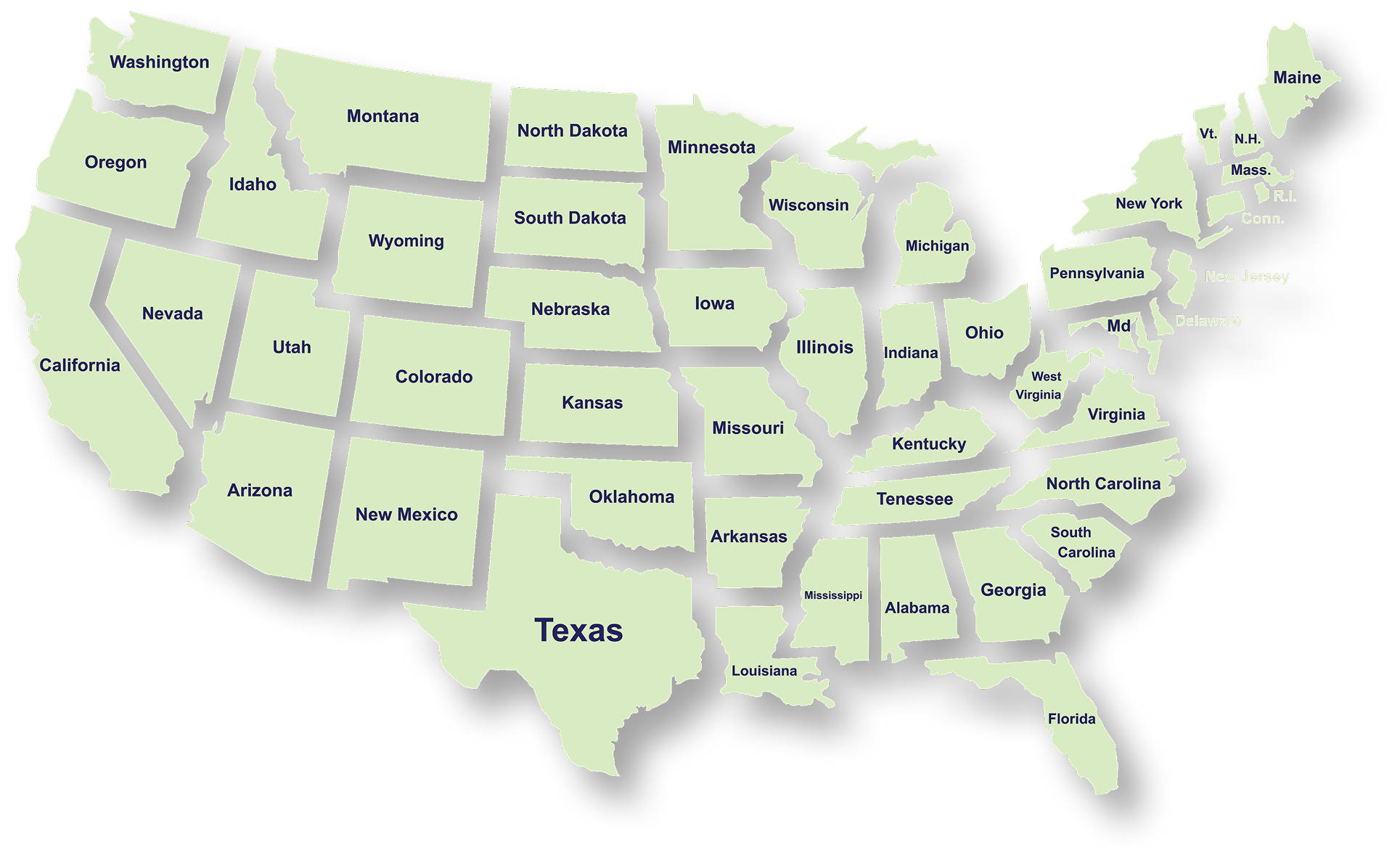
Serving Businesses & Individuals Across USA

We handle accounting, tax filing, and planning with defined timelines and accurate reporting for businesses and individuals across all states.

Frequently Asked Questions

What services does NR CPAs & Business Advisors provide?
What is tax planning and why is it important for businesses?
How can a Virtual CFO help my business?
When should a business consider IRS tax resolution services?
What financial statements does a business typically need?
How can startup advisory services help new businesses?
What is strategic business planning?
What is a Virtual Family Office and who can benefit from it?