Learning Center for Tax and Financial Insights

Stay updated with clear, actionable articles on tax rules, deadlines, deductions, and financial decisions that impact individuals and businesses.

No items found.

July 2022 Business Due Dates

July 1 - Self-Employed Individuals with Pension PlansIf you have a pension or profit-sharing plan, you may need to file a Form 5500 or 5500-EZ for calendar year 2021. Even though the forms do not need to be filed until August 1, you should contact this office now to see if you have a filing requirement, and if you do, allow time to prepare the return

Explore More
No items found.

Small Businesses Can Benefit from the Work Opportunity Tax Credit

Article Highlights:What is the Work Opportunity Tax Credit?Maximum CreditWho Can Claim the Credit?Qualified EmployeesPre-screening and CertificationTax-exempt EmployersThe Work Opportunity Tax Credit (WOTC) is a general business credit that is jointly administered by the Internal Revenue Service (IRS) and the Department of Labor (DOL). The WOTC is available for wages paid to certain individuals who begin work on or before December 31, 2025.The WOTC may be claimed by any employer that hires and pays or incurs wages to certain individuals who are certified by a designated local agency (sometimes referred to as a state workforce agency) as being a member of one of 10 targeted groups.In general, the WOTC is equal to 40% of up to $6,000 of wages paid to, or incurred on behalf of, an individual who:Is in their first year of employment with the business;Is certified as being a member of a targeted group; andPerforms at least 400 hours of services for that employer.However, an employer cannot claim the WOTC for employees who are rehired.Maximum Credit - Thus, the maximum tax credit is generally $2,400. A 25% rate applies to wages for individuals who perform fewer than 400 but at least 120 hours of service for the employer. Up to $24,000 in wages may be considered in determining the WOTC for certain qualified veterans.Who Can Claim the Credit - Employers of all sizes are eligible to claim the WOTC. This includes both taxable and certain tax-exempt employers located in the United States and in certain U.S. territories. Taxable employers claim the WOTC against income taxes, and in general, may carry the current year’s unused WOTC back one year and then forward 20 years. The procedure is different for eligible tax-exempt employers; they can claim the WOTC only against payroll taxes and only for wages paid to members of the Qualified Veteran targeted group.Qualified Employees - An employer may claim the WOTC for an individual who is certified as a member of any of the following targeted groups:Qualified IV-A Recipient - An individual who is a member of a family receiving assistance under a state plan approved under part A of title IV of the Social Security Act relating to Temporary Assistance for Needy Families (TANF). The assistance must be received for any 9-month period during the 18-month period ending on the hiring date.Qualified Veteran - A “qualified veteran” is a veteran who is any of the following:o A member of a family receiving assistance under the Supplemental Nutrition Assistance Program (SNAP) (food stamps) for at least 3 months during the first 15 months of employment.o Unemployed for a period totaling at least 4 weeks (whether or not consecutive) but less than 6 months in the 1-year period ending on the hiring date.o Unemployed for a period totaling at least 6 months (whether or not consecutive) in the 1-year period ending on the hiring date.o A disabled veteran entitled to compensation for a service-connected disability hired not more than one year after being discharged or released from active duty in the U.S. Armed Forces.o A disabled veteran entitled to compensation for a service-connected disability who is unemployed for a period totaling at least six months (whether or not consecutive) in the one-year period ending on the hiring date.o See IRS Notice 2012-13 for addition details.Ex-Felon - A “qualified ex-felon” is a person hired within a year of:o Being convicted of a felony oro Being released from prison from the felonyDesignated Community Resident (DCR) – Who is at least 18 years old and under 40, who resides within one of the following:o An Empowerment Zoneo An Enterprise communityo A Renewal communityand continues to reside at the locations after employment.Vocational Rehabilitation Referral - A “vocational rehabilitation referral” is a person who has a physical or mental disability and has been referred to the employer while receiving or upon completion of rehabilitative services pursuant to:o A state plan approved under the Rehabilitation Act of 1973 ORo An Employment Network Plan under the Ticket to Work program, ORo A program carried out under the Department of Veteran Affairs.Summer Youth Employee - A “qualified summer youth employee” is one who:o Is at least 16 years old, but under 18 on the date of hire or on May 1, whichever is later, ando Is only employed between May 1 and September 15 (was not employed prior to May 1) ando Resides in an Empowerment Zone (EZ), enterprise community or renewal community.Supplemental Nutrition Assistance Program (SNAP) Recipient - A “qualified SNAP benefits recipient” is an individual who on the date of hire is:o At least 18 years old and under 40, ANDo A member of a family that received SNAP benefits for:• the previous 6 months OR• at least 3 of the previous 5 monthSupplemental Security Income (SSI) Recipient - An individual is a “qualified SSI recipient” if a month for which this person received SSI benefits is within 60 days of the date this person is hired.Long-Term Family Assistance Recipient - A “long term family recipient” is an individual who at the time of hiring is a member of a family that meet one of the following conditions:o Received assistance under an IV-A program for a minimum of the prior 18 consecutive months; ORo Received assistance for 18 months beginning after 8/5/1997 and it has not been more than 2 years since the end of the earliest of such 18-month period; ORo Ceased to be eligible for such assistance because a Federal or State law limited the maximum time those payments could be made, and it has been not more than 2 years since the cessation.Qualified Long-Term Unemployment Recipient - A qualified long-term unemployment recipient is one who has been unemployed for not less than 27 consecutive weeks at the time of hiring and received unemployment compensation during some or all or the unemployment period.

Explore More
No items found.

Keeping Up With Receivables: Know Who Owes You

QuickBooks Online provides numerous ways for you to know which customers owe you money – and who is late.There are so many financial details to keep track of when you’re running a small business. You have to make sure your products and services are in good shape and ready to sell. You have to stay current with your bills. Orders need to be processed as quickly as possible, as do estimates and invoices. And you may have numerous questions from customers and vendors that must be addressed.Your number one priority, however, is ensuring that your customers are paying you. Whether you accept credit cards or bank transfers or issue sales receipts for cash and checks, you need to always know where you stand with incoming payments. “Are my receivables current?” should be a question you’re asking yourself or your staff frequently.QuickBooks Online offers numerous ways to know whether you’re being paid for your products and/or services and who might be falling behind. That information is critical to your understanding of how your receivables are stacking up against your payables. You should be able to gauge whether you’re making a profit, staying even, or losing money. Here’s a look at the tools you can use.Learning When You LaunchQuickBooks Online provides a good overview of your current cash flow as soon as you log into the site and see your two-pronged Dashboard. The first thing you see when you click the Business overview tab is a cash flow forecast that goes up to 24 months. Other content includes a profit and loss graph and charts showing expenses, income (including open and overdue invoice totals), and sales. Your account balances are there, too.This is helpful data, but it’s broad. To get far more detailed information, hover your mouse over Sales in the toolbar and select All Sales. The horizontal bar across the top displays dollar and transaction totals for estimates, unbilled activity, overdue (invoices), open invoices, and (invoices) paid last 30 days. When you click one of the bars, the list changes to show only that particular set of transactions.Partial view of the toolbar at the top of the Sales Transactions pageThe table of transactions is interactive. That is, there’s an Action column at the end of each row. Click the down arrow next to any of the activity listed there, and you’ll see a menu of options. Depending on the status of each, these options include commands like Receive payment, Send reminder, Print packing slip, Send, and Void.Running ReportsThe Sales Transactions page provides more of your receivables nuts and bolts than the Business overview screen does. But to get the most in-depth, customizable, comprehensive view of who owes you, you’ll need to run reports. Click Reports in the toolbar and scroll down to Who owes you.

Explore More
No items found.

Video Tips: Business Owners' Tax Advantages

If you are a small business owner, there may be tax benefits that you are not fully utilizing. Among them, some benefits such as business meal tax deduction have been enhanced to 100% in favor of small business owners. Watch this video for the tax advantages on which you may be missing out.

Explore More
No items found.

Sold or Thinking of Selling Your Home?

Article Highlights: Home Sale Exclusion2 out of 5 RuleBusiness Use of the HomeGain or Loss from a SalePrevious Use as a RentalForm 1099-S IRS MatchingRecordsIf you sold your home this year or are thinking about selling it, there are many tax-related issues that could apply to that sale. To help you prepare for reporting the sale you may have already made or make you aware of what issues you may face if you are in the “thinking about” stage, this article covers the tax basics and some special situations related to home sales and the home-sale gain exclusion. Home Sale Exclusion – For decades, Congress has encouraged home ownership, including by providing various tax breaks for taxpayers selling their homes. Under the current version of the tax code, you are allowed an exclusion of up to $250,000 ($500,000 for married couples) of gain from the sale of your primary residence if you owned and lived in it for at least 2 of the 5 years counting back from the sale date. You also cannot have previously taken a home-sale exclusion within the 2 years immediately preceding the sale. There is no limit on the number of times you can use the exclusion as long as you meet these time requirements; however, under some extenuating circumstances you may still be able to claim a reduced amount of the exclusion even if you haven’t satisfied the time requirements. The home-sale gain exclusion only applies to your main home, not to a second home or a rental property. 2 out of 5 Years Rule – As noted above, you must have used and owned the home for 2 out of the 5 years immediately preceding the sale. The years don’t have to be consecutive or the closest to the sale date. Vacations, short absences and short rental periods do not reduce the use period. If you are married, to qualify for the $500,000 exclusion, both you and your spouse must have used the home for 2 out of the 5 years prior to the sale, but only one of you needs to meet the ownership requirement. When only one spouse in a married couple qualifies, the maximum exclusion is limited to $250,000 instead of $500,000. Although this situation is quite rare, if you acquired the home as part of a tax-deferred exchange (sometimes referred to as a 1031 exchange), then you must have owned the home for a minimum of 5 years before the home-gain exclusion can apply.If you don’t meet the ownership and use requirements, there are some situations in which a prorated exclusion amount may be possible. An example of this situation would be if you were required to sell the home because of extenuating circumstances, such as a job-related move, a health crisis or other unforeseen events. Another rule extends the 5-year period to account for the deployment of military members and certain other government employees. Please call this office if you have not met the 2 out of 5 years rule to see if you qualify for a reduced exclusion. Business Use of the Home – If you used your home for business and claimed a tax deduction—for instance, for a home office, storing inventory in the home or using it as a day care center—that deduction probably included an amount to account for the home’s depreciation. In that case, up to the extent of the gain, the claimed depreciation cannot be excluded. Figuring Gain or Loss from a Sale – The first step is to determine how much the home cost, combining the purchase price and the cost of improvements. From this total cost, subtract any claimed casualty loss deductions and any depreciation taken on the home. The result is your tax basis. Next, subtract the sale expenses and this tax basis from the sale price. The result is your net gain or loss on the sale of the home.If the result is negative, the sale is a loss; losses on personal-use property such as homes cannot be claimed for tax purposes.If the result is a gain, however, subtract any home-gain exclusion (discussed above) up to the extent of the gain. This is your taxable gain, which is, unfortunately, subject to income tax. If you owned the home for at least a year and a day, the gain will be a long-term capital gain; as such, it will be taxed at the special capital-gains rate, which ranges from zero for low-income taxpayers to 20% for high-income taxpayers. Depending on the amount of all of your income, the gain may also be subject to the 3.8% net investment income surtax that was added as part of the Affordable Care Act. The tax computation can be rather complicated, so please call this office for assistance.

Explore More
No items found.

Cutting the IRS Out of Your Gifts

Article Highlights:Gift Tax RuleAnnual ExemptionLifetime ExemptionMedical and Tuition ExemptionsGift SplittingGifts of PropertyIf you are financially well off, you may want to gift money or property to family members or others you care about. If that is the case, there are some gift tax issues you should be aware of. Oh yes, the government even taxes gifts if they are large enough, so it is best to know the rules; otherwise, you may end up making a gift of taxes to the IRS.The gift tax rules provide two exclusions from gift tax, the annual exclusion and the lifetime exclusion:Annual Exclusion – The annual exclusion is periodically adjusted for inflation and is currently $16,000 per individual. Thus, you can give $16,000 a year to as many individuals as you wish without any gift tax or gift tax return filing requirements.Lifetime Exclusion – On top of the annual exclusion, there is a lifetime exclusion that is linked to the estate tax exclusion, which is also inflation adjusted, and for 2022 is $12,060,000. Thus, in addition to the $16,000 annual per donee exclusion, there is a $12.06 million exclusion that applies to the aggregate of all gifts more than the $16,000 per year per donee gifts.There are complications to utilizing the lifetime exclusion. You must file a gift tax return to claim the lifetime exclusion, and the amounts of the lifetime exclusion used as an exclusion from gift tax will be tracked on any gift tax return(s) filed and will reduce the estate tax exclusion. So for example, if in 2022 you make a gift of $3 million to your child, and you haven’t made gifts in the past that exceeded the annual per donee gift tax exclusion, you will pay no gift tax, but you will have reduced your remaining lifetime exclusion to $9.06 million ($12.06 million less $3 million). If you make more large gifts in the future that use up your remaining lifetime exclusion, not only will you then be subject to gift tax on the excess gifts, but at your passing, and assuming the value of your estate is large enough to be subject to estate tax, you will have no estate tax exclusion left to offset the estate’s value, so it will all be subject to estate tax.CAUTION - The estate tax rates and the lifetime exclusion have long been a political football. They date back to 2006, when the lifetime exclusion was $2 million. Congress can change the current exclusion at any time. In fact, recent proposed legislation would reduce the exclusion to $5 million.Special Tuition/Medical Exclusion - In addition to the current $16,000 annual exclusion, a donor may make gifts that are totally excluded from the gift tax in the following circumstances:Payments made directly to an educational institution for tuition. This includes college and private primary education. It does not include books or room and board.Payments made directly to any person or entity providing medical care for the donee.

Explore More
No results found.
Thank you! Your submission has been received!
Oops! Something went wrong while submitting the form.

Want tax & accounting tips & insights?Sign up for our newsletter.

Thank you! Your submission has been received!
Oops! Something went wrong while submitting the form.

Why Work With Us?

We combine deep tax expertise, financial strategy, and practical business insight to help you manage complexity, stay compliant, and make confident financial decisions.
A dollar sign, representing financial advice or discussion at NR CPAs & Business Advisors.

Experienced CPA and Enrolled Agent Leadership

Guidance led by licensed professionals with deep expertise in tax strategy, compliance, and complex financial matters.
White bar chart with an upward arrow on green circular background representing growth or progress at NR CPAs &. Business Advisors

Support for Growing Businesses and Startups

We understand the financial challenges of growth stage businesses and provide structured guidance to support expansion.
A white hand holding a dollar symbol and ascending bar chart on a green circular background representing financial growth or investment at NR CPAs & Business Advisors..

Strategic Financial Advisory

Our team helps you evaluate financial decisions with greater clarity, supported by practical insights and long term planning.

Fractional CFO Support

Access experienced financial leadership without the commitment and cost of hiring a full time Chief Financial Officer.

Proactive Tax Planning Approach

We focus on identifying tax opportunities throughout the year rather than reacting only during filing season.

Clear and Reliable Financial Reporting

Accurate financial statements and reporting that help you better understand performance and make informed decisions.
White IRS building icon with pillars and a dollar sign above on a green circular background.

Professional IRS Representation

Experienced support in resolving IRS notices, disputes, and compliance matters while protecting your financial interests.

Personalized Client Focus

Every client receives thoughtful attention and tailored financial solutions based on their specific needs and business goals.
Financial matters often involve important decisions. Working with experienced advisors can help you approach them with greater clarity and confidence in your choices.

Need Help With Your Tax or Financial Decisions?

Discuss your situation with our advisors to get clear guidance on tax planning, IRS matters, and the financial decisions ahead.
Business consulting at NR CPAs & Business Advisors.

Request Your Consultation

Fill out the form to discuss your tax concerns, financial questions, or advisory needs with our team. We will review your details and respond shortly.

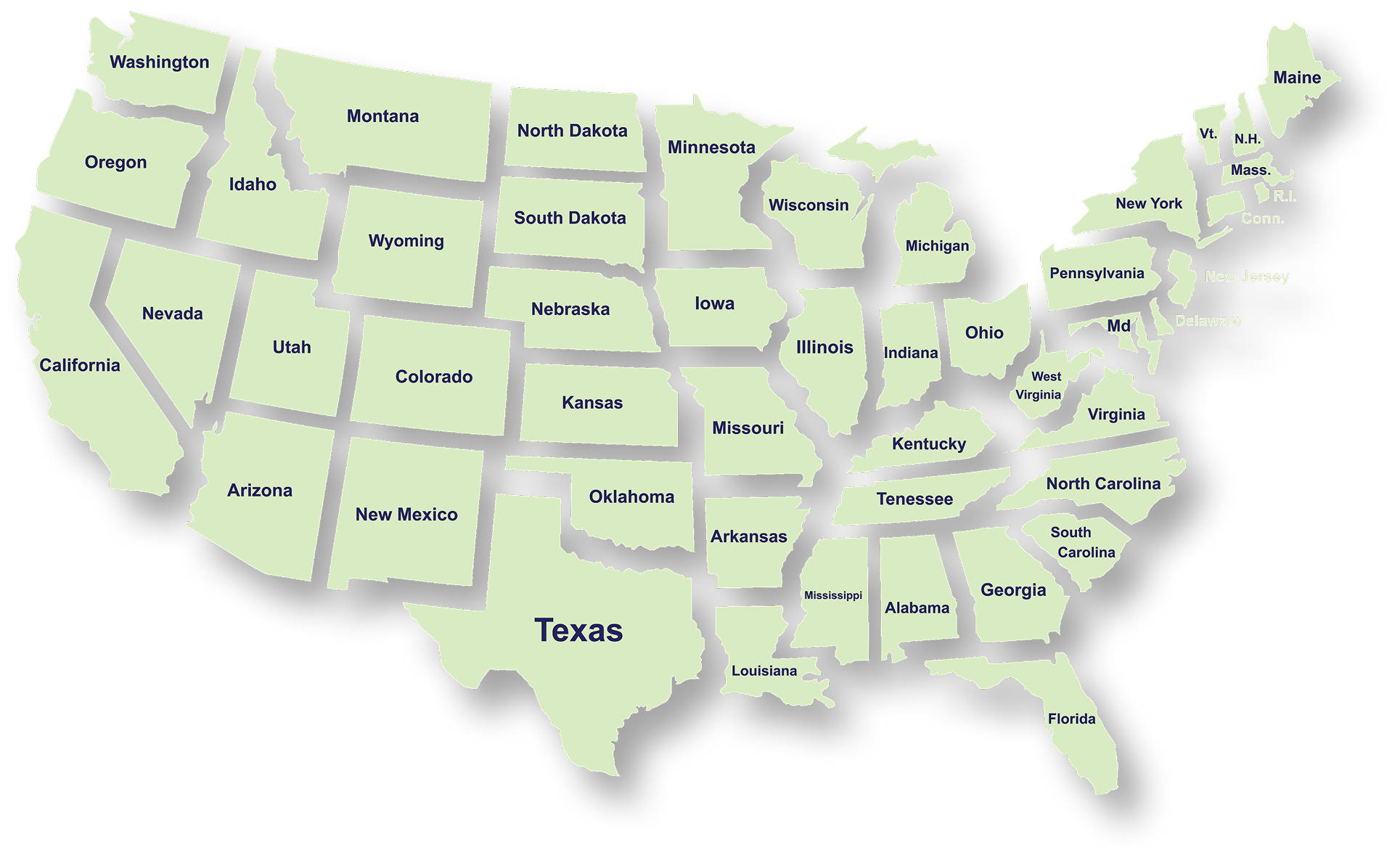
Serving Businesses & Individuals Across USA

We handle accounting, tax filing, and planning with defined timelines and accurate reporting for businesses and individuals across all states.

Frequently Asked Questions

What services does NR CPAs & Business Advisors provide?
What is tax planning and why is it important for businesses?
How can a Virtual CFO help my business?
When should a business consider IRS tax resolution services?
What financial statements does a business typically need?
How can startup advisory services help new businesses?
What is strategic business planning?
What is a Virtual Family Office and who can benefit from it?