Learning Center for Tax and Financial Insights

Stay updated with clear, actionable articles on tax rules, deadlines, deductions, and financial decisions that impact individuals and businesses.

No items found.

The Top Cash Flow Tips That Medical Practices Need to Follow

By far, one of the biggest issues that most organizations face is and will always be cash flow. This is especially true when it comes to medical practices, which rely more heavily on customer invoicing than most.Getting a hold of your practice’s cash flow situation may be difficult, but it certainly isn’t impossible – provided that you’re able to keep a few key tips and tricks in mind.Cash Flow Best Practices for Medical Organizations: Breaking Things DownObviously, there are a lot of factors that stand to impact the cash flow capabilities of a medical practice – which is why it’s always so important to address the situation from as many angles as possible.Case in point: a medical provider should always be verifying the insurance status of a patient before offering services of any kind. If an emergency situation were to come up, you definitely have a duty to do whatever is in your power to help someone out. But at the same time, that doesn’t mean that you can’t verify the insurance status for every patient that walks through the door for some type of routine procedure.Thanks to automation, this process is far easier than it has been in the past. You can have someone provide their insurance information in a matter of moments, allow the computer to verify it against what you already have on file just as quickly, and proceed with the task at hand. That way, you know immediately whether or not you’re going to get paid for what you’re doing – and how much that payment will be.Along the same lines, you’ll also want to train your staff to request payment at the time of service whenever possible. Remember that cash flow issues don’t necessarily come about because patients won’t pay – it’s because they haven’t yet paid and that money is suddenly in flux. Therefore, if people are able to pay their bills on the date of their appointment, they should absolutely be encouraged to do so. Not only that, but you could offer some type of incentive program to help move things along – like some type of savings plan where people will be charged less if they pay up-front and in cash.

Explore More
No items found.

Video Tips: Cash Flow Solution for Seniors

With the increasing inflation rate, senior retirees may have a hard time maintaining a positive cash flow for their living expenses. If you are in such a situation, a reverse mortgage may be a good solution for you. Watch this video to find out if you should consider a reverse mortgage.

Explore More
No items found.

June 2022 Individual Due Dates

June 10 - Report Tips to EmployerIf you are an employee who works for tips and received more than $20 in tips during May, you are required to report them to your employer on IRS Form 4070 no later than June 10. Your employer is required to withhold FICA taxes and income tax withholding for these tips from your regular wages. If your regular wages are insufficient to cover the FICA and tax withholding, the employer will report the amount of the uncollected withholding in box 12 of your W-2 for the year. You will be required to pay the uncollected withholding when your return for the year is filed.June 15 - Estimated Tax Payment DueThis is the last day to timely make your second quarter estimated tax installment payment for the 2022 tax year. Our tax system is a “pay-as-you-earn” system. To facilitate that concept, the government has provided several means of assisting taxpayers in meeting the “pay-as-you-earn” requirement. These include:Payroll withholding for employees;Pension withholding for retirees; andEstimated tax payments for self-employed individuals and those with other sources of income not covered by withholding.When a taxpayer fails to prepay a safe harbor (minimum) amount, they can be subject to the underpayment penalty. This penalty is equal to the federal short-term rate plus 3 percentage points, and the penalty is computed on a quarter-by-quarter basis.Federal tax law does provide ways to avoid the underpayment penalty. If the underpayment is less than $1,000 (the “de minimis amount”), no penalty is assessed. In addition, the law provides "safe harbor" prepayments. There are two safe harbors:The first safe harbor is based on the tax owed in the current year. If your payments equal or exceed 90% of what is owed in the current year, you can escape a penalty.The second safe harbor is based on the tax owed in the immediately preceding tax year. This safe harbor is generally 100% of the prior year’s tax liability. However, for taxpayers whose AGI exceeds $150,000 ($75,000 for married taxpayers filing separately), the prior year’s safe harbor is 110%.Example: Suppose your tax for the year is $10,000 and your prepayments total $5,600. The result is that you owe an additional $4,400 on your tax return. To find out if you owe a penalty, see if you meet the first safe harbor exception. Since 90% of $10,000 is $9,000, your prepayments fell short of the mark. You can't avoid the penalty under this exception.However, in the above example, the safe harbor may still apply. Assume your prior year’s tax was $5,000. Since you prepaid $5,600, which is greater than 110% of the prior year’s tax (110% = $5,500), you qualify for this safe harbor and can escape the penalty.This example underscores the importance of making sure your prepayments are adequate, especially if you have a large increase in income. This is common when there is a large gain from the sale of stocks, sale of property, when large bonuses are paid, when a taxpayer retires, etc. Timely payment of each required estimated tax installment is also a requirement to meet the safe harbor exception to the penalty. If you have questions regarding your safe harbor estimates, please call this office as soon as possible.

Explore More
No items found.

June 2022 Business Due Dates

June 15 - Employer’s Monthly Deposit DueIf you are an employer and the monthly deposit rules apply, June 15 is the due date for you to make your deposit of Social Security, Medicare, and withheld income tax for May 2022. This is also the due date for the non-payroll withholding deposit for May 2022 if the monthly deposit rule applies.

Explore More
No items found.

How QuickBooks Online Helps You Track Mileage

With gas prices so high, you need to track your travel costs as closely as possible. Consider getting a tax deduction for your business mileage.If you drive even a little for business, it’s easy to let mileage costs slide. After all, it’s a pain to keep track of your tax-deductible mileage in a little notebook and do all the calculations required. If you do rack up a lot of business miles, you probably forget to track some trips and end up losing money.QuickBooks Online offers a much better way. Its Mileage tools include simple fill-in-the-blank records that allow you to document individual trips. You can either enter the starting point and destination and let the site calculate your mileage and deduction or enter the number of miles yourself.If you use QuickBooks Online’s mobile app, it can track your miles automatically as you drive (as long as you have the correct settings turned on). Here’s a look at how all of this works.Setting Up To get started, click the Mileage link in QuickBooks Online’s toolbar. The screen that opens will eventually display a table that contains information about your trips, but you need to do a little setup first. Click the down arrow next to Add Trip in the upper right corner and select Manage vehicles. A panel will slide out from the right. Click Add vehicle. You’ll need to supply information about your vehicles before you can start entering trips.You’ll need to supply the vehicle’s year, make, and model. Do you own or lease it, and on what date was the vehicle purchased or leased and put into service? Do you want to have your annual mileage calculated by entering odometer readings or have QuickBooks Online track your business miles driven automatically? When you’re done making your selections and entering data, click Save.Entering Trip DataYou can download trips as CSV files or import them from Mile IQ, but you’re probably more likely to enter them manually. Click Add Trip in the upper right corner. In the pane that opens, you’ll enter the date of the trip and either the total miles or start and end point. You’ll select the business purpose and vehicle and indicate whether it was a round trip. When you’re done, click Save. The trip will appear in the table on the opening screen, and your current possible total deduction will be in the upper left corner, along with your total business miles and total miles.If you want to designate a trip as personal, click the box in front of the trip in that table. In the black horizontal box that appears, click the icon that looks like a little person, then click Apply. Now, the trip will appear in the Personal column and will not count toward your business tax-deductible mileage.

Explore More
No items found.

Understanding What Innocent Spouse Relief Is, and Whether You Need It

When you got married, you and your spouse pledged your love for each other and promised to stand together through good times and bad, sickness and health. But what happens if your spouse turns out to be a tax cheat, and you signed a joint tax return without realizing it. Can you be held responsible?Finding out that your spouse has dragged you into their tax evasion is a twofold problem. There’s the emotional aspect that surrounds your relationship and your marriage, and the more pragmatic issue of whether their actions make you subject to fines or penalties, as well as whether you’ll have to pay for their taxes. Though we have no advice for you on the former, there’s good news on the latter. You’re probably eligible for what is known as Innocent Spouse Relief.Filing Joint Taxes and Innocent Spouse ReliefMost married couples file their taxes jointly. There are plenty of reasons for doing so, including several important incentives for doing so that the government offers. But when you sign a joint income tax return, it makes both you and your spouse equally responsible for the taxes that are due, as well as any fines, penalties, and interest that may accrue. That responsibility is joint – meaning that you owe it together – but it is also able to be collected severally – which means that each individual may be expected to pay the whole.Joint tax returns are signed by both spouses, and the signature is a pledge that the taxes are accurate. When the IRS finds that is not the case, it has no interest in or ability to establish which spouse is behind the error, or in deciding who should make up the difference. Both spouses are responsible for paying their tax liability, and it is up legally up to them to make it happen. If the shortfall and any related penalties or fines aren’t paid, then both can be pursued legally and financially, together or separately. In fact, the courts have gone so far in support of the IRS’ pursuit of either spouse that they have determined that the agency is not required to abide by divorce decrees and other legally binding agreements meant to divert the agency away from one or the other spouse.Still, the agency has acknowledged that their equal opportunity pursuit of both signors of a joint tax return is not necessarily appropriate when one of the partners was unaware of their spouse’s wrongdoing. That’s where Innocent Spouse Relief comes in. It specifically grants liability relief to an innocent spouse for any unpaid taxes, as well as associated interest and penalties, for income or wrongdoing about which they were unaware. If there are portions of the tax return that are correct and legitimate, then the co-signer of the return is still responsible and can be pursued for those related taxes and fees.If you find that your spouse committed some form of tax evasion on your joint tax return and you want to see whether you qualify for Innocent Spouse Relief, here are the basic criteria:Having filed a joint tax return with your spouse The IRS has indicated that the tax liability on your joint tax return is greater than the amount reflected on the form The shortfall in the amount reflected on your tax return was a direct result of an action by your spouseYou are able to demonstrate a lack of knowledge about the shortfall on the tax return and had no reason to suspect that such a thing had occurred (the IRS refers to this as an absence of either “reason to know” or “actual knowledge”)The IRS agrees that it would reflect a level of “unfairness” to hold you responsible for the shortfall created by your spouse. So how does the IRS establish – or how do you disprove — that you had knowledge of your spouse’s tax evasion?It’s all a matter of timing. If the IRS has reason to believe that you knew about the issue when the return was filed (and when you signed), then you cannot be considered innocent. In fact, you would be deemed an accomplice. Of course, proving what somebody knew or didn’t know is a big challenge, so the government only holds itself to the standard of proving that there was “reason to know.” There are a few considerations that go into that test, including:

Explore More
No results found.
Thank you! Your submission has been received!
Oops! Something went wrong while submitting the form.

Want tax & accounting tips & insights?Sign up for our newsletter.

Thank you! Your submission has been received!
Oops! Something went wrong while submitting the form.

Why Work With Us?

We combine deep tax expertise, financial strategy, and practical business insight to help you manage complexity, stay compliant, and make confident financial decisions.
A dollar sign, representing financial advice or discussion at NR CPAs & Business Advisors.

Experienced CPA and Enrolled Agent Leadership

Guidance led by licensed professionals with deep expertise in tax strategy, compliance, and complex financial matters.
White bar chart with an upward arrow on green circular background representing growth or progress at NR CPAs &. Business Advisors

Support for Growing Businesses and Startups

We understand the financial challenges of growth stage businesses and provide structured guidance to support expansion.
A white hand holding a dollar symbol and ascending bar chart on a green circular background representing financial growth or investment at NR CPAs & Business Advisors..

Strategic Financial Advisory

Our team helps you evaluate financial decisions with greater clarity, supported by practical insights and long term planning.

Fractional CFO Support

Access experienced financial leadership without the commitment and cost of hiring a full time Chief Financial Officer.

Proactive Tax Planning Approach

We focus on identifying tax opportunities throughout the year rather than reacting only during filing season.

Clear and Reliable Financial Reporting

Accurate financial statements and reporting that help you better understand performance and make informed decisions.
White IRS building icon with pillars and a dollar sign above on a green circular background.

Professional IRS Representation

Experienced support in resolving IRS notices, disputes, and compliance matters while protecting your financial interests.

Personalized Client Focus

Every client receives thoughtful attention and tailored financial solutions based on their specific needs and business goals.
Financial matters often involve important decisions. Working with experienced advisors can help you approach them with greater clarity and confidence in your choices.

Need Help With Your Tax or Financial Decisions?

Discuss your situation with our advisors to get clear guidance on tax planning, IRS matters, and the financial decisions ahead.
Business consulting at NR CPAs & Business Advisors.

Request Your Consultation

Fill out the form to discuss your tax concerns, financial questions, or advisory needs with our team. We will review your details and respond shortly.

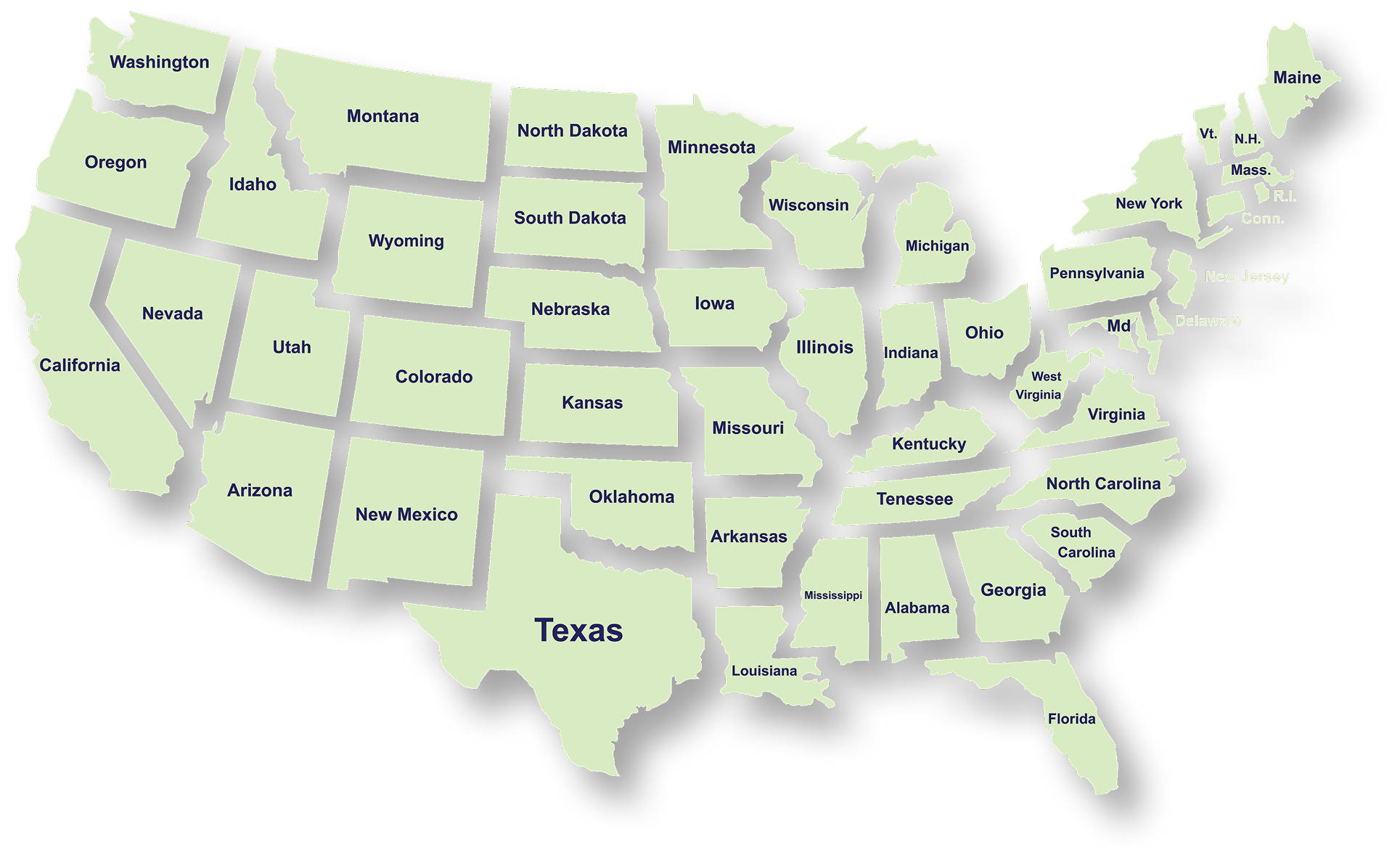
Serving Businesses & Individuals Across USA

We handle accounting, tax filing, and planning with defined timelines and accurate reporting for businesses and individuals across all states.

Frequently Asked Questions

What services does NR CPAs & Business Advisors provide?
What is tax planning and why is it important for businesses?
How can a Virtual CFO help my business?
When should a business consider IRS tax resolution services?
What financial statements does a business typically need?
How can startup advisory services help new businesses?
What is strategic business planning?
What is a Virtual Family Office and who can benefit from it?