Learning Center for Tax and Financial Insights

Stay updated with clear, actionable articles on tax rules, deadlines, deductions, and financial decisions that impact individuals and businesses.

No items found.

Corporate and LLC Structure Can Protect Sole Proprietors’ Assets

There are plenty of advantages to being your own boss, but that doesn’t mean that every decision is easy or straightforward. One of the first things you’ll have to decide is the type of business structure that is best for your situation. While selecting “sole proprietor” may seem like the path of least resistance, if you have personal assets at risk for your business’ debts and liabilities, it may make more sense to go with the more complicated route of electing to form as a C- or S-corporation, or even as a limited liability corporation (LLC).What is the difference between each? In a nutshell, if you set up as a C corporation – the preference of venture capital investors – you’ll have to pay taxes as both an individual and as a corporation. By contrast, both S corporations and LLCs have the advantage of a favorable pass-through tax treatment while still providing your personal assets with significant protection. No matter which entity you choose, you won’t find the process costly or complicated, and if you decide to switch at a later date you can do so easily. Still, it’s important to understand that filing a Certificate of Incorporation does not entirely protect you from personal liability. In order to provide yourself and your shareholders with the highest level of personal protection make sure that you do the following:Never use your personal name or the name of a shareholder on any official documents. Whether invoices, correspondence, or contracts, the official corporate name is the only appellation that should be used, and the word “inc.” or “corp.” should be included where corporate. This is the best way to ensure separate entity recognition. The same is true whenever signing on the company’s behalf. Only use the corporate name and include your title, as shown below:CORPORATION NAMEBy: ___________________________________Name and official title of the authorized signerMaintain entirely separate bank accounts for your personal funds and your corporate funds, as well as separate taxes. Corporate tax liabilities should be paid from corporate accounts and personal taxes from personal accounts; the same is true for shareholders.Assuming that you have corporate bylaws and other formalities, make sure that you follow all of them to a tee. This may include ensuring that meeting minutes are recorded, that the Board of Directors holds regular meetings, and that stock is issued.

Explore More
No items found.

From Homeless to Hero: The John Paul DeJoria Story

According to one recent study, there are more than 500,000 people living in homelessness in the United States as of 2022. If you needed a single statistic to underline what a significant issue this really is, let it be that one.In the distant past, one of them was a man named John Paul DeJoria. Born in 1944, he’s a businessman and entrepreneur based in the United States. He’s a noted philanthropist and, by all accounts, is a self-made billionaire. He co-founded the Paul Mitchell line of hair products and, along with the Patron Spirits Company, has certainly made quite an impact on a variety of industries.But it wasn’t always that way.The Journey of John Paul DeJoriaDeJoria was born in Los Angeles, California where, when he was just two years old, his parents went through a divorce. He began living with his mother who, unfortunately, wasn’t able to provide enough financial support for himself or his sibling. Not too long after that, DeJoria was sent to live in a foster home.DeJoria was a part of the California state foster system until the age of nine when his entrepreneurial spirit first began to develop. It was then that he started selling Christmas cards and newspapers in an effort to find some way – any way – to support his family.However, things weren’t necessarily on the way up quite yet.As is true with so many young people in this type of situation, DeJoria joined a street gang. He was an active participant for an unknown period of time while he attended night school. He only left the gang after his night school teacher urged him to – again underlining the importance of knowledgeable and compassionate educators in this country.After finally graduating, DeJoria was still on an uncertain path. He once again made a decision that is quite common for people in these environments – he joined the United States Navy. By this time, he wanted to go to college but had no way to pay for it himself so he spent two years in the Navy in order to get there.

Explore More
No items found.

Important Times to Seek Assistance

Article Highlights:When to seek professional assistanceExamples of times where tax saving moves can be madeWaiting for your regular appointment to discuss current tax-related issues can create problems or cause you to miss out on beneficial options that need to be timely exercised before year-end. Generally, you should call this office any time you have a substantial change in taxable income or deductions. By doing so, we can advise you about how to optimize your tax liability, avoid or minimize penalties, estimate and pre-pay required taxes, document deductions, and examine and explore tax options. You should call this office if you or your spouse:Receive a large employee bonus or award Become unemployed Change employment Take an unplanned withdrawal from an IRA or another pension planRetired or are contemplating retirement Moved or otherwise changed your addressSold or purchased a homeExercised or are planning to exercise an employee stock option Have significant stock gains or lossesRefinanced or plan to refinance your home mortgage Get marriedSeparate from or divorce your spouse Sell or exchange a property or business Experience the death of a spouse during the yearInherit propertyTurn 72 during the year Increase your family size through birth or adoption of a child Start a business, acquire a rental property, or convert your home to a rental Receive a substantial lawsuit settlement or award Get lucky at a casino, lotto, or game show and receive a W-2GPlan to donate property worth $5,000 ($500 if a vehicle) or more to a charityPlan to gift more than $16,000 to any one individual during the year

Explore More
No items found.

Video Tips: Tax Benefits for Military Members

As part of the benefits of serving the country, military members have access to tax perks that are not available to normal civilians. This can range from multiple tax exemptions to automatic extensions for tax filing season. Watch this video for details.

Explore More
No items found.

Happy Birthdays from the IRS

Article Highlights: Special Tax Birthdays Birth of a Child o Qualifying Child o Child Tax Credit o Child Care Credit o Earned Income Credit Qualifying Relative U.S. Savings Bonds Used for Education Expenses ABLE Account Retirement Plan Catch-up Contributions Retirement Plan Distributions o Public Safety Employees o Early Distributions Social Security Benefits Taxation Additional Standard Deduction Qualified Charitable Distribution Required Minimum Distributions Longevity Annuity When Congress enacts tax laws, many times whether the law applies is based on the age of the taxpayer or a taxpayer’s dependent. Reaching a certain age sometimes provides a tax benefit, while in other cases there’s a tax “penalty” – meaning that a specific type of income becomes taxable, or a credit no longer applies. Most of these age-related tax rules concern dependent children or retirement plan contributions or distributions. If you or a member of your tax family is having one of these special birthdays this year, you may be interested in knowing how your taxes will be affected, so here are some birthdays (or half-birthdays in a couple of cases) that have tax significance, listed by the age as of the birthday: 0 – “Zero” in this context means the birth of a child. In tax lingo, when you have a “qualifying child” you are entitled to claim that child as your tax dependent, which will then make you eligible to claim certain tax credits. A qualifying child is an individual who meets the following tests: (1) Has the same principal place of abode (residence) as you for more than half of the tax year. Exceptions include the year of birth and temporary absences; (2) Is your son, daughter, stepson, stepdaughter, brother, sister, stepbrother, stepsister, or a descendant of any of these individuals; (3) Is younger than you are; (4) Did not provide over half of his or her own support for the tax year; (5) Is under age 19, or under age 24 in the case of a full-time student, or is permanently and totally disabled (at any age); and (6) Was unmarried (or if married, either did not file a joint return or filed jointly only to claim a refund). For a newborn child, the “half the year” requirement of (1) doesn’t apply if your home was the child's home for more than half of the time he or she was alive during the year. So, in most instances, if you welcomed a baby into your family this year, even if the child was born on December 31, 2022, the child will be a qualifying child and your dependent for 2022, and you may be able to claim one or more of the following tax credits: Child Tax Credit – The child tax credit is $2,000 per child for 2022. If the credit is not entirely used to offset your tax, the excess portion of the credit, up to the amount that your earned income exceeds a threshold ($2,500 for 2022), but not more than $1,500, is refundable. The credit begins to phase out at modified adjusted gross incomes (MAGI) of $400,000 for married joint filers and $200,000 for other filing statuses. The credit is reduced by $50 for each $1,000 (or fraction of $1,000) of modified AGI over the threshold. See also “17” below. Child Care Credit - If you use the services of day care providers to look after your dependent child, you may qualify for a tax credit if the expense is an “employment-related” expense, which is one that you or your spouse, if married, incur to work, or look for work. Married couples must file jointly, and both spouses must work (or one spouse must be a full-time student or disabled) to claim the credit. The qualifying expenses for the credit are capped at $3,000 per year if you have one qualifying child, while the limit increases to $6,000 per year if you have two or more eligible children. However, the qualifying expenses are limited to your income from working and, if you are married, the expenses are limited to the lower of your or your spouse’s work income. An exception applies when one spouse has no actual income from working and that spouse is a full-time student or disabled. In that case the nonworking or student spouse is considered to have a monthly income of $250 (if there’s one qualifying child) or $500 (for two or more qualifying children). The credit is computed as a percentage of qualifying expenses with the credit rate ranging from 35% for those with AGI of $15,000 or less to 20% if AGI exceeds $43,000. The credit will reduce your tax bill dollar for dollar, but if the credit is more than your tax, the excess credit is not refundable. See also “13” below. Some employers provide dependent care assistance programs to help their employees with the cost of daycare. If you participate in such a plan and use payments from the plan to pay childcare expenses, the payments are excludable from your income, up to the lower of your earned income (or if you are married, the earned income of your spouse if it is lower) or $5,000 ($2,500 for married filing separate). Because reimbursement up to these limits is excludable from your income, it is treated as reimbursement for day care expenses that reduces the $3,000 or $6,000 expense limits when computing the credit. Reimbursement more than these limits is taxable to you and does not reduce qualified expenses for the credit. Earned Income Tax Credit (EITC) - If you have income from working either as an employee or a self-employed individual, you may qualify for this refundable credit. The credit is based on three factors: your earned income, AGI, and how many qualifying children you have. If you have investment income such as interest and dividends more than $10,300 (for 2022), you are ineligible for this credit. The credit was established as an incentive for individuals to obtain employment. It increases with the amount of earned income until the maximum credit is achieved and then begins to phase out at higher incomes. The table below illustrates the phase-out ranges for the various combinations of filing status and earned income and the maximum credit available. Although the EITC is available for lower-income taxpayers without children, the credit increases substantially for those with children. 2022 EIC PHASEOUT RANGE Number of Children Joint Return Others Maximum Credit None $15,290 - $22,610 $9,160 - $16,480 $560 1 $26,260 - $49,622 $20,130 - $43,492 $3,733 2 $26,260 - $55,529 $20,130 - $49,399 $6,164 3 or more $26,260 - $59,187 $20,130 - $53,057 $6,935 13 – In the year that your child turns 13, only the day care expenses you paid for the child for the part of the year when he or she was under age 13 qualify for the Child Care Credit. 17 – You can no longer claim the Child Tax Credit on your return starting for the year that your child is 17 at year’s end. So, for the year of your child’s 17th birthday, no Child Tax Credit is allowed for that child. 18 – The year in which your child has their 18th birthday is the last year that the child is considered a qualifying child, unless the child is a student and under age 24. To qualify as a student for this purpose, during some part of each of any 5 calendar months of the year, your child must be: A full-time student at a school that has a regular teaching staff, course of study, and a regularly enrolled student body at the school; or A student taking a full-time, on-farm training course given by a school described in the prior bullet, or by a state, county, or local government agency. The 5 calendar months don’t have to be consecutive, and a full-time student is a student who is enrolled for the number of hours or courses the school considers to be full-time attendance. If your older child isn’t a student under this definition, you might still qualify to claim the child as a dependent, but not as a qualifying child. The term for this type of dependent is “qualifying relative,” even though some individuals can qualify without being related to you. Three tests must be met before you can claim someone as your dependent if they aren’t a qualifying child: A. Member of Household or Relationship Test – To meet the member of the household test, an individual would have to live with you all year in your household. But under the “or relationship” part of the test, your child would satisfy this test just by being your child, foster child, or stepchild, even if not living with you. Other relatives, such as your siblings, parents, grandparents, and others, could also meet this test. B. Gross Income Test – To satisfy this test, your child (or other individual who might be a qualifying relative) can have no more than $4,400 (2022) of gross income for the year. C. Support Test – You would need to provide more than half of the cost of the individual’s support. So, for example, if you wanted to figure whether you provided more than half of your 19-year-old non-student child’s support, compare the amount you contributed to your child’s support with the entire amount of support he or she received from all sources, including the support the child provided from their own funds.

Explore More
No items found.

With a Possible Recession Looming, You May Want to Review Your Cash Flow Process

If you’re a business owner who has been through a recession before, you know that smart cash flow management is absolutely crucial. If you’re a new entrepreneur who hasn’t been through an economic downturn, you may be less familiar with how quickly your finances can be affected. To protect yourself and keep your business operating, here are the things you need to know about adjusting your cash flow process to match the economic environment.Evaluate Your Expenses When cash is short, it’s time to take a magnifying glass to your expenses, both to ensure that you’re being charged appropriately and to determine which of the invoices coming in should not be repeated. It’s easy to spend money when cash is coming in, but once things get tight you may need to adjust your budgetary line items and start chatting with employees about whether specific expenditures are actually needed. You may also want to think about how spending decisions are approved, limiting authority for purchasing above certain amounts or requiring sign-off from management to ensure that you’re staying within your means and available resources. Though staff may object to losing their travel or entertainment budgets, an economic downturn should reclassify them as luxuries that can be cut back or eliminated rather than necessities. The same goes for meeting expenditures.Other expenses can be adjusted in a way that limits the impact on your staff but still helps your bottom line. Fixed costs for transportation can be shifted from purchasing new vehicles to contracting for a fleet leasing program. Doing so keeps your capital in your bank account, where it can be put to better use when money is tight.Vendor relationships can become strained when you find yourself having to either cancel or downgrade a contract and even more so if you’re unable to pay your bills. The best way to approach this is upfront and with honesty. The more open you are about your cash situation, the more likely you will be able to work something out in the short term and maintain or resume the relationship for the long term.

Explore More
No results found.
Thank you! Your submission has been received!
Oops! Something went wrong while submitting the form.

Want tax & accounting tips & insights?Sign up for our newsletter.

Thank you! Your submission has been received!
Oops! Something went wrong while submitting the form.

Why Work With Us?

We combine deep tax expertise, financial strategy, and practical business insight to help you manage complexity, stay compliant, and make confident financial decisions.
A dollar sign, representing financial advice or discussion at NR CPAs & Business Advisors.

Experienced CPA and Enrolled Agent Leadership

Guidance led by licensed professionals with deep expertise in tax strategy, compliance, and complex financial matters.
White bar chart with an upward arrow on green circular background representing growth or progress at NR CPAs &. Business Advisors

Support for Growing Businesses and Startups

We understand the financial challenges of growth stage businesses and provide structured guidance to support expansion.
A white hand holding a dollar symbol and ascending bar chart on a green circular background representing financial growth or investment at NR CPAs & Business Advisors..

Strategic Financial Advisory

Our team helps you evaluate financial decisions with greater clarity, supported by practical insights and long term planning.

Fractional CFO Support

Access experienced financial leadership without the commitment and cost of hiring a full time Chief Financial Officer.

Proactive Tax Planning Approach

We focus on identifying tax opportunities throughout the year rather than reacting only during filing season.

Clear and Reliable Financial Reporting

Accurate financial statements and reporting that help you better understand performance and make informed decisions.
White IRS building icon with pillars and a dollar sign above on a green circular background.

Professional IRS Representation

Experienced support in resolving IRS notices, disputes, and compliance matters while protecting your financial interests.

Personalized Client Focus

Every client receives thoughtful attention and tailored financial solutions based on their specific needs and business goals.
Financial matters often involve important decisions. Working with experienced advisors can help you approach them with greater clarity and confidence in your choices.

Need Help With Your Tax or Financial Decisions?

Discuss your situation with our advisors to get clear guidance on tax planning, IRS matters, and the financial decisions ahead.
Business consulting at NR CPAs & Business Advisors.

Request Your Consultation

Fill out the form to discuss your tax concerns, financial questions, or advisory needs with our team. We will review your details and respond shortly.

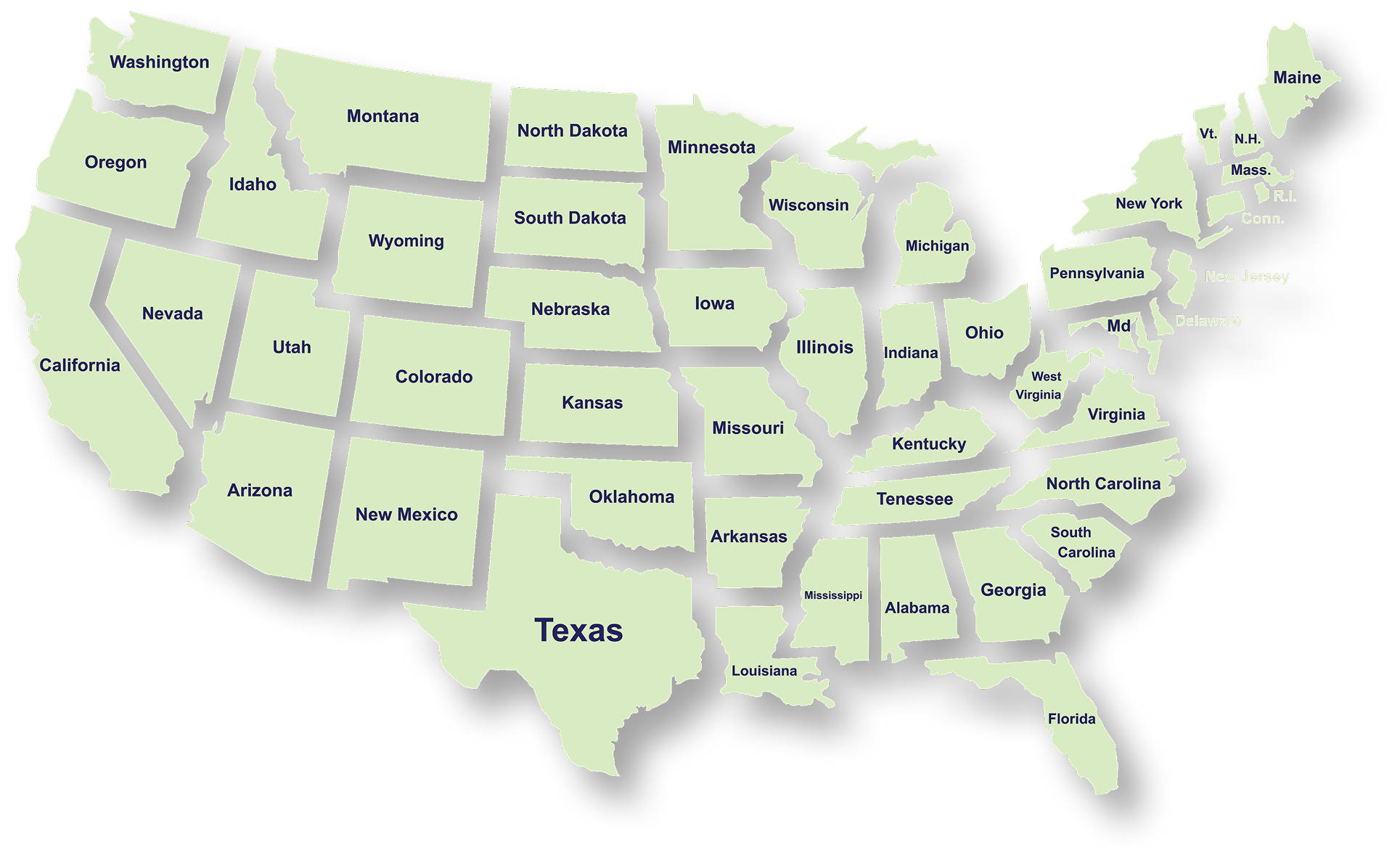
Serving Businesses & Individuals Across USA

We handle accounting, tax filing, and planning with defined timelines and accurate reporting for businesses and individuals across all states.

Frequently Asked Questions

What services does NR CPAs & Business Advisors provide?
What is tax planning and why is it important for businesses?
How can a Virtual CFO help my business?
When should a business consider IRS tax resolution services?
What financial statements does a business typically need?
How can startup advisory services help new businesses?
What is strategic business planning?
What is a Virtual Family Office and who can benefit from it?