Learning Center for Tax and Financial Insights

Stay updated with clear, actionable articles on tax rules, deadlines, deductions, and financial decisions that impact individuals and businesses.

No items found.

January 2022 Individual Due Dates

January 3 - Time to Call For Your Tax Appointment -January is the beginning of tax season. If you have not made an appointment to have your taxes prepared, we encourage you to do so before the calendar becomes too crowded.January 10 - Report Tips to Employer -If you are an employee who works for tips and received more than $20 in tips during December, you are required to report them to your employer on IRS Form 4070 no later than January 10.January 18 - Individual Estimated Tax Payment Due -It’s time to make your fourth quarter estimated tax installment payment for the 2021 tax year.

Explore More
No items found.

January 2022 Business Due Dates

January 3 - Payment of Employer Share of Social Security Tax from 2020 -If you are an employer that deferred paying the employer share of social security tax or the railroad retirement tax equivalent in 2020, pay 50% of the deferred amount of the employer share of social security tax by January 3, 2022. The remaining 50% of the deferred amount of the employer share of social security tax is due by January 3, 2023. Any payments or deposits made before January 3, 2022, are first applied against the payment due by January 3, 2023.January 3 - Payment of the Deferred Employee Share of Social Security Tax from 2020 - If are an employer that deferred withholding and payment of the employee share of social security tax or the railroad retirement tax equivalent on certain employee wages and compensation between September 1, 2020, and December 31, 2020, you should have withheld and paid those taxes ratably from wages paid to the employee between January 1, 2021, and December 31, 2021. The employer is liable to pay the deferred taxes to the IRS and must do so before January 3, 2022.January 18 - Employer’s Monthly Deposit Due - If you are an employer and the monthly deposit rules apply, January 18 is the due date for you to make your deposit of Social Security, Medicare, and withheld income tax for December 2021. This is also the due date for the nonpayroll withholding deposit for December 2021 if the monthly deposit rule applies. Employment tax deposits must be made electronically (no paper coupons), except employers with a deposit liability under $2,500 for a return period may remit payments quarterly or annually with the return.January 18 - Farmers and Fishermen -Pay your estimated tax for 2021 using Form 1040-ES. You have until April 18 (April 19 if you live in Maine or Massachusetts) to file your 2021 income tax return (Form 1040 or Form 1040-SR). If you don't pay your estimated tax by January 18, you must file your 2021 return and pay any tax due by March 1, 2022, to avoid an estimated tax penalty.January 31 - 1099-NECs Due to Service Providers & the IRS -If you are a business or rental property owner and paid $600 or more to individuals (other than employees) as nonemployee compensation during 2021, you are required to provide Form 1099-NEC to those workers by January 31. “Nonemployee compensation” can mean payments for services performed for your business or rental by an individual who is not your employee, commissions, professional fees and materials, prizes and awards for services provided, fish purchases for cash, and payments for an oil and gas working interest. To avoid a penalty, copies of the 1099-NECs also need to be sent to the IRS by January 31, 2022. The 1099-NECs must be submitted on optically scannable (OCR) forms. This firm prepares 1099s in OCR format for submission to the IRS with the 1096 submittal form. This service provides both recipient and file copies for your records. A business or individual who is required to file 250 or more information returns (i.e., 1099s and W-2s among others) must file those forms electronically. Please call this office for preparation assistance.January 31 - Form 1098 and Other 1099s Due to Recipients -

Explore More
No items found.

Using Data to Drive Your E-Commerce Business’ Growth

Using Data to Drive Your E-Commerce Business’ GrowthIf knowledge is power, then the information available to e-commerce business owners provides nearly unlimited potential. The same platforms that host your websites include data collection tools that – if used properly – can guide your decision-making process and inform your business strategies. The metrics offered can easily overwhelm anybody who doesn’t have an MBA, but they don’t have to. Extracting the most valuable information for your particular business relies on identifying your own goals and understanding which key performance indicators (KPIs) tie into those goals. Combining those two lets you take advantage of the information that will help you the most.E-commerce is a unique business model. With that in mind, we have assembled a list of the six e-commerce KPIs we think will most help you assess how your business is measuring up when compared to where you want to be. By reviewing these metrics regularly (and understanding what they mean), you can compare your performance to your goals and make important adjustments to your strategy.Net sales – As much as gross sales numbers may give you a warm fuzzy feeling about how well you’re doing, the truth is that it is your net sales number that tells the real story. That’s because it reflects the deductions and losses that are a cost of doing business and selling your services, whether online or anywhere else. Net sales are your real revenue number, and it not only tells you how much money your sales efforts have brought in, but also can give you a snapshot of how your business performed during a specific period of time. This is not only useful for your profit and loss statement, but also as a way to assess the success of marketing campaigns and to forecast future performance.Basket size – If you run an ecommerce business, knowing how much money your customers are buying and how many items they buy with each visit is essential. This metric provides you with an average of both for a specific period of time and allows you to analyze the impact of a sales campaign, the appeal of products being sold, and other information to guide future promotions.Sales dilution rate – This metric helps you see where you lost revenue as a result of returns, discounts, and allowances. Though it is easy to just write the difference between total revenue and net sales off, doing so misses an opportunity to improve performance and eliminate inefficiencies. Taking a deeper dive into the merchandise that was most frequently returned or for which you had to offer discounts helps you identify and eliminate or improve products that are not only losing profit for you, but also disappointing your clients.Customer Retention Cost (CRC) – Once you’ve attracted a customer to your e-commerce store, it is important to hold onto them because it costs less money to keep a customer than to attract a new one. The amount of money that you spend on inspiring loyalty is your Customer Retention Cost, and though it will differ for each customer and with each time you spend money on retaining them, it can also be averaged out across all of your customers to see whether the expense is warranted, needs to be cut back, or even expanded.Customer Lifetime Value (CLV) – Your Customer Lifetime Value is the average amount that a consumer is likely to spend on your business from the time that they first discover your store to the last dollar they spend. Knowing this number helps you project the number of clients you’ll need to make your business a success and achieve your long-term goals. To make this KPI truly valuable it needs to be combined with other indicators such as cost of goods sold and the costs to attain and retain the client. Otherwise, you’re only measuring revenue and not profitability.Contribution margin – This measure of how much you’re spending on marketing and selling your goods or services is absolutely essential. It can not only tell you whether you need to keep your selling costs in check, but also the converse – whether you might be smart to put a bit more money into them. The contribution margin gets added to costs of goods sold and other operational costs as a way to determine your net profit. If the margin is too high then you need to cut back on your efforts, as they may not be doing you enough good to justify the amount you’re spending. By the same token, a low margin in combination with not meeting your engagement goals can be an indication that you need to spend more to drive greater brand awareness.

Explore More
No items found.

Video tips: A Quick Reminder about Forms 1099-NEC & 1099-MISC

Businesses are required to file Form 1099-NEC if they pay an independent contractor more than $600 this year. Watch this quick video for some other details you may want to know.

Explore More
No items found.

Employers and Self-employed Who Elected to Defer 2020 Social Security Tax, The Payments Are Due Jan. 3

Article Highlights:2020 COVID Social Security Tax Deferral ReliefIRS Payment ReminderRepayment Due DateHow to Make Repayment of the Deferred AmountsAs part of the COVID relief provided during 2020, employers and self-employed people could choose to put off paying the employer’s share of their eligible Social Security tax liability, normally 6.2% of wages. Half of that deferral is now due on Jan. 3, 2022, and the other half on Jan. 3, 2023.Reminder - If you are an employer or self-employed and chose to defer paying part of your 2020 Social Security tax obligation you should have received a reminder from the IRS reminding you that the first payment is due January 3, 2022. Even if you did not receive a reminder from the IRS, you are still responsible for making the payment on time, even if you did not receive a bill.How to Repay Deferred Taxes - Employers and individuals can make the deferral payments through the Electronic Federal Tax Payment System or by credit or debit card, money order or with a check. To be sure these payments are credited properly, they must be made separately from other tax payments.

Explore More
No items found.

2022 Standard Mileage Rates Announced

Article Highlights:Standard Mileage Rates for 2022Business, Charitable, Medical and Moving RatesImportant Considerations for 2022Switching Between the Actual Expense and Standard Mileage Rate MethodsEmployer ReimbursementsEmployee Deductions SuspendedSpecial Allowances for SUVsBonus DepreciationAs it does every year, the Internal Revenue Service recently announced the inflation-adjusted 2022 optional standard mileage rates used to calculate the deductible costs of operating an automobile for business, charitable, medical or moving purposes.Beginning on Jan. 1, 2022, the standard mileage rates for the use of a car (or a van, pickup or panel truck) are:58.5 cents per mile for business miles driven (including a 26-cent-per-mile allocation for depreciation). This is up from 56.0 cents in 2021;18 cents per mile driven for medical care or by an active member of the armed forces for moving purposes. This is up from 16 cents in 2021; and14 cents per mile driven in service of charitable organizations.The business standard mileage rate is based on an annual study of the fixed and variable costs of operating an automobile. The rate for medical and moving purposes is based on the variable costs as determined by the same study. The rate for using an automobile while performing services for a charitable organization is statutorily set (it can only be changed by Congressional action) and has been 14 cents per mile for over 15 years.Important Consideration – The 2022 rates are based on 2021 fuel costs. Given the potential for the continuation of substantially higher gas prices, it may be appropriate to consider switching to the actual expense method for 2022, or at least keeping track of the actual expenses, including fuel costs, repairs, maintenance, etc., so that the option is available for 2022.Taxpayers always have the option of calculating the actual costs of using their vehicle for business rather than using the standard mileage rates. In addition to the possibility of higher fuel prices, the bonus depreciation and increased depreciation limitations for passenger autos that were part of the 2017 Tax Cuts and Jobs Act may make using the actual expense method worthwhile during the first year a vehicle is placed in business service.However, the standard mileage rates cannot be used if you have used the actual method (using Sec. 179, bonus depreciation and/or MACRS depreciation) in previous years. This rule is applied on a vehicle-by-vehicle basis. In addition, the business standard mileage rate cannot be used for any vehicle used for hire or for more than four vehicles simultaneously.Employer Reimbursement – When employers reimburse employees for business-related car expenses using the standard mileage allowance method for each substantiated employment-connected business mile, the reimbursement is tax-free if the employee substantiates to the employer the time, place, mileage and purpose of employment-connected business travel.

Explore More
No results found.
Thank you! Your submission has been received!
Oops! Something went wrong while submitting the form.

Want tax & accounting tips & insights?Sign up for our newsletter.

Thank you! Your submission has been received!
Oops! Something went wrong while submitting the form.

Why Work With Us?

We combine deep tax expertise, financial strategy, and practical business insight to help you manage complexity, stay compliant, and make confident financial decisions.
A dollar sign, representing financial advice or discussion at NR CPAs & Business Advisors.

Experienced CPA and Enrolled Agent Leadership

Guidance led by licensed professionals with deep expertise in tax strategy, compliance, and complex financial matters.
White bar chart with an upward arrow on green circular background representing growth or progress at NR CPAs &. Business Advisors

Support for Growing Businesses and Startups

We understand the financial challenges of growth stage businesses and provide structured guidance to support expansion.
A white hand holding a dollar symbol and ascending bar chart on a green circular background representing financial growth or investment at NR CPAs & Business Advisors..

Strategic Financial Advisory

Our team helps you evaluate financial decisions with greater clarity, supported by practical insights and long term planning.

Fractional CFO Support

Access experienced financial leadership without the commitment and cost of hiring a full time Chief Financial Officer.

Proactive Tax Planning Approach

We focus on identifying tax opportunities throughout the year rather than reacting only during filing season.

Clear and Reliable Financial Reporting

Accurate financial statements and reporting that help you better understand performance and make informed decisions.
White IRS building icon with pillars and a dollar sign above on a green circular background.

Professional IRS Representation

Experienced support in resolving IRS notices, disputes, and compliance matters while protecting your financial interests.

Personalized Client Focus

Every client receives thoughtful attention and tailored financial solutions based on their specific needs and business goals.
Financial matters often involve important decisions. Working with experienced advisors can help you approach them with greater clarity and confidence in your choices.

Need Help With Your Tax or Financial Decisions?

Discuss your situation with our advisors to get clear guidance on tax planning, IRS matters, and the financial decisions ahead.
Business consulting at NR CPAs & Business Advisors.

Request Your Consultation

Fill out the form to discuss your tax concerns, financial questions, or advisory needs with our team. We will review your details and respond shortly.

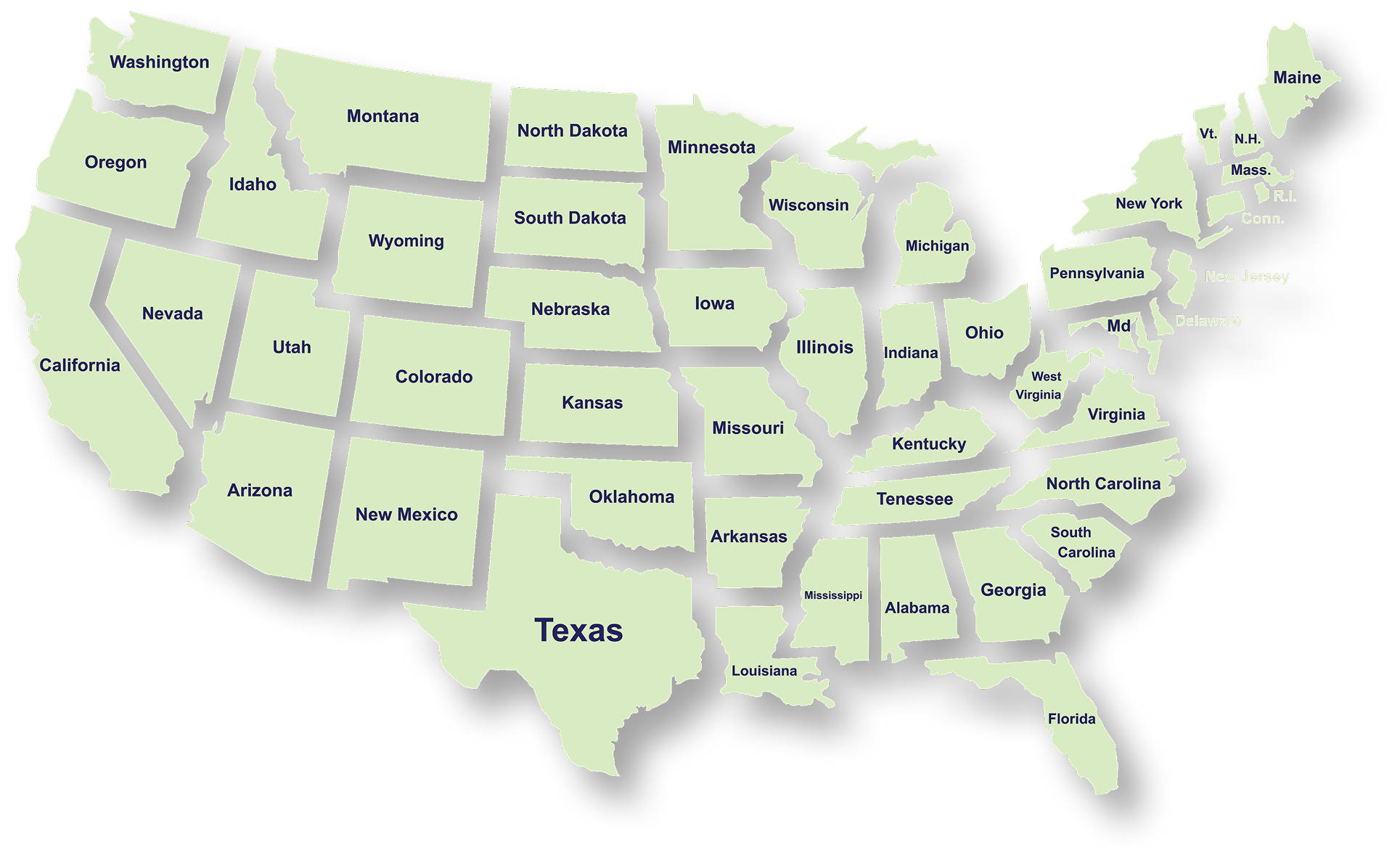
Serving Businesses & Individuals Across USA

We handle accounting, tax filing, and planning with defined timelines and accurate reporting for businesses and individuals across all states.

Frequently Asked Questions

What services does NR CPAs & Business Advisors provide?
What is tax planning and why is it important for businesses?
How can a Virtual CFO help my business?
When should a business consider IRS tax resolution services?
What financial statements does a business typically need?
How can startup advisory services help new businesses?
What is strategic business planning?
What is a Virtual Family Office and who can benefit from it?