Learning Center for Tax and Financial Insights

Stay updated with clear, actionable articles on tax rules, deadlines, deductions, and financial decisions that impact individuals and businesses.

No items found.

Minimizing Tax on Social Security Benefits

Article Highlights: Income as a Factor Filing Status as a Factor 85% Maximum Taxable Base Amounts Deferring Income Maximizing IRA Distributions Gambling Gotcha Whether your Social Security benefits are taxable (and, if so, the amount that is taxed) depends on a number of issues. The following facts will help you understand the taxability of your Social Security benefits. For this discussion, the term “Social Security benefits” refers to the gross amount of benefits you receive (i.e., the amount before reduction due to payments withheld for Medicare premiums). The tax treatment of Social Security benefits is the same whether the benefits are paid due to disability, retirement or reaching the eligibility age. Supplemental Security Income (SSI) benefits are not included in the computation because they are not taxable under any circumstances. The amount of your Social Security benefits that are taxable (if any) depends on your total income and marital status. o If Social Security is your only source of income, it is generally not taxable. o On the other hand, if you have a significant amount of other income, as much as 85% of your Social Security benefits can be taxable. o If you are married and lived with your spouse at any time during the year and file a separate return from your spouse using the married filing separately status, 85% of your Social Security benefits are taxable regardless of your income. This is to prevent married taxpayers who live together from filing separately, thereby reducing the income on each return and thus reducing the amount of Social Security income subject to tax. The following quick computation can be done to determine if some of your benefits are taxable: Step 1. First, add one-half of the total Social Security benefits you received to the total of your other income, including any tax-exempt interest and other exclusions from income. Step 2. Then, compare this total to the base amount used for your filing status. If the total is more than the base amount, some of your benefits may be taxable. The base amounts are: o $32,000 for married couples filing jointly; o $25,000 for single persons, heads of household, qualifying widows/widowers with dependent children, and married individuals filing separately who did not live with their spouses at any time during the year; and o $0 for married persons filing separately who lived together during the year.

Explore More
No items found.

Video Tip: Tax Ramifications of Disposing of an Old Vehicle

Are you disposing of an old vehicle? Whether you are trading in, selling, or donating, different methods may lead to different tax ramifications. Watch this video for a quick overview of what you can do with your old car and how that will affect your taxes. .embed-container { position: relative; padding-bottom: 56.25%; height: 0; overflow: hidden; max-width: 100%; } .embed-container iframe, .embed-container object, .embed-container embed { position: absolute; top: 0; left: 0; width: 100%; height: 100%; }

Explore More
No items found.

Our Olympic Champs Get a Tax Break

Article Highlights: Olympians’ Prize Money Who Gets Taxed? Gold Medals Aren’t Solid Gold Value of Medals if Sold You may not realize this, but in addition to winning an Olympic medal, winners are compensated by the U.S. Olympic Committee with prize money: $37,500 for winning a gold medal (up from $25,000 in the 2016 games). Prize money for winning a silver medal is $22,500 (up from $15,000 in 2016) and $15,000 for a bronze medal (up from $10,000). Olympic medals and prize money are currently tax-free for most Olympians. Congress passed a tax law in 2016 exempting Olympians, including Paralympic winners, from tax on their prize money and medals if their adjusted gross income (AGI) for the year is $1 million or less ($500,000 or less, if married filing separately). However, in addition to the prize money, many of the more successful and well-known athletes also have commercial endorsement contracts that bring in big bucks that can easily push their incomes over $1 million, which will make their Olympic prize money taxable. Oh, and by the way, the gold medals are not solid gold. In fact, they haven’t been solid gold since the 1912 Stockholm Games. According to the International Olympic Committee, each gold medal contains far more silver than gold, roughly 6 grams of gold and 556 grams of silver, with a metal value of approximately $800.

Explore More
No items found.

Complications to the IRA-to-Charity Distribution Provision

Article Highlights IRA Contribution Age Restrictions Removed Required Minimum Distributions Qualified Charitable Distribution Tax Trap Individuals are required to begin taking distributions from their IRA when they reach a certain age. That age was 70½ until Congress passed the SECURE Act in late 2019 which made significant changes to the retirement plan provisions of the tax code, one of which was to up the age for beginning required minimum distributions (RMD) to age 72. That change was supposed to occur with 2020 distributions, but due to the Covid-19 pandemic, Congress waived RMDs for 2020. So, 2021 is actually the first year that the age 72 rule is effective. Prior to the passage of the SECURE Act, the tax code also restricted contributions to IRAs by individuals once they reached age 70½, which coordinated with the prior requirement to begin RMDs. That restriction has been eliminated, and as of 2020, individuals may make IRA contributions at any age provided they have earned income. The tax code also includes another provision that allows taxpayers to transfer up to $100,000 from their IRA to qualified charities. The tax provision is called a Qualified Charitable Distribution (QCD), and has been a popular way for retirees to make charitable contributions that can provide significant tax benefits. Here is how this provision, if utilized, plays out on a tax return: (1) The IRA distribution is excluded from income.(2) The distribution counts toward the taxpayer’s RMD for the year; and (3) The distribution does NOT count as a charitable contribution deduction. At first glance, this may not appear to provide a tax benefit. However, by excluding the distribution, a taxpayer lowers his or her adjusted gross income (AGI), which helps for other tax breaks (or punishments) that are pegged at AGI levels, such as medical expenses if itemizing deductions, passive losses, taxable Social Security income, and so on. In addition, non-itemizers essentially receive the benefit of a charitable contribution to offset the IRA distribution. Whether intentional or an oversight by Congress, the SECURE Act did not change the age at which a taxpayer can begin making QCDs and left it at age 70½ – no longer in synchronization with the revised RMD age of 72. Tax Trap – Unfortunately, that has created a situation that can be detrimental for individuals who have earned income and wish to utilize the QCD provisions and also continue to contribute to an IRA after age 70½.

Explore More
Business Success Stories

Business Success Stories > The explosive growth of Zoom.

Video conferencing in and of itself is certainly nothing new. It's been around in some form or another for decades — businesses used it for remote meetings in the 1990s, and personal users have been "Skyping" with friends and family members since high-speed Internet connections found their way into just about every home. But at the same time, certain organizations have become virtually synonymous with the trend in much the same way that "Google it" became shorthand for "search for something online" all those years ago. Zoom Video Communications is one such company. Originally launched in 2013 by a former Cisco engineer and executive named Eric Yuan, Zoom has enjoyed an almost unprecedented level of growth over the last two years, thanks in large part to the still-ongoing COVID-19 pandemic. In March 2020 as the Coronavirus began to make its way around the world, people were sent to work from home indefinitely during lockdowns. Of course, they still needed a way to communicate and collaborate with one another. They had to suddenly figure out how to be just as productive at home as they could be in the office. For many, Zoom became that solution. Charting the Rise of Zoom From just about every angle, it's clear that COVID-19 has contributed enormously to Zoom's current success. In January of 2020, for example, it was estimated that the service saw approximately 56,000 daily downloads. By February, that number had already climbed to 1.7 million. Just a month later, when the worldwide lockdowns and other social distancing restrictions began, it had risen again to 2.13 million — a trend that shows no signs of slowing down anytime soon. Likewise, the platform has also seen a dramatic surge in the number of people participating in meetings every day. After all, Zoom is a free download from both the service's website and in various app stores — downloads don't amount to much if people aren't actively using the software. Thankfully for Zoom, they are. In December of 2019, there were approximately 10 million daily meeting participants as per the same research outlined above. In March of 2020, that number had climbed to 200 million. A month later and it had hit more than 300 million — pointing to a trend that was somehow still only getting stronger. The idea for Zoom was born from Eric Yuan, an immigrant from China who first arrived in the United States in the 1990s. Even back then, he was passionate about finding a way to make video calls not only easy but portable — and this was before the advent of the smartphone. His career began at WebEx, where he worked as an engineer. After WebEx was acquired by Cisco a decade later, he became that company's Corporate Vice President of Engineering. He enjoyed a tremendous amount of success during that time... but he still had visions of something far bigger. While he was at Cisco, he listened carefully to customers who would express various complaints about how WebEx operated. They were constantly dealing with unreliable connections, with a disconnect between the audio and video and more. They even found the installation process frustrating — particularly in IT departments that were working with a large number of users. They wanted something faster, more reliable, more efficient and more straightforward. Yuan was more than happy to oblige. In 2011, he left Cisco and began to work on the solution that would become Zoom. It would officially launch in January of 2013, and by all accounts, it was a major hit right out of the gate. Not only did it hit one million active participants just a few months later in May, but Yuan was also able to secure funding of $10 million to continue his work. But even without the pandemic, Zoom still found a way to differentiate itself from so many other competitors in the marketplace. For starters, Yuan prioritized very low data usage — meaning that calls would still function on slower Internet connections and on mobile devices. Not only that, but Zoom was based in the cloud — virtually eliminating the irritating installation procedure that so many WebEx customers had complained about in the past. This also made it available on any device or platform, no exceptions. But even the "Pro" package cost just $9.99 per month at that time — far cheaper than just about anything out there. Even still, Zoom was offered to K-12 schools free of charge in many of the countries it had entered. All of this combined to form a perfect storm in the best possible way. Zoom had slowly begun to increase its market share, and then the COVID-19 pandemic acted as an accelerant that solidified what many in the industry already knew. Video conferencing was here to stay, and Zoom was now permanently tied to it. Sharing business success stories will help inspire you to stay focused and determined. If you need any assistance with your start-up or are scaling your business, feel free to give us a call.

Explore More
Videos & Info Graphics

Video Tips: Taxpayers' Bill of Rights

Did you know there is a taxpayers' bill of rights? Watch this video to learn more about your privileges in the tax law. .embed-container { position: relative; padding-bottom: 56.25%; height: 0; overflow: hidden; max-width: 100%; } .embed-container iframe, .embed-container object, .embed-container embed { position: absolute; top: 0; left: 0; width: 100%; height: 100%; }

Explore More
No results found.
Thank you! Your submission has been received!
Oops! Something went wrong while submitting the form.

Want tax & accounting tips & insights?Sign up for our newsletter.

Thank you! Your submission has been received!
Oops! Something went wrong while submitting the form.

Why Work With Us?

We combine deep tax expertise, financial strategy, and practical business insight to help you manage complexity, stay compliant, and make confident financial decisions.
A dollar sign, representing financial advice or discussion at NR CPAs & Business Advisors.

Experienced CPA and Enrolled Agent Leadership

Guidance led by licensed professionals with deep expertise in tax strategy, compliance, and complex financial matters.
White bar chart with an upward arrow on green circular background representing growth or progress at NR CPAs &. Business Advisors

Support for Growing Businesses and Startups

We understand the financial challenges of growth stage businesses and provide structured guidance to support expansion.
A white hand holding a dollar symbol and ascending bar chart on a green circular background representing financial growth or investment at NR CPAs & Business Advisors..

Strategic Financial Advisory

Our team helps you evaluate financial decisions with greater clarity, supported by practical insights and long term planning.

Fractional CFO Support

Access experienced financial leadership without the commitment and cost of hiring a full time Chief Financial Officer.

Proactive Tax Planning Approach

We focus on identifying tax opportunities throughout the year rather than reacting only during filing season.

Clear and Reliable Financial Reporting

Accurate financial statements and reporting that help you better understand performance and make informed decisions.
White IRS building icon with pillars and a dollar sign above on a green circular background.

Professional IRS Representation

Experienced support in resolving IRS notices, disputes, and compliance matters while protecting your financial interests.

Personalized Client Focus

Every client receives thoughtful attention and tailored financial solutions based on their specific needs and business goals.
Financial matters often involve important decisions. Working with experienced advisors can help you approach them with greater clarity and confidence in your choices.

Need Help With Your Tax or Financial Decisions?

Discuss your situation with our advisors to get clear guidance on tax planning, IRS matters, and the financial decisions ahead.
Business consulting at NR CPAs & Business Advisors.

Request Your Consultation

Fill out the form to discuss your tax concerns, financial questions, or advisory needs with our team. We will review your details and respond shortly.

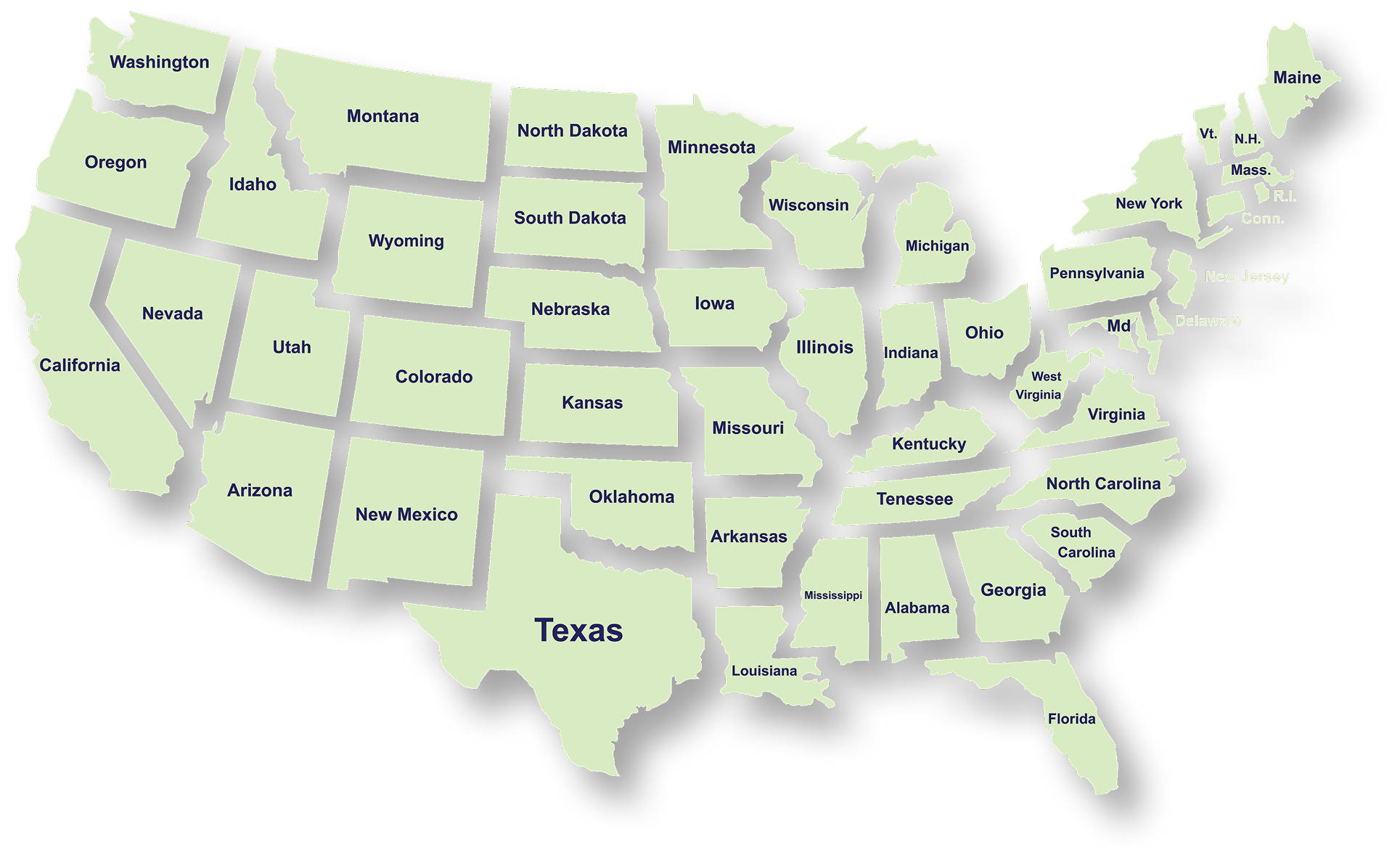
Serving Businesses & Individuals Across USA

We handle accounting, tax filing, and planning with defined timelines and accurate reporting for businesses and individuals across all states.

Frequently Asked Questions

What services does NR CPAs & Business Advisors provide?
What is tax planning and why is it important for businesses?
How can a Virtual CFO help my business?
When should a business consider IRS tax resolution services?
What financial statements does a business typically need?
How can startup advisory services help new businesses?
What is strategic business planning?
What is a Virtual Family Office and who can benefit from it?