Learning Center for Tax and Financial Insights

Stay updated with clear, actionable articles on tax rules, deadlines, deductions, and financial decisions that impact individuals and businesses.

No items found.

Know Where You Stand: Use QuickBooks Reports

If you’re currently using QuickBooks, you know how it’s transformed your daily bookkeeping practices. You can create sales forms like invoices quickly and actually find them when you need them. Your customer and vendor records are organized and stored neatly for fast retrieval. You can accept online payments, track your inventory, and record billable time. But if you’re not using QuickBooks’ built-in reports, you’re missing out on one of the software’s most powerful components. While you can look at lists of invoices, sales receipts, and payments, you can’t see in a few seconds who owes you money and how late they are in paying, for example. You’re not able to get an instant overview of who you owe. You can’t call up a customer’s history instantly, and it will take an enormous amount of time to see which of your items and services are selling and which aren’t. These are just a few of the insights you get from using QuickBooks reports. Beyond learning about your company’s past and present financial states, you can make better business decisions that will improve your future. Before You Start QuickBooks’ reports are exceptionally customizable, as you’ll see. But before you start creating them, you should see what your general report options are. Open the Edit menu and select Preferences, then Company Preferences (which only administrators can modify). You’ll see this window: Before you start working with reports in QuickBooks, you should make sure their global settings represent your needs. You can see in the image above that you can control your reports’ general settings. For example, some reports can be created on the basis of either Accrual or Cash. You can designate your preference here. Do you want the aging process to begin on the due date or transaction date? How much information should appear when Items or Accounts are displayed? What additional data should appear on your report pages (Report Title, Date Prepared, Report Basis, etc.)? You can specify your own Format or just accept the Default. Statement of Cash Flows is an advanced report, one we don’t recommend you try to modify or analyze on your own. We can help with that when the report is needed, which is usually monthly or quarterly. When you’re done here, click OK. Learn What’s There The best way to familiarize yourself with the reports that QuickBooks offers is to open the Reports menu and click Report Center. The content here is divided by type (Customers & Receivables

Explore More
No items found.

Relocating? How to Do It with Taxes in Mind

If you’re thinking about moving from your current locale, you’re not alone. Americans are on the move for many different reasons: Remote work is increasingly popular and allows employees to live wherever they have access to WiFi, while tax changes introduced by the 2017 Tax Cuts and Jobs Act (TCJA) limited the important SALT (State and Local Tax) deduction to $10,000 for single and married individuals. That deduction had previously made living in high-tax states less costly for affluent individuals. When you combine those two factors alone, it makes sense that people are looking to see where the grass may be greener. There’s also a strong possibility that states may begin adding new taxes to make up for budget shortfalls – so, it’s no surprise there may be a significant number of people moving. Some say it has already started, using Florida’s net gain of $16 billion in adjusted gross income since 2018 as proof. Whether states begin adding new taxes or not, it seems clear that people are not staying put the way that they used to, and many are basing their decisions about where to go on tax considerations. If you have found yourself starting to look at real estate ads in a different state, it is important that you take a 360-degree view of what moving would mean for you. As attractive as it may seem to pick up your things and go to a state with a more appealing tax scheme, there are other things to think about, including ensuring that if you move, you do so in a way that accomplishes your tax goals. Here are the different factors you need to make sure to include in your decision-making process. TAXES ARE NOT THE ONLY CONSIDERATION Moving to another community is a shock to the system in more ways than one and moving to an entirely different state will have an even greater impact. Not only do you need to think about the quality-of-life issues involved, but also the implications for those who own multiple homes in multiple states, as they will need to make a choice as to where their primary residence is going to be, and make sure that they can prove that they are compliant. Non-tax-related considerations include: Quality of life issues include your proximity to family and friends, familiarity with where all your resources are, access to mass transportation hubs for those who enjoy travel, culture, and climate are just a few things that have a direct effect on your level of satisfaction and enjoyment of life. Moving may leave you feeling isolated and uncertain after years of confidently navigating life from your current address. Availability of state-of-the-art medical care is not something to be taken for granted. If you currently live in an area where major teaching hospitals are essentially in your backyard and you are moving to a more remote location, you may find yourself regretting your decision, especially as you get older and the infirmities of age start to appear. Different areas of the country have different vulnerabilities to hurricanes, earthquakes and other types of disasters. If you are moving to an area that has a higher risk for any type of weather or naturally-caused damage it makes sense to investigate what your homeowners’ insurance costs are going to be – as well as to think about whether you are really willing to put yourself in the path of nature’s wrath. THE TAXES WORTH CONSIDERING If you’ve already included the non-tax considerations listed above and you are still intent on making a move, then it is time to understand what doing so will mean to your economic picture. It’s a good idea to sit down and discuss your plans with your financial advisors long before putting your home up for sale, as you may have second thoughts after thinking about all of the consequences of a move. Among your considerations are:

Explore More
No items found.

Restaurants and Businesses Benefit from Temporary Tax Break

Article Highlights: New Business Tax Break Restaurant Purchased Meals Qualifying Restaurants Take-out Meals Lavish Limitations Taxpayer Presence Substantiation Congress has provided businesses with a temporary tax break as a means of helping the restaurant industry, which has been devastated by the COVID pandemic. Although the Tax Cuts and Jobs Act eliminated the business deduction for entertainment, it continued to allow a deduction for 50% of the cost of qualified business meals. As part of its COVID relief efforts Congress is allowing businesses to deduct 100% of business meals during 2021 and 2022, provided the meals are provided by a restaurant. Recent guidance from the IRS (Notice 2021-25) defines the term restaurant to mean a business that prepares and sells food or beverages to retail customers for immediate consumption, regardless of whether the food or beverages are consumed on the business’s premises. However, a restaurant does not include a business that primarily sells pre-packaged food or beverages not for immediate consumption, such as a grocery store; specialty food store; beer, wine, or liquor store; drug store; convenience store; newsstand; or a vending machine or kiosk. In addition, an employer may not treat as a restaurant any eating facility located on the business premises of the employer and used in furnishing meals excluded from an employee’s gross income under IRC Sec 119, or any employer-operated eating facility treated as a de minimis fringe benefit even if such eating facility is operated by a third party under contract with the employer.

Explore More
No items found.

Raising Capital for Your Startup: The Basics

Creating a successful business requires a good idea combined with skill, talent, and ambition. But even if you have all of those elements, you may end up falling short if you can’t raise the capital that you need to move forward. No entrepreneur wants to think about raising funds. It is hard to ask people for money, and even harder to be rejected. But when you’re trying to turn a dream into a reality, having a plan for how you’re going to raise capital for your startup is just as important as having a great product or service to offer. To make sure you’re fully prepared and put yourself in the best possible position to achieve your goals, you must take time to learn the basics of raising capital. The information below will be a good starting point. Do your homework Before you begin to investigate how funding works, you need to be completely cognizant of every element of your business. Not only will this preparation help you to answer questions with confidence, it will also make you aware of any shortcomings that you can address prior to seeking investment. No funder wants to put their money into a startup that has not been thoroughly vetted for its potential, and it is your responsibility to ensure that you’ve done all of the research into competitors, the marketplace, and the health of the industry in general. You also want to show that you care enough to have projections in hand and a considered estimate of exactly how much you need to accomplish your goals. The more clear-cut your plans and the more specific and well-documented your answers, the more confidence you will inspire. Make sure you put in the time and effort needed. You will not only feel more secure as you make the ask but will also be more likely to get what you want. Understand who your potential investors are Just as there are many different types of investment opportunities, there are many different types of investors. The more you understand who your potential investors are and the different ways of approaching investment, the more you will understand about who to go to initially, and who to turn to afterwards if your initial attempts at raising capital fall flat. There are several different types of potential investors for startups, including: Founders Family and friends Venture capitalists Angel investors Single family offices Business incubators Investment groups Crowdfunding Not all potential investors are right for your business. Some are likely to want to exert more control, some may end up costing you too much in the long run. You may even want to consider going with a simple bank loan instead of involving outsiders. The decision is entirely yours, but make sure that you understand the advantages and disadvantages of each and how they will impact you in the long and short term before moving forward.

Explore More
No items found.

Tax Deductions Related to Charity Auctions

Article Highlights: Purchase of Items at Charity Auction Auction Donor Appreciated Property Fair Market Value (FMV) Unrelated Use Contributions of “Use” It is common practice for charities to hold auction events where attendees will bid upon and purchase items. The questions often arise whether (1) the money spent on the items purchased constitutes a charitable donation and (2) what kind of charitable deduction the individual who contributed the item is entitled to. The answer to the first question is some, but not all, of what’s paid for the item may be deductible. So, if you purchase items at a charity auction, you may claim a charitable contribution deduction for the excess of the purchase price paid for the item over its fair market value. Fair market value being the amount the item would sell for on the open market when the parties to the sale are aware of all the facts, are acting in their own interest, are free of any pressure to buy or sell, and have ample time to make the decision. You must be able to show, however, that you knew that the value of the item was less than the amount you paid for it. For example, a charity may publish a catalog, given to each person who attends an auction, providing a good faith estimate of items that will be available for bidding. Assuming you have no reason to doubt the accuracy of the published estimate, if you pay more than the published value, the difference between the amount you paid and the published value may constitute a charitable contribution deduction. As to the second question, if you provide goods for a charity to sell at an auction, you may wonder if you are entitled to claim a fair market value charitable deduction for your contribution of appreciated property when the charity will later sell the item. Under these circumstances, the tax law limits your charitable deduction to your

Explore More
No items found.

2021 - the Year of Substantial Tax Breaks for Families with Children and Lower-Income Taxpayers

Article Highlights: Child and Dependent Care Credit Workers Can Set Aside More in a Dependent Care FSA Childless EITC Expanded Changes Expanding EITC for 2021 and Beyond Expanded Child Tax Credit Advance Child Tax Credit Payments This is an overview of the several tax benefits that were included in the American Rescue Plan Act recently passed by Congress that will impact families with children and lower-income taxpayers during 2021. These include increased child care benefits plus an increased child tax credit, including advanced monthly payments for some. Child and Dependent Care Credit The new law increases the amount of the credit and the percentage of employment-related expenses for qualifying care considered in calculating the credit, modifies the phase-out of the credit for higher earners, and makes it refundable for eligible taxpayers. For 2021, eligible taxpayers can claim qualifying employment-related expenses up to: o $8,000 for one qualifying individual, up from $3,000 in prior years, or o $16,000 for two or more qualifying individuals, up from $6,000. The maximum credit rate in 2021 is increased to 50% of the taxpayer’s employment-related expenses, which means the maximum credit will be $4,000 for one qualifying individual, or $8,000 for two or more qualifying individuals. In past years the credit rate varied from 35% down to 20%. When figuring the credit, a taxpayer must subtract tax-free employer-provided dependent care benefits, such as those provided through a flexible spending account, from total employment-related expenses. A qualifying individual is a dependent under the age of 13, or a dependent of any age or spouse who is incapable of self-care, and who lives with the taxpayer for more than half of the year. As before, the more a taxpayer earns, the lower the percentage of employment-related expenses that are considered in determining the credit. However, under the new law, more individuals will qualify for the maximum credit percentage rate. That's because the adjusted gross income level at which the credit percentage starts to phase out is raised to $125,000, whereas it was only $15,000 under the prior law. Above $125,000, the 50% credit percentage goes down as income rises. It is entirely unavailable for any taxpayer with adjusted gross income over $444,000. The credit is fully refundable for the first time in 2021. This means an eligible taxpayer can benefit, even if they owe no federal income tax. To be eligible for the refundable portion of the credit, a taxpayer, or the taxpayer’s spouse if filing a joint return, must reside in the United States for at least half of the year. Workers Can Set Aside More in a Dependent Care FSA For 2021, the maximum amount of tax-free employer-provided dependent care benefits increased to $10,500. This means an employee can set aside $10,500 in a dependent care flexible spending account, instead of the normal $5,000. However, workers can only do this if their employer adopts this change. Employees should contact their employer for details. Childless EITC Expanded for 2021For 2021 only, more workers without qualifying children can qualify for the earned income tax credit, a fully refundable tax benefit that helps many low- and moderate-income workers and working families. That's because the maximum credit is nearly tripled for these taxpayers and is, for the first time, available to younger workers and now has no age limit cap. For 2021, EITC is generally available to filers without qualifying children who are at least 19 years old with earned income below $21,430 or $27,380 for spouses filing a joint return. The maximum EITC for filers with no qualifying children is $1,502. Another change for 2021 allows individuals to figure the EITC using their 2019 earned income if it was higher than their 2021 earned income. In some instances, this option will give them a larger credit. Other Changes Expand EITC for 2021 and Beyond Additional new law changes expand the EITC for 2021 and future years. These changes include: o More workers and working families who also have investment income can get the credit. Starting in 2021, the amount of investment income they can receive and still be eligible for the EITC increases to $10,000. o Married but separated spouses who do not file a joint return may qualify to claim the EITC. They qualify if they live with their qualifying child for more than half the year and either: o Do not have the same principal place of abode as the other spouse for at least the last six months of the tax year for which the EITC is being claimed, or o Are legally separated according to their state law under a written separation agreement or a decree of separate maintenance and do not live in the same household as their spouse at the end of the tax year for which the EITC is being claimed. Expanded Child Tax Credit for 2021 The American Rescue Plan Act made several notable but temporary changes to the child tax credit, including: o Increasing the amount of the credit. o Making it available for qualifying children who turn age 17 in 2021. o Making it fully refundable for most taxpayers. o Allowing many taxpayers to receive half of the estimated 2021 credit in advance. Taxpayers who have qualifying children under age 18 at the end of 2021 can now get the full credit even if they have little or no income from a job, business, or other source. Prior to 2021, the credit was worth up to $2,000 per qualifying child, with the refundable portion limited to $1,400 per child, and a requirement to have at least $2,500 of earned income. The new law increases the credit to as much as $3,000 per child ages 6 through 17 at the end of 2021, and $3,600 per child age 5 and under at the end of 2021. For taxpayers who have their main homes in the United States for more than half of the tax year and bona fide residents of Puerto Rico, the credit is fully refundable, and the $1,400 limit and earned income requirement do not apply. The maximum credit is available to taxpayers with a modified adjusted gross income of: o $75,000 or less for single filers and married persons filing separate returns. o $112,500 or less for heads of household. o $150,000 or less for married couples filing a joint return and qualifying widows and widowers. Above these income thresholds, the excess amount over the original $2,000 credit — either $1,000 or $1,600 per child — reduces by $50 for every $1,000 in additional modified AGI. The original $2,000 credit continues to be reduced by $50 for every $1,000 that modified AGI is more than $200,000 or $400,000 for married couples filing a joint return. Advance child tax credit payments From July 15 through December 2021, Treasury and the IRS will advance one half of the estimated 2021 child tax credit in monthly payments to eligible taxpayers. Eligible taxpayers are taxpayers who have a main home in the United States for more than half the year. This means the 50 states and the District of Columbia. U.S. military personnel stationed outside the United States on extended active duty are considered to have a main home in the United States. The monthly advance payments will be estimated from the taxpayer’s 2020 tax return, or their 2019 tax return if 2020 information is not available. Advance payments will not be reduced or offset for overdue taxes or other federal or state debts that taxpayers or their spouses owe. Taxpayers will claim the remaining child tax credit based on their 2021 information when they file their 2021 income tax return. The IRS is developing an online portal that taxpayers can use to opt-out of the advance child tax credit payments or to notify the IRS of changes in their personal situations, such as the birth of a child in 2021, that will impact the monthly payment amounts. The IRS should be releasing details about this soon.

Explore More
No results found.
Thank you! Your submission has been received!
Oops! Something went wrong while submitting the form.

Want tax & accounting tips & insights?Sign up for our newsletter.

Thank you! Your submission has been received!
Oops! Something went wrong while submitting the form.

Why Work With Us?

We combine deep tax expertise, financial strategy, and practical business insight to help you manage complexity, stay compliant, and make confident financial decisions.
A dollar sign, representing financial advice or discussion at NR CPAs & Business Advisors.

Experienced CPA and Enrolled Agent Leadership

Guidance led by licensed professionals with deep expertise in tax strategy, compliance, and complex financial matters.
White bar chart with an upward arrow on green circular background representing growth or progress at NR CPAs &. Business Advisors

Support for Growing Businesses and Startups

We understand the financial challenges of growth stage businesses and provide structured guidance to support expansion.
A white hand holding a dollar symbol and ascending bar chart on a green circular background representing financial growth or investment at NR CPAs & Business Advisors..

Strategic Financial Advisory

Our team helps you evaluate financial decisions with greater clarity, supported by practical insights and long term planning.

Fractional CFO Support

Access experienced financial leadership without the commitment and cost of hiring a full time Chief Financial Officer.

Proactive Tax Planning Approach

We focus on identifying tax opportunities throughout the year rather than reacting only during filing season.

Clear and Reliable Financial Reporting

Accurate financial statements and reporting that help you better understand performance and make informed decisions.
White IRS building icon with pillars and a dollar sign above on a green circular background.

Professional IRS Representation

Experienced support in resolving IRS notices, disputes, and compliance matters while protecting your financial interests.

Personalized Client Focus

Every client receives thoughtful attention and tailored financial solutions based on their specific needs and business goals.
Financial matters often involve important decisions. Working with experienced advisors can help you approach them with greater clarity and confidence in your choices.

Need Help With Your Tax or Financial Decisions?

Discuss your situation with our advisors to get clear guidance on tax planning, IRS matters, and the financial decisions ahead.
Business consulting at NR CPAs & Business Advisors.

Request Your Consultation

Fill out the form to discuss your tax concerns, financial questions, or advisory needs with our team. We will review your details and respond shortly.

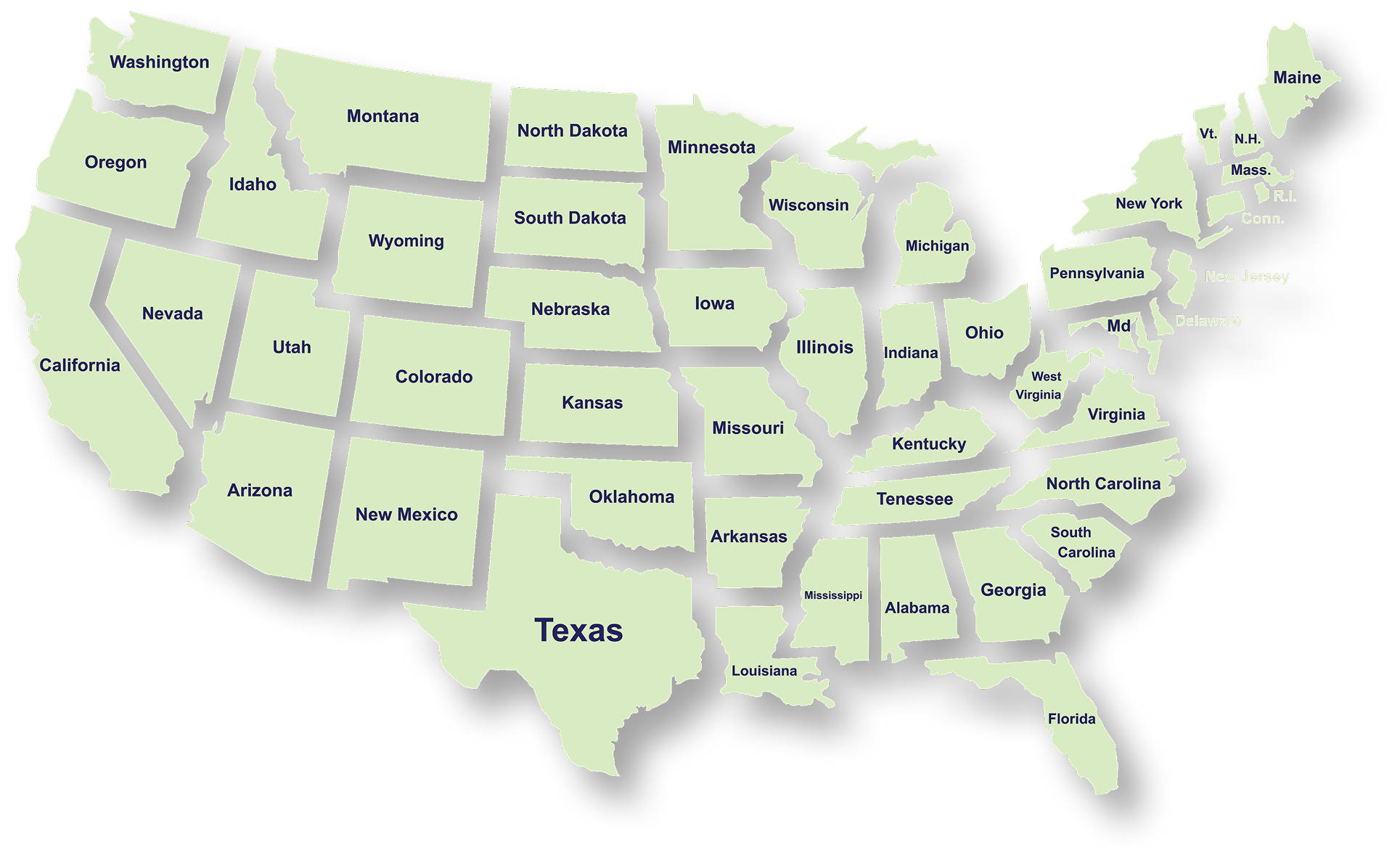
Serving Businesses & Individuals Across USA

We handle accounting, tax filing, and planning with defined timelines and accurate reporting for businesses and individuals across all states.

Frequently Asked Questions

What services does NR CPAs & Business Advisors provide?
What is tax planning and why is it important for businesses?
How can a Virtual CFO help my business?
When should a business consider IRS tax resolution services?
What financial statements does a business typically need?
How can startup advisory services help new businesses?
What is strategic business planning?
What is a Virtual Family Office and who can benefit from it?