Learning Center for Tax and Financial Insights

Stay updated with clear, actionable articles on tax rules, deadlines, deductions, and financial decisions that impact individuals and businesses.

Newsworthy

Here’s What Happened in the World of Small Business in May 2021

Here are five things that happened this past month that affect your small business. 1) The US Treasury proposed a global minimum corporate tax rate of 15%. Continuing its push for a global minimum tax for businesses, the Treasury Department said on May 20th that corporations should pay at least a 15% tax on their earnings. That being said, the final rate could go even higher – a Treasury release said that the 15% minimum is a “floor and that discussions should continue to be ambitious and push that rate higher.” (Source: CNBC) Why this is important for your business: If your business grows to be a multinational corporation, this would affect your bottom line. 2) As offices reopen, some employees don’t want to go back – ever. As the economy continues to reopen, the conversation around working from home or returning to the office (or some combination) is growing louder. According to a Harris Poll survey, “Forty percent of Americans prefer to work from home full-time, compared with 35% who seek a home-office hybrid and 25% who want to go back to the office full-time.” (Source: USA Today) Why this is important for your business: Deciding on your work from home policies going forward will influence employee satisfaction (and probably retention). Choose carefully. 3) Inflation fears abound as prices across various sectors continue to rise. As the economy gains steam, “demand is coming back faster than supply. It’s a recipe for bigger price tags for everything from airline tickets to used cars, at least temporarily.” Congress has put the Federal Reserve in charge of controlling inflation, and while they think the jump in prices this year will fade, fears across the political spectrum continue. (Source: The New York Times) Why this is important for your business: Demand, supply, pricing – inflation would affect just about everything with your business. 4) As companies race to attract service workers, some are increasing their minimum wage. As shops and restaurants reopen, some – like Chipotle – are looking to add to their workforce and are increasing pay to entice candidates to come onboard. (Source: Fast Company) Why this is important for your business: The push for a $15 minimum wage seems to have stalled in Congress for now, but some businesses are feeling the need to increase their wages to catch the eye of new employees. 5) As Americans start dining out again, food supply chain issues loom. People are heading back to restaurants, bars, and other types of dining establishments, but “suppliers and logistics providers say distributors are facing shortages of everyday products like chicken parts.” They’re also facing “difficulty in finding workers and surging transportation costs as companies effectively try to reverse the big changes in food services that came as coronavirus lockdowns spread across the U.S. last year.” (Source: The Wall Street Journal) Why this is important for your business: If your business is in the food and beverage space, these supply chain interruptions could create problems for your operations.

Explore More
No items found.

Some Small Businesses Are Recovering. Is Yours?

Intuit recently did a survey documenting the financial losses that many small businesses had experienced since March 2020. Not surprisingly, the report, Intuit QuickBooks Small Business Recovery, found that COVID-19 has had a significant impact on the financial health of U.S. small businesses. But many of the companies surveyed have proved to be resilient. As of March 31, 2021, 61 percent of them saw an annual revenue increase compared to pre-COVID days. How would you have answered the survey? If indeed you did suffer financial and personnel losses because of the pandemic, has your business started to rebound yet? If not, there are actions you can take in QuickBooks Online to help in your recovery. Here are some of them. Transactions: Watch your income and expenses like a hawk. QuickBooks Online provides excellent transaction-tracking tools that help you document income and expenses. How much time do you spend working with your downloaded transactions? If you take advantage of the excellent tools QuickBooks Online provides, you may notice patterns that you’ll want to explore and modify. For example, are you spending too much in one or more particular areas? When and where is your income dipping? It’s critical that you connect to as many online financial institutions as possible, so you get a complete picture of your income and expenses. Once you have, click on Transactions in the toolbar, which should open to the Banking page. If you’re only going there to make sure there are no unrecognized entries, you’re missing out on some of QuickBooks Online’s transaction-tracking tools. In the image above, we’ve specified a vendor and chosen a Category and Tags. This will make your reports more meaningful and actionable. If you don’t know what it means to Find Match, we can show you how that works. It’s a real time saver. Sales: Make it easier for customers to pay you. We’ve written about accepting online payments in this column before. It’s especially important if you’re struggling. You may actually be losing sales if you don’t let potential customers pay online through a credit card or bank account transfer. And existing customers may pay faster if they can do business with you in that way. QuickBooks Payments makes this possible. There are some nominal fees involved, but the potential increase in your income should more than cover them. Let us know if you want us to help you set up a merchant account. When you set up a merchant account through QuickBooks Payments, you may find that your customer base will grow, and existing customers will pay faster. Expenses: Categorize expenses with tax time in mind. You’ve probably already filed your 2020 income taxes, but we’re well into 2021, and it’s not too early to start thinking about your current tax situation. QuickBooks Online helps you track your income carefully, but it’s equally important to make sure you know what your tax-related expenses are. You want to get every deduction and credit you can. So when you’re looking at transactions, like we described above, make very certain that you’re assigning the correct categories to each of them.

Explore More
No items found.

Don't Lose Your Passport Because of Unpaid Federal Debt

Article Highlights: Notice CP508C Seriously Delinquent Tax Debt State Department Certification Passport Restrictions Lifting Restrictions Overseas When Restrictions Applied The IRS has begun issuing notice CP508C to taxpayers with “seriously delinquent” tax debt and the service has resumed its program of notifying the State Department of taxpayers’ unpaid federal debts. The U.S. Department of State generally will not renew a passport or issue a new passport to taxpayers after receiving a certification of “seriously delinquent” tax debt from the IRS, and they may revoke or place limitations on current passports. Generally, you can use your passport until you’re notified by the U.S. Department of State that it’s taking action to revoke or limit your passport. Once a taxpayer receives the notice CP508C, they have 30 days to dispute the notice. Taxpayers are cautioned to retain the notice until the issue is resolved. The IRS contact number is in the top right-hand corner of the CP508C notice. If the debt has already been satisfied, the taxpayer will need to have proof of payment available. Seriously Delinquent Tax Debt - Seriously delinquent tax debt is an individual's unpaid, legally enforceable federal tax debt totaling more than $54,000 (including interest and penalties) for which: Notice of federal tax lien has been filed and all administrative remedies under the Internal Revenue Code have lapsed or been exhausted, or A levy has been issued. The seriously delinquent tax debt amount that triggers the IRS to notify the State Department is inflation adjusted, so the $54,000 amount applies to 2021 and will no doubt increase for 2022.Getting the Certification Reversed – Once IRS has certified the “seriously delinquent” tax debt to the U.S. Department of State the IRS will reverse the certification when: The tax debt is fully satisfied or becomes legally unenforceable. The tax debt is no longer seriously delinquent. The certification is erroneous. A previously certified debt is no longer seriously delinquent when: The taxpayer and the IRS enter into an installment agreement allowing the debt to be paid over time. The IRS accepts an offer in compromise to satisfy the debt. The U.S. Department of Justice enters into a settlement agreement to satisfy the debt. Collection is suspended because the taxpayer requests innocent spouse relief. The taxpayer makes a timely request for a collection due process hearing in connection with a levy to collect the debt.

Explore More
No items found.

7 Different Types of Income Streams for Your Business

No matter what type of business you operate, you rely on having a predictable flow of income to keep your bills paid. If you only have a single source of income and it suddenly falters, you’re going to be in trouble. Having more than one income stream is an insurance policy against economic disaster. It provides a cushion to keep you afloat if your business suddenly falls off. Though some types of businesses have a clearer path to expanding their income streams then others, with a little creativity you can identify new sources of revenue that can add stability, save you from a downturn, and even add to your bottom line. The Difference Between Active and Passive Income Streams There are several different types of income streams, all of which fall into the category of either active or passive. If you are making something, selling something, or providing a service of some kind in exchange for direct payment, that is active income. While passive income also generates revenue, the payment is not as connected to the original work. A good example of someone earning passive income would be an author’s book sales. While months or even years of work went into the book’s publication, the income generated by the book’s sales after publication is passive. They go on without the author lifting a finger, with income deposited into their bank account for years after, and even following their death. How to Add New Income Streams to your Business Adding new income streams to your business is known as diversification, and it is not as hard as it sounds. Any type of business can create new sources of revenue. A dog grooming salon can start to sell dog toys, or clothes, or food. Supermarkets can add pharmacies, hair salons can add spa services like massage and skincare. Many retailers have created online stores that sell their products. One of the most famous examples of income stream diversification can be seen in Sir Richard Branson’s iconic Virgin brand. Though it began as a record store, the company has branched out into a wide range of products and services, including jewelry, cruises, mobile phone service, and even an airline. Though you may not dream quite as grandly as Sir Richard, you still have options available to you. Even people who feel limited by being skilled in a specific industry, like plumbers or electricians, can generate additional revenue streams by making videos of themselves teaching basic home repair skills and uploading them for monetization on YouTube, or offering to teach classes at the local high school or at homeowners’ association meetings. Different Income Streams To help you identify alternative sources of income for yourself or your business, here is a list of 7 different types of income streams:

Explore More
No items found.

Unpaid Debt Taking Your Tax Refund?

Article Highlights: Bureau of the Fiscal Service Allowable Refund Offsets Disputing an Offset Injured Spouse Claim We all look forward to receiving our tax refunds, but what if you were expecting a refund and it never arrived? It may be because you have outstanding federal or state debts—and not just tax-related debts. The Treasury Department’s Bureau of the Fiscal Service (BFS) issues federal tax refunds, and Congress authorizes BFS to reduce your refund through its Treasury Offset Program (TOP) to pay: Past-due child and parent support; Federal agency non-tax debts; State income tax obligations; or Certain unemployment compensation debts owed to a state (generally, these are debts for (1) compensation paid due to fraud or (2) contributions owed to a state fund that weren't paid). So, if you owe a debt that’s past due, all or part of your federal income tax refund may go to pay your outstanding federal or state debt if it has been submitted for tax refund offset by an agency of the federal or state government. BFS will send you a notice if an offset occurs reflecting the original refund amount, your offset amount, the agency receiving the payment, and the address and telephone number of the agency. BFS will notify the IRS of the amount taken from your refund once your refund date has passed. You should contact the agency shown on the notice if you believe you don't owe the debt or if you're disputing the amount taken from your refund. The IRS should be contacted only if your original refund amount shown on the BFS offset notice differs from the refund amount shown on your tax return. If you don't receive a notice, contact the BFS's TOP call center at 800-304-3107 (or TTY/TDD 866-297-0517), Monday through Friday 7:30 a.m. to 5 p.m. CST. If you choose to wait and see what happens when you file your return, BFS will send you a notice if an offset occurs. If you wish to dispute the amount taken from your refund, you will have to contact the agency that submitted the offset claim. It will be shown on the notice you will receive from the BFS. If your payment was reduced because a federal or state agency thinks you owe money, you should have received a letter from that agency. Call or write to them at the contact information on the letter. If you can't find that information, you can get it by calling 800-304-3107. Only the agency that told BFS to collect the debt can work with you to return any part of the payment that should not have been taken from your refund. If you filed a joint tax return and only one spouse is responsible for the debt, the other spouse may be entitled to part or all of the refund. To request a refund for the spouse not responsible for the offset, you can file for an injured spouse allocation. The IRS will compute the injured spouse's share of the joint refund. If you lived in a community property state during the tax year, the IRS will divide the joint refund based upon state community property law. Not all debts are subject to a tax refund offset. If your debt was submitted for offset, BFS will reduce your refund as needed to pay off the debt and send it to the agency you owe. Any portion of your remaining refund after offset is issued in a check or is direct deposited as originally requested on the tax return. The Treasury Offset website includes a Q&A section. With regard to the COVID-19 pandemic Economic Impact Payments (EIPs) that were issued in 2020 and early 2021, the second EIPs authorized in late December of 2021, are not subject to offset for any reason through the Treasury Offset Program. However, the first EIPs created by the CARES Act could have been entirely offset, up to the amount of an individual’s child support debt. The EIPs are advance payments of the Recovery Rebate Credit that is part of your 2020 tax return. To the extent that you have an overpayment of your 2020 income tax liability, the Recovery Rebate Credit can be reduced to pay debts you owe to Federal or state agencies. In the future, if you have an outstanding debt and want to be proactive, you can contact the agency with which you have a debt to determine if your debt was submitted for a tax refund offset. Please contact this office if you need assistance filing for an injured spouse claim or have other questions about refund offsets.

Explore More
No items found.

How Biden's Proposed American Families Plan Might Affect You

Article Highlights: Education Benefits Education, Teachers and Educators Child Tax Credit Child & Dependent Care Tax Credit Earned Income Tax Credit for Childless Workers Paid Family Leave Health Insurance Corporate Tax Rate Individual Marginal Tax Rates Capital Gains Tax Basis Step-up Carried Interest Like-kind Exchange for Real Estate Excess Business Losses Medicare Tax Tax Preparer Regulation Compliance Bank Information Reporting President Biden presented his proposed American Families Plan (AFP) during his Joint Session of Congress address on April 29, 2021. What follows is an overview of what is included in the plan. But this is only his wish list; Congress will need to draft proposed legislation that will have to pass in both the House of Representatives and the Senate before becoming law. With a price tag of more than $1.8 trillion, many on both sides of the political aisle think the plan is too expensive. As with virtually all legislation, the provisions will be debated, altered and deleted during Congressional negotiations. The final bill, if passed, may be quite different than the original proposed version. BENEFITS Education Benefits – The AFP primarily incorporates education benefits that, if passed, would add four years of free public education and provide federal funds to certain higher education institutions. More specifically, it would address: Pre-Kindergarten Education – Provide free universal preschool to all three- and four- year-olds. Community College Education – Provide two years of tuition-free community college education, including for DREAMers. Pell Grants – Increase Pell Grants by approximately $1,400 to assist low-income families and DREAMers. College Retention and Completion Rates – Include a $62 billion grant program to invest in completion and retention activities at colleges and universities (particularly community colleges) that serve high numbers of low-income students. States, territories and tribes will receive grants to provide funding to colleges that adopt innovative, proven solutions for student success. Subsidized Tuition – For families earning less than $125,000, provide two years of subsidized tuition at historically black colleges and universities and other minority-serving institutions. The plan would expand and create additional grants for these schools to strengthen their academic, administrative and fiscal capabilities, including by creating or expanding educational programs in high-demand fields such as STEM, computer sciences, nursing and related health care. Education, Teachers and Educators – The AFP includes several provisions to increase college retention and completion rates, address teacher shortages, improve teacher preparation and strengthen pipelines for teachers of color. It would double scholarships for future teachers from $4,000 to $8,000 per year while they are earning their degree and would also help current teachers earn in-demand credentials. Child Tax Credit – The President is proposing that the Child Tax Credit increases included in the American Rescue Plan Act (ARPA) be made permanent. The ARPA increased the Child Tax Credit from $2,000 per child to $3,000 per child six years old and above and $3,600 per child under six years old. It also made 17-year-olds eligible children for the credit and made the credit fully refundable and payable periodically during the year. These changes were for 2021 only. The AFP proposal would extend the ARPA increases through 2025 and make the refundability permanent. Child & Dependent Care Tax Credit – The ARPA, for 2021 only, made this credit fully refundable and provided a credit equal to 50% of the expenses before phaseout. The maximum amount of expenses that can be used to compute the credit was increased to $8,000 for one qualified individual and $16,000 for two or more qualified individuals. As under prior law, a dependent child qualifies if they are under the age 13. The maximum credit is $4,000 (50% of $8,000) for one eligible individual and $8,000 (50% of $16,000) for two or more eligible individuals. The AFP would make these changes permanent. Earned Income Tax Credit (EITC) for Childless Workers – The ARPA essentially tripled the EITC for childless workers for 2021 only. The one-year change increased the maximum credit from $543 to $1,502. Biden is asking Congress to make this increase permanent. Paid Family Leave – The AFP would create a program that would ensure workers receive partial wage replacement to take time to bond with a new child, care for a seriously ill loved one, deal with a loved one’s military deployment, find safety from sexual assault, stalking or domestic violence, heal from a serious illness of their own or take time to deal with the death of a loved one. It would guarantee twelve weeks of paid parental, family and personal illness/safe leave by year 10 of the program and also ensure that workers get three days of bereavement leave per year starting in year one. The program would provide workers up to $4,000 a month, with a minimum of two-thirds of average weekly wages being replaced, rising to 80 percent of average weekly wages for the lowest-wage workers. Health Insurance

Explore More
No results found.
Thank you! Your submission has been received!
Oops! Something went wrong while submitting the form.

Want tax & accounting tips & insights?Sign up for our newsletter.

Thank you! Your submission has been received!
Oops! Something went wrong while submitting the form.

Why Work With Us?

We combine deep tax expertise, financial strategy, and practical business insight to help you manage complexity, stay compliant, and make confident financial decisions.
A dollar sign, representing financial advice or discussion at NR CPAs & Business Advisors.

Experienced CPA and Enrolled Agent Leadership

Guidance led by licensed professionals with deep expertise in tax strategy, compliance, and complex financial matters.
White bar chart with an upward arrow on green circular background representing growth or progress at NR CPAs &. Business Advisors

Support for Growing Businesses and Startups

We understand the financial challenges of growth stage businesses and provide structured guidance to support expansion.
A white hand holding a dollar symbol and ascending bar chart on a green circular background representing financial growth or investment at NR CPAs & Business Advisors..

Strategic Financial Advisory

Our team helps you evaluate financial decisions with greater clarity, supported by practical insights and long term planning.

Fractional CFO Support

Access experienced financial leadership without the commitment and cost of hiring a full time Chief Financial Officer.

Proactive Tax Planning Approach

We focus on identifying tax opportunities throughout the year rather than reacting only during filing season.

Clear and Reliable Financial Reporting

Accurate financial statements and reporting that help you better understand performance and make informed decisions.
White IRS building icon with pillars and a dollar sign above on a green circular background.

Professional IRS Representation

Experienced support in resolving IRS notices, disputes, and compliance matters while protecting your financial interests.

Personalized Client Focus

Every client receives thoughtful attention and tailored financial solutions based on their specific needs and business goals.
Financial matters often involve important decisions. Working with experienced advisors can help you approach them with greater clarity and confidence in your choices.

Need Help With Your Tax or Financial Decisions?

Discuss your situation with our advisors to get clear guidance on tax planning, IRS matters, and the financial decisions ahead.
Business consulting at NR CPAs & Business Advisors.

Request Your Consultation

Fill out the form to discuss your tax concerns, financial questions, or advisory needs with our team. We will review your details and respond shortly.

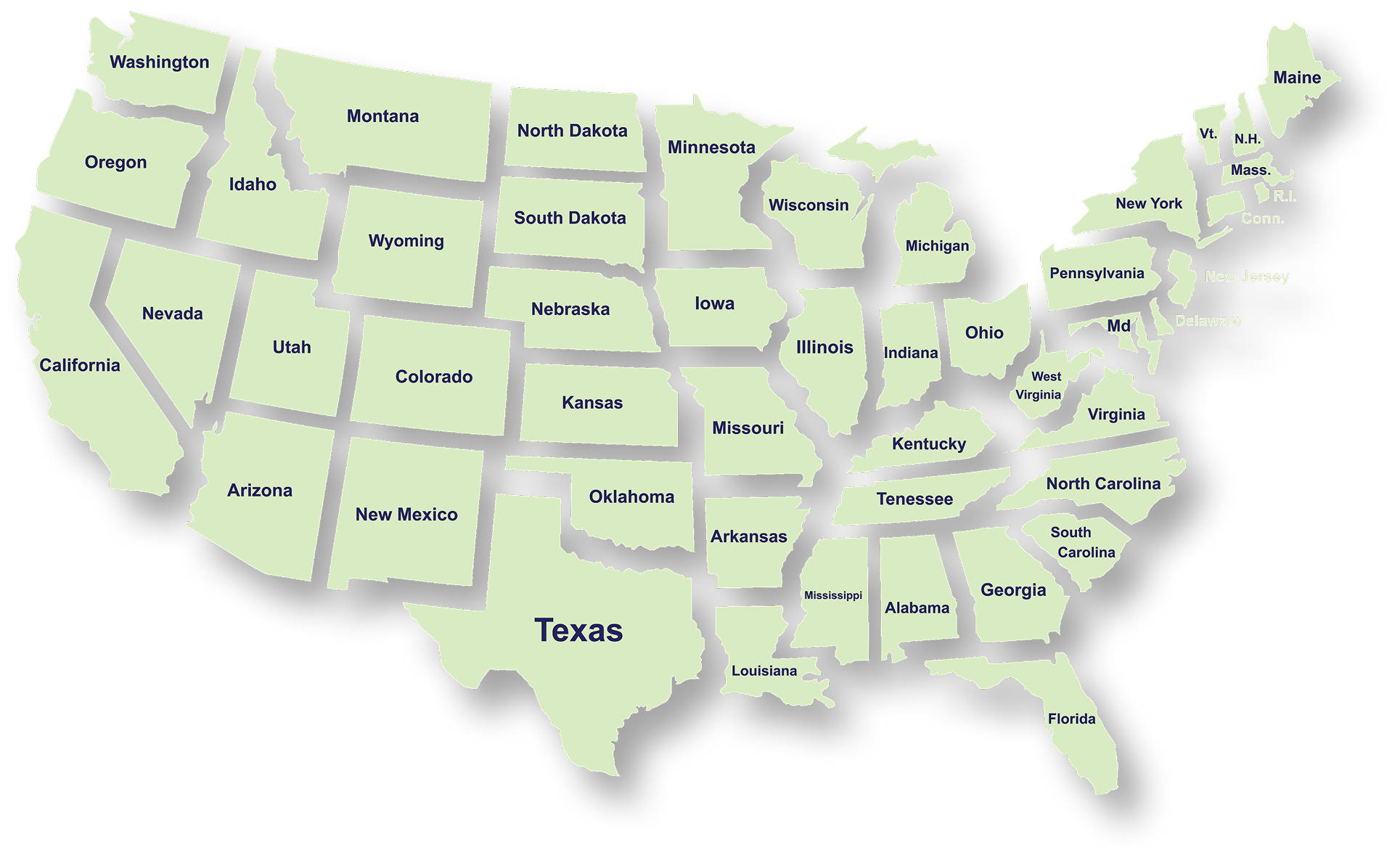
Serving Businesses & Individuals Across USA

We handle accounting, tax filing, and planning with defined timelines and accurate reporting for businesses and individuals across all states.

Frequently Asked Questions

What services does NR CPAs & Business Advisors provide?
What is tax planning and why is it important for businesses?
How can a Virtual CFO help my business?
When should a business consider IRS tax resolution services?
What financial statements does a business typically need?
How can startup advisory services help new businesses?
What is strategic business planning?
What is a Virtual Family Office and who can benefit from it?