Learning Center for Tax and Financial Insights

Stay updated with clear, actionable articles on tax rules, deadlines, deductions, and financial decisions that impact individuals and businesses.

No items found.

Required Minimum IRA Distributions Will Resume in 2021

Article Highlights: CARES Act Moratorium RMD Resumptions Age Considerations Figuring out the RMD Amount Penalty for Not Taking an RMD No Maximum Limit IRA-to-Charity Transfers As part of the CARES Act, the requirement for older taxpayers to take required minimum distributions (RMDs) from their retirement plans was waived for 2020. This primarily was due to the anticipated drop in value for most investments as a result of the economic effects of COVID-19, which actually did not materialize. So, barring any extension of the 2020 moratorium by Congress, RMDs must be resumed for the 2021 tax year. RMDs are required distributions from qualified retirement plans and commonly are associated with traditional IRAs, but they also apply to 401(k)s and SEP IRAs. The tax code does not allow taxpayers to keep funds indefinitely in their qualified retirement plans. Eventually, these assets must be distributed, and taxes must be paid on those distributions. If a retirement plan owner takes no distributions, or if the distributions are not large enough, then he or she may have to pay a 50% penalty on the amount that is not distributed but should have been. If you turned age 70½ before 2020 or turned 72 in 2020, you are already subject to the RMD requirement and must take a distribution in 2021. If you turn 72 in 2021, you must begin taking RMDs in 2021. However, the first year’s distribution for 2021 can be delayed to no later than April 1, 2022, but that means you would have to take two distributions in 2022, which may or may not be beneficial to your taxes. The amount you are required to withdraw is based upon the value of the IRA account on December 31 of the prior year divided by the “distribution period” (your life expectancy), which generally is found in the Uniform Lifetime Table for the year of distribution. Historically, the Uniform Lifetime Table – created by the IRS – has remained unchanged. But beginning with distributions in 2022, the IRS has developed a new table that reflects a longer life expectancy. Both are illustrated below. If you have more than one IRA, the RMD for each one is figured separately, but you may add up all of the RMDs and take the total amount required for the year from any one or a combination of the IRAs. CURRENT UNIFORM LIFETIME TABLE – THROUGH 2021 Age Distribution Period Age Distribution Period Age Distribution Period Age Distribution Period Age Distribution Period 70 27.4 80 18.7 90 11.4 100 6.3 110 3.1 71 26.5 81 17.9 91 10.8 101 5.9 111 2.9 72 25.6 82 17.1 92 10.2 102 5.5 112 2.6 73 24.7 83 16.3 93 9.6 103 5.2 113 2.4 74 23.8 84 15.5 94 9.1 104 4.9 114 2.1 75 22.9 85 14.8 95 8.6 105 4.5 115+ 1.9 76 22.0 86 14.1 96 8.1 106 4.2 - - 77 21.2 87 13.4 97 7.6 107 3.9 - - 78 20.3 88 12.7 98 7.1 108 3.7 - - 79 19.5 89 12.0 99 6.7 109 3.4 - - REVISED UNIFORM LIFETIME TABLE – EFFECTIVE 2022 Age Distribution Period Age Distribution Period Age Distribution Period Age Distribution Period Age Distribution Period - - 80 20.2 90 12.2 100 6.4 110 3.5 - - 81 19.4 91 11.5 101 6.0 111 3.4 72 27.4 82 18.5 92 10.8 102 5.6 112 3.3 73 26.5 83 17.7 93 10.1 103 5.2 113 3.1 74 25.5 84 16.8 94 9.5 104 4.9 114 3.0 75 24.6 85 16.0 95 8.9 105 4.6 115 2.9 76 23.7 86 15.2 96 8.5 106 4.3 116 2.8 77 22.9 87 14.4 97 7.8 107 4.1 117 2.7 78 22.0 88 13.7 98 7.3 108 3.9 118 2.5 79 21.1 89 12.9 99 6.8 109 3.7 119 23 - - - - - - - - 120+ 2.0

Explore More
No items found.

Understanding Tax-Filing Status

Article Highlights: Single Married Filing Jointly Surviving Spouse Married to a Nonresident Alien Head of Household Married Filing Separate Filing status is determined on the last day of the year and most often is based on marital status. The two most prevalent are as follows: Single – Unmarried individuals without dependents. Married Taxpayers Filing Jointly (MFJ) – The couple combines their incomes, deductions, and credits on a jointly filed return. They are jointly and separately liable for the tax determined on the return. Because filing status is based on the taxpayers’ marital status on December 31 of each year, this means that couples who marry during the year, regardless of the date of the marriage, are eligible to file MFJ (but a special rule applies for nonresident aliens – see below). Likewise, those who divorce during the year are not qualified to file MFJ for the year when the divorce is made final. A couple that is separated but still married as of December 31 may file either MFJ or Married Filing Separate (or possibly Head of Household, as explained below), and neither spouse can file using the single status. But single and MFJ are just the tip of the iceberg when it comes to determining the proper and most beneficial filing status. There are a number of possibilities: Surviving Spouse (Qualified Widow[er]) – In the year of a spouse’s death, the surviving spouse, if not remarried by the end of the year, can use the MFJ status. In the two subsequent years, if not remarried, the surviving spouse may be able to file as a Qualified Widow(er). The benefit of filing as a Qualified Widow(er) is that the taxpayer gets to us the MFJ tax rates, which are lower than those for the Single and Head of Household statuses. To file as a Qualified Widow(er), the taxpayer must meet the following requirements: 1. The taxpayer must have a son, daughter, stepson, or stepdaughter (no age limits) – but not a foster child and not a grandchild – who can be claimed as a dependent, either as a qualified child or a dependent relative, except that the child’s gross income is disregarded for purposes of determining if the child is a dependent. 2. The child cannot have filed a joint return. 3. The taxpayer cannot be claimed as someone else’s dependent. 4. The child must have lived in the taxpayer’s home all year, except for temporary absences or if a child was born or died during the year or was kidnapped. 5. The taxpayer must have paid more than half the cost of keeping up the home for the year. Married to a Nonresident Alien – Generally, a U.S. citizen or a U.S. resident who is married to a nonresident alien must file as Married Filing Separate. However, a person who is a nonresident alien at the end of his or her taxable year and who is married to a U.S. citizen or a U.S. resident can be treated as a U.S. resident for income-tax purposes, if the spouses so elect. In doing so, both spouses must agree to subject their worldwide income for the taxable year to U.S. taxation, and both parties must make the election. Head of Household (HH) – This status may be claimed by a single or married individual meeting certain requirements. While the status provides favorable tax rates, it is frequently used in error, often because the taxpayer doesn’t understand the eligibility rules. Of all of the statuses, head of household is the only one in which a paid tax preparer is subject to a penalty if they do not perform the IRS-prescribed due diligence when determining if their client qualifies to claim HH. It is also closely monitored by federal and state tax agencies. A single (unmarried) individual may use this status if he or she 1. Pays more than one-half of the cost of maintaining, as his or her home, a household that is the principal place of abode of a qualified person for more than half of the year. A qualified person generally includes a qualified child (the child’s exemption does not have to be claimed – it can be released to the other parent) or a relative for whom the taxpayer may claim a dependency exemption, OR 2. Pays more than half the cost of maintaining a separate household that was the main home for a dependent parent for the entire year. A married individual may use this status if he or she 1. Lived apart from their spouse for at least the last six months of the year, and2. Pays more than one-half of the cost of maintaining, as his or her home, a household that is the principal place of abode, for more than half the year, of a child, stepchild, or eligible foster child for whom the taxpayer may claim a dependency exemption. Other Head-of-Household issues: - Generally, a single house cannot contain more than one household.- For HH purposes, “temporary absences” for school, vacations, illness, military service, etc., do not change the place of a dependent’s abode.- A person claimed as a dependent under a “multiple support agreement” does not qualify a taxpayer for the HH filing status. (When several people together provide over 50% of support for an individual, those providing more than 10% of the support can have a multiple-support agreement that specifies which of them will claim the dependent.)- A married child (including a grandchild, stepchild, or adopted child) who is a dependent will qualify a taxpayer for this filing status. But to be a “qualifying child,” the child cannot file a joint return unless the return was filed only as a claim for a refund. Married Filing Separate (MFS) – Married taxpayers have the option of filing a joint return or separate returns. Generally, if the income, deductions, and credits are split exactly 50-50, the total tax when filing separate returns will be the same as a joint return. However, some credits and deductions may not be allowed when filing MFS. These are the most common reasons for filing MFS.1. They may be separated and may not wish to file jointly. However, this creates complicated issues in dividing up the income and deductions because the spouses are often uncooperative. In some states, community property laws can also add complications in dividing the income and deductions.2. They may wish to keep their financial affairs separate. This most commonly occurs when individuals marry later in life, or when one spouse comes to the marriage with significantly greater wealth than the other spouse, and they wish to keep their finances separate, even if doing so costs them some extra taxes.3. A spouse may be concerned that the other spouse is not properly reporting their income or deductions. When a joint return is filed, both spouses are liable for the tax, even if only one spouse earned the income.

Explore More
Hr & People Management

Analyzing Overtime Costs: A Strategic Step for HR

Analyzing overtime costs can be an important strategic step in determining when to hire new workers and improve efficiency in operations, labor costs and productivity. Overtime vs. More Hires An important strategy for making hiring decisions is looking closely at the costs of overtime compared with the costs of hiring additional employees. Those costs will vary based on the employee's salary and other factors. Here are three steps to help determine whether it's best to pay overtime to current employees or hire new workers. 1. Determine Fixed Costs of Hiring an Employee Those costs may include an annual cost for health insurance, benefits, paid time off and other paid leave mandated by law or through an employer's policy. Multiply the potential employee's daily pay rate by the total number of paid days off they are entitled to each year. Fixed costs will stay the same — regardless of the number of hours a person works. 2. Determine the Costs of Paying Overtime If an employee's hourly wage is $15, your business pays them approximately $600 for a 40-hour workweek. If the employee's regular rate of pay is $15 per hour, under the FLSA they would be entitled to time and a half for all hours worked over 40 hours in a workweek, which amounts to $22.50 per hour. If that employee works an extra 10 hours, they cost you $825 in weekly payroll. These are variable costs and do not take into consideration any state overtime requirements, which may be even more generous to employees. 3. Crunch the Numbers If you only need 10 extra hours of work out of a $15-per-hour employee, it may not be worth the cost of hiring a new employee and paying the fixed employment costs for a new person. But at some point, it will become cheaper to hire a new employee — even part time — than to continue paying for overtime hours. Analyze the fixed costs and variable costs of hiring new employees and paying for current overtime to determine your organization's break-even point. Using Overtime Strategically Many employers use overtime to cover for absences or allow employees to catch up on missed work. But rather than using overtime as a last-minute approach to playing catch up, businesses can benefit by being more strategic and by analyzing overtime costs. To use overtime strategically, determine how you might use it over the long term to meet production demands at certain times of the year or to fulfill uncharacteristically large orders. With an integrated, cloud-based HR system, leaders can quickly access a wealth of data and leverage it to keep costs down. Here are a few strategic steps you can take to better maximize your use of overtime:

Explore More
No items found.

Video: Could You Get a Tax Deduction for Your Home Office?

Because of the pandemic, many have been forced to work from home for the past year. A frequent question is do they qualify for a special tax deduction for using their home as a workplace? .embed-container { position: relative; padding-bottom: 56.25%; height: 0; overflow: hidden; max-width: 100%; } .embed-container iframe, .embed-container object, .embed-container embed { position: absolute; top: 0; left: 0; width: 100%; height: 100%; }

Explore More
Personal Finance

7 Personal Finance Tips for Freelancers and Gig Workers

Freelance work and the gig economy have taken the nation by storm. A study commissioned by the Freelancers Union and freelance platform Upwork revealed that the gig economy’s workforce reached an eye-popping 57 million Americans in 2019, with increasing numbers likely to join in the future. You can choose freelancing as your sole source of income or you can do it in your spare time for extra money, but whatever path you choose, you need to pay attention to how you’re managing your money — otherwise, you’re liable to end up facing costly consequences. Here are seven personal finance tips that can benefit every person working as part of the freelance economy. 1. Always start with a budgetBeing your own boss is a common dream, but it isn’t easy. When you go out on your own as a freelancer or gig worker, you need to be able to gauge how much income you need in order to make it both worthwhile and feasible. To make that determination, you start with how much money you actually need, and that’s where reading some good budgeting tips can help. That’s where a budget comes in. Knowing how much you pay out in bills and other expenses each month, as well as how much you need to save for the future, tells you how much you need to earn. 2. Create your own withholding scheduleWhen you’re a W-2 employee, your employer withholds the appropriate amount of federal and state taxes on your behalf and sends them in so that you don’t have to. It’s done with every paycheck. As a freelancer, you are responsible for paying your own taxes, and if you don’t set aside part of your income on a regular basis, you’ll be in for a rude awakening come tax time. 3. Send the taxes you’ve withheld every quarterPeople who are self-employed are required to send in quarterly estimated taxes to the federal government, their state, and in some cases to their city or county. Failing to do so can lead to penalties, so make sure that you read up on the rules and due dates for each. These taxes can usually be submitted online or via snail mail, and if you choose the latter there are specific payment forms that should accompany your tax submissions. 4. Record what you’re spending and earningIt doesn’t matter whether you use a software package or just keep track using a spreadsheet or ledger, but whatever you do, record every dollar that comes in and that you spend for the business. Not only will this help you know exactly what your tax liability is, but you will have an easy-access record when it’s time to list all of your business deductions. It will also help you to see clearly whether your business is profitable. 5. Last word on taxes – hire a pro If you’ve decided to be a freelancer, you’ve already taken on responsibilities that go far beyond what most workers carry. Don’t take the risk that you’re underestimating how much you should withhold or what is or isn’t an eligible deduction. Work with a tax professional like us to find out what you can and can’t do. Not only will you feel more secure as you move forward, but we can also give you some help with minimizing your tax liability. 6. Save for a rainy daySaving is always a good idea, but when you’re working as a freelancer or a gig worker, you’re not getting regular paychecks the way that you do when you work for an employer. There may be times when you’re so busy you can hardly keep up, but you can also have slow periods or times when your clients aren’t paying quickly. Building an emergency fund will help you smooth out your ability to pay bills during slow patches. 7. Be disciplined about saving for retirementOne of the most valuable benefits that comes with many W-2 jobs is a dedicated retirement plan like a 401(k) or pension. If you’ve fully embraced freelancing and left company benefits behind, you’ll need to set up your own retirement savings plan for when you no longer want to work. Most experts advise treating long-term savings as if they’re a utility bill – something that needs to be paid every month. Setting up automatic contributions to a Roth IRA, SEP IRA, IRA, Solo 401(k) is easy and ensures that your nest egg is building. Ask any successful gig worker or freelancer about their jobs and you’re likely to hear that they love it. But dig a little deeper and you’ll also find out that they count their management of finances, taxes and savings as an important part of their responsibilities. By following these tips and including them in your daily or weekly tasks, you can avoid headaches and set yourself on a path to success.

Explore More
No items found.

Working from Home? Is there a Tax Deduction?

Article Highlights: COVID Work from Home Requirements Employee Versus Self-employed Qualifications Actual Expense Method Simplified Method Home Office Expenses for Renters vs. Homeowners How Moving Affects the Home-Office Deduction Other Issues Gross Income Limitation Many individuals, because of the COVID pandemic, have been forced to work from home in order to curtail the spread of the virus. A frequent question is do they qualify for a special tax deduction for using their home as a workplace? The tax law includes a deduction when you use part of your home for business; however, the bad news is the home office deduction for employees was suspended through 2025 by the Tax Cuts and Jobs Act (TCJA) that went into effect in 2018. So, currently employees cannot take a home office deduction. Employees may want to discuss with their employers the possibility of being reimbursed for the costs associated with using the home for the benefit of the employer, such as a percentage of the rent or mortgage expenses, utilities and maintenance costs. If structured appropriately as an accountable plan, the reimbursed amounts would be nontaxable. In some states, employers are required by state law to reimburse their employees for job-related expenses, which could include their home office expenses. The TCJA prohibition on an employee’s home office deduction does not preclude self-employed business owners from claiming the home office deduction if they otherwise qualify. The space itself does not actually have to be an office in the conventional sense. But, one of the following must apply to be able to deduct home office expenses. The home office: Must be the taxpayer’s main place of business. OR Must be a place of business where the taxpayer meets patients, clients or customers. The taxpayer must meet these people in the normal course of business. OR Must be in a separate structure that is not attached to the taxpayer’s home. The taxpayer must use this structure in connection with their business. OR Must be a place where the taxpayer stores inventory or samples. This place must be the sole, fixed location of their business. Generally, except when used to store inventory, an office area must be used on a regular and continuing basis and be exclusively restricted to the trade or business (i.e., no personal use). Two Methods – There are actually two methods to determine the amount of a home-office deduction: the actual-expense method and the simplified method. Actual-Expense Method – The actual-expense method prorates home expenses based on the portion of the home that qualifies as a home office, which is generally based on square footage. Aside from prorated expenses, 100% of directly related costs, such as painting and repair expenses specific to the office, can be deducted. Unlike the simplified method, the business is not limited to 300 square feet. Simplified Method – The simplified method allows for a deduction equal to $5 per square foot of the home used for business, up to a maximum of 300 square feet, resulting in a maximum simplified deduction of $1,500. A taxpayer may elect to take the simplified method or the actual-expense method (also referred to as the regular method) on an annual basis. Thus, a taxpayer may freely switch between the two methods each year. Additional office expenses such as utilities, insurance, office maintenance, etc., are not allowed when the simplified method is used. Prorated rent or home interest and taxes are not permitted either, although 100% of home interest and taxes are deductible if the taxpayer itemizes deductions.To determine the average square footage when using the simplified method, no more than 300 square feet for any month can ever be used, even if the taxpayer has multiple businesses for which he or she uses space in the home. If there are multiple businesses, a reasonable method to allocate between businesses is used. Zero is used for months when there was no business use or when the business was not operating for a full year. Don’t count any month when the business use was less than 15 days.Example: Sandra, who is self-employed, begins using 400 square feet of her home for business on March 20, 2020 and continues using the space as a home office through the end of the year. Her average monthly allowable square footage for 2020 is 225 square feet (300 x 9 months = 2,700/12 = 225). Her home office deduction under the simplified method would be $1,125 (225 x $5). Home Office Expenses – There are differences as to which prorated home expenses are deductible by renters and homeowners when computing the actual expense method, as illustrated in the table below. Prorated Expense Own Rent Mortgage Interest X - Property Taxes X - Rent - X Homeowner’s Insurance X - Renter’s Insurance - X Utilities X X Depreciation X - Home Maintenance X X

Explore More
No results found.
Thank you! Your submission has been received!
Oops! Something went wrong while submitting the form.

Want tax & accounting tips & insights?Sign up for our newsletter.

Thank you! Your submission has been received!
Oops! Something went wrong while submitting the form.

Why Work With Us?

We combine deep tax expertise, financial strategy, and practical business insight to help you manage complexity, stay compliant, and make confident financial decisions.
A dollar sign, representing financial advice or discussion at NR CPAs & Business Advisors.

Experienced CPA and Enrolled Agent Leadership

Guidance led by licensed professionals with deep expertise in tax strategy, compliance, and complex financial matters.
White bar chart with an upward arrow on green circular background representing growth or progress at NR CPAs &. Business Advisors

Support for Growing Businesses and Startups

We understand the financial challenges of growth stage businesses and provide structured guidance to support expansion.
A white hand holding a dollar symbol and ascending bar chart on a green circular background representing financial growth or investment at NR CPAs & Business Advisors..

Strategic Financial Advisory

Our team helps you evaluate financial decisions with greater clarity, supported by practical insights and long term planning.

Fractional CFO Support

Access experienced financial leadership without the commitment and cost of hiring a full time Chief Financial Officer.

Proactive Tax Planning Approach

We focus on identifying tax opportunities throughout the year rather than reacting only during filing season.

Clear and Reliable Financial Reporting

Accurate financial statements and reporting that help you better understand performance and make informed decisions.
White IRS building icon with pillars and a dollar sign above on a green circular background.

Professional IRS Representation

Experienced support in resolving IRS notices, disputes, and compliance matters while protecting your financial interests.

Personalized Client Focus

Every client receives thoughtful attention and tailored financial solutions based on their specific needs and business goals.
Financial matters often involve important decisions. Working with experienced advisors can help you approach them with greater clarity and confidence in your choices.

Need Help With Your Tax or Financial Decisions?

Discuss your situation with our advisors to get clear guidance on tax planning, IRS matters, and the financial decisions ahead.
Business consulting at NR CPAs & Business Advisors.

Request Your Consultation

Fill out the form to discuss your tax concerns, financial questions, or advisory needs with our team. We will review your details and respond shortly.

Serving Businesses & Individuals Across USA

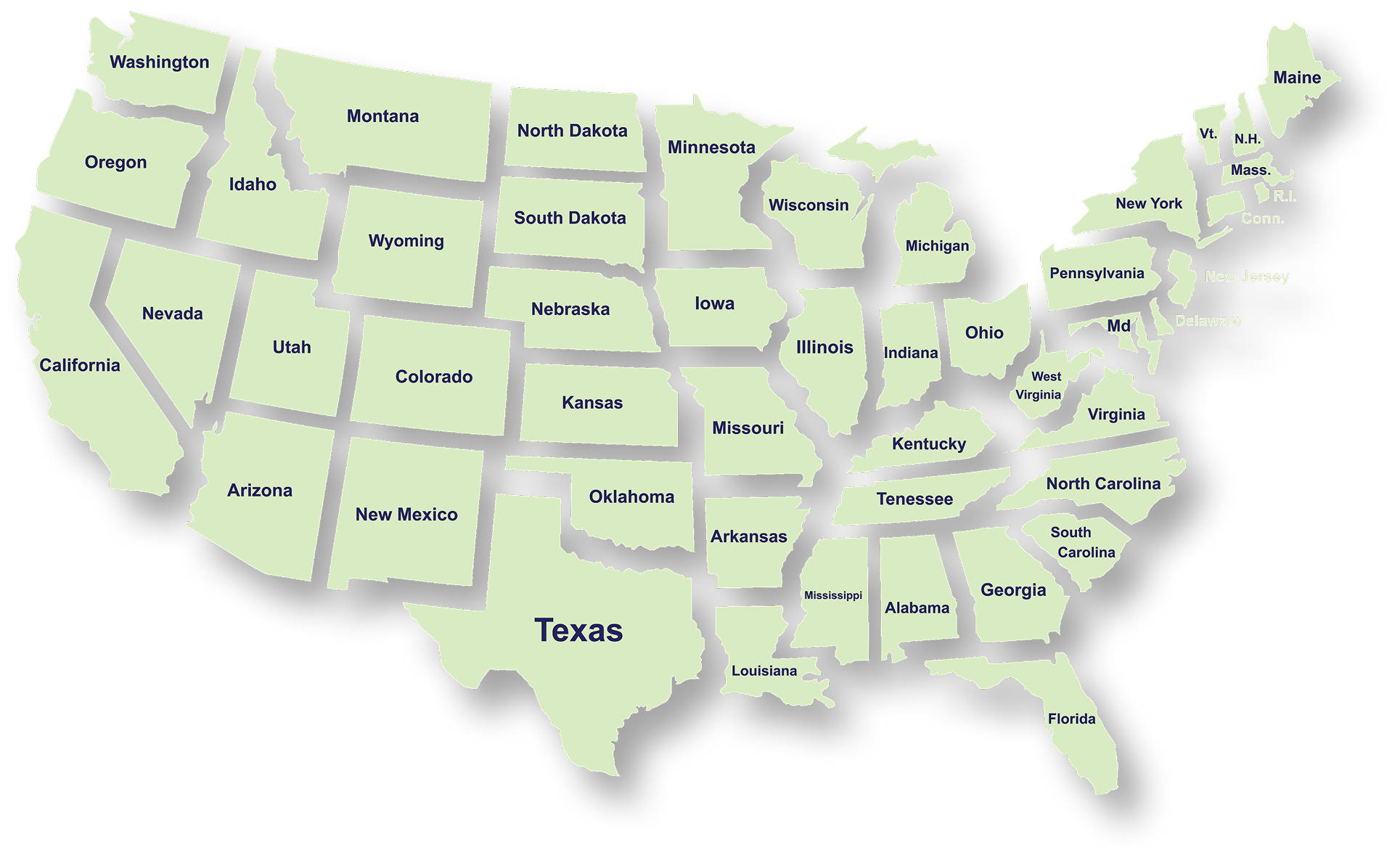
We handle accounting, tax filing, and planning with defined timelines and accurate reporting for businesses and individuals across all states.

Frequently Asked Questions

What services does NR CPAs & Business Advisors provide?
What is tax planning and why is it important for businesses?
How can a Virtual CFO help my business?
When should a business consider IRS tax resolution services?
What financial statements does a business typically need?
How can startup advisory services help new businesses?
What is strategic business planning?
What is a Virtual Family Office and who can benefit from it?