Learning Center for Tax and Financial Insights

Stay updated with clear, actionable articles on tax rules, deadlines, deductions, and financial decisions that impact individuals and businesses.

No items found.

Be Tax Wise With Your Charitable Contributions

Article Highlights: Charitable Itemized Deductions Bunching Deductions Qualified Charitable Distributions Donor-Advised Funds Donations to charities can be deducted as an itemized deduction on your tax return. This means that to achieve any tax benefit from your charitable donations, you cannot use the standard deduction and instead must itemize your deductions. However, if the total of all your itemized deductions does not exceed the standard deduction amount for the year, then you are better off taking the standard deduction, but in doing so, you will get no tax benefit from your charitable contributions. As a rule, most taxpayers just wait until tax time to add up their potential deductions and then use the higher of the standard deduction or their itemized deductions. If you want to be more proactive, here are some strategies that might work for you. Bunching – Charitable contributions are a nice fit for the tax strategy referred to as “bunching.” When employing the bunching strategy, a taxpayer essentially doubles up on as many deductions as possible in one year, with the goal of being able to itemize deductions and then taking the standard deduction in the following year. Because charitable contributions are entirely payable at your discretion, they fit right into the bunching strategy. For example, if you normally tithe at your church, you could make your normal contributions throughout the current year and then prepay the entire subsequent year’s tithing in a lump sum in December of the current year, thereby doubling up on the church contribution in one year and having no charity deduction for church in the next year. Normally, charities are very active with their solicitations during the holiday season, giving you the opportunity to make contributions at the end of the current year or simply wait a short time and make them after the end of the year. Be sure you get a receipt or acknowledgment letter from the organization that clearly shows the year when the contribution was made. Qualified Charitable Distribution – If you are age 70.5 or older, you can make charitable contributions by transferring funds from your IRA account to a charity, which are referred to as qualified charitable distributions (QCDs). The only hitch here is the funds must be transferred directly from the IRA to the charity, meaning your IRA trustee will have to make the distribution to the charity. No minimum amount needs to be transferred, but the maximum of all such transfers for the year is $100,000 per year, per taxpayer. Also note that distributions to private foundations and donor-advised funds don’t qualify for the QCD. Thus, this strategy allows you to make a charitable contribution without itemizing deductions; since these distributions are tax-free, you can’t also claim a deduction for them. Even better, QCDs also count toward your minimum required distribution for the year. Because QCDs are nontaxable, your AGI will be lower, and you can benefit from tax provisions that are pegged to AGI, such as the amount of Social Security income that’s taxable and the cost of Medicare B insurance premiums for higher-income taxpayers. If you decide to make a QCD, check with your IRA custodian on the IRA’s rules for how to request the QCD, and be sure to give the IRA custodian ample time to complete the process if you are making the request toward the end of the year. Always get a written acknowledgment from the charity, for tax-reporting purposes.

Explore More
Personal Finance

The Best Ways to Create a Budget You Can Live By

It takes little more than a passing understanding of the United States economy to understand that the next recession might be right around the corner. In fact, people have already begun to talk about how it may be arriving sooner rather than later. Recent economic forecasts predict that the economy will not only slow down across 2019, but it will continue to do so into 2020... pointing to the fact that trouble may be just over the horizon. If you’re worried about the next great recession and are still haunted by memories of 2007 and 2008, you have every right to be. But you also need to learn from the mistakes of the past. Things got so bad the last time because many, many people were caught off-guard. Based on that, your course of action is clear: You need to start preparing for this possibility, and you need to start doing so today. This means getting real about a personal or family budget, which, thankfully, is a lot more straightforward than you might have thought. Your Keys to Building a Better Budget To build the most accurate and forward-thinking budget that you can, you first need actionable information to work from. That means figuring out your after-tax income, so you know how much money you’re talking about. If you get a regular paycheck from your employer, for example, sit down and consider not only your taxes but also automatic deductions for things like health and life insurance and your 401(k). Do this for every member of your household and add all those totals together to get a better idea of the total amount of money you’re actually working with. At the same time, you also need to get an accurate idea of what your monthly expenses look like. For the best results, don’t consider your spending habits just yet this early in the process. Instead, simply list everything that you ‒ and your loved ones ‒ spend money on to maintain the lifestyle you’ve grown accustomed to. List absolutely everything, including not only the essentials like utilities but also streaming service subscriptions, the amount of money you spend eating out in a month, and more. Don’t hold anything back ‒ it won’t benefit you at all to pretend like you don’t spend $50 a month on coffee runs if you absolutely know that you do. If you need to, go through your credit card statements. A variety of smartphone apps are available that will help you get a granular look at your expenses moving forward.

Explore More
No items found.

April 2019 Individual Due Dates

April 1 - Last Day to Withdraw Required Minimum DistributionLast day to withdraw 2018’s required minimum distribution from Traditional or SEP IRAs for taxpayers who turned 70½ in 2018. Failing to make a timely withdrawal may result in a penalty equal to 50% of the amount that should have been withdrawn. Taxpayers who became 70½ before 2018 were required to make their 2018 IRA withdrawal by December 31, 2018.April 10 - Report Tips to Employer If you are an employee who works for tips and received more than $20 in tips during March, you are required to report them to your employer on IRS Form 4070 no later than April 10. Your employer is required to withhold FICA taxes and income tax withholding for these tips from your regular wages. If your regular wages are insufficient to cover the FICA and tax withholding, the employer will report the amount of the uncollected withholding in box 12 of your W-2 for the year. You will be required to pay the uncollected withholding when your return for the year is filed. April 15 - Taxpayers with Foreign Financial Interests A U.S. citizen or resident, or a person doing business in the United States, who has a financial interest in or signature or other authority over any foreign financial accounts (bank, securities or other types of financial accounts), in a foreign country, is required to file Form FinCEN 114. The form must be filed electronically; paper forms are not allowed. The form must be filed with the Treasury Department (not the IRS) no later than April 15, 2019 for 2018. An extension of time to file of up to 6 months is automatically allowed. This filing requirement applies only if the aggregate value of these financial accounts exceeds $10,000 at any time during 2018. Contact our office for additional information and assistance filing the form. April 15 - Individual Tax Returns Due File a 2018 income tax return (Form 1040) and pay any tax due. If you want an automatic six-month extension of time to file the return, please call this office. NOTE: The due date for individuals living in Maine or Massachusetts is April 17.Caution: The extension gives you until October 15, 2019 to file your 2018 1040 return without being liable for the late filing penalty. However, it does not avoid the late payment penalty; thus, if you owe money, the late payment penalty can be severe, so you are encouraged to file as soon as possible to minimize that penalty. Also, you will owe interest, figured from the original due date until the tax is paid. If you have a refund, there is no penalty; however, you are giving the government a free loan, since they will only pay interest starting 45 days after the return is filed. Please call this office to discuss your individual situation if you are unable to file by the April 15 due date. April 15 - Estimated Tax Payment Due (Individuals) It’s time to make your first quarter estimated tax installment payment for the 2019 tax year. Our tax system is a “pay-as-you-earn” system. To facilitate that concept, the government has provided several means of assisting taxpayers in meeting the “pay-as-you-earn” requirement. These include:

Explore More
No items found.

April 2019 Business Due Dates

April 1 - Electronic Filing of Forms 1098, 1099 and W-2G If you file Forms 1098, 1099 (other than 1099-MISC withan amount in box 7), or W-2G electronically with the IRS, this is the final due date. This due date applies only if you file electronically (not paper forms). Otherwise, January 31 or February 28 was the due date, depending on the form filed. The due date for giving the recipient these forms was January 31. April 1 -Applicable Large Employers (ALE) – Form 1095-C If filing electronically, file Form 1095-C, Employer-Provided Health Insurance Offer and Coverage, with the IRS. If filing on paper the due date was February 28, 2019. April 1 - Large Food and Beverage Establishment Employers If you file Forms 8027 for 2018 electronically with the IRS, this is the final due date. This due date applies only if you file electronically. Otherwise, February 28 was the due date. April 15 - Household Employer Return Due If you paid cash wages of $2,100 or more in 2018 to a household employee, you must file Schedule H. If you are required to file a federal income tax return (Form 1040), file Schedule H with the return and report any household employment taxes. Report any federal unemployment (FUTA) tax on Schedule H if you paid total cash wages of $1,000 or more in any calendar quarter of 2017 or 2018 to household employees. Also, report any income tax that was withheld for your household employees. For more information, please call this office. April 15 - C-Corporations File a 2018 calendar year income tax return (Form 1120) and pay any tax due. If you need an automatic 6 -month extension of time to file the return, file Form 7004, Application for Automatic Extension of Time To File Certain Business Income Tax, Information and Other Returns, and deposit what you estimate you owe. Filing this extension protects you from late filing penalties but not late payment penalties, so it is important that you estimate your liability and deposit it using the instructions on Form 7004.

Explore More
No items found.

Tax Tips for IRA Owners

Article Highlights: Early Withdrawals Excess Contributions Multiple Rollovers No Traditional IRA Contributions in the Year Reaching age 70½ Failing to Take a Required Minimum Distribution (RMD) Late Contributions Switch the Type of IRA Backdoor Roth IRA Alimony as Compensation Spousal IRA Saver’s Credit IRA-to-Charity Direct Transfers There are both opportunities and pitfalls for IRA owners, and while you definitely don’t want to get caught up in a pitfall, you may want to take advantage of the opportunities. IRAs come in two varieties: the traditional and the Roth. The traditional generally provides a tax deduction for a contribution and tax-deferred accumulation, with distributions being taxable. On the other hand, there is no tax deduction for making a Roth contribution, but the distributions are tax-free. So, it leaves taxpayers with a significant decision, with long-term consequences of whether to contribute to traditional or Roth IRA. If you can afford to make the contributions without a tax deduction, then the Roth IRA is probably the better choice in most circumstances. However, some high-income restrictions limit the deductibility of a traditional IRA and the ability to contribute to a Roth IRA. Pitfalls – Here are some of the pitfalls that can be encountered with IRAs: Early withdrawals – IRAs were designed by the government to be retirement resources, and to deter individuals from tapping these accounts before retirement they added what is called an early withdrawal penalty of 10% of the taxable amount of the IRA distribution. The penalty generally applies for distributions made before reaching age 59-½, but there are some exceptions to the penalty. Excess contributions – The tax code sets the maximum amount that can be contributed to an IRA annually. Contributions in excess of those limits are subject to a nondeductible 6% excise tax penalty, and this penalty continues to apply each year until the over-contribution is corrected. Multiple rollovers – A rollover is where you take possession of the IRA funds for a period of time (up to 60 days) and then redeposit the funds into the same or another IRA. Only one IRA rollover is allowed in a 12-month period and all IRAs are treated as one for purposes of this rule. If more than one rollover is made in a 12-month period, the additional distributions are treated as taxable distributions and the rollover is treated as an excess contribution, with both causing significant tax and penalties. Rollovers can be avoided by directly transferring assets between IRA trustees. No Traditional IRA contributions in year reaching age 70½ - Individuals cannot make a Traditional IRA contribution in the year they reach the age 70½ or any year thereafter. This rule doesn’t apply to Roth IRAs. Contributions to a traditional IRA made in the year you turn 70½ (and for subsequent years) are treated as excess contributions and are subject to the nondeductible 6% excise tax penalty until corrected. Failing to take a required minimum distribution (RMD) – Individuals who have traditional IRA accounts must begin taking RMDs in the year they turn 70½ and in each year thereafter. However, the distribution for the year when an individual reaches age 70½ can be delayed to the next year without penalty if the distribution is made by April 1 of the next year. Failing to take a distribution is subject to a penalty equal to 50% of the RMD. The IRS will generally waive the penalty for non-willful failures to take the RMD, provided the individual has a valid excuse and the under-distribution is corrected. The RMD rules don’t apply to Roth IRAs while the owner is alive. Opportunities Late contributions – If you forgot to make an IRA contribution or just decided to do so for the prior year, the tax law allows you to make a retroactive contribution in the subsequent year, provided you do so before the unextended April filing due date. As an example, you can make an IRA contribution for 2018 through April 15, 2019. This is also a benefit for taxpayers who were not previously sure they could afford to make a contribution. Switch the type of IRA – If you make an IRA contribution for a year, tax law allows you to switch the designation of that contribution from a traditional IRA to a Roth IRA, or vice versa, provided you do so before the unextended April filing due date. Backdoor Roth IRA – Contributing to a Roth IRA is not allowed if the individual’s modified adjusted gross income (AGI) exceeds a specified amount based on filing status. For example, the limits for 2019 are $203,000 if filing a joint return, $10,000 if filing married separate, or $137,000 for all others. If a high-income taxpayer would like to contribute to a Roth IRA but cannot because of the income limitation, there is a work-around that will allow the high-income individual to fund a Roth IRA. Here is how that backdoor Roth IRA works:

Explore More
No items found.

Defer Gains with Qualified Opportunity Funds

If you have a large capital gain from the sale of a stock, asset, or business and would like to defer that gain with the possibility of excluding some of it from taxation, you may want to check out the new investment vehicle created by tax reform, called a qualified opportunity fund (QOF). Congress, as a means of helping communities that have not recovered from the past decade’s economic downturn, included a provision in the Tax Cuts and Jobs Act intended to promote investments in certain economically distressed communities through QOFs. Investments in QOFs provide unique tax incentives that lawmakers designed to encourage taxpayers to participate in these funds. Reinvesting Gains – Taxpayers who have a capital gain from selling or exchanging any non-QOF property to an unrelated party may elect to defer that gain if it is reinvested in a QOF within 180 days of the sale or exchange. Only one election may be made with respect to a given sale or exchange. If the taxpayer reinvests less than the full amount of the gain in the QOF, the remainder is taxable in the sale year, as usual. Only the gain need be reinvested in a QOF, not the entire proceeds from the sale. This is in sharp contrast to a 1031 exchange where the entire proceeds must be reinvested to defer the gain. The gain income is deferred until the date when the QOF investment is sold or December 31, 2026, whichever is earlier. At that time, the taxpayer includes the lesser of the following amounts as taxable income: a. The deferred gain or b. The fair market value of the investment, as determined at the end of the deferral period, reduced by the taxpayer’s basis in the property. (Basis is explained below.) A taxpayer who holds a QOF investment for 10 years or more before selling it can elect to permanently exclude the gain from the sale that is in excess of the originally deferred gain (i.e., the appreciation). Qualified Opportunity Fund Basis – The basis of a QOF that is purchased with a deferred gain is $0 unless either of the following increases applies: (a) If the investment is held for 5 years, the QOF’s basis increases from $0 to 10% of the deferred gain. (b) If the investment is held for 7 years, the QOF’s basis increases from $0 to 15% of the deferred gain. If, on December 31, 2026, a taxpayer holds a QOF that was purchased with deferred gains, the original deferred gain, or if less, the difference between the fair market value of the QOF reduced by the basis, must be included as gross income on that taxpayer’s 2026 return; the basis of the investment will then be increased by the amount of this included gain. If the QOF investment is held for at least 10 years before being sold, the taxpayer can elect to increase the basis to the property’s fair market value. This adjustment means that the QOF’s appreciation is not taxable when it is sold. Example 1: On June 30, 2018, Phil sold a rental apartment building for $3 million, resulting in a gain of $1 million. Within the statutory 180-day window, he invested that $1 million into a QOF and elected to defer the gain from the building’s sale. On July 1, 2026, he then sold the QOF for $1.5 million. Because Phil held the investment for over 7 years, its basis is enhanced by $150,000 (15% of $1 million). Because the investment’s fair market value is greater than the original deferred gain, he must include a taxable gain of $1.35 million ($1.5 million – $150,000) in his 2026 gross income. Example 2: The facts here are the same as in Example 1, except Phil waited to sell the QOF until 2030, meaning that he held it for nearly 12 years. On December 31, 2026, the fair market value of the QOF was $1 million. Because he had the investment on December 31, 2026, he was required to include $850,000 ($1 million – $150,000) of deferred gain on his 2026 return, the lesser of the $1 million gain he’d deferred or the FMV less his basis. He then increases his basis in the QOF from $0 to $850,000. After selling the QOF for $1.5 million in 2030, Phil elected to permanently exclude the gain by increasing his basis to $1.5 million (the fair market value on the date of the sale). Thus, he has no gain ($1.5 million – $1.5 million) in 2030.

Explore More
No results found.
Thank you! Your submission has been received!
Oops! Something went wrong while submitting the form.

Want tax & accounting tips & insights?Sign up for our newsletter.

Thank you! Your submission has been received!
Oops! Something went wrong while submitting the form.

Why Work With Us?

We combine deep tax expertise, financial strategy, and practical business insight to help you manage complexity, stay compliant, and make confident financial decisions.
A dollar sign, representing financial advice or discussion at NR CPAs & Business Advisors.

Experienced CPA and Enrolled Agent Leadership

Guidance led by licensed professionals with deep expertise in tax strategy, compliance, and complex financial matters.
White bar chart with an upward arrow on green circular background representing growth or progress at NR CPAs &. Business Advisors

Support for Growing Businesses and Startups

We understand the financial challenges of growth stage businesses and provide structured guidance to support expansion.
A white hand holding a dollar symbol and ascending bar chart on a green circular background representing financial growth or investment at NR CPAs & Business Advisors..

Strategic Financial Advisory

Our team helps you evaluate financial decisions with greater clarity, supported by practical insights and long term planning.

Fractional CFO Support

Access experienced financial leadership without the commitment and cost of hiring a full time Chief Financial Officer.

Proactive Tax Planning Approach

We focus on identifying tax opportunities throughout the year rather than reacting only during filing season.

Clear and Reliable Financial Reporting

Accurate financial statements and reporting that help you better understand performance and make informed decisions.
White IRS building icon with pillars and a dollar sign above on a green circular background.

Professional IRS Representation

Experienced support in resolving IRS notices, disputes, and compliance matters while protecting your financial interests.

Personalized Client Focus

Every client receives thoughtful attention and tailored financial solutions based on their specific needs and business goals.
Financial matters often involve important decisions. Working with experienced advisors can help you approach them with greater clarity and confidence in your choices.

Need Help With Your Tax or Financial Decisions?

Discuss your situation with our advisors to get clear guidance on tax planning, IRS matters, and the financial decisions ahead.
Business consulting at NR CPAs & Business Advisors.

Request Your Consultation

Fill out the form to discuss your tax concerns, financial questions, or advisory needs with our team. We will review your details and respond shortly.

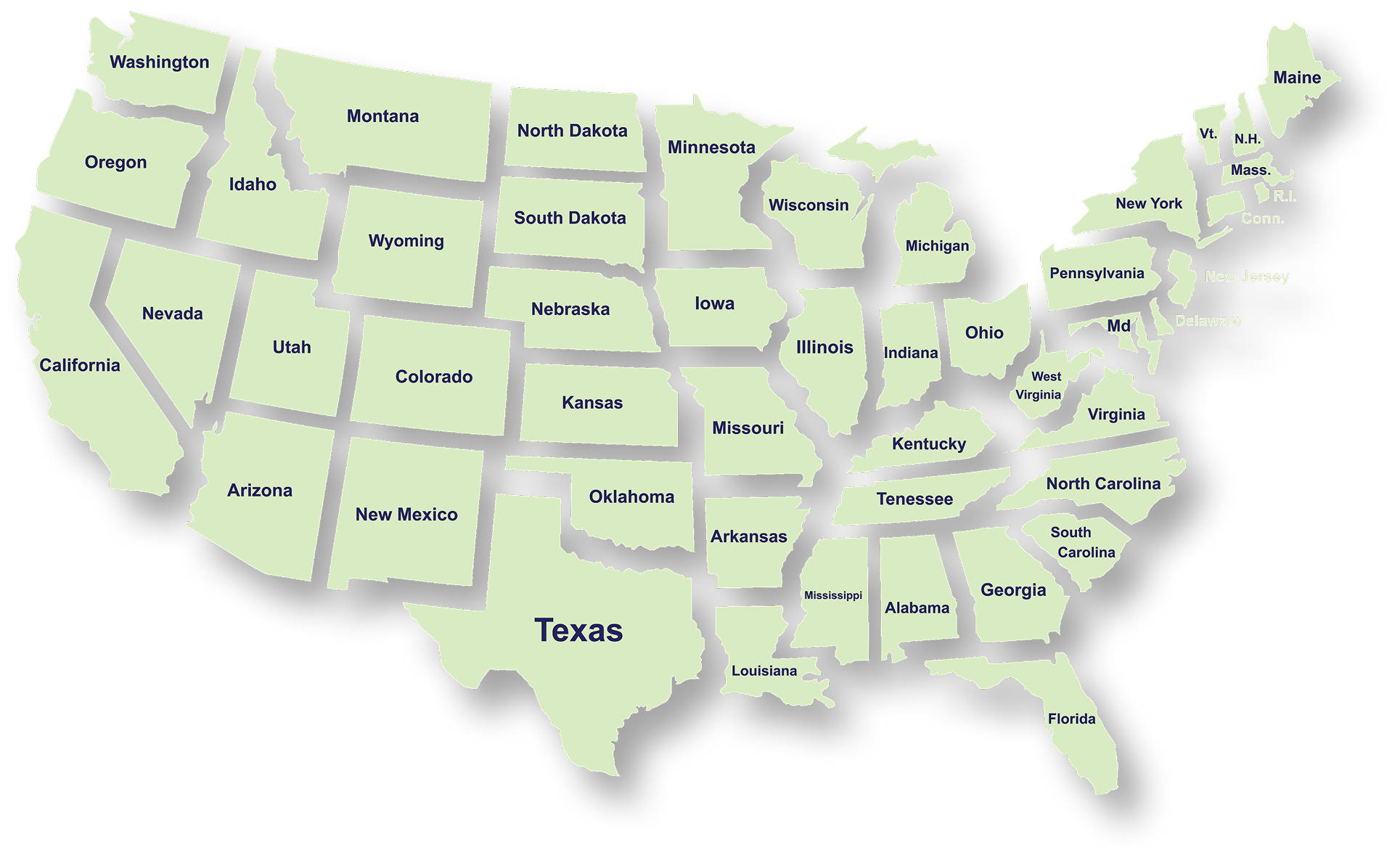
Serving Businesses & Individuals Across USA

We handle accounting, tax filing, and planning with defined timelines and accurate reporting for businesses and individuals across all states.

Frequently Asked Questions

What services does NR CPAs & Business Advisors provide?
What is tax planning and why is it important for businesses?
How can a Virtual CFO help my business?
When should a business consider IRS tax resolution services?
What financial statements does a business typically need?
How can startup advisory services help new businesses?
What is strategic business planning?
What is a Virtual Family Office and who can benefit from it?