Learning Center for Tax and Financial Insights

Stay updated with clear, actionable articles on tax rules, deadlines, deductions, and financial decisions that impact individuals and businesses.

No items found.

October 2018 Individual Due Dates

October 10 - Report Tips to Employer If you are an employee who works for tips and received more than $20 in tips during September, you are required to report them to your employer on IRS Form 4070 no later than October 10. Your employer is required to withhold FICA taxes and income tax withholding for these tips from your regular wages. If your regular wages are insufficient to cover the FICA and tax withholding, the employer will report the amount of the uncollected withholding in box 12 of your W-2 for the year. You will be required to pay the uncollected withholding when your return for the year is filed.

Explore More
No items found.

The Key Steps to Take BEFORE You Start a New Business

Very few people think that starting a new business is easy. But at the same time, there are few first-time entrepreneurs who realize just how involved things are from the moment you start trying to bring that idea that previously only existed in your head into the real world. There's a massive amount of commitment required, even before your business technically exists at all. This is okay, because as the old saying goes, "anything worth doing is worth doing right." In fact, there are a number of key steps that you need to take BEFORE you've even started the business of your dreams that you'll absolutely want to pay close attention to moving forward. Identify the "Why" of It All First thing's first: Before you do anything else, you need to determine why you feel so compelled to start this particular business at this particular time. Is it just because you think you have a great, sure-fire idea that is going to generate a lot of money? If so, you may want to take a step back... you'll likely be disappointed. But if it's because this will allow you to genuinely do something you love, and something that you think will make an impact on the lives of a lot of people, then, by all means, push ahead. Identify the NEED Next, you need to verify that this idea of yours is actually a viable one in the first place; essentially, you have to confirm that there is a genuine need in the marketplace for a product or service like the one you want to create. DO NOT allow yourself to become "a solution in search of a problem." Make sure that people are asking for a business like yours and that need is currently going unfulfilled. DON'T Quit Your Day Job Building a successful business is not something that happens overnight. This often takes years of planning and hard work, not to mention many mistakes along the way. All of this is to say that if your ability to quit your day job and focus on your new business full time depends on an instant success... don't quit your day job just yet. DON'T Neglect Your Family Yes, starting a business is something that requires a huge amount of your time. Yes, you need to devote every ounce of space in your brain and every free moment to this goal. But do not, under any circumstances, let that come at the expense of your loved ones and those around you. You're going to need quite a bit of support to get your new business up and running. If you neglect your family now, you're not going to have that support later. The Art of Writing a Business Plan At this point, you can start working on making your vision a reality. This part of the journey always begins in the same basic way: writing a realistic, actionable business plan that will guide your every move in the future. With a business plan, you really do need to be as specific as humanly possible. You know where you're starting, and you know where you want to end up. The job of a business plan is to connect those dots by way of a series of smaller, logical and achievable steps. It's essentially the roadmap you'll use to shine a light through the darkness, guaranteeing that you're always moving in the right direction (and that this direction is forward). The Entrepreneur's Bet As you write your business plan, you'll also have to make what is often referred to as "The Entrepreneur's Bet." Essentially, you need to figure out how much money a business like yours needs to make in order to become profitable. You also need to acknowledge that, once again, your business is very unlikely to be successful enough right away to have this bet pay off in the short term. A lot of new businesses are operating at a loss at first — that's okay. But this is yet another step that confirms the path you're on is actually viable and it's one that you absolutely do not want to skip. The Myth of the "One Size Fits All" Approach At this point, it's also important to acknowledge that there really is no one "right way" to start a business. The choices you have to make will be influenced by a wide range of different factors, many of which are unique to your industry, your business plan and even the vision that you're starting with. Case in point: You need to review all local, state and federal regulations pertaining to what you're trying to accomplish. Different places have different laws, and ignorance is not an excuse for breaking them. Factors like how to become compliant, what standards a product has to meet and more will all be influenced by these regulations, and they will impact a lot of the steps on your business plan as well. It's Time to Start Thinking About Technology Once this foundation is all in place, it's time to start thinking about the tools you'll need to bring your new business into the world. These days, that involves a lot more technology than people often realize. This is another one of those steps that will obviously be impacted by the type of business you're starting. A local brick-and-mortar retail store will obviously have different technological needs (point of sale systems, inventory management equipment, etc.) than an online marketing agency (graphic design software, collaboration tools, etc.). But when built properly, your technology strategy and your business strategy are essentially one and the same. They feed into one another, and your IT helps generate the momentum you need to continue to grow and expand while remaining agile as well. It's far too important to neglect. Choosing the Right Business Entity This is another important step you don't want to skip because it dictates things like taxes, paperwork, liability and other legal elements of your business. One of the most common types of business entities is the limited liability structure, or LLC. This is because it provides you with the level of flexibility you need right now, coupled with the protection you'll need from a personal liability standpoint. But that isn't a guarantee that this is right for you. Other structures like sole proprietorships, partnerships, S corporations and C corporations all have their fair share of advantages and disadvantages. You need to pick the right one today or you'll open yourself up to a world of problems tomorrow. Finding the Help You Need (and You WILL Need It) Finally, as your journey toward true entrepreneurship is about to begin in earnest, you need to understand two of the core pillars of successful business ownership:

Explore More
No items found.

Do You Own a Specified Service Trade or Business? If So, Your 20% Flow-Through Tax Deduction May Be Limited

Article Highlights: 20% Flow-Through Deduction Qualified Trade or Business Specified Service Trade or Business Deduction Table Listing of Service Businesses As part of its recent tax reform, Congress included a new 20% deduction of pass-through income for trades or businesses other than C-corporations. This pass-through income is referred to as qualified business income (QBI); for trades or businesses, it generally includes bottom-line profits, and for S-corporations and partnerships, it includes K-1 flow-through income. This new law was added as tax code section 199A, so the deduction is often referred to as the 199A deduction. Congress added this deduction to benefit sole proprietors, partners, and S-corporation shareholders (among others); the goal is to allow for benefits equivalent to the substantial tax-rate cut that the same reform provided to C-corporations. However, this new deduction is not applied uniformly to all types of trades and businesses, for which there are two categories: qualified trades or businesses (QTBs) and specified service trades or businesses (SSTBs). This deduction is limited by the taxpayer’s filing status and 1040 taxable income, and it differs depending on whether the business is a QTB or a SSTB. Although the main purposes of this article are to define SSTBs and to describe how they are taxed differently from QTBs, if one is to understand why an SSTB may not qualify for the deduction, whereas a QTB might qualify, it is necessary to first understand the basic differences between the deductions for SSTBs and QTBs. Apparently, Congress considered the income from service businesses to be akin to wages and didn’t want taxpayers who provide services to have the benefit of the 20% deduction instead of paying taxes on that income as ordinary wages. This change was primarily aimed at deterring high-income people from becoming independent contractors or setting up pass-through businesses so that they could turn their wages into business income and get the 20% deduction. The result is a phase-out of the deduction for high-income taxpayers who have income from SSTBs. The table below provides an overview of the tax treatment for each type of business. As you will note, the SSTB deduction phases out for higher levels of 1040 taxable income, but the QTB deduction does not. This type of phase-out is called a wage limitation. Example of How to Use the Table: Two married people who are filing jointly have 1040 taxable income (before the 199A deduction) of $469,000; they also have a SSTB. They would first select the box with their filing status (“Married Filing a Joint Return”), then move to the right to the correct range of 1040 taxable income (which is the adjusted gross income after removing either the standard deduction or the itemized deductions; in this case, “Greater than $415,000”), and finally follow that column down to the cell aligned with the correct type of business (“SSTB”). In this case, the trade or business does not qualify for the 199A deduction. Taxpayer’s Filing Status Taxable Income(Before the 199A deduction) Married Filing a Joint Return Less Than $315,000 Between $315,000 and $415,000 Greater than $415,000 Other filing Statuses Less Than $157,500 Between $157,500 and $207,500 Greater than $207,500 Type of Business The 199A Deduction SSTB 20% of QBI Deduction phased out No deduction allowed QTB 20% of QBI Wage limitation phased in Deduction equal to the lesser of 20% of QBI or the wage limitation Specified Service Trades or Businesses (SSTBs) The IRS describes SSTBs as being in the following fields: Health – The health category includes the provision of services by physicians, pharmacists, nurses, dentists, veterinarians, physical therapists, psychologists, and similar health care professionals who provide medical services directly to patients. However, this excludes the provision of services that are not directly related to a medical field, even when those services purportedly relate to the health of the service recipient. For example, this category excludes the operation of health clubs or spas that provide physical exercise or conditioning; health-related payment processing; or the research, testing, manufacture, and/or sales of pharmaceuticals or medical devices. Law – The law category refers to the provision of services by lawyers, paralegals, legal arbitrators, mediators, and similar professionals in their capacities as such. The category excludes the provision of services that do not require skills unique to the field of law, such as the printing, delivery, and stenography services provided to lawyers. Accounting – The accounting category includes the provision of services by accountants, enrolled agents, tax-return preparers, financial auditors, and similar professionals in their capacities as such. This category is not limited to services that require state licensure as a certified public accountant. This category also excludes payment processing and billing analysis. Actuarial Science – The actuarial science category refers to the provision of services by actuaries and similar professionals in their capacities as such. This category only includes the services provided by analysts, economists, mathematicians, and statisticians if they are engaged in analyzing or assessing financial costs due to risk or uncertainty. Performing Arts – The performing arts category includes the performance of services by individuals who participate in the creation of the performing arts, including actors, singers, musicians, entertainers, directors, and similar professionals in their capacities as such. It excludes services that do not require skills that are unique to the creation of performing arts, such as the maintenance and operation of equipment or facilities. Similarly, the dissemination of video or audio of performing-arts events to the public is not considered to be a service in the performing arts. Athletics – The athletics category refers to the performance of services by individuals who participate in athletic competitions, including athletes, coaches, and team managers in sports such as baseball, basketball, football, soccer, hockey, martial arts, boxing, bowling, tennis, golf, skiing, snowboarding, track and field, billiards, and racing. This category excludes the provision of services that do not require skills that are unique to athletic competition, such as the maintenance and operation of equipment or facilities for use in athletic events. It also excludes the provision of services by persons who disseminate video or audio of athletic events to the public. Consulting – The consulting category refers to the provision of professional advice and counsel to clients to assist them in achieving goals and solving problems. Consulting professionals include lobbyists and similar professionals, but this category focuses on their capacities as such and excludes the minor consulting that accompanies the sale of a product. A trade or businesses cannot be an SSTP if less than 10% of its gross receipts are from consulting (or 5% if the company’s gross receipts are greater than $25 million). Financial services – The category of financial services applies to services that are typically performed by financial advisors and investment bankers, including the following financial services: managing wealth; advising clients with respect to their finances; developing retirement and wealth-transition plans; providing advisory and other services regarding valuations, mergers, acquisitions, dispositions, and restructurings (including in title 11 bankruptcies and similar cases); and raising financial capital through underwriting or by acting as a client’s agent in the issuance of securities. This includes the services provided by financial advisors, investment bankers, wealth planners, retirement advisors, and similar professionals but excludes banking services such as deposit-taking or loan-making. Brokerage Services – The brokerage services category includes services in which a person arranges transactions between a buyer and a seller with respect to securities and in exchange for a commission or fee. This includes services provided by stock brokers and similar professionals but excludes services provided by real estate or insurance agents and brokers. Reputation or Skill – The original legislation’s list of SSTBs included trades or businesses for which the principal asset was the reputation or skill of one or more of employees or owners. However, it was unclear if this meant, for example, that a self-employed plumber who provided his skill to the business would be eligible for the 199A deduction. The taxpayer-friendly interpretation of these tax regulations has generally defined “reputation and skill” to mean: (1) The receipt of income in exchange for endorsing products or services for which the individual provides endorsement services; (2) The receipt of licensing income in exchange for the use of an individual’s image, likeness, name, signature, voice, trademark, or any other symbol associated with that individual’s identity; or (3) The receipt of appearance fees or income (including fees or income paid to reality performers who appear as themselves on television, social media, or other forums; radio, television, and other media hosts; and video game players).

Explore More
No items found.

Are You Prepared for a Disaster?

Article Highlights: Business Owners Family and Home Records Disaster Scams Self-help Publications Government Assistance This year’s wildfires, record rains, flooding, tornadoes, hurricanes and potential for earthquakes should all act as reminders that you should be prepared for a disaster. Sure, it will take some effort on your part and you may never be affected by a disaster, but if you are, you will sure wish you had been prepared. It can become a nightmare, whether it impacts you personally or your business. Business Owners – If you are a business owner, unexpected events can have a devastating effect on your business. You need to be protected from any number of natural and unnatural events, such as fire, computer failure and illness or the loss of key staff, all of which can make it difficult or even impossible to continue day-to-day operations. Good planning can help you take steps to minimize the impact of a disaster and protect your business. The following recommendations can help your business cope with an unforeseen calamity. By identifying possible disasters that may affect you and your business, you may be able to minimize the risks and losses that might occur. A well-thought-out business continuity plan will identify an action plan, safety concerns, applicable computer back-ups and alternative operational headquarters. It will also provide a road map back to normal activities by highlighting the points of contact for insurance and emergency relief way ahead of time. How will you escape? Where will you meet up? How will you communicate? Map out and practice escape routes from your building. Familiarize yourself with the local authorities and emergency radio signals announced at the time of a disaster. What happens if you survive the disaster but your biggest supplier does not? Develop backup vendors and relationships ahead of time. Don’t forget that many employees will have families to care for and that their homes may be damaged or destroyed by the disaster. Have you stockpiled water, batteries, first aid kits and food in case emergency services are delayed? As many realize after the fact, they are not insured for many natural disasters under their existing business policy. You may need to add or increase coverage, if it is available. Check with your carrier for details on your coverage. Different types of businesses have different computer system needs, and those systems need to be backed up in case an event damages or causes the loss of the business’s computer capabilities. Backups are easy with the current online technology. Many businesses now have outside vendors that host and back up their computer systems for them. Inquire about whether they have redundant backup systems and request information on their emergency plans. In fact, in many cases, businesses now have their entire computer systems and data online, and these backups function from anywhere, from any computer. If the disaster is only temporary and shuts down the electrical grid to your business, a generator may be a sound investment. The generator can power your computer system, equipment, refrigerators and other crucial items. Family and Home – Just like a business, your family needs to have an emergency plan. They may be in different locations, such as school, work and home, when a disaster strikes. You need to have plans in place for where to meet if separated and a pre-planned evacuation route or action plan for unexpected disasters. The pre-planned evacuation route should avoid areas that can flood or are dangerous. It is good practice to never let the fuel level in your car(s) get below half-full, or let your electric car be less than half-charged, because the area may lose power, and gas stations may also be damaged by the disaster or run out of fuel. While many people these days use credit or debit cards or other electronic payment methods in lieu of cash for their purchases, it’s a good idea to have some cash on hand for times when a disaster causes the electricity to be out for an extended period of time. Without power, vendors won’t be able to process non-cash payments. Is your insurance coverage appropriate? Do you have supplies of batteries, flashlights, water, food, medications and first aid supplies in case of an emergency? And don’t forget to consider the needs of your pets during and after an emergency. Records – We now live in a digital world, and if you are computer savvy, an easy way to keep your records out of harm’s way is to store digital copies of the documents on a remote server (i.e., in the cloud). It may cost a few bucks a month, but the digital files will be there when you need them, regardless of what happens to your home or business location. If you aren’t a fan of cloud storage, you should maintain an up-to-date backup of your computer files on an external hard drive or thumb drive(s), preferably with a copy stored in a secure location away from your home or office that is not likely to be affected by the same disaster. Most financial institutions these days provide all of their documents digitally, and you can store those documents on your remote server or even retrieve them from the financial institutions’ websites. However, before relying on the financial institutions, make sure they retain your records for long enough to meet your needs. For example, you generally need to keep individual tax records for at least 3 years after the tax return’s due date for that tax year or the date when you filed the return, if it was filed after the due date. For example, your 2017 return was due April 17, 2018. If you filed it on or before April 17, the statute of limitations for the 2017 return would not run out until April 15, 2021. So, you would have to keep the records for the 2017 tax return until then. (The statute of limitations runs for 4 years for some states, and some records need to be kept longer for both federal and state purposes.) If some of your files are not already available digitally, you can always scan the originals to create digital copies.

Explore More
No items found.

Disabled Taxpayer Tax Benefits

Article Highlights: Increased Standard Deduction Tax-Exempt Income Impairment-Related Work Expenses Financially Disabled Earned Income Tax Credit Child or Dependent Care Credit Special Medical Deductions Qualified Medicaid Waiver Payments ABLE Accounts Taxpayers with disabilities may qualify for a number of tax credits and other tax benefits. Parents of children with disabilities may also qualify. Listed below are several tax credits and other benefits that are available if you or someone else listed on your federal tax return is disabled. Increased Standard Deduction – Tax reform substantially increased the standard deduction for 2018 to $12,000 for single filers, $18,000 for those filing as head of household and $24,000 for married filing joint returns. Tax reform also retained the standard deduction add-on for taxpayers who are legally blind. Thus, if a taxpayer is filing jointly with a blind spouse, they are able to add an additional $1,300 to their standard deduction; if both spouses are blind, the add-on doubles to $2,600. For other filing statuses, the additional amount is $1,600. While being age 65 or older isn’t a disability, it should be noted that the “elderly” add-on of $1,300 or $1,600, depending on filing status, has also been retained. These add-ons apply only to the taxpayer and spouse, and not to any dependents. Exclusions from Gross Income – Certain disability-related payments, Veterans Administration disability benefits, and Supplemental Security Income are excluded from gross income (i.e., they are not taxable). Amounts received for Social Security disability are treated the same as regular Social Security benefits, which means that up to 85% of the benefits could be taxable, depending on the amount of the recipient’s (and spouse’s, if filing jointly) other income. • Impairment-Related Work Expenses – Individuals who have a physical or mental disability may deduct impairment-related expenses paid to allow them to work. • Employee – Although the tax reform eliminated most miscellaneous itemized deductions, it retained the deduction for employees who have a physical or mental disability limiting their employment. As a result, they can still deduct, as an itemized deduction, the expenses that are necessary for them to work. • Self-employed – For those who are self-employed, impairment-related expenses are deductible on Schedule C or F. Impairment-related work expenses are ordinary and necessary business expenses for attendant care services at the individual’s place of work as well as other expenses in at the place of work that are necessary for the individual to be able to work. An example is when a blind taxpayer pays someone to read work-related documents to the taxpayer. Financially Disabled – Under normal circumstances, one must file a claim for a tax refund within 3 years of the unextended due date of the tax return. For example, for a 2015 tax return, the due date was April 15, 2016, which is the date when the 3-year clock started running. Thus, the IRS will not issue refunds for an amended 2015 or a late-filed original 2015 return submitted to the IRS after April 15, 2019. However, if a taxpayer is “financially disabled,” the time periods for claiming a refund are suspended for the period during which the individual is financially disabled. An individual is financially disabled if they are unable to manage their financial affairs because of a medically determinable physical or mental impairment that can be expected to result in death or that has lasted or can be expected to last for a continuous period of not less than 12 months. For a joint income tax return, only one spouse has to be financially disabled for the time period to be suspended. However, financial disability does not apply during any period when the individual’s spouse or any other person is authorized to act on the individual’s behalf in financial matters. Earned Income Tax Credit – The EITC is available to disabled taxpayers and to the parents of a child with a disability. To be eligible for the credit, the taxpayer must receive earned income, which generally is wages or self-employment income. However, if an individual retired on disability, taxable benefits that were received under their employer’s disability retirement plan are considered earned income until the individual reaches a minimum retirement age. If the disability benefits being received are nontaxable, as would be the case if the disabled individual paid the premiums for the disability insurance policy from which the benefits come, then the benefits are not considered earned income. The EITC is a tax credit that not only reduces a taxpayer’s tax liability but may also result in a refund. Many working individuals with a disability who have no qualifying children but are older than 24 and younger than 65 may qualify for the EITC. Additionally, if the taxpayer’s child is disabled, the qualifying child’s age limitation for the EITC is waived. The EITC has no effect on certain public benefits. Any refund that is received because of the EITC will not be considered income when determining whether a taxpayer is eligible for benefit programs such as Supplemental Security Income and Medicaid. Child or Dependent Care Credit – Taxpayers who pay someone to come to their home and care for their dependent or disabled spouse may be entitled to claim this credit. For children, this credit is usually limited to the care expenses paid only until age 13, but there is no age limit if the child is unable to care for himself or herself. Special Medical Deductions When Claiming Itemized Deductions – In addition to conventional medical deductions, the tax code provides special medical deductions related to disabled taxpayers and dependents. They include: • Impairment-Related Expenses – Amounts paid for special equipment installed in the home, or for improvements, may be included as medical expenses deductible as part of itemized deductions, if their main purpose is medical care for the taxpayer, the spouse, or a dependent. The cost of permanent improvements that increase the value of the property may only be partly included as a medical expense. • Learning Disability – Tuition paid to a special school for a child who has severe learning disabilities caused by mental or physical impairments, including nervous system disorders, can be included as medical expenses eligible for the medical deduction when itemizing deductions. A doctor must recommend that the child attend the school. Fees for the child’s tutoring recommended by a doctor and given by a teacher who is specially trained and qualified to work with children who have severe learning disabilities might also be included. • Drug Addiction – Amounts paid by a taxpayer to maintain a dependent in a therapeutic center for drug addicts, including the cost of the dependent's meals and lodging, are included as medical expenses for itemized deduction purposes. Exclusion of Qualified Medicaid Waiver Payments – Payments made to care providers caring for related individuals in the provider’s home are excluded from the care provider’s income. Qualified foster care payments are amounts paid under the foster care program of a state (or political subdivision of a state or a qualified foster care placement agency). For more information, please call. ABLE Accounts – Qualified ABLE programs provide the means for individuals and families to contribute and save for the purpose of supporting individuals with disabilities in maintaining their health, independence, and quality of life. Federal law authorizes the states to establish and operate an ABLE program. Under these ABLE programs, an ABLE account may be set up for any eligible state resident – someone who became severely disabled before turning age 26 – who would generally be the only person who could take distributions from the account. ABLE accounts are very similar in function to Sec. 529 plans. The main purpose of ABLE accounts is to shelter assets from the means testing required by government benefit programs. Individuals can contribute to ABLE accounts, subject to per-account gift tax limitations (maximum $15,000 for 2018). The 2017 tax reform added a provision allowing working individuals who are beneficiaries of ABLE accounts to contribute limited additional amounts to their ABLE accounts, beginning in 2018. Distributions to the disabled individual are tax-free if the funds are used for qualified expenses of the disabled individual. These accounts are established at the state level.

Explore More
No items found.

Surrogacy Fees and Taxes

Article Highlights: Surrogate Births Legal Arrangements Taxability to Surrogate Mothers Social Security Taxes Business Deductions Deductibility for the New Parents Articles about the taxability and deductibility of surrogacy fees are rare because there are far fewer surrogacies than with conventional births. Surrogacy is a legal arrangement in which a surrogate mother, new parents and (often) a surrogacy agency enter into a binding contract. In the event of a breach of that contract, any party can be held to the terms of the agreement. Tax Treatment for the Surrogate – The Internet contains a wide variety of opinions related to the taxability of the surrogacy fee to the surrogate mother. Some authors classify this fee as a gift; however, a U.S. Supreme Court decision (Commissioner vs. LoBue, Philip (1956, S Ct)) stated that, for tax purposes, gifts must be made out of detached or disinterested generosity. Any payment that parents make to a surrogate mother cannot reasonably be considered detached or disinterested, so surrogate fees are not gifts. On the other hand, many surrogacy agencies advise their clients that surrogacy payments are for pain and suffering and thus are exempt under Sec 104 of the Internal Revenue Code (IRC). This section is about “compensation for injury or sickness”; however, the term “pain and suffering” does not appear anywhere in that section. Surrogacy does not meet the definition of an excludable physical injury under IRC Sec 104 such as an injury associated with a car accident, bungled surgery or other accident. Thus surrogacy fees do not fall under the compensation exclusion for injury or sickness. IRC Sec 61 states, “Except as otherwise provided, gross income means all income from whatever source derived.” There is no exception in the code for surrogacy fees, so such fees are considered taxable income for the surrogate mother. To complicate matters, the surrogate mother is providing a personal service and thus may be subject to the self-employment (Social Security and Medicare) taxes in addition to income tax if such a fee is received in the course of business. To be subject to Social Security taxes, the surrogacy arrangement would have to rise to the level of a trade or business. The determination of whether that is the case is dependent on the facts and circumstances of the individual surrogacy. For instance, if a surrogate has entered into such an arrangement previously or intends to do so again, the fee will likely be considered self-employment income. However, if the surrogacy is a one-time activity, an argument could be made that this act is not a business—in which case the surrogacy fee would not be subject to Social Security taxes. If the fee is considered self-employment income, it may be offset with benefits that are available to any self-employed taxpayer, including the ability to deduct health insurance above the line rather than as an itemized deduction and the ability to make deductible contributions to a self-employed retirement plan or IRA. Although there are not many deductible business expenses in such a situation, the legal or other costs associated with drafting and executing the surrogacy contract are deductible.

Explore More
No results found.
Thank you! Your submission has been received!
Oops! Something went wrong while submitting the form.

Want tax & accounting tips & insights?Sign up for our newsletter.

Thank you! Your submission has been received!
Oops! Something went wrong while submitting the form.

Why Work With Us?

We combine deep tax expertise, financial strategy, and practical business insight to help you manage complexity, stay compliant, and make confident financial decisions.
A dollar sign, representing financial advice or discussion at NR CPAs & Business Advisors.

Experienced CPA and Enrolled Agent Leadership

Guidance led by licensed professionals with deep expertise in tax strategy, compliance, and complex financial matters.
White bar chart with an upward arrow on green circular background representing growth or progress at NR CPAs &. Business Advisors

Support for Growing Businesses and Startups

We understand the financial challenges of growth stage businesses and provide structured guidance to support expansion.
A white hand holding a dollar symbol and ascending bar chart on a green circular background representing financial growth or investment at NR CPAs & Business Advisors..

Strategic Financial Advisory

Our team helps you evaluate financial decisions with greater clarity, supported by practical insights and long term planning.

Fractional CFO Support

Access experienced financial leadership without the commitment and cost of hiring a full time Chief Financial Officer.

Proactive Tax Planning Approach

We focus on identifying tax opportunities throughout the year rather than reacting only during filing season.

Clear and Reliable Financial Reporting

Accurate financial statements and reporting that help you better understand performance and make informed decisions.
White IRS building icon with pillars and a dollar sign above on a green circular background.

Professional IRS Representation

Experienced support in resolving IRS notices, disputes, and compliance matters while protecting your financial interests.

Personalized Client Focus

Every client receives thoughtful attention and tailored financial solutions based on their specific needs and business goals.
Financial matters often involve important decisions. Working with experienced advisors can help you approach them with greater clarity and confidence in your choices.

Need Help With Your Tax or Financial Decisions?

Discuss your situation with our advisors to get clear guidance on tax planning, IRS matters, and the financial decisions ahead.
Business consulting at NR CPAs & Business Advisors.

Request Your Consultation

Fill out the form to discuss your tax concerns, financial questions, or advisory needs with our team. We will review your details and respond shortly.

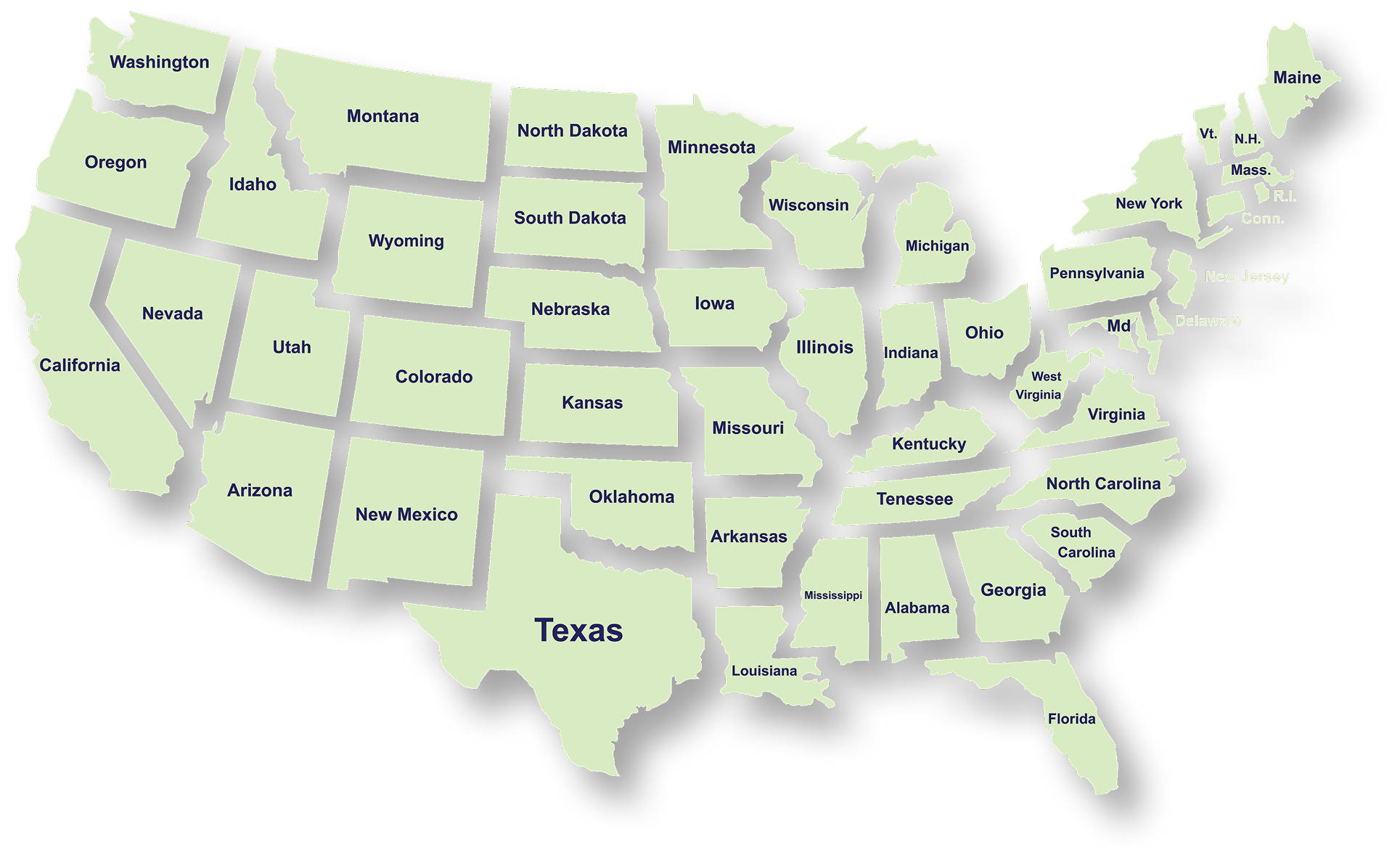
Serving Businesses & Individuals Across USA

We handle accounting, tax filing, and planning with defined timelines and accurate reporting for businesses and individuals across all states.

Frequently Asked Questions

What services does NR CPAs & Business Advisors provide?
What is tax planning and why is it important for businesses?
How can a Virtual CFO help my business?
When should a business consider IRS tax resolution services?
What financial statements does a business typically need?
How can startup advisory services help new businesses?
What is strategic business planning?
What is a Virtual Family Office and who can benefit from it?