Learning Center for Tax and Financial Insights

Stay updated with clear, actionable articles on tax rules, deadlines, deductions, and financial decisions that impact individuals and businesses.

No items found.

What Are The Penalties For Not Filing Your Tax Return?

Everybody knows the old saying about death and taxes, yet a surprising number of people fail to file an income tax return. If you’re one of those people and you think you’ll be able to slide by, you need to reconsider your position. Even if you’re unable to pay your taxes, you need to file a return. Not doing so will eventually lead to a domino effect of negative consequences. No matter how many people have told you that it’s no big deal, or that the IRS has “bigger fish to fry” than you, the employees of the Internal Revenue Service have a job to do and a process that they follow. Even if no legal action is taken against you, failure to file a return will end up working against you. Let’s take a look at the rules regarding filing your taxes and the various outcomes that you risk: Most are Required to File Tax Returns If your income is less than the standard deduction and you don’t owe self-employment taxes, ACA penalties or refunds or qualify for a refundable credit, then you probably don’t have to file a tax return. However, these days with health and family assistance all tied to the tax return the number no required to file a return is shrinking. So just about all individuals, estates and trusts have to file a return and may have to pay taxes. Those are two different things, and there are penalties involved with ignoring or rejecting each of them. Even people who don’t have the money available to pay the tax that they owe are better off sending in a tax return rather than skipping the process. Here’s why: The IRS imposes a fee for not paying your taxes, and they impose a separate fee for not filing. The larger of the two is imposed for not filing – it’s 4.5%, compared to just 0.5% for not paying, and that fee gets charged every single month. You can end up paying up to 22.5% for failure to file and 25% for not paying (plus interest on unpaid taxes accrues from the return’s due date until you pay). The bottom line is that whether you can pay or not, you’ll save yourself big fees by submitting the required paperwork. In addition to incurring fees, consideration must also be given to the actions that the IRS takes when they haven’t received a tax return from a taxpayer. The process involves the preparation of a substitute return which will be completed without consideration of tax advantages, deductions or write-offs, which leads to a higher calculated amount owed than would be the case if you prepared and filed your return for yourself. The IRS is limited by a rule known as the “statute of limitations” that gives them just three years from the date that you file to perform an audit. The three-year clock starts when you file a return, so the sooner you get the paperwork in, the sooner your risk of being audited expires. That statute also applies to any refund you might have coming, after three from the date of filing you forfeit any refund. Beyond audit, if the IRS allows ten years from the date of your filing to go by without pursuing your taxes owed, they lose their ability to collect taxes, penalty or interest. The same is true of your ability to include your tax debt, interest debt or penalty debt in a Chapter 7 Bankruptcy discharge is based upon the date of your tax filing (generally two to four years after your tax return is filed).

Explore More
No items found.

Tax Reform Eases the Alternative Minimum Tax - But It's Still There

Article Highlights: What Is AMT? AMT Triggers Medical Deductions Deduction for Taxes Paid Home Mortgage Interest Miscellaneous Itemized Deductions Personal Exemptions Standard Deduction Incentive Stock Options Although Congress has been promising to repeal the alternative minimum tax (AMT), they failed to do that when they passed tax reform in 2017. Instead, they lessened the effects of the AMT by increasing AMT exemptions (an amount of income exempt from AMT taxation) and raising the income thresholds for when the exemptions are phased out. These two steps and some other changes covered below lessen your chances of being hit by the AMT, but it is still there, so it is wise to be aware of how the AMT is determined and the things that might trigger it. There are two ways to determine your tax: the regular way, which most everyone is familiar with, and the alternative method. Your tax will be the higher of the two. So, what is the alternative tax and why might you get hit with it? Well, many, many years ago, Congress, in an effort to curb tax shelters and tax preferences of wealthy taxpayers, created an alternative method for computing tax that disallows certain deductions and adds preference income and called it the AMT. Although originally intended to apply to the wealthy, years of inflation caused more than just wealthy taxpayers to be caught up in the tax. What Triggers the AMT? The list of tax deductions and preferences not allowed when computing the AMT is substantial and, at times, complicated. However, the typical taxpayer does not encounter most of them. In the past, the seven following items routinely caused taxpayers to be hit by the AMT. As you will note, tax reform has lessened or eliminated the impact of some of these. Medical Deductions – For many years, medical deductions were allowed to the extent they exceeded 7.5% of a taxpayer’s income for regular tax purposes and 10% for the AMT computation. The 2.5% difference was one of the items that added to the AMT tax. (For 2013 through 2016, the percentage for taxpayers under age 65 was 10% for both regular tax and AMT, and they had no AMT adjustment.) For 2017 and 2018, tax reform made the medical limit 7.5% for both regular and AMT purposes. After 2018, the percentage of income that reduces medical expenses will be 10% for both regular tax and AMT. Therefore medical expenses also will not impact the AMT in 2019 and later years. Deduction for Taxes Paid – When itemizing deductions on a federal return, a taxpayer is allowed to deduct a variety of state and local taxes, including real property, personal property, and state income or sales tax. But, for AMT purposes, none of these taxes is deductible, thus creating an AMT adjustment. However, tax reform imposed a $10,000 limit on state and local tax deductions, lessening the difference in the regular tax and AMT adjustment, especially for higher income taxpayers and those living in states with high taxes. However, when combined with other triggering items, the state and local taxes deducted for regular tax can still create an AMT. Home Mortgage Interest – For both the regular tax and AMT computations, interest paid on a debt to acquire or substantially improve a main home or second home is deductible as long as the $1 million debt limit ($750,000 for loans incurred after 2017) isn’t exceeded. Prior to 2018, for regular tax purposes, the interest on up to $100,000 of equity debt on first and second homes was also deductible, creating a difference between the regular tax and AMT deduction, as equity debt interest is not allowed for AMT purposes. Additionally, interest on debt to acquire a motor home or boat that is used as a taxpayer’s home or second home is deductible for regular tax purposes but not for AMT purposes. Starting in 2018, tax reform no longer allows homeowners to deduct the interest on equity debt, which eliminates another difference between what is deductible for regular tax and the AMT and reduces the chances of being saddled with the AMT. Miscellaneous Itemized Deductions – The category of miscellaneous deductions, which includes employee business expenses and investment expenses, is not deductible for AMT purposes. For certain taxpayers with deductible employee business expenses or high investment advisor fees, this has created a significant AMT. Here again, tax reform has eliminated these same miscellaneous deductions for regular tax beginning in 2018, thus eliminating another difference between the AMT and the regular tax computation. Personal Exemptions – Through 2017, a deduction for personal exemptions was allowed for regular tax but not for the AMT, creating a difference in the computation and adding to the chance of being subject to the AMT. As of 2018, exemptions are no longer allowed for regular tax, which eliminates yet another difference. Standard Deduction – For regular tax purposes, a taxpayer can choose to itemize their deductions or use the standard deduction. However, for the AMT, only itemized deductions are allowed. Tax reform substantially increased the standard deduction used to figure regular tax, and this can increase chances of being affected by the AMT. There is a strategy that can be used to mitigate the AMT for taxpayers who would normally use the standard deduction, which is forcing itemized deductions even if they total an amount that is less than the standard deduction amount. Even the smallest of charitable deductions will benefit at a minimum of 26% (the lowest bracket for the AMT). This strategy is tricky and best left to a tax professional to figure out. Exercising Incentive Stock Options and Holding the Stock – Many employers offer stock options to their employees. One type of option is called a qualified or incentive stock option. The taxpayer does not recognize income when the options are exercised and becomes qualified for long-term capital gain treatment upon sale of the stock acquired from the option if the stock is held more than a year after the option was exercised and two years after the option was granted. However, for AMT purposes, the difference between the option price and the exercise price is AMT income in the year the option is exercised, which frequently triggers an AMT tax when large blocks of stock are exercised. Tax reform did not change this provision.

Explore More
No items found.

Do You Need to Renew Your ITIN?

Article Highlights: Over 2 Million ITINs Require Renewal Failure to Renew Can Affect Tax Filings and Refunds in 2019 W-7 Family Renewal Option Three Ways to Renew Avoiding Common Mistakes The IRS has announced that more than 2 million Individual Taxpayer Identification Numbers (ITINs) are set to expire at the end of 2018. An ITIN is a nine-digit number issued by the IRS to individuals who are required for U.S. federal tax purposes to have a U.S. taxpayer identification number but who do not have and are not eligible to get a Social Security number (SSN). Failure to renew an ITIN in a timely manner can delay one’s ability to file a tax return, and with 2.7 million expected ITIN renewals, acting now to renew ITIN numbers will help taxpayers avoid delays that could affect their tax filing and refunds in 2019. Under the Protecting Americans from Tax Hikes (PATH) Act, ITINs that have not been used on a federal tax return at least once in the last three consecutive years, as well as ITINs with specified middle digits (see below), will expire on Dec. 31, 2018. These affected taxpayers who expect to file a tax return in 2019 must submit a renewal application as soon as possible. Who Needs to Renew Their ITIN? Taxpayers whose ITIN is expiring or whose ITIN includes the middle digits listed below and who need to file a tax return in 2019 must submit a Form W-7 renewal application. ITINs with the middle digits 73, 74, 75, 76, 77, 81 or 82 (for example: 9NN-73-NNNN) need to be renewed even if the taxpayer has used it in the last three years. Other ITIN holders do not need to take any action. The IRS has begun sending the CP-48 Notice, “You Must Renew Your Individual Taxpayer Identification Number (ITIN) to File Your U.S. Tax Return,” in early summer to affected taxpayers. The notice explains the steps to take to renew the ITIN if it will be included on a U.S. tax return filed in 2019. Taxpayers who receive this notice after taking action to renew their ITIN do not need to take further action, unless another family member is affected. ITINs with middle digits of 70, 71, 72, 78, 79 or 80 have previously expired. Taxpayers with these ITINs who haven’t previously gone through the renewal process can still renew at any time. Spouses or dependents residing inside the United States should renew their ITINs. However, spouses and dependents residing outside the United States do not need to renew their ITINs unless they anticipate being claimed for a tax benefit (for example, after they move to the United States) or unless they file their own tax return. That’s because the deduction for personal exemptions has been suspended for tax years 2018 through 2025 by the Tax Cuts and Jobs Act. Consequently, spouses or dependents outside the United States who would have been claimed for this personal exemption benefit and no other benefit do not need to renew their ITINs this year. Family Renewal Option – Taxpayers with an ITIN that has middle digits 73, 74, 75, 76, 77, 81 or 82, as well as all previously expired ITINs, have the option to renew ITINs for their entire family at the same time. Those who have received a renewal letter from the IRS can choose to renew their family’s ITINs together, even if family members have an ITIN with middle digits that have not been identified as expiring. Family members include the tax filer, the filer’s spouse and any dependents claimed on the tax return.

Explore More
No items found.

States Sue U.S. to Void $10,000 Cap on State and Local Tax Deduction

Article Highlights: Four States Sue Federal Government High-Tax States Challenging the $10,000 Itemized Deduction for State and Local Taxes Charitable Deduction Work-Around Substance over Form Proposed IRS Regulations to Counter Work-Arounds Taxpayers Should Exercise Caution Four states – New York, Connecticut, Maryland and New Jersey – have sued the federal government to void the tax-reform cap on the federal itemized deduction for state and local taxes, contending that limiting the deduction is unconstitutional. The taxes at issue include state and local income taxes, real property (real estate) taxes and personal property taxes. These states – all Democratic (blue states), with some of the highest state and local tax rates in the nation – saw this deduction limitation as political retribution from the Republican-controlled Congress and have passed state legislation attempting to circumvent the tax reform provision limiting the federal itemized deduction for state and local taxes (SALT) to $10,000. Both NY and NJ have created charitable funds that their state constituents can contribute to and allows them to receive a credit against their state and local taxes. NY’s legislation allows 85% of the amount contributed to the fund as a credit against taxes, while NJ allows 90%. The Connecticut law allows municipalities to create charitable organizations that taxpayers can contribute to in support of town services, from which they then receive a corresponding credit on their local property taxes. Each of these measures essentially circumvents the $10,000 limitation on SALT deductions. However, two big questions are whether a donation for which a donor receives personal benefit is really a deductible charitable contribution and whether the state legislatures really thought this through. These work-arounds overlook one of the long-standing definitions of a deductible charitable contribution: the donor cannot receive any personal benefit from the donation. Recently, the IRS waded into the issue with Notice 2018-54 and an accompanying news release, informing taxpayers that it intends to propose regulations addressing the federal income tax treatment of certain payments made by taxpayers to state-established "charitable funds," for which the contributors receive a credit against their state and local taxes – essentially, the work-arounds adopted or proposed by the states noted above and others. In general, the IRS indicated that the characterization of these payments would be determined under the Code, informed by substance-over-form principles and not the label assigned by the state.

Explore More
No items found.

SALT Deduction - Battle Lines Have Been Set and Swords Have Been Drawn

Article Highlights: SALT Tax Limits State Work-arounds Converting Tax Deductions to Charitable Contributions IRS Regulations Taxpayer Beware Tax reform has limited the federal itemized deduction for state income and local government taxes (including property taxes), collectively referred to as the SALT deduction, to $10,000 a year. This set off a firestorm of protests from the capitals of states with high state income and property taxes. Many called it political retribution by the Republican-controlled Congress against blue states. As it turns out, CA, CT, NJ and NY are among the states with the nation’s highest combined state income and property taxes, and they happen to be blue states. As a result, the legislatures in these states have passed or are working on legislation at the state level to circumvent the federal $10,000 limit on SALT deductions by transforming tax deductions into charitable deductions through some clever legislation. New Jersey and New York have already passed legislation that permits local governments to establish charitable bodies, to which their taxpayers can contribute and, in turn, receive credit against their state’s taxes, thus converting what would be a tax payment into fully deductible charitable contributions. For New Jersey, the credit against tax is 90% of the charitable contribution; for New York, it is 85%. Connecticut has a similar program, and California has one working its way through the legislature. Example: A New York resident could contribute $5,000 to the charitable fund and then would get a $4,250 (85% of $5,000) credit against the state tax bill and have a $5,000 federal charitable contribution. Note that in the example, it is costing the taxpayer $750 (15% of the $5,000) – the difference between the charitable contribution and the tax credit – to buy the tax benefit. Thus, this work-around does not benefit lower-income taxpayers who are in the 10 or 12 percent tax brackets, since it is costing them $750 to acquire the benefit but their federal tax savings at the 12% tax rate would only be $600 (12% of $5,000).

Explore More
No items found.

Disaster Casualty Losses

A disaster loss is actually a casualty loss that occurs in a geographic area that the President of the United States declares eligible for Federal disaster assistance. Disaster losses are also eligible for special tax benefits, which are discussed in this brochure. Note: Tax reform no longer allows a federal deduction for personal casualty losses other than in disaster areas. Some states continue to allow non-disaster area casualty loss deductions. What is a Casualty Loss?A casualty loss occurs when there is property damage from a sudden, unanticipated event. Some examples of qualifying events are: hurricanes, earthquakes, tornadoes, floods, storms, fire and volcanic eruptions. Why Are Disaster Losses Different?Taxpayers within a federally declared disaster area may elect to claim their loss: In the year it occurs, or On the preceding year’s return. Example: A taxpayer in a federally declared disaster area can claim a casualty loss either on their return for the year of the loss or on their return for the previous year. If the previous year’s return has already been filed, as is generally the case, it can be amended by filing a Form 1040X. In contrast, someone who suffered an individual casualty (a car accident, a house fire caused by a cooking mishap, etc.) who is eligible to claim a casualty loss may only do so on the return for the year that the casualty occurred. The return on which to claim a disaster loss deduction depends upon a number of factors and should be carefully analyzed to determine which year is the most beneficial for the taxpayer. The tax brackets for each year – Each year should be carefully examined as to which will provide the greatest overall tax advantage without wasting other tax benefits. The need for immediate cash – The primary purpose of the special rules allowing the casualty loss to be claimed on the prior year’s return is to provide a taxpayer access to a tax refund without the need to wait – often many months - to file their return for the year of the loss. Self-employment tax – Self-employed taxpayers will also need to consider whether to take a business casualty loss that affects inventory in the current or prior year since the loss can offset self-employment tax as well as income taxes. Whether the loss will be used up – If the casualty loss is not fully used up in the year it is first deducted, it can create what is called a net operating loss (NOL). For losses claimed on a 2018 or later year return, the NOL is carried forward as a deduction on the next and future years until used up. If the loss is claimed on the 2017 or an earlier year return, the NOL is first taken back to the second prior year return; any excess carries forward. NOLs occurring in 2018 and subsequent years can only offset 80% of a subsequent year’s taxable income. Values the Loss is Based UponGenerally, for each item lost in the casualty the deductible loss is the lesser of: The cost or adjusted basis(1) or The decrease in fair market value(2) (FMV) Once the loss is determined for each individual item, then those amounts are added together to determine the total loss for the casualty event. For real property, the loss is figured on the whole property (buildings, plants, trees, etc.), not item-by-item. (1) Generally, the measure of a taxpayer’s basis in a property is its cost. When property is inherited, received as a gift, or acquired in a nontaxable exchange, the basis will be determined in some other manner. Certain events can take place after acquiring the property that can increase or decrease the basis; thus the term “adjusted basis”. Examples would be improvements to the property, depreciation and casualty loss deductions. (2) Fair market value (FMV) is the price that a willing seller would accept from a willing buyer when the seller does not need to sell nor must the buyer purchase and both are aware of all the relevant facts.Business or Personal CasualtyThose that are business casualty losses are fully deductible without limitations. Personal casualty losses, on the other hand, are first reduced: by $100 for each event, and then the total of all events for the year is reduced by 10%of the taxpayer’s annual income (Adjusted Gross Income). In addition, for personal casualty losses, deductions must be itemized in order to take advantage of the loss. Example: Claiming a Personal Loss – The taxpayer’s principal residence was damaged in a flood in a federally declared disaster area. The damage amounted to $12,000 and the taxpayer had no flood insurance. His AGI for the year was $57,000. His casualty loss for the year is determined as follows: Casualty loss $ 12,000 “Per-event” amount -100 10% of AGI -5,700 Casualty loss $ 6,200 Since the loss occurred in a federally declared disaster, the taxpayer can elect to take the casualty in the prior tax year.Figuuring a LossTo determine the deduction for a casualty or theft loss, figure out the loss first. Amount of loss: Figure the amount of the loss using the following steps. Determine the adjusted basis in the property before the casualty or theft. Determine the decrease in fair market value (FMV) of the property as a result of the casualty or theft. Subtract any insurance proceeds or other reimbursement received (or expected to be received) from the smaller of the amounts determined in (1) and (2). If the property is covered by insurance, the taxpayer must file a timely insurance claim for reimbursement of the loss. Otherwise, a casualty or theft loss deduction cannot be claimed for that property. However, the part of the loss usually not covered by insurance (for example, a deductible) is not subject to this rule. Gain From ReimbursementIt is possible to incur a gain from a casualty event. If a taxpayer’s reimbursement is more than the adjusted basis in the property, there is a gain. This is true even if the decrease in the FMV of the property is smaller than the adjusted basis. If there is a gain, taxes may have to be paid on it, or reporting the gain may be postponed (as discussed later). If the gain is from a taxpayer’s primary residence and the taxpayer has owned and used the residence as the main home for 2 out of the prior 5 years, the taxpayer can exclude $250,000 ($500,000 on a joint return) of gain. Example: Assume an individual purchased his home for $50,000 fifteen years ago and the home is destroyed by a hurricane. The insurance company decides the home is a total loss and pays the single homeowner $200,000 as the settlement for the loss. He decides not to rebuild and sells the lot where the house once stood for $40,000. If the taxpayer elects to use his $250,000 home gain exclusion to offset the gain from the casualty, he would have no taxable gain.

Explore More
No results found.
Thank you! Your submission has been received!
Oops! Something went wrong while submitting the form.

Want tax & accounting tips & insights?Sign up for our newsletter.

Thank you! Your submission has been received!
Oops! Something went wrong while submitting the form.

Why Work With Us?

We combine deep tax expertise, financial strategy, and practical business insight to help you manage complexity, stay compliant, and make confident financial decisions.
A dollar sign, representing financial advice or discussion at NR CPAs & Business Advisors.

Experienced CPA and Enrolled Agent Leadership

Guidance led by licensed professionals with deep expertise in tax strategy, compliance, and complex financial matters.
White bar chart with an upward arrow on green circular background representing growth or progress at NR CPAs &. Business Advisors

Support for Growing Businesses and Startups

We understand the financial challenges of growth stage businesses and provide structured guidance to support expansion.
A white hand holding a dollar symbol and ascending bar chart on a green circular background representing financial growth or investment at NR CPAs & Business Advisors..

Strategic Financial Advisory

Our team helps you evaluate financial decisions with greater clarity, supported by practical insights and long term planning.

Fractional CFO Support

Access experienced financial leadership without the commitment and cost of hiring a full time Chief Financial Officer.

Proactive Tax Planning Approach

We focus on identifying tax opportunities throughout the year rather than reacting only during filing season.

Clear and Reliable Financial Reporting

Accurate financial statements and reporting that help you better understand performance and make informed decisions.
White IRS building icon with pillars and a dollar sign above on a green circular background.

Professional IRS Representation

Experienced support in resolving IRS notices, disputes, and compliance matters while protecting your financial interests.

Personalized Client Focus

Every client receives thoughtful attention and tailored financial solutions based on their specific needs and business goals.
Financial matters often involve important decisions. Working with experienced advisors can help you approach them with greater clarity and confidence in your choices.

Need Help With Your Tax or Financial Decisions?

Discuss your situation with our advisors to get clear guidance on tax planning, IRS matters, and the financial decisions ahead.
Business consulting at NR CPAs & Business Advisors.

Request Your Consultation

Fill out the form to discuss your tax concerns, financial questions, or advisory needs with our team. We will review your details and respond shortly.

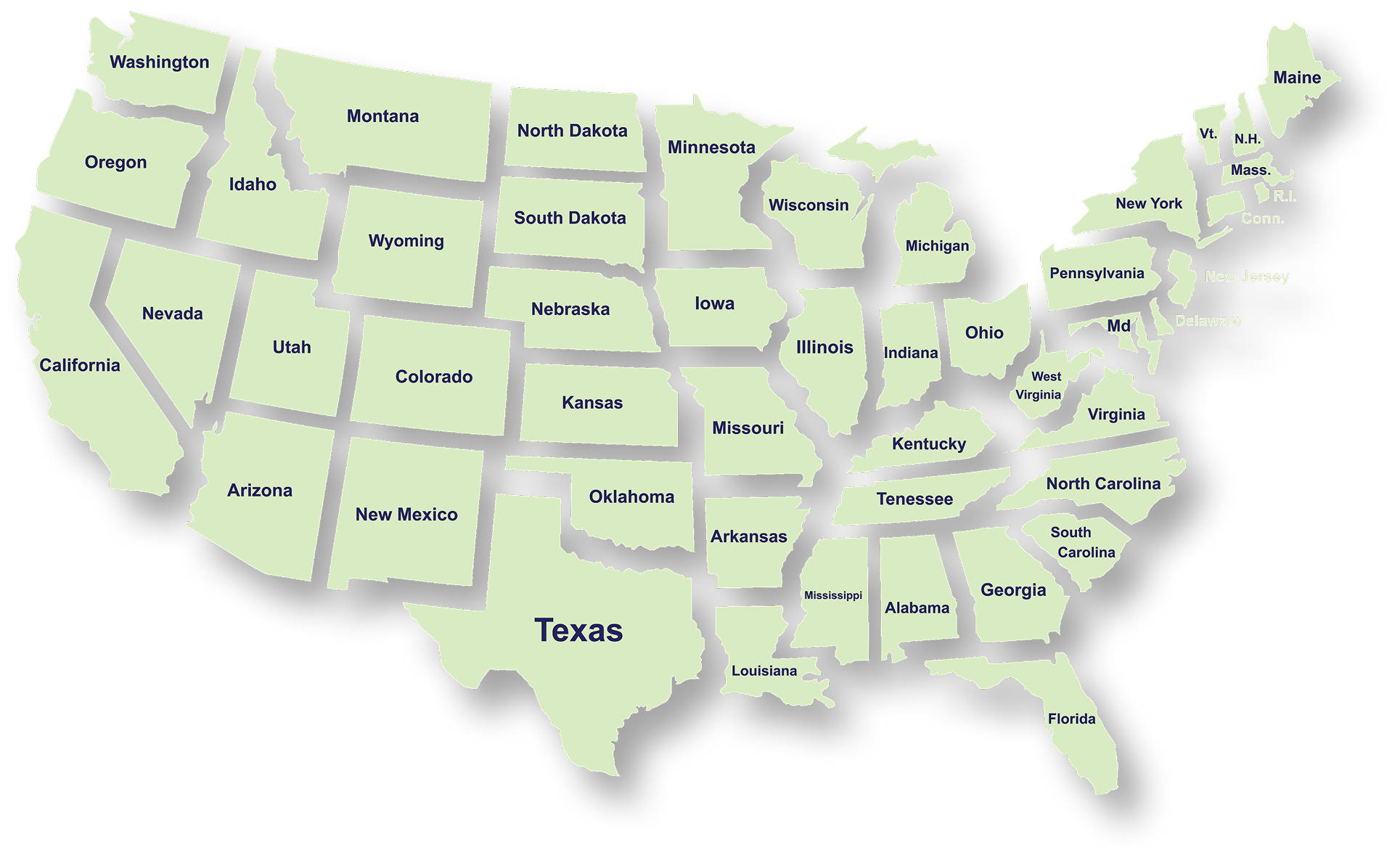
Serving Businesses & Individuals Across USA

We handle accounting, tax filing, and planning with defined timelines and accurate reporting for businesses and individuals across all states.

Frequently Asked Questions

What services does NR CPAs & Business Advisors provide?
What is tax planning and why is it important for businesses?
How can a Virtual CFO help my business?
When should a business consider IRS tax resolution services?
What financial statements does a business typically need?
How can startup advisory services help new businesses?
What is strategic business planning?
What is a Virtual Family Office and who can benefit from it?