Learning Center for Tax and Financial Insights

Stay updated with clear, actionable articles on tax rules, deadlines, deductions, and financial decisions that impact individuals and businesses.

No items found.

Tax Reform and Your Taxes

Article Highlights: Personal Exemptions Standard Deductions Itemized Deductions Medical Taxes Home Mortgage Interest Charity Casualty Losses Employee Business Expenses Tax Rates Child Tax Credit Well, the Tax Cuts and Jobs Act (H.R. 1) has passed, mainly starting in 2018, and if you are confused by how this new law will impact you, you’re not alone. As has become the norm for Congress, it played brinksmanship and waited to almost the end of the year, in the midst of the holidays, to pass this very extensive tax bill, providing little time for anyone to plan for 2018. So that you have an idea about how these changes might affect individual taxpayers like yourself, we have assembled some of the key points of the new law. As a suggestion, pull out your 2016 federal return and follow along to get a better understanding of these changes. Personal Exemptions – (See 1040 Line 42, 1040A Line 26) In the past you were able to deduct a personal exemption amount for yourself, your spouse (if married filing jointly), and anyone who you could claim as a dependent. For 2016 and 2017, that amount is $4,050. Under the new law, the deduction for exemptions has been eliminated. Standard Deductions – (See 1040 Line 40, 1040A Line 24) Taxpayers can take a standard deduction or itemize their deductions if the itemized deductions provide a larger deduction. Under the new tax law, the standard deduction amounts are almost doubled, and the itemized deductions allowed have been scaled back. The chart below illustrates the standard deductions by filing status for 2017 and the amounts under the new law for 2018. Itemized Deductions – (See 1040 Schedule A) Before this change in law, taxpayers were generally able to deduct medical expenses above a percentage of their income, various state and local taxes paid, home mortgage interest, charitable contributions, casualty losses, gambling losses to the extent of gambling winnings, and, if the total of the category was greater than 2% of their income, employee and investment expenses plus other infrequently encountered deductions. The following will look at the changes to these deductions made by the new law. Medical Deductions – (Schedule A – Line 4) Individuals can still deduct their medical expenses to the extent they exceed a percentage of their income (AGI). This income limit has been reduced from 10% to 7.5% of AGI for years 2017 and 2018 and returns to 10% in 2019. Taxes – (Schedule A – Line 9) Prior to the change in law, taxpayers were allowed to deduct state and local income taxes, or sales tax if larger, real property taxes, and certain personal property taxes. Under the new law, these taxes are still deductible, but the overall tax deduction is limited to $10,000. State income tax represented a very large deduction for many residents of states with high state income taxes, and modifying the deduction was a big bone of contention, as it was being debated in Congress. Home Mortgage Interest – (Schedule A – Lines 10-12) Under the old tax law, a taxpayer could deduct the interest on up to $1 million of acquisition debt for the purchase of the taxpayer’s first and second homes. In addition, taxpayers were allowed to deduct the interest on up to $100,000 of home equity debt. The new law reduces the $1 million limit on home acquisition debt to $750,000 ($375,000 for married separate filers) for first and second homes, except the lower limit won’t apply to indebtedness incurred before December 15, 2017. That is, the $1 million cap continues to apply to acquisition mortgages on a primary and second residence already in existence prior to December 15, 2017. However, starting with 2018 returns, the new law does not permit a deduction for any equity debt, which can have an adverse impact on individuals who have used their home equity to pay for costs of tuition, travel, cars, and other purposes. Donations to Charities – (Schedule A – Line 19) The new law continues to allow a deduction for charity contributions and even raises the general 50% of income (AGI) limit on charity deductions to 60%. Casualty and Theft Losses – (Schedule A – Line 20) Under the new tax law, no personal casualty losses will be allowed except those incurred in a federally declared disaster area. Job Expenses and Certain Miscellaneous Deductions – (Schedule A – Line 27) This category is no longer deductible under the new tax law. Overall Limit on Itemized Deductions – The new law suspends from 2018 through 2025 the rule requiring higher-income taxpayers to phase out their total itemized deductions once their AGI exceeds certain threshold amounts.

Explore More
No items found.

5 Things You Need to Do After Jumping Into Entrepreneurship

Congratulations! You've decided to dive into the exciting world of entrepreneurship and bring that great business idea to life. Whether you're opening a local brick-and-mortar business that your community needs, looking to grow rapidly in the next few years and get an investor, or just keep things small and solo, certain steps come next that aren't as exciting as preparing for launch, but need to be done. Here are the five things you need to do after you've decided it's time to go from idea to delivery. 1. Choose the Right Business Entity. How you organize your business plays a major role in taxes, bookkeeping, current and potential ownership, and overall administrative burden. While all of these considerations would need to be made regardless of the current state of the tax code, it's especially important to think about in the face of massive tax overhaul. The GOP tax reform bill has become law and many changes go into effect starting January 1, 2018. Some owners of pass-through businesses can expect to get a bonus deduction of up to 20 percent of profits up to $157,500 for most filing statuses and $319,000 for married filing jointly. Ninety-five percent of US businesses are pass-through entities, which is a sole proprietorship, partnership, S corporation, or limited liability company (LLC) using the same tax structure as one of these entities, with the maximum income tax being 29.6 percent for pass-through income. For C corporations, the maximum corporate income tax rate is dropping from 35 percent to 21 percent. Taxes aside, each state also treats business entities differently and may present bonuses and disadvantages you weren't aware of. For example, many small business owners reap numerous benefits from S corporations but if you're a New York City resident, you still have to pay city income tax. New York State recognizes S status but New York City doesn't. Sales tax nexus, risk management, and legal aspects are other considerations to make when choosing an entity. Depending on your entrepreneurial goals as well as personal needs, you need to decide which entity makes the most sense for your operations. If you plan to change entities in the near future due to taking on a partner or investor, you should also factor in how the tax bill will affect you. 2. Register your business with the appropriate state, local, and federal agencies. When you organize your business, you may automatically be registered into your state or local agency's database after filing articles of incorporation or similar documents. Check with your local Division of Corporations or other authority to make sure that you've taken all necessary steps to register your business once you've decided which entity to go with. If you're forming an LLC, you may need to file additional paperwork such as a publication affidavit which is when the state requires you to announce your commencement in a newspaper. This can be inexpensive or present a major cost barrier. For any "DBA" claims where you're not doing business under your actual name or business entity name, you also need to check with your county clerk regarding forms and filing fees. For federal agencies, most of the registration has to do with hiring employees, but even if you don't plan on hiring any in the near future or ever, you still need to get an Employer Identification Number from the IRS. If you need to obtain licenses or approvals before operations commence, you also need to prioritize contacting these agencies and getting your paperwork taken care of before working with your first client. 3. Find business advisers, mentors, and peers. You want to work with business advisers who can teach you about not just business in general, but also about the specific type of business that you're operating and your industry. A good business adviser is one that will tell you both what you're excelling at and what really needs improvement and how to achieve your business goals. You want to find an adviser who's on the same wavelength as you, but who can also give you the benefit of their knowledge and experience for your particular industry. In seeking out mentors and professional peers, you'll want to find spaces for your profession or business type online and in person to exchange ideas and learn from each other. They're excellent ways to grow your business while learning the ropes and you'll learn the dos and don'ts of pre-launch. 4. Pick the right accounting software. Even if you plan on outsourcing your accounting and tax responsibilities to a competent professional, you still need to have an accounting solution in place for them to work with. Jotting your expenses down on an Excel sheet can be a placeholder when you don't have that many transactions yet and haven't formally set up an entity in the very beginning, but it's not going to be a viable long-term solution. Accounting software isn't as cost-prohibitive as it once was and there are many different products on the market meant for small business owners, solopreneurs, people who travel frequently, and even programs and apps that work in the cloud designed specially for certain industries and types of businesses. Cloud accounting programs are perfect for busy people who use multiple devices, so your accounting professional can see transactions in real time and correctly adjust them as you go. If your business has more robust accounting needs such as inventory tracking and payroll, you need to test out the program and see if it works well for you. For most people without accounting knowledge, figuring out how to get accounting software set up can be daunting, so you also want to see if your tax professional can help you with this or if there are training videos and courses for your software. 5. Get ready to launch! Once you've taken care of these crucial items pre-launch, it's time to get going! You can now focus your time and energy on building a great product, finding the best staff, and cultivating a following for your brand. It's just part of the game when you own a business. While your business entity and accounting needs might not be as exciting as putting together your website and initial marketing blasts, it's extremely important to have them sorted out beforehand so you aren't scrambling to get tax paperwork in order right when things are really taking off for you. By establishing your entity, business registration, publication affidavits, and other business-related paperwork beforehand with the help of a business adviser, you'll also have peace of mind that these things were done right the first time and you won't need to stop what you're doing to keep mailing in forms. The journey to a successful business is definitely not an easy one. But if you've got a pre-launch roadmap and the right professionals on your side, you'll minimize your chances of dealing with irksome bureaucratic obstacles so you can focus on growing your business.

Explore More
No items found.

5 QuickBooks Reports You Need to Run in January

Does your accounting to-do list look like a clean slate, or are critical 2017 tasks still nagging? Getting all of your accounting tasks done in December is always a challenge. Besides the vacation time you and your employees probably took for the holidays, there are those year-end, Let’s-wrap-it-up-by-December-31 projects. How did you do last month? Were you ready to move forward when you got back to the office in January? Or did you run out of time and have to leave some accounting chores undone? Besides paying bills and chasing payments, submitting taxes and counting inventory in December, there’s another item that should have been on your to-do list: creating end-of-year reports. If you didn’t get this done, it’s not too late. It’s important to have this information as you begin the New Year. QuickBooks can provide it. A Report DashboardYou may be using the Reports menu to access the pre-built frameworks that QuickBooks offers. Have you ever explored the Report Center, though? You can get there by clicking Reports in the navigation toolbar or Reports | Report Center on the drop-down menu at the top of the screen. QuickBooks’ Report Center introduces you to all of the software’s report templates and helps you access them quickly. As you can see in the image above, the Report Center divides QuickBooks’ reports into categories and displays samples of each. Click on one of the tabs at the top if you want to: Memorize a report using any customization you applied. Designate a report as a Favorite. See a list of the most Recent reports you ran. Explore reports beyond those included with QuickBooks, Contributed by Intuit or other parties. Recommended Reports Here are the reports we think you should run as soon as possible if you didn’t have a chance to in December: Budget vs Actual We hope that by now you’ve at least started to create a budget for 2018. If not, the best way to begin is by looking at how close you came to your numbers in 2017. QuickBooks actually offers four budget-related reports, but Budget vs Actual is the most important; it tells you how your actual income and expenses compare to what was budgeted. Budget Overview

Explore More
No items found.

Tax Reform Special Report

On Friday, December 22, 2017, the "Tax Cuts and Jobs Act" (H.R. 1) was signed into law by President Trump. Almost all of these provisions go into law January 1, 2018.We have put together a side-by-side comparison of current law and the "Tax Cuts and Jobs Act" (H.R. 1) changes. There are numerous tax planning issues facing both individuals and business owners. TAX CUTS AND JOBS ACT OF 2017 This table compares the predominate changes made by the “Tax Cuts and Jobs Act of 2017” to the tax law as it was during 2017 for individuals and small businesses. 2017 Tax CutS & Jobs Act (2018) Exemptions $4,050 Suspended through 2025 (effectively repealed) Standard Deductions Single: $6,350 Head of household: $9,350 Married filing joint: $12,700 Add’l Elderly & Blind Joint & Surviving Spouse: $1,250 Others: $1,550 Single: $12,000 Head of household: $18,000 Married filing joint: $ 24,000 Add’l Elderly & Blind Joint & Surviving Spouse: $1,300 Others: $1,600 Itemized Deductions Medical – Allowed in excess of 10% of AGI Retained for 2017 and 2018 with an AGI threshold of 7.5% regardless of age. Threshold increases to 10% after 2018. 7.5% threshold also applies for AMT purposes for ’17 and ’18. Taxes –Property taxes, and state and local income taxes are deductible. Taxpayers can elect to deduct sales tax in lieu of state income tax. The deduction for taxes is retained but capped at $10,000 for the year. Foreign real property taxes may not be included. The Act prohibits claiming a 2017 itemized deduction on a pre-payment of income tax for 2018 or other future taxable year in order to avoid the dollar limitation applicable for taxable years beginning after 2017. Home Mortgage Interest –Allows interest on $1M of acquisition debt on primary and second home and interest on $100K of home equity debt. Allows interest on $750K of acquisition debt on primary and secondary home. Grandfathers interest on up to $1M of acquisition debt for loans prior to 12/15/2017. Repeals the deduction for home equity debt. Charitable Contributions – Allows charitable contributions generally not exceeding 50% of a taxpayer’s AGI. Continues to allow charitable contributions and increases the 50% of AGI to 60%. Bans charitable deduction for payments made in exchange for college athletic event seating rights. Also repeals certain substantiation exceptions. Gambling Losses – Allows a deduction for gambling losses not exceeding gambling income. Continues to allow a deduction for gambling losses not to exceed the gambling income. Clarifies that “gambling losses” includes any deduction otherwise allowable in carrying on any wagering transaction. Personal Casualty & Theft Losses – Casualty and theft losses are allowed to the extent each loss exceeds $100 and the sum of all losses for the year exceeds 10% of the taxpayer’s AGI. Suspends personal casualty losses through 2025, except for casualty losses attributable to a disaster declared by the President under Sec 401 of the Robert T Stafford Disaster Relief and Emergency Assistance Act. Tier 2 Miscellaneous – Includes deductions for employee business expenses, tax preparation fees, investment expenses and certain casualty losses. Suspends all tier 2 (those subject to the 2% of AGI threshold) itemized deductions through 2025. Phase-out of Itemized Deductions –Itemized deductions are phased out for higher income taxpayers. The phase-out is suspended through 2025. Above-The-Line Deductions Teachers’ Deduction – Allowed up to $250 (indexed) for classroom supplies and professional development courses. Continues to allow this deduction. Moving Deduction & Reimbursements – Allows a deduction for moving expenses for a job related move where the commute is 50 miles further and the individual is employed for a certain length of time. Qualified moving expense reimbursements are excluded from the employee’s gross income. Deduction is suspended through 2025 except for military change of station. Employer (other than military) reimbursement would be included as taxable wages. Alimony – Allows the payer of alimony to claim an above-the-line deduction for qualified payments; recipient reports the income. For divorce agreements entered into after December 31, 2018 or existing agreements modified after that date that specifically include this amendment in the modification, alimony would no longer be deductible by the payer and would not be income to the recipient. Performing Artists Expenses – An employee with an AGI of $16,000 or less who receives $200 or more from each of two or more employers in the performing arts field can deduct their performing arts expenses that exceed 10% of AGI as an above-the-line deduction. Retained - The House Bill would have repealed this deduction but the conference agreement retains it in its current form. Government Officials’ Expenses - An official who is paid on a fee basis as an employee of a state or local government and who pays or incurs expenses with respect to that employment may claim the expenses as a deduction in calculating AGI. Retained - The House Bill would have repealed this deduction but the conference agreement retains it in its current form. Employee Fringe Benefits Bicycle Commuting – Allows reimbursement of $20 per month as tax-free compensation Suspended through 2025 Employer Provided Housing – Allows an exclusion from income for the costs of housing provided an employee for the convenience of the employer Retained - The House Bill would have limited the excludable amount, but the conference agreement retains the exclusion in its current form. Dependent Care Assistance – Allows an exclusion from gross income of up to $5,000 per year for employer provided dependent care assistance. Retained - The House Bill would have repealed the excludable amount, but the conference agreement retains the exclusion in its current form. Adoption Assistance – An employee can exclude a maximum of $13,570 (2017) for qualified adoption expenses paid or reimbursed by an employer. The exclusion is phased out for higher-income taxpayers. Retained – The House Bill would have repealed the exclusion, but the conference agreement retains the exclusion in its current form. Tax Rates There are seven tax brackets: 10, 15, 25, 28, 33, 35 and 39.6%. There will continue to be seven tax brackets but at different rates and thresholds. The rates are: 10, 12, 22, 24, 32, 35 and 37% Identifying Shares Sold Under current law a taxpayer who disposes of part of his shares in a corporation that were acquired at different times or for different prices is allowed to choose which shares are considered sold if they are adequately identified. The Senate version of the bill would have required using the first-in first-out (FIFO) method of selection for which shares were sold. However, the final bill does not include that requirement. Child Tax Credit Allows a credit of $1,000 per qualified child under the age of 17. The credit is reduced by $50 for each $1,000 the taxpayer’s modified gross income exceeds $75K for single taxpayers, $110K for married taxpayers filing joint and $55K for married taxpayers filing separate. Taxpayers are eligible for a refundable credit equal to 15% of earned income in excess of $3,000. There is also a special refundable computation when there are 3 or more qualifying children. Retains the “under age 17” requirement and increases the child tax credit to $2,000, with up to $1,400 being refundable per qualified child. The credit phases out for taxpayers with AGI over $200,000 ($400,000 if married joint). Thresholds are not inflation-indexed. Child must have a valid Social Security Number that is issued before the due date of the return to qualify for this credit. Non-child Dependent Credit No such provision Allows a $500 non-refundable credit for non-child dependents. Same phaseout rule as for Child Tax Credit. Alternative Minimum Tax (AMT) Individuals – 2017 Exemption amounts are $84,500 for married taxpayers filing jointly, $42,250 for married filing separate, and $54,300 for single and head of household. The exemption phase-out thresholds are: $160,900 for married taxpayers filing jointly, $80,450 for married filing separate, and $120,700 for single and head of household. Retained, but the exemption amounts are increased to: $109,400 for married taxpayers filing jointly, $54,700 for married filing separate, and $70,300 for single and head of household. The exemption phase-out thresholds are increased to: $1 Million for married taxpayers filing jointly and $500K for others. Corporate Repealed Education Provisions American Opportunity Credit (AOTC) –The AOTC provides a post-secondary education tax credit of up to $2,500 per year, per student for up to four years. 40% of the credit is refundable. The credit has a phase-out threshold of $160K for MFJ filers (no credit allowed for MFS) and $80K for others. Retained - The House Bill would have extended the credit to a fifth year, but the conference agreement retained the credit in its current form. Lifetime Learning Credit (LLC) –LLC provides annual credit of up to $2,000 per family for post-secondary education. The credit has a phase-out threshold of $112K for MFJ filers (no credit allowed for MFS) and $56K for others. Retained - The House Bill would have repealed the LLC, but the conference agreement retains the credit in its current form. Coverdell Education Accounts – An annual non-deductible contribution of up to $2,000 is permitted and with tax-free accumulation if distributions are used for grammar school and above education expenses. Retained - The House Bill would have barred any further contributions to Coverdells, but allowed a rollover to a Sec 529 plan. However, the conference agreement retains Coverdell accounts in their current form. Sec 529 Plans – These accounts allow non-deductible contribution and provide for tax-free accumulation if distributions are used for post-secondary education expenses. Amended to allow tax-free distributions of up to $10K per year for grammar and high school education tuition and expenses. Discharge of Student Loan Indebtedness– Excludes from income the discharge of debt where the discharge was contingent on the student working a specific period of time in certain professions and for certain employers. Modified to exclude income from the discharge of indebtedness due to death or permanent disability of the student. Higher Education Interest – Allows an interest deduction of up to $2,500 for interest paid on post-secondary education loans. Retained - The House Bill would have repealed the higher education interest deduction, but the conference agreement retains the deduction in its current form. Tuition Deduction – Allows an above-the-line deduction for tuition and related expenses in years before 2017. The amount of the deduction is limited by AGI and the maximum deduction for any year is $4,000. Retained - The House Bill would have repealed the tuition deduction, but the conference agreement retains the deduction in its current form. This means that the termination date of December 31, 2016 still applies, so this deduction would not be allowed for 2017 and later. Employer Provided Education Assistance – An employer is permitted to provide tax-free employee fringe benefits up to $5,250 per year for an employee’s education. Retained - The House Bill would have repealed employer provided education assistance, but the conference agreement retains the assistance in its current form. Exclusion of Qualified Tuition Reduction – Employees of educational institutions, their spouses and dependents may receive a nontaxable benefit of reduced tuition. Retained - The House Bill would have repealed the exclusion from income of tuition reductions, but the conference agreement retains the benefit in its current form. Exclusion for Interest on U.S. Savings Bonds used for Higher Education Expenses - Interest earned on a qualified United States Series EE savings bond issued after 1989 is excludable from gross income to the extent the proceeds of the bond upon redemption are used to pay for higher education expenses. The exclusion is phased out for higher income taxpayers. Retained - The House Bill would have repealed the exclusion from income of U.S. savings bond interest used for higher education expenses, but the conference agreement retains the benefit in its current form. Sec 529 – Able Account Rollovers Distributions after 2017 from 529 plans would be allowed to be rolled over to an ABLE account without penalty, provided that the ABLE account is owned by the designated beneficiary of that 529 account, or a member of the designated beneficiary's family. Home Sale Exclusion Generally, where a taxpayer owns and uses a home as his principal residence for 2 out of the 5 years prior to its sale, the taxpayer can exclude up to $250,000 ($500,000 for a married couple) of profit from the sale. Both the Senate and House bills would have changed the qualifying period to 5 out of 8 years, and the House bill would have phased the exclusion out for higher income taxpayers. The conference agreement retains the current law. Roth Conversion Recharacterizations Permits, within certain time limits, a Traditional to Roth IRA conversion to be undone. The Act repeals the special rule that allows IRA contributions to one type of IRA (either traditional or Roth) to be recharacterized as a contribution to the other type of IRA. Thus, for example, under the provision, a conversion contribution establishing a Roth IRA during a taxable year can no longer be recharacterized as a contribution to a traditional IRA (thereby unwinding the conversion). Estate & Gift Taxes $5.49 Million (2017) is exempt from gift and/or estate tax. This is in addition to the annual gift tax exclusion, which for 2017 is $14,000 per gift recipient. The exclusion is increased to $10 Million adjusted for inflation since 2011, which is estimated to be approximately $11.2 Million. The annual gift tax exclusion is retained. The House Bill would have repealed the estate tax for decedents dying in 2025 or later, but the conference agreement did not include this provision. Entertainment Expenses A taxpayer who can establish that entertainment expenses or meals are directly related to (or associated with) the active conduct of its trade or business, generally may deduct 50% of the expense. No deduction is allowed for (1) an activity generally considered to be entertainment, amusement or recreation, (2) membership dues with respect to any club organized for business, pleasure, recreation or other social purposes, or (3) a facility or portion thereof used in connection with items (1) and (2). Also disallows a deduction for expenses associated with providing any qualified transportation fringe to the taxpayer’s employees. Employers may still deduct 50% of the food and beverage expenses associated with operating their trade or business (e.g., meals consumed by employees on work travel). Tax Credits Electric Vehicle Credit - Provides a non-refundable credit of up to $7,500 for the purchase of a qualified electric vehicle. Retained – the House Bill originally repealed this credit, but the credit is retained in the conference agreement. Adoption Credit– Provides a credit of up to $13,570 for child under the age of 18 or a person physically or mentally incapable of self care. Retained – the House Bill originally repealed this credit, but the credit is retained in the conference agreement. Sec 1031 Exchange There is non-recognition of gain when taxpayers trade properties of like-kind that are used for business or investment. For exchanges completed after December 31, 2017, only real property will qualify for Sec 1031 treatment. Real Estate Recovery Periods Currently real property has a MACRS recovery period of 39 years for commercial property and 27.5 years for residential rental property. The Senate version would have shortened the recovery period for real property. However, the conference agreement retains the 27.5 and 39-year recovery periods. Net Operating Loss (NOL) Deduction Generally a NOL may be carried back 2 years and any remaining balance is then carried forward until used up or a maximum of 20 years unless the taxpayer elects to forego the carryback and carry the loss forward only. The 2-year carryback provision is generally repealed after 2017 except for certain farm losses. Beginning after December 31, 2017, the NOL deduction is limited to 80% of taxable income (determined without regard to the NOL deduction) for losses arising in taxable years beginning after December 31, 2017. Sec 179 Expensing A taxpayer can elect to expense up to $510,000 of tangible business property, off the shelf software and certain qualified real property (generally leasehold improvements). The annual limit is reduced by $1 for every $1 over a $2,030,000 investment limit. The Sec 179 deduction for certain sport utility vehicles is capped at $25,000. For property placed in service after 2017: The annual expensing and investment threshold limits are increased to $1,000,000 and $2,500,000, respectively, with both subject to inflation indexing. SUV cap to be inflation-adjusted. Definition of Sec 179 property expanded to include certain depreciable tangible personal property – e.g., beds and other furniture, refrigerators, ranges, and other equipment used in the living quarters of a lodging facility such as an apartment house, dormitory, or any other facility (or part of a facility) used predominantly to furnish lodging or in connection with furnishing lodging. Expands the definition of qualified real property eligible for Sec 179 expensing to include any of the following improvements to nonresidential real property placed in service after the date such property was first placed in service: roofs; heating, ventilation, and air-conditioning property; fire protection and alarm systems; and security systems. Unlimited Expensing For 2017 current law allows 50% of the cost of eligible new property to be deducted with the balance of the cost depreciable. This is commonly termed “bonus” depreciation. The bonus rate is scheduled to decline to 40% for 2018, 30% for 2019 and 0% thereafter. Allows 100% unlimited expensing of tangible business assets (except structures) acquired after September 27, 2017 and through 2022. Applies when a taxpayer first uses the asset (does not need to be new). “Luxury Auto” Depreciation Limit Annual limits apply to passenger autos used for business on which depreciation is claimed. For vehicles placed in service in 2017 the limits are $3,160, $5,100, $3,050 and $1,875, respectively, for years 1, 2, 3, and 4 and later. If bonus depreciation is claimed, the first-year limitation is increased by an additional $8,000. For passenger autos placed in service after 2017 the maximum amount of allowable depreciation is increased to the following amounts if bonus depreciation is not claimed: $10,000 for the placed-in-service year, $16,000 for the 2nd year, $9,600 for the 3rd year, and $5,760 for the 4th and later years. Amounts will be indexed for inflation after 2018. Listed Property To claim a business deduction for certain types of property, referred to as listed property, enhanced substantiation requirements must be followed and deductions are only allowed if business use of the property is more than 50%. Computers have been included in this category. Computers and peripheral equipment placed in service after 2017 have been removed from the definition of listed property. Deduction For Pass-Through Income No such provision. The Act provides a 20% deduction for pass-through income, limited to the greater of (1) 50 percent of wage income or (2) 25% of wage income plus 2.5% of the cost of tangible depreciable property for qualifying businesses, including publicly traded partnerships, but not including certain service providers. The limitations (both caps and exclusions) do not apply to joint filer’s with income below $315K and ratably phases out between $315K and $415K, For other filers the threshold is $157K and phases out between $157K and $207K. Excess Business Losses For Individuals Losses, other than passive losses, were allowed, and if a net loss was the result, a NOL deduction was created and carried back 2 years and then forward 20 years until used up. A taxpayer other than a C corporation would not be allowed an “excess business loss.” Instead, the loss would be carried forward and treated as part of the taxpayer's net operating loss (NOL) carryforward in subsequent taxable years. Excess business loss for a taxable year is defined in the Act as the excess of the taxpayer’s aggregate deductions attributable to the taxpayer’s trades or businesses for that year, over the sum of the taxpayer’s aggregate gross income or gain for the year plus a “threshold amount” of $500,000 for married individuals filing jointly, or $250,000 for other individuals. The provision will apply after taking into account the passive activity loss rules. Domestic Production Deduction (Sec 199) Sec 199 provides a deduction from taxable income (AGI in the case of an individual), equal to 9% of the lesser of the taxpayer’s qualified domestic production activities income or taxable income (determined without regard to the section 199 deduction) for the taxable year. The deduction is further limited to 50% of the W-2 wages paid by the taxpayer that are allocable to domestic production gross receipts for the year. Repealed, effective 2018 ACA Individual Insurance Mandate Anyone who does not meet one of the limited exemptions must have health insurance or pay a penalty. In the tax code this is referred to as the “shared responsibility payment.” The penalty is the greater of an inflation adjusted flat dollar amount or 2.5% of the taxpayer’s household income. For 2018 the flat dollar amount is $695 per adult and $347.50 per child but not more than $2,085 per family. Repealed, effective 2019.

Explore More
No items found.

Using Online Agents to Rent Your Home Short Term? You May Be Surprised at the Tax Ramifications

Article Highlights: Schedule C vs. Schedule E Rentals of Less Than15 Days Rentals of 7 Days or Less Rentals of 8 to 30 Days Exception to the 30-Day Rule If you are among the many taxpayers renting your first or second home using rental agents or online rental services that match property owners with prospective renters, such as Airbnb, VRBO and HomeAway, then you should know the IRS has special rules related to short-term rentals. When property is rented for short periods, special (and sometimes complex) taxation rules come into play, which can make the rents excludable from taxation; other situations may force the rental income and expenses to be reported on Schedule C (as opposed to Schedule E). If you have been renting your home or second home for short periods of time, here is a synopsis of the rules governing short-term rentals so you can prepare yourself for the upcoming tax season. Rented for Fewer Than 15 Days During the Year: If you rent your property for fewer than 15 days during the tax year, the rental income is not reportable, and the expenses associated with that rental are not deductible. However, interest and property taxes are still deductible as itemized deductions on your Schedule A. Rented for an Average of 7 Days or Less: Under normal circumstances, rentals are treated as passive activities, which are reported on a Schedule E, and net profit from the rental activity is not subject to self-employment tax. But the special rules treat short-term rentals averaging 7 days or less as a trade or business similar to that of a hotel or motel, with the income and expenses reported on Schedule C, and the profits are subject to both income tax and self-employment tax. Rented for an Average of 8 to 30 Days: Even rentals for longer than 7 days are treated as a trade or business when substantial personal services are provided to the short-term tenant. Substantial services are those that are primarily for your tenant’s convenience, such as regular cleaning, changing linen, or maid service. Substantial services do not include the furnishing of heat and light, the cleaning of public areas, trash collection, and such. When extraordinary services are provided, the rental is treated as a trade or business and reported on Schedule C regardless of the average rental period. However, it would be extremely rare for this to apply to short-term rentals of your home or second home. Exception to the Significant Services Rule – If the personal services provided are similar to those that generally are provided in connection with long-term rentals of high-grade commercial or residential real property (such as the cleaning of public areas and trash collection), and if the rental also includes maid and linen services at a cost of less than 10% of the rental fee, then the personal services are neither significant nor extraordinary for the purposes of the 30-day rule.

Explore More
No items found.

Driving For Uber Or Others? Your Tax Situation Is Unique

Article Highlights: 1099-K Schedule C Uber and Credit Card Fees Record Keeping Vehicle Expense Options Home Office Other Options With tax time approaching, if you drive for Uber, Lyft or a competitor, here is some tax information related to reporting your income. You are considered self-employed and will report your income and deductible expenses on IRS Schedule C to arrive at your taxable income for income tax and self-employment tax. Your driving income will be reported on IRS information Form 1099-K, which reflects the entire amount for your fares charged on credit cards through the Uber reporting system. So if the 1099-K includes the total charges, then it also includes the Uber fee and credit card fees, both of which are deductible by you on your Schedule C. To determine the amount of those fees, you must first add up all the direct deposits made by Uber to your bank account. Then subtract the total deposits from the amount on the 1099-K; the result will be the total of the Uber fees and credit card processing fees. If you drive for multiple services, you will have multiple 1099-Ks and deposits from multiple services. It is highly recommended that you keep copies of your bank statements for the year so you can verify deposits in case of an IRS audit. You will also need to include in your income any cash tips you received that were not charged through Uber. You should keep a notebook in your vehicle where you can record your cash tips. Having a contemporaneously maintained tip logbook is important in case of an audit. Your largest deduction on your Schedule C will be your vehicle expenses. The first step in determining the deduction for the business use of a vehicle is to determine the total miles the vehicle was driven, and then, of the total miles, the number of deductible business miles and non-deductible personal miles. Recording the vehicle’s odometer reading at the beginning of the year and again at year-end will give you the information needed to figure total miles driven during the year. Although the Uber reporting system provides you with the total fare miles, it does not include miles between fares, which are also deductible. Thus it is important that you maintain a daily log of the miles driven from the beginning of your driving shift to the end of the shift. The total of the shift miles driven will be your business miles for the year. If you know the business miles driven and total miles driven, you can determine the percentage of vehicle use for business, which is used to determine what portion of the vehicle expenses are deductible. You may use the actual expense method or an optional mileage method to determine your deduction for the use of the vehicle. If you choose the actual expense method in the first year you use the vehicle for business, you cannot switch to the optional mileage method in a later year. On the other hand, if you choose the optional mileage rate in the first year, you are allowed to switch between methods in future years, but your write-off for vehicle depreciation is limited to the straight line method rather than an accelerated method. For 2017, the optional mileage rate is 53.5 cents per mile. The IRS generally only adjusts the rate annually. If using the optional mileage rate, you need not track the actual vehicle expenses (but you still need to track the mileage).

Explore More
No results found.
Thank you! Your submission has been received!
Oops! Something went wrong while submitting the form.

Want tax & accounting tips & insights?Sign up for our newsletter.

Thank you! Your submission has been received!
Oops! Something went wrong while submitting the form.

Why Work With Us?

We combine deep tax expertise, financial strategy, and practical business insight to help you manage complexity, stay compliant, and make confident financial decisions.
A dollar sign, representing financial advice or discussion at NR CPAs & Business Advisors.

Experienced CPA and Enrolled Agent Leadership

Guidance led by licensed professionals with deep expertise in tax strategy, compliance, and complex financial matters.
White bar chart with an upward arrow on green circular background representing growth or progress at NR CPAs &. Business Advisors

Support for Growing Businesses and Startups

We understand the financial challenges of growth stage businesses and provide structured guidance to support expansion.
A white hand holding a dollar symbol and ascending bar chart on a green circular background representing financial growth or investment at NR CPAs & Business Advisors..

Strategic Financial Advisory

Our team helps you evaluate financial decisions with greater clarity, supported by practical insights and long term planning.

Fractional CFO Support

Access experienced financial leadership without the commitment and cost of hiring a full time Chief Financial Officer.

Proactive Tax Planning Approach

We focus on identifying tax opportunities throughout the year rather than reacting only during filing season.

Clear and Reliable Financial Reporting

Accurate financial statements and reporting that help you better understand performance and make informed decisions.
White IRS building icon with pillars and a dollar sign above on a green circular background.

Professional IRS Representation

Experienced support in resolving IRS notices, disputes, and compliance matters while protecting your financial interests.

Personalized Client Focus

Every client receives thoughtful attention and tailored financial solutions based on their specific needs and business goals.
Financial matters often involve important decisions. Working with experienced advisors can help you approach them with greater clarity and confidence in your choices.

Need Help With Your Tax or Financial Decisions?

Discuss your situation with our advisors to get clear guidance on tax planning, IRS matters, and the financial decisions ahead.
Business consulting at NR CPAs & Business Advisors.

Request Your Consultation

Fill out the form to discuss your tax concerns, financial questions, or advisory needs with our team. We will review your details and respond shortly.

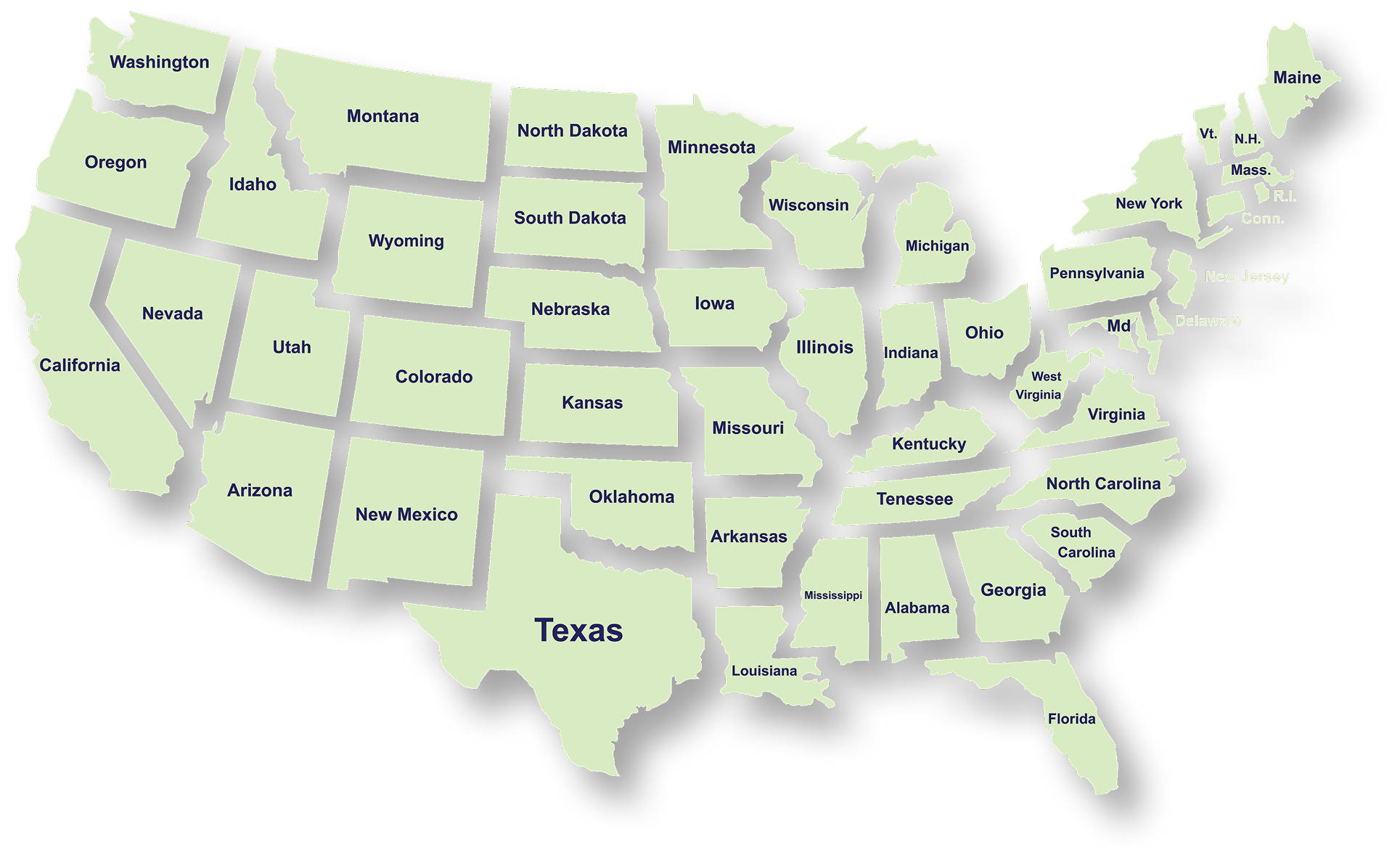
Serving Businesses & Individuals Across USA

We handle accounting, tax filing, and planning with defined timelines and accurate reporting for businesses and individuals across all states.

Frequently Asked Questions

What services does NR CPAs & Business Advisors provide?
What is tax planning and why is it important for businesses?
How can a Virtual CFO help my business?
When should a business consider IRS tax resolution services?
What financial statements does a business typically need?
How can startup advisory services help new businesses?
What is strategic business planning?
What is a Virtual Family Office and who can benefit from it?