Learning Center for Tax and Financial Insights

Stay updated with clear, actionable articles on tax rules, deadlines, deductions, and financial decisions that impact individuals and businesses.

No items found.

The Hidden Tax Realities of Selling Your Life Insurance Policy

If you have spent any time watching television in Coral Gables, you have likely encountered those slick advertisements promising immediate cash in exchange for your unwanted life insurance policy. These commercials often target seniors or those facing shifting financial priorities, framing the transaction as a simple way to unlock value. While a life settlement can be a viable financial strategy, the reality is far more nuanced than a thirty-second soundbite suggests. Beyond the immediate liquidity lies a complex tax environment that can significantly impact your net return.At NR CPAs & Business Advisors, we believe in looking beyond the surface. Let’s examine the intricacies of life settlements, the factors influencing payout amounts, and the tax liabilities that often catch policyholders by surprise.Understanding Life Settlements: What is at Stake?A life settlement involves the sale of an existing life insurance policy to a third party for a lump sum. This amount is typically greater than the policy’s cash surrender value but less than its total net death benefit. For many, this provides the cash flow needed for retirement, medical expenses, or clearing long-term debt obligations.Common motivations for pursuing a life settlement include:Addressing rising medical or long-term care costs.The inability to maintain high premium payments.The death of the primary beneficiary, rendering the coverage redundant.Divorce or significant changes in family structure.Business changes where coverage is no longer needed to fund buy-sell agreements.A reduction in expected estate tax liabilities, making the original policy unnecessary for death tax coverage.What Determines Your Settlement Amount?The offer you receive depends on several variables, primarily your age, current health status, and the policy’s face value. Historically, payouts range between 10% and 35% of the face amount, though these figures fluctuate widely based on market conditions. Generally, buyers offer more to older policyholders or those with health challenges, as the buyer expects to receive the death benefit payout sooner. However, these transactions almost always yield a payout significantly lower than the death benefit itself.TYPICAL PAYOUT RANGES BY AGE AND HEALTHAge GroupAverage Health PayoutPoor Health Payout65-705%-12%15%-25%70-757%-18%20%-35%75-8012%-25%30%-45%80+18%-35%+40%-60%+Disposing of Your Policy: Surrender vs. SaleWhen a policy no longer serves your needs, you essentially have two paths: surrendering it to the insurer or selling it on the secondary market. Each path carries distinct financial and tax consequences.Policy Surrender: This involves canceling the contract in exchange for the net cash value, minus any redemption fees. If your policy has no cash value—common with many term insurance plans—you will not receive a payment. If it does, and that value exceeds your total premiums paid, you will face immediate tax implications.Sale of a Policy: Opting for a life settlement often yields a higher financial return than surrendering, particularly for policies with significant cash value. However, the financial benefit is often offset by a "labyrinth" of tax consequences that aren’t immediately evident to the average seller.The IRS Three-Tier Tax SystemThe IRS evaluates life settlement proceeds using a specific hierarchy to determine your tax liability:Cost Basis (Premiums Paid): Amounts received up to the total premiums you have paid into the policy are generally considered a return of capital and are not taxed.Ordinary Income: Any proceeds exceeding the premiums paid, up to the policy’s cash surrender value, are taxed at ordinary income rates.Capital Gains: Any remaining proceeds above the cash surrender value are subject to capital gains tax.Putting the Rules into PracticeTo illustrate how these rules function, let’s look at two scenarios involving a policyholder named John.Example 1: The SurrenderJohn held a policy for eight years, paying $64,000 in total premiums. He decided to surrender the policy for its cash value of $78,000 (after a $10,000 cost-of-insurance deduction). John’s gain is $14,000 ($78,000 - $64,000). Because this is a surrender rather than a sale, the entire $14,000 is taxed as ordinary income.Example 2: The SaleInstead of surrendering, John sells the same policy to an unrelated third party for $80,000. His total gain is $16,000 ($80,000 - $64,000). The first $14,000—the amount by which the cash value exceeds the premiums—is taxed as ordinary income. The final $2,000 is classified as a capital gain.

Explore More
No items found.

Property Tax Breaks for Disabled Veterans: State Exemptions & New York's New Law

For most homeowners, property taxes represent a substantial and inevitable annual expense. However, disabled veterans often have access to significant relief, with these costs sometimes reduced to zero.A new law in New York recently expanded full property tax exemptions for qualifying veterans. At NR CPAs & Business Advisors in Coral Gables, Florida, we continuously monitor these legislative shifts to help our individual and business clients navigate their broader financial planning strategies. Whether you live in our home state of Florida or elsewhere across the country, understanding how these exemption programs work can yield massive savings.Decoding Property Tax ExemptionsThe phrase "property tax exemption" is not universally defined. Depending on your jurisdiction, an exemption might:Lower the assessed taxable value of your homeErase specific line items on your local tax billApply exclusively to municipal taxes while leaving school taxes intactDeliver a complete waiver of property taxes for highly rated disabilitiesUltimately, two individuals with identically priced homes could face vastly different property tax burdens depending on their local laws and the relief programs they pursue.The Recent New York ExpansionNew York has fundamentally improved its property tax benefits for those who served. Under the updated legislation, veterans boasting a 100% service-connected disability are granted a full property tax exemption on their primary residence statewide.Historically, New York municipalities had to opt into this benefit, creating an uneven patchwork of relief. The newly standardized law mandates this waiver across the state, taking effect on October 1, 2026, and impacting the subsequent assessment roll.

Explore More
No items found.

California Restaurant Taxes: A Complete Compliance & Planning Guide

Strategic Deductions and Tax PlanningProtecting your margins requires proactive tax planning. Deductible expenses range from cost of goods sold and wages to rent, marketing, and professional fees. When upgrading your kitchen, federal depreciation rules like Section 179 can accelerate deductions, though California conformity often diverges. Timing your capital improvements effectively shifts tax burdens between fiscal years. Furthermore, implementing retirement plans not only helps attract talent but also reduces taxable income, especially with California's CalSavers mandate for employers lacking sponsored plans.Filing Frequencies and RecordkeepingThe CDTFA dictates your sales tax filing schedule based on sales volume. Missing these deadlines guarantees penalties. Similarly, federal and state payroll deposits follow strict semiweekly, monthly, or quarterly schedules. Robust recordkeeping shields you during audits:Configure POS systems to isolate taxable sales, delivery fees, and tips.Monitor inventory and cost of goods sold monthly.Retain exhaustive payroll data, including timecards, W-2s, and vendor 1099s.Archive invoices and lease agreements to substantiate deductions.Navigating Common PitfallsAvoid these frequent missteps:Misclassifying employees as independent contractors, which invites severe payroll assessments and back wage claims.Mishandling sales tax on delivery orders.Overlooking municipal gross receipts taxes.Confusing federal and California rules regarding meals, entertainment, and fringe benefits.Partner with NR CPAs & Business AdvisorsTax rules for restaurants evolve rapidly. Led by licensed CPA and Enrolled Agent Nischay Rawal, NR CPAs & Business Advisors brings the analytical depth of a large firm and the responsiveness of a boutique practice. While based in Coral Gables, Florida, our Fractional CFO and business consulting services support hospitality clients navigating complex multi-state or California-specific regulations seamlessly.Quick Compliance ChecklistSecure a seller permit from the CDTFA and payroll accounts via the EDD.Validate health permits and local business licenses.Program your POS to distinguish prepared food, groceries, tips, and service charges.Execute timely payroll deposits and file quarterly returns.Reconcile inventory metrics monthly.Frequently Asked QuestionQ: Do I collect sales tax on online delivery orders?A: Typically, yes, for prepared food. However, your contract and marketplace facilitator laws dictate whether you or the delivery app remits the tax. Always verify with your Fractional CFO or tax advisor.Ready to streamline your restaurant's finances? Schedule a consultation with NR CPAs & Business Advisors today to build a customized tax calendar or explore strategic entity structuring.

Explore More
No items found.

Understanding Tax Code Sec 61: What Counts as Taxable Income?

What Constitutes Taxable Income?According to IRC Section 61 of the tax code, "gross income means all income from whatever source derived."Coral Gables Tax PlanningFor local individuals and businesses, this sweeping IRS rule makes almost every dollar earned taxable. Partner with NR CPAs & Business Advisors today to optimize your tax preparation and planning.

Explore More
No items found.

Maximizing Tax Benefits for Medically Necessary Home Modifications

The year 2025 stands as a watershed moment for American demographics. It marks the peak of the ‘Silver Tsunami,’ where a record-breaking number of individuals reached age 65. Statistically, roughly 11,400 Americans celebrated this milestone every single day throughout 2025. This massive shift, spearheaded by the baby boomer generation, carries profound implications for retirement strategy, healthcare infrastructure, and the broader economy.Data from the U.S. Centers for Disease Control and Prevention (CDC) highlights a critical concern for this demographic: falls are the primary cause of injury among adults aged 65 and older. In fact, nearly 30% of seniors report falling at least once within a 12-month period. To mitigate these risks and accommodate age-related physical changes, many homeowners are proactively installing grab bars, modifying staircases, and widening hallways for wheelchair access. While these projects enhance safety and accessibility, they also represent a significant financial investment. Fortunately, under specific IRS guidelines, these costs may qualify as deductible medical expenses for income tax purposes.The Fundamental Rules of Medical Home ModificationsTypically, the costs associated with home improvements are treated as capital expenditures. They aren't immediately deductible but are added to the property’s basis to reduce taxable gain when the home is eventually sold. However, a specialized exception exists: if the primary purpose of a modification is medical care, it may be claimed as a medical expense deduction. The tax code defines deductible medical expenses as those paid for the ‘diagnosis, cure, mitigation, treatment, or prevention of disease, and the costs for treatments affecting any part or function of the body.’If you are modifying your residence because you, your spouse, or a dependent has a specific medical need, the expense may be deductible. The caveat is that the deduction is limited to the portion of the cost that exceeds the resulting increase in your home’s market value. At NR CPAs & Business Advisors, we often help our Coral Gables clients navigate these nuances to ensure they are maximizing their tax positions while staying compliant with IRS standards.Establishing Medical NecessityWhile the IRS does not strictly require a written prescription for most home modifications, you must be prepared to prove the link between the expenditure and medical care. If your return is ever questioned, a letter from a licensed physician explaining the specific medical condition and how the modification alleviates or treats it is invaluable. This documentation serves as the cornerstone of your defense, transforming a standard home renovation into a legitimate medical expense.It is also worth noting that some improvements actually decrease a home’s resale value or have a neutral impact. For example, lowering kitchen cabinets for someone in a wheelchair might make the home less appealing to the general buyer pool, even though it is vital for the current occupant. In these cases, the full cost of the improvement can often be included as a medical expense.IRS-Recognized Improvements with No Value IncreaseThe IRS has identified a specific list of modifications that generally do not increase the value of a home. For these items, the entire cost is usually eligible to be treated as a medical expense. This list includes:Constructing entrance or exit ramps for the residence.Widening doorways at entry points to accommodate walkers or wheelchairs.Modifying interior hallways and doorways to create more clearance.Installing support bars, railings, or other safety modifications.Lowering or reconfiguring kitchen cabinets and equipment.Repositioning electrical outlets, switches, and fixtures for easier access.Installing porch lifts, stair lifts, or other mechanical elevators.Upgrading fire alarms, smoke detectors, and warning systems for sensory impairments.Modifying stairways to improve safety.Bathroom renovations including roll-in showers, lower sinks, and grab bars.Installing non-slip flooring or leveling floor surfaces to prevent tripping hazards.Modifying hardware on doors, such as installing lever handles.Grading the exterior ground to provide better access to the home.It is essential to distinguish between medical necessity and personal preference. If you choose premium architectural finishes or high-end aesthetic upgrades that go beyond what is ‘reasonable’ to accommodate a disability, those additional costs are not deductible as medical expenses. However, they can still be added to the home’s tax basis.The 7.5% AGI Threshold and ItemizationEven if a modification is perfectly documented, the tax benefit is subject to the itemized deduction rules. Total medical expenses are only deductible to the extent they exceed 7.5% of your Adjusted Gross Income (AGI). Furthermore, you must itemize your deductions on Schedule A rather than taking the standard deduction. Given the high standard deduction amounts currently in place, many taxpayers find that they don't reach the threshold where itemizing becomes beneficial. For our Florida clients, who often enjoy no state income tax, reaching the itemization threshold requires careful planning and aggregation of medical and other qualifying expenses.The Long-Term Benefit: Adjusting Your BasisIf you cannot claim the medical deduction because of the 7.5% floor or because you don't itemize, the money isn't ‘lost’ from a tax perspective. These costs can be added to your home’s purchase price to determine the ‘tax basis.’ When the time comes to sell your Coral Gables property, a higher basis translates to a lower capital gain. To secure this benefit, meticulous record-keeping is required. We recommend maintaining a permanent folder with all receipts and taking ‘before and after’ photos to substantiate the work performed.The Complexity of ‘Luxury’ Medical Deductions: Hot Tubs and SpasOne of the more debated areas of tax law involves claiming hot tubs, saunas, or swimming pools as medical expenses. While these items often provide legitimate therapeutic benefits, the IRS views them with extreme scrutiny because they also provide significant recreational value. To successfully deduct a hot tub, the primary function must be the treatment of a specific medical condition (such as chronic arthritis or fibromyalgia) rather than general wellness.Strict Guidelines for Hydrotherapy DeductionsMedical Confirmation: A recommendation from a chiropractor or a general wellness coach is usually insufficient. You typically need a detailed prescription from a licensed physician (MD) that links the specific condition to hydrotherapy.Capital Expense Calculation: The IRS considers a hot tub a capital expense. If you spend $21,000 on a spa and it increases your home value by $20,000, your current medical deduction is capped at $1,000. The remaining $20,000 is added to your home basis.Apportioning Use: If other family members use the hot tub for leisure, the IRS may require you to apportion the maintenance costs based on the ratio of medical use versus personal use.Reasonableness: A modest, functional unit is much easier to defend than a custom-built, oversized spa with high-end landscaping and lighting.

Explore More
No items found.

How Automation is Changing the Way Coral Gables Businesses Scale

There is no shortage of noise surrounding artificial intelligence right now.Some headlines warn of job losses, while others promise total industry disruption. Neither narrative is particularly useful when you are in the trenches managing a company. For business owners in Coral Gables and across South Florida, the actual question is far more practical.Can this technology help you operate efficiently, cut operating expenses, and expand without inflating your overhead?The Metric That Matters: Revenue Per EmployeeHistorically, hiring has been the default lever for growth. When demand increases, you bring on more staff. However, adding headcount involves more than just base salaries. You are also taking on payroll taxes, benefits, training hours, and the management friction that naturally accompanies a larger team.One straightforward way to evaluate automation is to ask: Will this increase my revenue per employee?If your current staff can process more output without a corresponding spike in labor costs, your margins immediately strengthen. Consider a $60,000 team member spending ten hours a week on manual data entry or administrative tasks. That represents roughly $15,000 annually spent on non-revenue-generating activities. Streamlining even a fraction of that workflow through smart systems reshapes your cost structure.Scaling Without the SlogMost of the organizations we partner with at NR CPAs & Business Advisors do not lack market demand. Instead, the founder or CEO becomes the bottleneck. Every decision, approval, and process funnels through one desk, making growth feel burdensome.By systematizing routine communications, internal documentation, and follow-ups, you standardize the core operations of your company. That shift frees you to focus on high-level strategy and strengthening client relationships.Where We See the Best Early GainsThe most profitable applications of this technology are not about eliminating roles, but enhancing workflows.

Explore More
No results found.
Thank you! Your submission has been received!
Oops! Something went wrong while submitting the form.

Want tax & accounting tips & insights?Sign up for our newsletter.

Thank you! Your submission has been received!
Oops! Something went wrong while submitting the form.

Why Work With Us?

We combine deep tax expertise, financial strategy, and practical business insight to help you manage complexity, stay compliant, and make confident financial decisions.
A dollar sign, representing financial advice or discussion at NR CPAs & Business Advisors.

Experienced CPA and Enrolled Agent Leadership

Guidance led by licensed professionals with deep expertise in tax strategy, compliance, and complex financial matters.
White bar chart with an upward arrow on green circular background representing growth or progress at NR CPAs &. Business Advisors

Support for Growing Businesses and Startups

We understand the financial challenges of growth stage businesses and provide structured guidance to support expansion.
A white hand holding a dollar symbol and ascending bar chart on a green circular background representing financial growth or investment at NR CPAs & Business Advisors..

Strategic Financial Advisory

Our team helps you evaluate financial decisions with greater clarity, supported by practical insights and long term planning.

Fractional CFO Support

Access experienced financial leadership without the commitment and cost of hiring a full time Chief Financial Officer.

Proactive Tax Planning Approach

We focus on identifying tax opportunities throughout the year rather than reacting only during filing season.

Clear and Reliable Financial Reporting

Accurate financial statements and reporting that help you better understand performance and make informed decisions.
White IRS building icon with pillars and a dollar sign above on a green circular background.

Professional IRS Representation

Experienced support in resolving IRS notices, disputes, and compliance matters while protecting your financial interests.

Personalized Client Focus

Every client receives thoughtful attention and tailored financial solutions based on their specific needs and business goals.
Financial matters often involve important decisions. Working with experienced advisors can help you approach them with greater clarity and confidence in your choices.

Need Help With Your Tax or Financial Decisions?

Discuss your situation with our advisors to get clear guidance on tax planning, IRS matters, and the financial decisions ahead.
Business consulting at NR CPAs & Business Advisors.

Request Your Consultation

Fill out the form to discuss your tax concerns, financial questions, or advisory needs with our team. We will review your details and respond shortly.

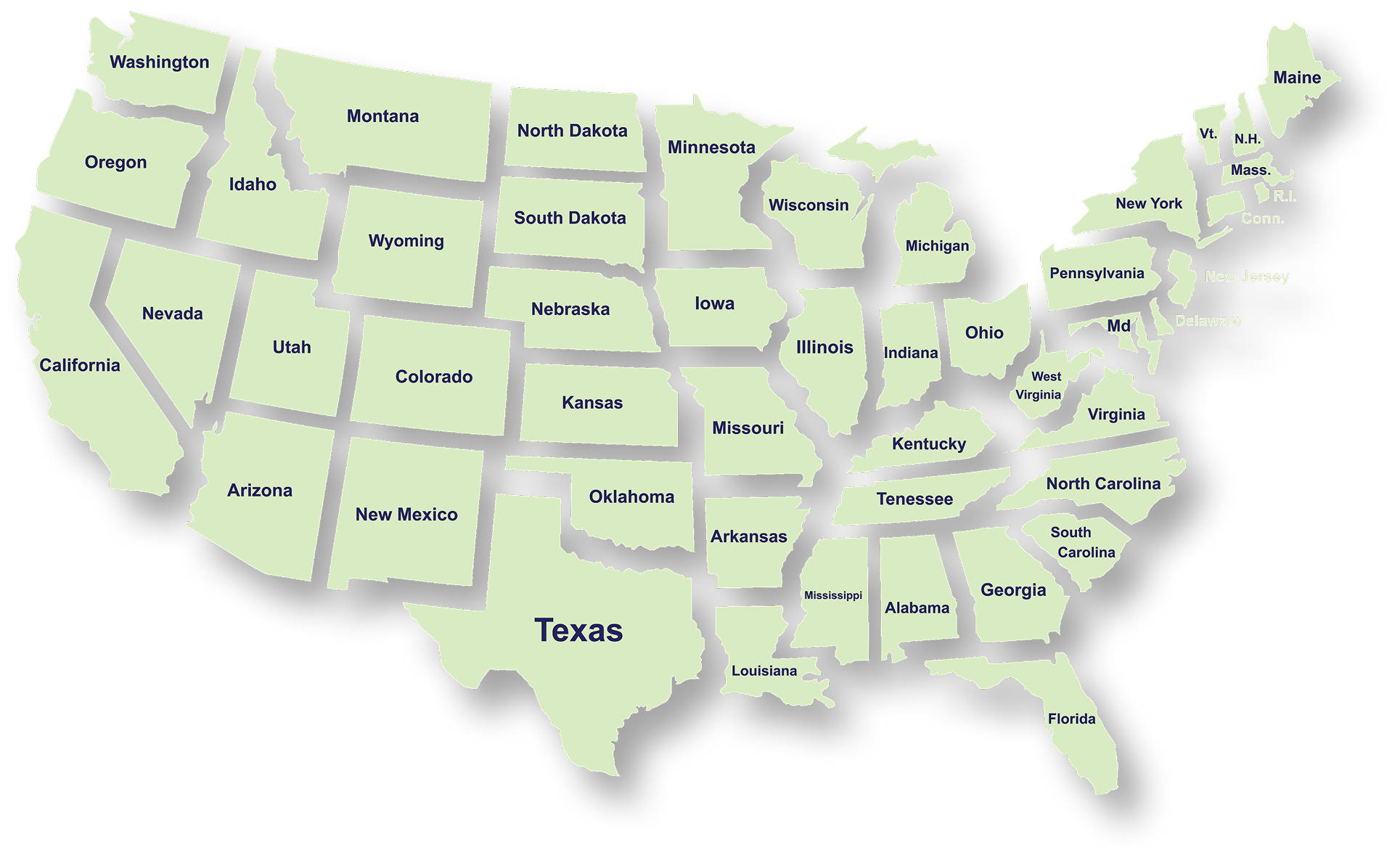
Serving Businesses & Individuals Across USA

We handle accounting, tax filing, and planning with defined timelines and accurate reporting for businesses and individuals across all states.

Frequently Asked Questions

What services does NR CPAs & Business Advisors provide?
What is tax planning and why is it important for businesses?
How can a Virtual CFO help my business?
When should a business consider IRS tax resolution services?
What financial statements does a business typically need?
How can startup advisory services help new businesses?
What is strategic business planning?
What is a Virtual Family Office and who can benefit from it?