Learning Center for Tax and Financial Insights

Stay updated with clear, actionable articles on tax rules, deadlines, deductions, and financial decisions that impact individuals and businesses.

No items found.

Buying in France? Here’s What U.S. Homeowners Need to Know About Taxes in the Hexagon

France has long drawn American second-home buyers seeking la belle vie, from its sun-drenched coastlines to its rolling vineyards and chic urban centers. But beyond the aesthetics of a Provençal stone cottage or a Paris pied-à-terre, France’s evolving tax landscape is increasingly catching the attention of those considering full or part-time residency.In recent years, interest has grown in how France's residency rules and tax treaties could benefit certain individuals, especially retirees or remote workers with international income. But with potential upside comes complexity, making the role of a qualified tax professional essential.Tax Residency: A Strategic Move?Many Americans are surprised to learn that becoming a French tax resident can sometimes be more favorable than remaining under the U.S. system alone. As noted by financial adviser Rob Kay in a recent Connexion France article, France offers tools for tax optimization, especially for families or those with diverse global assets.Take, for example, France’s parts familiales system, which spreads taxable income over household members and can substantially lower one’s effective tax rate. For a couple or family with dependents, this can translate into a notably reduced burden compared to single-filer systems.In addition, France’s double tax treaties (including with the U.S.) help prevent double taxation and allow individuals to structure income streams strategically. This is especially useful for those drawing income from pensions, royalties, or real estate in multiple countries.The Wealth Tax Isn’t What You ThinkWhile France’s impôt sur la fortune immobilière (real estate wealth tax) may sound intimidating, it applies only to real estate holdings worth more than €1.3 million. Moreover, for new residents, foreign-held properties are exempt from this tax for five years, providing significant relief for those who’ve diversified their wealth internationally.According to EY’s France wealth tax guide, this exemption can serve as a strategic tool for mid- to high-net-worth families eyeing retirement or succession planning in Europe.Succession Tax Strategies for FamiliesFrench inheritance taxes, while high on paper, are often mitigated through careful planning. As The Connexion notes, France allows for multiple allowances between generations, meaning large portions of an estate can pass tax-free with the right structuring. For instance, each child can receive up to €100,000 tax-free from each parent.For expats or dual nationals, this opens the door for trust strategies, corporate asset structures, or donor-advised funds to be considered in tandem with U.S. requirements. The interplay between French and U.S. inheritance law is intricate, highlighting once again the importance of cross-border tax expertise.

Explore More
No items found.

Video Tips: Getting Your Kids into The Family Business This Summer Break

It's almost summertime! Ever considered hiring your kid to work for you? Assuming a child is suitable for the job, a reasonable salary paid to the child reduces the self-employment income and tax of the parents (the business owners) by shifting income to the child. Plus, if the business is unincorporated, children under 18 are not subject to payroll taxes.

Explore More
No items found.

Market Jitters? Smart Tax Moves Boomers Should Be Thinking About Now

Explore More
No items found.

Getting Married Soon? Tax Considerations for Newlyweds

Explore More
No items found.

June 2025 Individual Due Dates

Staying on top of your tax deadlines is key to avoiding penalties and staying compliant. June 2025 brings a few key due dates for individuals, including IRA reporting, tip income, estimated tax payments, and special rules for taxpayers abroad or in combat zones. Learn what’s due and when, and how to stay ahead.June 2 - Final Due Date for IRA Trustees to Issue Form 5498Final due date for IRA trustees to issue Form 5498, providing IRA owners with the fair market value (FMV) of their IRA accounts as of December 31, 2024. The FMV of an IRA on the last day of the prior year (Dec 31, 2024) is used to determine the required minimum distribution (RMD) that must be taken from the IRA if you are age 73 or older during 2025.June 10 - Report Tips to EmployerIf you are an employee who works for tips and received more than $20 in tips during May, you are required to report them to your employer on IRS Form 4070 no later than June 10. Your employer is required to withhold FICA taxes and income tax withholding for these tips from your regular wages. If your regular wages are insufficient to cover the FICA and tax withholding, the employer will report the amount of the uncollected withholding in box 8 of your W-2 for the year. You will be required to pay the uncollected withholding when your return for the year is filed.June 16 - Estimated Tax Payment DueThis is the last day to timely make your second quarter estimated tax installment payment for the 2025 tax year. Our tax system is a “pay-as-you-earn” system. To facilitate that concept, the government has provided several means of assisting taxpayers in meeting the “pay-as-you-earn” requirement. These include:Payroll withholding for employees.Pension withholding for retirees; and Estimated tax payments for self-employed individuals and those with other sources of income not covered by withholding.When a taxpayer fails to prepay a safe harbor (minimum) amount, they can be subject to the underpayment penalty. This penalty is equal to the federal short-term rate plus 3 percentage points, and the penalty is computed on a quarter-by-quarter basis. Federal tax law does provide ways to avoid the underpayment penalty. If the underpayment is less than $1,000 (the “de minimis amount”), no penalty is assessed. In addition, the law provides "safe harbor" prepayments. There are two safe harbors:The first safe harbor is based on the tax owed in the current year. If your payments equal or exceed 90% of what is owed in the current year, you can escape a penalty. The second safe harbor is based on the tax owed in the immediately preceding tax year. This safe harbor is generally 100% of the prior year’s tax liability. However, for taxpayers whose AGI exceeds $150,000 ($75,000 for married taxpayers filing separately), the prior year’s safe harbor is 110%.Example: Suppose your tax for the year is $10,000 and your prepayments total $5,600. The result is that you owe an additional $4,400 on your tax return. To find out if you owe a penalty, see if you meet the first safe harbor exception. Since 90% of $10,000 is $9,000, your prepayments fell short of the mark. You can't avoid the penalty under this exception. However, in the above example, the safe harbor may still apply. Assume your prior year’s tax was $5,000. Since you prepaid $5,600, which is greater than 110% of the prior year’s tax (110% = $5,500), you qualify for this safe harbor and can escape the penalty. This example underscores the importance of making sure your prepayments are adequate, especially if you have a large increase in income. This is common when there is a large gain from the sale of stocks, sale of property, when large bonuses are paid, when a taxpayer retires, etc. Timely payment of each required estimated tax installment is also a requirement to meet the safe harbor exception to the penalty. If you have questions regarding your safe harbor estimates, please call this office as soon as possible.

Explore More
No items found.

June 2025 Business Due Dates

Stay on top of your business tax responsibilities this June. Key due dates include federal tax deposits for May and the second estimated tax payment for corporations. Don’t miss these important deadlines.June 16 - Employer’s Monthly Deposit DueIf you are an employer and the monthly deposit rules apply, June 16 is the due date for you to make your deposit of Social Security, Medicare, and withheld income tax for May 2025. This is also the due date for the nonpayroll withholding deposit for May 2025 if the monthly deposit rule applies. June 16 - CorporationsDeposit the second installment of estimated income tax for 2025 for calendar year corporations.

Explore More
No results found.
Thank you! Your submission has been received!
Oops! Something went wrong while submitting the form.

Want tax & accounting tips & insights?Sign up for our newsletter.

Thank you! Your submission has been received!
Oops! Something went wrong while submitting the form.

Why Work With Us?

We combine deep tax expertise, financial strategy, and practical business insight to help you manage complexity, stay compliant, and make confident financial decisions.
A dollar sign, representing financial advice or discussion at NR CPAs & Business Advisors.

Experienced CPA and Enrolled Agent Leadership

Guidance led by licensed professionals with deep expertise in tax strategy, compliance, and complex financial matters.
White bar chart with an upward arrow on green circular background representing growth or progress at NR CPAs &. Business Advisors

Support for Growing Businesses and Startups

We understand the financial challenges of growth stage businesses and provide structured guidance to support expansion.
A white hand holding a dollar symbol and ascending bar chart on a green circular background representing financial growth or investment at NR CPAs & Business Advisors..

Strategic Financial Advisory

Our team helps you evaluate financial decisions with greater clarity, supported by practical insights and long term planning.

Fractional CFO Support

Access experienced financial leadership without the commitment and cost of hiring a full time Chief Financial Officer.

Proactive Tax Planning Approach

We focus on identifying tax opportunities throughout the year rather than reacting only during filing season.

Clear and Reliable Financial Reporting

Accurate financial statements and reporting that help you better understand performance and make informed decisions.
White IRS building icon with pillars and a dollar sign above on a green circular background.

Professional IRS Representation

Experienced support in resolving IRS notices, disputes, and compliance matters while protecting your financial interests.

Personalized Client Focus

Every client receives thoughtful attention and tailored financial solutions based on their specific needs and business goals.
Financial matters often involve important decisions. Working with experienced advisors can help you approach them with greater clarity and confidence in your choices.

Need Help With Your Tax or Financial Decisions?

Discuss your situation with our advisors to get clear guidance on tax planning, IRS matters, and the financial decisions ahead.
Business consulting at NR CPAs & Business Advisors.

Request Your Consultation

Fill out the form to discuss your tax concerns, financial questions, or advisory needs with our team. We will review your details and respond shortly.

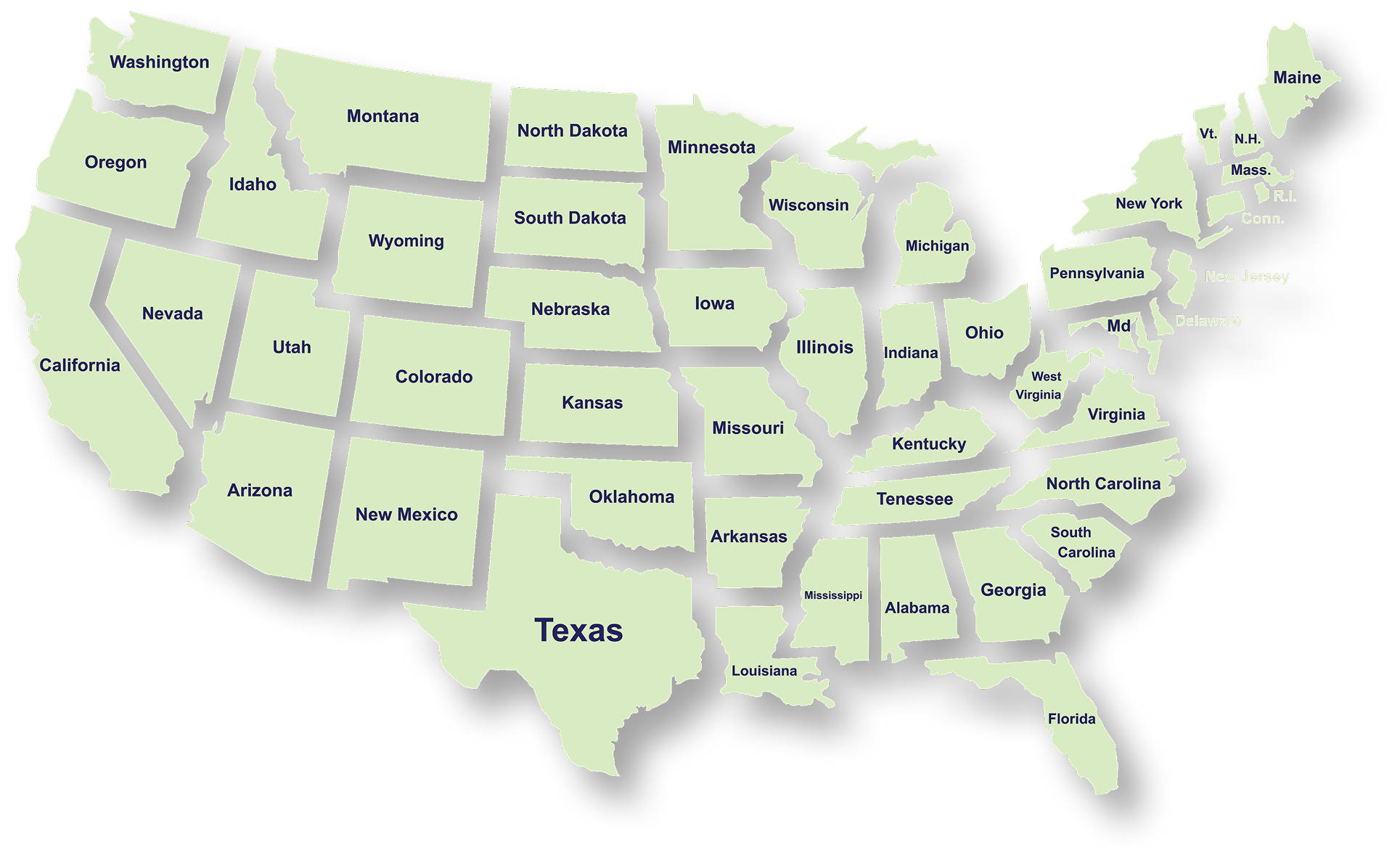
Serving Businesses & Individuals Across USA

We handle accounting, tax filing, and planning with defined timelines and accurate reporting for businesses and individuals across all states.

Frequently Asked Questions

What services does NR CPAs & Business Advisors provide?
What is tax planning and why is it important for businesses?
How can a Virtual CFO help my business?
When should a business consider IRS tax resolution services?
What financial statements does a business typically need?
How can startup advisory services help new businesses?
What is strategic business planning?
What is a Virtual Family Office and who can benefit from it?