Learning Center for Tax and Financial Insights

Stay updated with clear, actionable articles on tax rules, deadlines, deductions, and financial decisions that impact individuals and businesses.

No items found.

Video Tips: Taxpayers, Add a Layer of Protection with Identity Protection PIN

The IRS Identity Protection PIN (IP-PIN) is a crucial tool in the fight against tax-related identity theft. Though originally limited to identity theft victims, the IRS has expanded the IP-PIN program to allow taxpayers to voluntarily opt-in for additional protection when tax season comes. Watch this video for more details.

Explore More
No items found.

Uncertain About the Reporting Deadlines for BOI? This Article Will Bring You Up to Date

Back in 2021 Congress passed the Corporate Transparency Act (CTA) which included the Beneficial Ownership Information (BOI) reporting requirements for certain companies beginning in 2024. Companies in business before 2024 had a reporting deadline of January 1, 2025, while new companies created in 2024 had a 90-day reporting requirement. CTA’s reporting requirements are intended to combat money laundering, tax fraud and the financing of terrorism. Less than a month before the January 1, 2025, filing due date, a series of events took place that has left in doubt the filing due date and even whether the CTA is Constitutional. Here is the history of those events:On December 3, 2024, the U.S. District Court for the Eastern District of Texas issued a nationwide injunction that temporarily halted enforcement of the CTA and its Beneficial Ownership Information (BOI) reporting requirements with the Financial Crimes Enforcement Network (FinCEN) based on the CTA being unconstitutional under the Commerce Clause or Necessary and Proper Clause.On December 5, 2024,in response to the Texas court’s ruling, the Department of Justice filed a Notice of Appeal requesting a stay of the injunction pending appeal.On December 23, 2024,the Fifth Circuit Court of Appeals lifted the injunction for all companies except the plaintiffs in the December 3 Texas District Court Case. On December 26, 2024, the stay was reinstated by the Fifth Circuit Court of Appeals pending a hearing scheduled for March 25, 2025,again suspending the BOI filing deadlines of companies with FinCEN.On December 31, 2024,the Department of Justice (DOJ),filed with the Supreme Court (SCOTUS) asking the high court to stay the district court’s injunction, reasoning that the government “is likely to succeed on the merits of respondents’ claim” and that the Corporate Transparency Act’s reporting requirements are important to the federal response to money laundering, tax fraud and the financing of terrorism, falling “comfortably within Congress’s authority under the Commerce Clause to regulate economic activities that substantially affect interstate commerce.” As of the date of this article, SCOTUS has not taken any action.On January 15, 2025, Senator Tommy Tuberville (R-AL) reintroduced the Repealing Big Brother Overreach Act that would overturn the CTA, and thus make filing a BOI report unnecessary. At the same time Congressman Warren Davidson (R. OH) also reintroduced companion legislation in the U.S. House of Representatives.On January 23, 2025, the Supreme Court issued a stay on a nationwide injunction that had previously halted the enforcement of beneficial ownership information (BOI) reporting requirements. The stay will remain in effect until the Fifth Circuit acts and possibly further review by the Supreme Court.On January 24, 2025, FinCEN provided the following update: “On January 23, 2025, the Supreme Court granted the government’s motion to stay a nationwide injunction issued by a federal judge in Texas (Texas Top Cop Shop, Inc. v. McHenry—formerly, Texas Top Cop Shop v. Garland). As a separate nationwide order issued by a different federal judge in Texas (Smith v. U.S. Department of the Treasury) remains in place, reporting companies are not currently required to file beneficial ownership information with FinCEN despite the Supreme Court’s action in Texas Top Cop Shop. Reporting companies are also not liable if they fail to file this information while the Smith order remains in force. However, reporting companies may continue to voluntarily submit beneficial ownership information reports.”

Explore More
No items found.

Federal EV Tax Credits: Should They Stay or Go?

Explore More
No items found.

Understanding the Taxation of Military Service Members

Explore More
No items found.

Unlocking Wealth: How Exchanges Can Transform Your Real Estate Investments

Section 1031 of the Internal Revenue Code, commonly known as a 1031 exchange or like-kind exchange, is a powerful tax-deferral strategy used by real estate investors. This provision allows investors to defer capital gains taxes on the sale of a property by reinvesting the proceeds into a similar property. However, the Tax Cuts and Jobs Act (TCJA) of 2017 introduced significant limitations to this strategy. In this blog, we will explore the intricacies of 1031 exchanges, the impact of TCJA, state considerations, and the mechanics of different types of exchanges.The Basics of Section 1031 Exchanges - A 1031 exchange allows a taxpayer to defer paying capital gains taxes on an investment property when it is sold, if another similar property is purchased with the profit gained by the sale. This deferral can be a significant financial advantage, allowing investors to leverage their equity into larger or more profitable properties without the immediate tax burden. While sometimes referred to as a “tax-free exchange,” this is an erroneous term since the seller’s capital gain isn’t forgiven, but merely postponed until the property acquired in the exchange is sold in other than another exchange arrangement.Key Requirements:Like-Kind Property: The properties exchanged must be of like-kind, meaning they are of the same nature or character, even if they differ in grade or quality. For real estate, this is broadly interpreted, allowing exchanges between different types of real estate properties. For example, a residential rental can be exchanged for an apartment house, a commercial building or vacant land.Investment or Business Use: Both the relinquished property and the replacement property must be held for investment or productive use in a trade or business.Timing: The replacement property must be identified within 45 days of the sale of the relinquished property, and the exchange must be completed within 180 days.Limitations Imposed by the Tax Cuts and Jobs Act - The TCJA, enacted in December 2017, brought significant changes to 1031 exchanges. Prior to the TCJA, 1031 exchanges could be used for a variety of property types, including personal property like machinery, equipment, and even intangible assets. However, the TCJA limited 1031 exchanges strictly to real property. Unlike most of the TCJA provisions that expire after 2025 (unless reinstated by Congress), the changes to Sec 1031 exchanges are permanent. Here are a couple of key changes:Real Property Only: As of January 1, 2018, 1031 exchanges are limited to real property. This means that exchanges involving personal property, such as vehicles or equipment, no longer qualify for tax deferral under Section 1031.Domestic Limitation: The TCJA also clarified that exchanges must involve properties within the United States. Properties exchanged between domestic and foreign locations do not qualify as like-kind.State Considerations - While the TCJA applies federally, some states may not conform to these changes. This means that in certain states, taxpayers might still be able to defer taxes on exchanges involving personal property. Another complication may occur when the replacement property is in a different state than the relinquished property. It's crucial for investors to consult with a tax professional familiar with state-specific tax laws to understand how these rules apply in their jurisdiction.The Role of a Qualified Intermediary - A qualified intermediary (QI), also known as an accommodator, is a crucial component of nearly all 1031 exchanges. The QI facilitates the exchange by holding the proceeds from the sale of the relinquished property and using them to purchase the replacement property. This ensures that the selling taxpayer does not have actual or constructive receipt of the funds, which would disqualify the transaction from 1031 treatment. A QI is required in all delayed exchanges to ensure compliance with IRS regulations. The QI must be an independent third party and cannot be the taxpayer or a related party.

Explore More
No items found.

February 2025 Individual Due Dates

February 10 - Report Tips to EmployerIf you are an employee who works for tips and received more than $20 in tips during January, you are required to report them to your employer on IRS Form 4070 no later than February 10. Your employer is required to withhold FICA taxes and income tax withholding for these tips from your regular wages. If your regular wages are insufficient to cover the FICA and tax withholding, the employer will report the amount of the uncollected withholding in box 8 of your W-2 for the year. You will be required to pay the uncollected withholding when your return for the year is filed.February 18 - Last Date to Claim Exemption from WithholdingIf you are an employee who claimed an exemption from income tax withholding last year on the Form W-4 you gave your employer, you must file a new Form W-4 by this date to continue your exemption for another year.Weekends & Holidays:

Explore More
No results found.
Thank you! Your submission has been received!
Oops! Something went wrong while submitting the form.

Want tax & accounting tips & insights?Sign up for our newsletter.

Thank you! Your submission has been received!
Oops! Something went wrong while submitting the form.

Why Work With Us?

We combine deep tax expertise, financial strategy, and practical business insight to help you manage complexity, stay compliant, and make confident financial decisions.
A dollar sign, representing financial advice or discussion at NR CPAs & Business Advisors.

Experienced CPA and Enrolled Agent Leadership

Guidance led by licensed professionals with deep expertise in tax strategy, compliance, and complex financial matters.
White bar chart with an upward arrow on green circular background representing growth or progress at NR CPAs &. Business Advisors

Support for Growing Businesses and Startups

We understand the financial challenges of growth stage businesses and provide structured guidance to support expansion.
A white hand holding a dollar symbol and ascending bar chart on a green circular background representing financial growth or investment at NR CPAs & Business Advisors..

Strategic Financial Advisory

Our team helps you evaluate financial decisions with greater clarity, supported by practical insights and long term planning.

Fractional CFO Support

Access experienced financial leadership without the commitment and cost of hiring a full time Chief Financial Officer.

Proactive Tax Planning Approach

We focus on identifying tax opportunities throughout the year rather than reacting only during filing season.

Clear and Reliable Financial Reporting

Accurate financial statements and reporting that help you better understand performance and make informed decisions.
White IRS building icon with pillars and a dollar sign above on a green circular background.

Professional IRS Representation

Experienced support in resolving IRS notices, disputes, and compliance matters while protecting your financial interests.

Personalized Client Focus

Every client receives thoughtful attention and tailored financial solutions based on their specific needs and business goals.
Financial matters often involve important decisions. Working with experienced advisors can help you approach them with greater clarity and confidence in your choices.

Need Help With Your Tax or Financial Decisions?

Discuss your situation with our advisors to get clear guidance on tax planning, IRS matters, and the financial decisions ahead.
Business consulting at NR CPAs & Business Advisors.

Request Your Consultation

Fill out the form to discuss your tax concerns, financial questions, or advisory needs with our team. We will review your details and respond shortly.

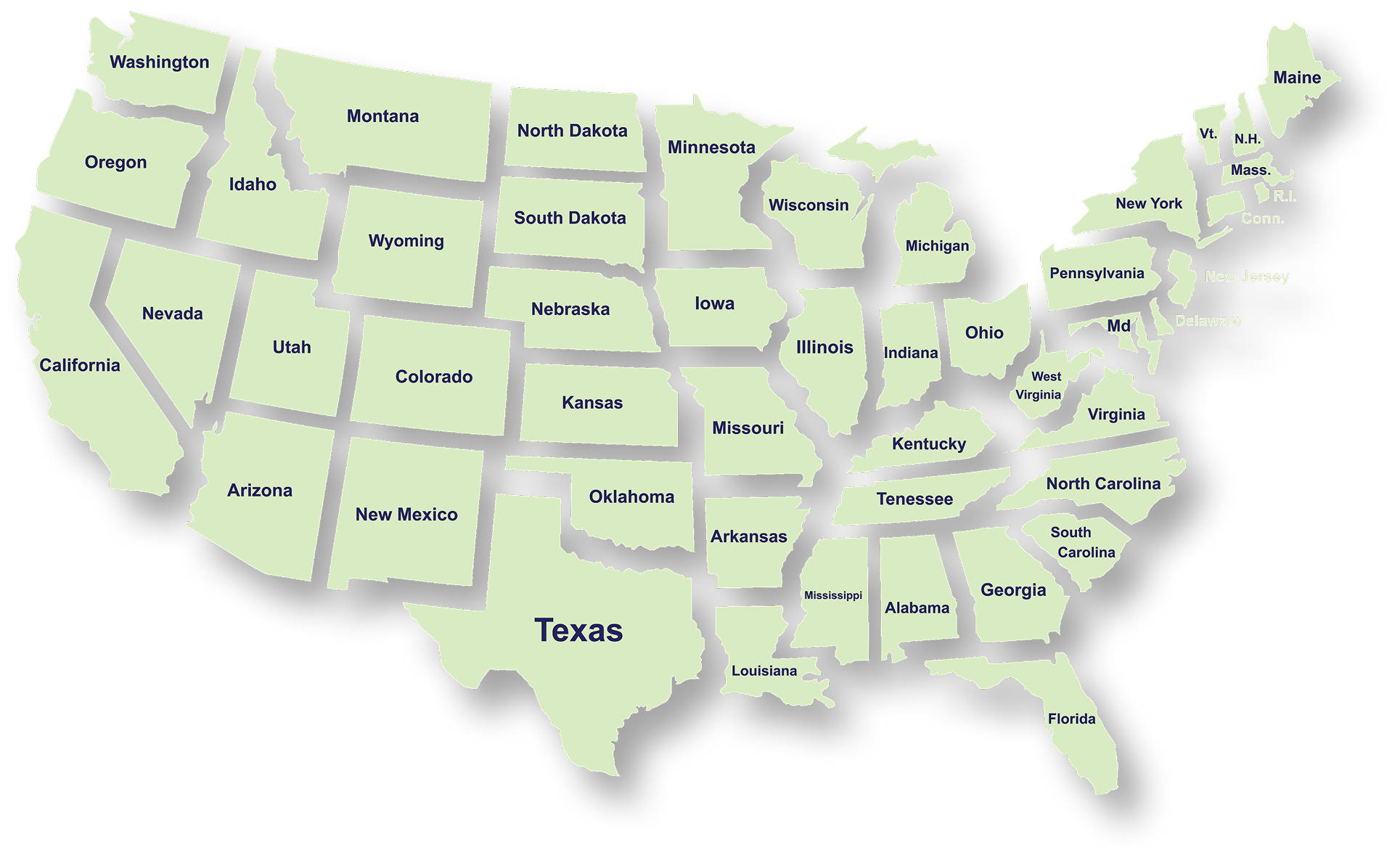
Serving Businesses & Individuals Across USA

We handle accounting, tax filing, and planning with defined timelines and accurate reporting for businesses and individuals across all states.

Frequently Asked Questions

What services does NR CPAs & Business Advisors provide?
What is tax planning and why is it important for businesses?
How can a Virtual CFO help my business?
When should a business consider IRS tax resolution services?
What financial statements does a business typically need?
How can startup advisory services help new businesses?
What is strategic business planning?
What is a Virtual Family Office and who can benefit from it?