Learning Center for Tax and Financial Insights

Stay updated with clear, actionable articles on tax rules, deadlines, deductions, and financial decisions that impact individuals and businesses.

No items found.

Beware of Scams Targeting Corporate Transparency Act Reporting Requirements!

Article Highlights:Purpose of the Corporate Transparency ActBeneficial Owner Reporting RequirementsTypes of Scams Associated with the CTAPhishing ScamsFake Compliance ServicesImpersonation ScamsData Breach ScamsFake Penalty NoticesWhat Beneficiaries of a Scam Should DoThe Corporate Transparency Act (CTA), enacted as part of the Defense Authorization Act for Fiscal Year 2021, represents a significant legislative effort to enhance corporate transparency and combat illicit financial activities in the United States. The CTA mandates the electronic reporting of beneficial ownership information (BOI) to the federal government’s Financial Crimes Enforcement Network (FinCEN), aiming to curb money laundering, terrorism financing, and other forms of illicit finance. However, the CTA has also given rise to various scams targeting businesses and individuals. This article explores the purpose of the CTA, its beneficial owner reporting requirements, and the types of scams associated with it. Additionally, it provides guidance on what victims of such scams should do.Purpose of the Corporate Transparency Act - The primary objective of the CTA is to strengthen the integrity and transparency of the U.S. financial system. By requiring businesses to disclose their beneficial owners, the CTA aims to:Combat Illicit Finance - The CTA seeks to prevent money laundering, terrorism financing, and other illicit financial activities by making it more difficult for criminals to hide their identities behind anonymous shell companies.Enhance National Security - By improving transparency, the CTA supports national security efforts to identify and disrupt the financial networks of criminal organizations, including drug traffickers, human traffickers, and kleptocrats.Protect Legitimate Businesses - The CTA aims to level the playing field for legitimate businesses that comply with the law by reducing the competitive advantage of those that engage in illegal activities.Beneficial Owner Reporting Requirements - Under the CTA, reporting companies include corporations, limited liability companies (LLCs), and any other entity created by the filing of a document with a secretary of state or any similar office under the law of a state or Indian tribe. This generally includes limited partnerships and possibly general partnerships depending upon state or tribal law. Also included are similar foreign entities.These entities must disclose the identity and information related to their beneficial owners and in some cases the company applicant. The government does not charge a fee for submitting the report.Beneficial Owner - A beneficial owner is defined as a natural person who:o Holds at least 25% of the company's equity interests.o Exercises substantial control over the company. Company Applicant - The individual who filed the company's formation documents.The required information for the above includes:Full legal nameDate of birthResidential or business addressState or tribal jurisdiction of formationIRS taxpayer identification numberVerification of identity, such as a passport or driver’s license, is generally required to be uploaded when the Beneficial Ownership Information Report is submitted to FinCEN.Failure to comply with these reporting requirements can result in severe penalties, including fines and imprisonment.Types of Scams Associated with the CTA - The implementation of the CTA has unfortunately led to various scams targeting businesses and individuals. These scams exploit the regulatory requirements and the potential penalties for non-compliance. The following are some common types of scams associated with the CTA:

Explore More
No items found.

Best Practices for Hiring: Red Flags to Watch Out For

Hiring the right talent is crucial for the success and growth of any organization, especially for small and medium-sized businesses (SMBs). The hiring process is not just about filling a position; it’s about finding the right fit for your company’s culture and goals. Making the wrong hire can be costly and time-consuming, impacting your business in several ways.Why Hiring Right is So ImportantCost Implications: The financial cost of a bad hire can be substantial. According to various industry studies, the cost of replacing an employee can range from 30% to 150% of their annual salary. This includes direct costs like recruitment fees, training, and onboarding, as well as indirect costs such as lost productivity and the impact on team morale.Time Investment: The time required to hire and train a new employee is significant. From the initial job posting to screening resumes, conducting interviews, and finally onboarding, the process can take several weeks to months. A bad hire means repeating this entire process, diverting valuable time and resources away from other critical business activities.Impact on Team Dynamics: A wrong hire can disrupt team cohesion and productivity. Employees who lack integrity or are hard to be around can create a toxic work environment. This not only affects the immediate team but can also have a ripple effect throughout the organization, leading to decreased employee engagement and higher turnover rates.Client Relationships: For SMBs and accounting professionals, maintaining strong client relationships is paramount. Employees who do not align with your company’s values or who lack the necessary interpersonal skills can negatively impact client interactions. If an employee is difficult to be around, chances are clients won’t enjoy their presence either. This can lead to lost business opportunities and damage to your company’s reputation.Long-term Growth: Hiring the right talent is essential for long-term growth and innovation. Employees who embody the company’s values and mission are more likely to be engaged, motivated, and committed to the organization’s success. Finding employees who are humble, hungry, and smart—traits that drive collective success—contributes to a positive work culture.By being vigilant about red flags during the hiring process, you can better assess candidates’ suitability for your organization. This approach not only saves time and money but also ensures that you build a cohesive and productive team dedicated to achieving your business goals.How Job Candidates Present ThemselvesRambling: Candidates who ramble endlessly or constantly change the subject when asked a question may lack focus and the ability to communicate effectively. This can be a sign that they are not well-prepared or are trying to cover up a lack of knowledge.Contradicting Themselves: If a candidate frequently contradicts themselves, it can indicate dishonesty or a lack of clarity in their thoughts. Consistency in responses is key to assessing their reliability and truthfulness.Bragging: While it’s important for candidates to be proud of their accomplishments, excessive bragging can suggest a lack of humility and a tendency to take all the credit. This behavior can be detrimental to team dynamics and collaboration.Lack of Eye Contact: Avoiding eye contact can suggest a lack of confidence or honesty. However, it’s important to consider that some individuals, especially those who are non-neurotypical, may struggle with eye contact. Focus on other communication cues like coherence and enthusiasm.Unkempt Appearance: A candidate who appears unkempt may not care about how they present themselves or represent your company. While everyone has off days, a consistent lack of grooming can be a red flag.Constant Rescheduling: Life happens, and rescheduling an interview occasionally is understandable. However, candidates who constantly reschedule may lack time management skills and respect for your organization’s time.Tardiness: Being extremely late without a valid reason is a red flag. Punctuality is crucial, especially in the first interview, as it reflects the candidate’s respect for the opportunity and their organizational skills.Inappropriate Humor: While humor can break the ice, inappropriate jokes during an interview can be a major red flag and a potential HR issue. Assess how their sense of humor might impact team dynamics.Use of Slang: Overly casual language or slang during the interview can indicate a lack of professionalism. While workplace cultures vary, it’s important to gauge if the candidate can adapt to your company’s communication standards.Swearing: Swearing during an interview is almost always inappropriate and shows a lack of professionalism and respect. Even in relaxed company cultures, this is a significant red flag.

Explore More
No items found.

The Ultimate Guide to Starting Your Own Business: A Step-by-Step Blueprint for Young Entrepreneurs

Starting your own business is an exciting journey filled with opportunities and challenges. As a young entrepreneur, you have the energy, creativity, and drive to turn your ideas into reality. This comprehensive guide will walk you through the essential steps to launch your business successfully. By following this blueprint, you'll be well-prepared to navigate the complexities of entrepreneurship and set your business up for long-term success. And remember, before you get started, reach out to us for personalized advice and support tailored to your unique needs.1. Find the Right OpportunityThe first step in starting a business is identifying the right opportunity. Consider your expertise, interests, and the amount of time and money you can invest. Some businesses can be launched from home with minimal overhead, especially in the e-commerce and remote work sectors. Evaluate your ideas to ensure they are viable and have the potential to generate revenue. If you're unsure where to start, explore various business ideas and trends to get inspired.2. Write a Business PlanA solid business plan is crucial for your success. This document outlines your business goals, strategies, target market, and financial projections. It serves as a roadmap for your business and is essential when seeking funding from investors or lenders. Your business plan should include:Executive Summary: A brief overview of your business and its objectives.Business Description: Detailed information about your products or services.Market Analysis: Insights into your target market and competition.Organization and Management: Your business structure and team.Marketing and Sales Strategy: How you plan to attract and retain customers.Financial Projections: Budgets, cash flow projections, and funding requirements.3. Choose a Business StructureSelecting the right legal structure for your business is vital as it affects your taxes, liability, and regulatory requirements. Common structures include:Sole Proprietorship: Simple and easy to set up, but offers no personal liability protection.Partnership: Ideal for businesses with multiple owners, but personal liability is shared.Limited Liability Company (LLC): Provides personal asset protection and flexible tax options.Corporation: Offers the most protection but is more complex and costly to set up.S-Corporation: S-corporations are corporations that elect to pass corporate income, losses, deductions, and credits through to their shareholders for federal tax purposes.Consult with our office to determine the best structure for your business.4. Get a Federal Tax IDAn Employer Identification Number (EIN) is necessary for most businesses to file taxes, open bank accounts, and hire employees. Applying for an EIN is free and can be done online in just a few minutes.5. Apply for Licenses and PermitsDepending on your industry and location, you may need various licenses and permits to operate legally. Research the specific requirements for your business and ensure you comply with all regulations. This may include health inspections, zoning permits, and professional licenses.6. Open a Business Bank AccountSeparating your personal and business finances is crucial for effective financial management. A business bank account helps you track expenses, manage cash flow, and simplify tax preparation. Setting up an account is straightforward and provides a professional image for your business.

Explore More
No items found.

Jet Set and Tax Savvy: Navigating Taxes for the Global Traveler

Article Highlights:Understanding Ordinary and Necessary ExpensesTCJA Limits for EmployeesBusiness Days vs. Nonbusiness DaysPersonal Activities and Allocation AdjustmentsForeign Conventions, Seminars, and MeetingsCruise Ship ConventionsLuxury Water TravelAccompanied by a SpouseIn an increasingly globalized economy, foreign business travel has become a staple for many companies seeking to expand their reach, forge new partnerships, and stay competitive. However, the financial implications of such travel, particularly in light of tax considerations, can be complex. The Tax Cuts and Jobs Act (TCJA) of 2017 introduced several changes affecting the deductibility of business travel expenses, making it essential for employees and employers alike to stay informed. This article delves into the intricacies of foreign business travel expenses, covering everything from the definition of ordinary and necessary expenses to the specifics of attending foreign conventions, seminars, and meetings, as well as the nuances of cruise ship travel, luxury water travel, and the implications of being accompanied by a spouse.Understanding Ordinary and Necessary Expenses - For an expense to be deductible, it must be both "ordinary" and "necessary" in the conduct of the taxpayer's business. An ordinary expense is one that is common and accepted in your field of trade or business. A necessary expense is one that is helpful and appropriate for your business. When traveling abroad for business, expenses that typically fall under this category include airfare, lodging, meals (subject to limitations), and transportation costs at the destination. However, no deduction is allowed if the expense is lavish or extravagant.TCJA Limits for Employees - One of the significant changes introduced by the TCJA is the suspension of most miscellaneous itemized deductions on individual tax returns for the tax years 2018 through 2025. This suspension directly impacts employees with unreimbursed foreign travel expenses, as they can no longer deduct these costs. Employees affected by this change should consider negotiating with their employers to be covered by an accountable plan, which would provide tax-free reimbursement for their business expenses.Business Days vs. Nonbusiness Days - Distinguishing between business and nonbusiness days is crucial when determining the deductibility of travel expenses. Business days include days spent traveling to and from the business destination by a direct route, days when actual business is conducted, weekends or standby days that fall between business days, and days when business was planned but canceled due to unforeseen circumstances. Conversely, nonbusiness days are those spent on personal activities and weekends, holidays, or other standby days that fall at the end of the business activity if the taxpayer remains at the destination for personal reasons.Personal Activities and Allocation Adjustments - When a business trip includes personal activities, taxpayers must allocate their expenses between business and personal. Only the business portion is deductible. If the trip outside the U.S. is primarily for business, and any personal activities do not significantly extend the duration or cost of the trip, the primary travel expenses (e.g., airfare) remain fully deductible. However, day-to-day expenses need to be allocated accordingly.Foreign Conventions, Seminars, and Meetings - Expenses incurred attending foreign conventions, seminars, or meetings are deductible under specific conditions. The event must be directly related to the taxpayer's trade or business, and it must be reasonable for the meeting to be held outside the North American area. Documentation and a clear demonstration of the business necessity of attending such events are crucial for deductibility.Cruise Ship Conventions - The IRS places strict limits on deductions for conventions held on cruise ships. To deduct these expenses, the ship must be a U.S. flagship, and all ports of call must be within the U.S. or its possessions. The maximum deduction is capped at $2,000 per attendee, and taxpayers must provide detailed substantiation, including signed statements from both the attendee and an officer of the convention sponsor.Luxury Water Travel - For those opting for luxury water travel such as on an ocean liner or cruise ship as a means of transportation for business, the deduction is limited to twice the highest per diem travel amount for federal government employees on official business away from home allowable in the U.S. Separately-stated meals during such travel are subject to a 50% limitation before the per diem limit applies.Accompanied by a Spouse - The travel expenses of a spouse, dependent, or employee accompanying the business traveler are generally not deductible unless the accompanying person is an employee of the taxpayer, the travel is for a bona fide business purpose, and the expenses would otherwise qualify as deductible business travel expenses. Notably, if traveling by car, the entire cost of business-related transportation is deductible, as the law does not require allocation in such cases.

Explore More
No items found.

September 2024 Business Due Dates

September 16 - S CorporationsFile a 2023 calendar year income tax return (Form 1120-S) and pay any tax due. This due date applies only if you requested an automatic 6-month extension. Provide each shareholder with a copy of their Schedule K-1 (Form 1120-S) or a substitute Schedule K-1 and, if applicable, Schedule K-3 (Form 1120-S) or substitute Schedule K-3 (Form 1120-S).September 16 - Corporations Deposit the third installment of estimated income tax for 2023 calendar yearSeptember 16 - Social Security, Medicare and withheld income taxIf the monthly deposit rule applies, deposit the tax for payments in August.September 16 - Nonpayroll WithholdingIf the monthly deposit rule applies, deposit the tax for payments in August.September 16 - PartnershipsFile a 2023 calendar year return (Form 1065). This due date applies only if you were given an additional 5-month extension. Provide each partner with a copy of K-1 (Form 1065) or a substitute Schedule K-1.September 30 - Fiduciaries of Estates and TrustsFile a 2023 calendar year return (Form 1041). This due date applies only if you were given an extension of 5 1/2 months. If applicable, provide each beneficiary with a copy of K-1 (Form 1041) or a substitute Schedule K-1.Weekends & Holidays:

Explore More
No items found.

September 2024 Individual Due Dates

September 1 - 2024 Fall and 2025 Tax Planning Tax Planning Contact this office to schedule a consultation appointment.September 10 - Report Tips to EmployerIf you are an employee who works for tips and received more than $20 in tips during August, you are required to report them to your employer on IRS Form 4070 no later than September 10. Your employer is required to withhold FICA taxes and income tax withholding for these tips from your regular wages. If your regular wages are insufficient to cover the FICA and tax withholding, the employer will report the amount of the uncollected withholding in box 8 of your W-2 for the year. You will be required to pay the uncollected withholding when your return for the year is filed.September 16 - Estimated Tax Payment DueThe third installment of 2024 individual estimated taxes is due. Our tax system is a “pay-as-you-earn” system. To facilitate that concept, the government has provided several means of assisting taxpayers in meeting the “pay-as-you-earn” requirement. These include:Payroll withholding for employees;Pension withholding for retirees; and Estimated tax payments for self-employed individuals and those with other sources of income not covered by withholding.When a taxpayer fails to prepay a safe harbor (minimum) amount, they can be subject to the underpayment penalty. This penalty is equal to the federal short-term rate plus 3 percentage points, and the penalty is computed on a quarter-by-quarter basis.Federal tax law does provide ways to avoid the underpayment penalty. If the underpayment is less than $1,000 (the de minimis amount), no penalty is assessed. In addition, the law provides "safe harbor" prepayments. There are two safe harbors:The first safe harbor is based on the tax owed in the current year. If your payments equal or exceed 90% of what is owed in the current year, you can escape a penalty.The second safe harbor is based on the tax owed in the immediately preceding tax year. This safe harbor is generally 100% of the prior year’s tax liability. However, for taxpayers whose AGI exceeds $150,000 ($75,000 for married taxpayers filing separately), the prior year’s safe harbor is 110%.

Explore More
No results found.
Thank you! Your submission has been received!
Oops! Something went wrong while submitting the form.

Want tax & accounting tips & insights?Sign up for our newsletter.

Thank you! Your submission has been received!
Oops! Something went wrong while submitting the form.

Why Work With Us?

We combine deep tax expertise, financial strategy, and practical business insight to help you manage complexity, stay compliant, and make confident financial decisions.
A dollar sign, representing financial advice or discussion at NR CPAs & Business Advisors.

Experienced CPA and Enrolled Agent Leadership

Guidance led by licensed professionals with deep expertise in tax strategy, compliance, and complex financial matters.
White bar chart with an upward arrow on green circular background representing growth or progress at NR CPAs &. Business Advisors

Support for Growing Businesses and Startups

We understand the financial challenges of growth stage businesses and provide structured guidance to support expansion.
A white hand holding a dollar symbol and ascending bar chart on a green circular background representing financial growth or investment at NR CPAs & Business Advisors..

Strategic Financial Advisory

Our team helps you evaluate financial decisions with greater clarity, supported by practical insights and long term planning.

Fractional CFO Support

Access experienced financial leadership without the commitment and cost of hiring a full time Chief Financial Officer.

Proactive Tax Planning Approach

We focus on identifying tax opportunities throughout the year rather than reacting only during filing season.

Clear and Reliable Financial Reporting

Accurate financial statements and reporting that help you better understand performance and make informed decisions.
White IRS building icon with pillars and a dollar sign above on a green circular background.

Professional IRS Representation

Experienced support in resolving IRS notices, disputes, and compliance matters while protecting your financial interests.

Personalized Client Focus

Every client receives thoughtful attention and tailored financial solutions based on their specific needs and business goals.
Financial matters often involve important decisions. Working with experienced advisors can help you approach them with greater clarity and confidence in your choices.

Need Help With Your Tax or Financial Decisions?

Discuss your situation with our advisors to get clear guidance on tax planning, IRS matters, and the financial decisions ahead.
Business consulting at NR CPAs & Business Advisors.

Request Your Consultation

Fill out the form to discuss your tax concerns, financial questions, or advisory needs with our team. We will review your details and respond shortly.

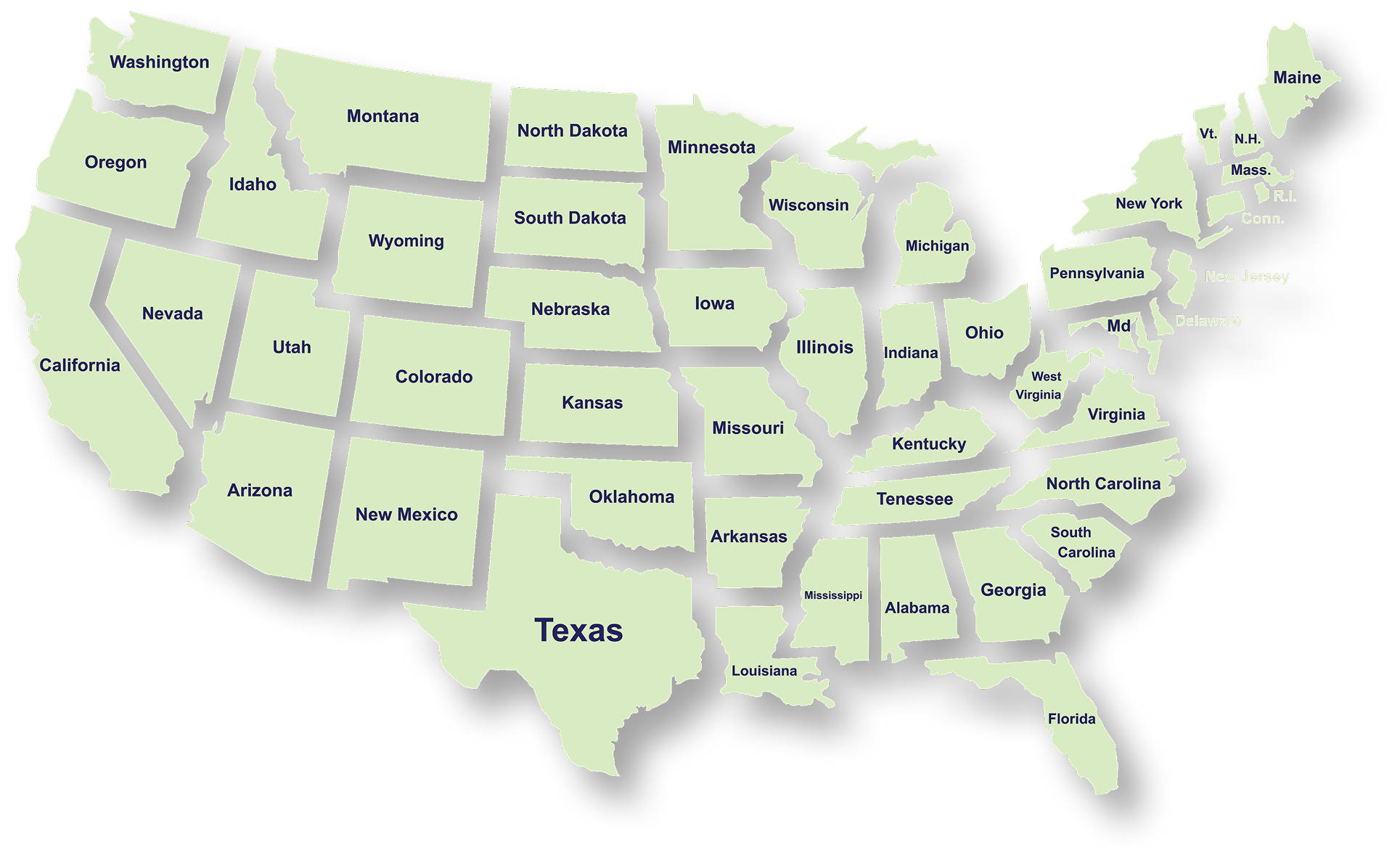
Serving Businesses & Individuals Across USA

We handle accounting, tax filing, and planning with defined timelines and accurate reporting for businesses and individuals across all states.

Frequently Asked Questions

What services does NR CPAs & Business Advisors provide?
What is tax planning and why is it important for businesses?
How can a Virtual CFO help my business?
When should a business consider IRS tax resolution services?
What financial statements does a business typically need?
How can startup advisory services help new businesses?
What is strategic business planning?
What is a Virtual Family Office and who can benefit from it?