Learning Center for Tax and Financial Insights

Stay updated with clear, actionable articles on tax rules, deadlines, deductions, and financial decisions that impact individuals and businesses.

No items found.

Understanding IRS Actions: A Detailed Look at Tekashi 6ix9ine

The case of rapper Tekashi 6ix9ine, born Daniel Hernandez, offers a real-life example of what can happen when the Internal Revenue Service (IRS) takes action against taxpayers who do not meet their legal obligations. The 27-year-old musician’s encounter with the IRS unfolded at his home in Lake Worth, Florida, where enforcement agents, alongside police officers from the Palm Beach Sheriff's Office, executed a seizure operation. Let’s explore the details.The IRS Operation: A Closer ExaminationAccording to the media site TMZ, which broke the story, IRS agents, with the assistance of local law enforcement, arrived at Tekashi 6ix9ine's residence in April 2024. This operation was not a mere courtesy visit but a coordinated effort to seize assets due to issues presumably related to the rapper's tax affairs. The presence of law enforcement officers alongside IRS agents is notable because it showcases the overall gravity of the situation—in layman’s terms, the IRS was not messing around.Eyewitness accounts and material shared by multiple publications reveal that several high-dollar items were removed from the rapper's home. Among the most seized assets were multiple luxury sports cars. These vehicles, including a blue Lamborghini and another vehicle with custom paint jobs designed to mimic the appearance of being splattered by multicolored paintballs, were towed away from the property, leaving a clear message about the IRS's reach.These cars had “Warning” labels affixed to the windshields, declaring them part of a 'United States Government Seizure.' The labels bore Hernandez's name, directly linking the seizure to the rapper.The Implications of the IRS's VisitWhile the specific details of the tax issues leading to the seizure have not been fully disclosed, the operation's visibility and targeted items suggest significant tax liabilities. Tekashi 6ix9ine's legal representative, Lance Lazzaro, indicated they were assessing the situation and would issue a statement in due time, as the matter is ongoing.

Explore More
No items found.

Video Tips: Employees, Don't Miss Out on Your Fringe Benefits

Employees should become familiar with and take advantage of the tax- and financially-favored benefits offered by their employers. These perks may include tax-free health insurance coverage, matching contributions to retirement plans, tax-free education assistance, and more.

Explore More
No items found.

Payroll Management: A Complete Guide for SMBs

Payroll taxes can be a significant headache for many small—to medium-sized business owners. Without proper education, entrepreneurs can find themselves in trouble with the IRS and state tax agencies. Fortunately, if you’ve been struggling with payroll taxes, you’re in the right place. This guide will help you understand and manage payroll taxes effectively to ensure legal compliance. The temptation to cut corners, especially in employment taxes, can be a pitfall with severe consequences. Here, we will examine employment tax evasion schemes, educating SMB owners like you about the importance of proper payroll management and the risks associated with attempting to avoid payroll taxes, intentionally or unintentionally.The High Stakes of Payroll Tax ComplianceEmployment taxes are a fundamental obligation for businesses. On the federal level, Social Security and Medicare taxes from employees' paychecks and the employer's contribution to these taxes are categorized as “payroll taxes.” Failure to pay not only undermines a business's financial integrity but also places it squarely in the crosshairs of the IRS. As former IRS Commissioner Mark W. Everson stated, “Failure to pay employment taxes is stealing from the business's employees.” This stark reminder underscores the gravity of payroll tax compliance.Common Pitfalls in Payroll Tax ManagementSeveral strategies employed by businesses to evade payroll taxes have been identified, each carrying its own set of risks and potential for legal repercussions:Pyramiding: This scheme involves withholding taxes from employees but intentionally failing to remit them to the IRS. Businesses caught in this cycle often file for bankruptcy to evade creditors, only to re-emerge under a new name and repeat the process.Misclassifying Workers: Incorrectly classifying employees as independent contractors to avoid payroll taxes is a common tactic. However, the IRS applies strict criteria for classification, focusing on the degree of control a business has over the worker. Misclassification can lead to significant penalties and back taxes.Paying Employees in Cash: While not illegal, paying employees without proper documentation and tax withholding is a red flag for tax evasion. This method makes it challenging for the IRS to ascertain the accuracy of payroll tax submissions.Filing False Payroll Tax Returns or Failing to File: Underreporting wages or not filing payroll tax returns are direct forms of evasion that attract severe penalties and scrutiny from the IRS.

Explore More
No items found.

Unlocking the Secrets of the SMB Business Life Cycle

Understanding your company's journey from inception to maturity is not optional if you want to have a successful career as a business owner. The business life cycle, a concept thoroughly explored by experts in corporate finance, serves as an essential roadmap for entrepreneurs and owners of small to medium-sized businesses (SMBs). This guide walks you through the stages of launch, growth, shake-out, maturity, and decline, offering tips that can influence your strategic decisions and operational adjustments at any stage.The Launch Phase: Planting the Seeds of SuccessEvery business begins with a vision that transforms into reality by introducing products or services designed to appeal to a specific demographic. This initial phase is typically marked by excitement and rapid learning, with gradually increasing sales. During this phase, business owners should focus on marketing and establishing a market presence.Despite the initial thrill, the launch phase can also be fraught with financial challenges—startup costs are substantial, revenues are modest, and cash flow often dips negative. Understanding this phase's financial dynamics is critical for navigating these early challenges and laying a robust foundation for future growth.The Growth Phase: Nurturing Your BusinessAs you begin to establish your business in earnest, the growth phase usually leads to rapid increases in sales and a shift toward profitability. This stage is crucial as it signals the onset of seeing the fruits of your labor. However, managing the lag between sales growth and profit realization is essential. A healthy cash flow during this period indicates a solid excess of cash inflow, signifying that the business is on the right trajectory. Strategic investments in market expansion and diversification become pivotal to sustaining momentum.The Shake-Out Phase: Standing Firm Amid ChallengesFollowing growth, the shake-out phase occurs as sales continue to climb less rapidly than during the growth phase. Generally, deceleration occurs due to market saturation or increased competition. This phase tests your business's resilience, with sales peaking, overall profits starting to wane, and operational costs creeping up. However, cash flow generally remains robust, often exceeding profit levels. Adapting strategies to maintain market position and prepare for future phases is crucial during the shake-out.

Explore More
No items found.

Tax Facts about Claiming Tax Benefits for Childcare Expenses

Article Highlights: Credit For Childcare Credit Percentage Child Qualifications Employment-Related Expense Taxpayer Earnings Limits Full-Time-Student or Disabled Spouse Qualifying Care Other Facts and Issues Tactic for Maximizing Credit Many parents who work or are actively looking for work must arrange for care of their children after the school day ends, on weekends when they get called in to work, and during school vacations. If you are in this situation, and your children requiring care are under 13 years of age (or any age if handicapped), you may qualify for a tax credit that can reduce your federal income taxes and help offset the cost of care for children. Don’t confuse this credit with the Child Tax Credit; they are two separate credits with different requirements. This article is about the Child and Dependent Care Credit. Basic Facts about Claiming the Childcare Credit The Child and Dependent Care Credit is available for expenses you incur that enable you to work or actively look for work. You must claim the qualifying child for whom you pay care expenses as your dependent to qualify to claim the credit, but there is an exception for divorced or separated parents (not discussed in this article). The credit is the percentage of actual care expenses. It can be as high as 35% for lower income taxpayers but is never less than 20% for higher income taxpayers. The table illustrates credit percentages at various levels of adjusted gross income (AGI). AGI Over But Not Over Applicable Percent AGI Over But Not Over Applicable Percent 0 15,000 35 29,000 31,000 27 15,000 17,000 34 31,000 33,000 26 17,000 19,000 33 33,000 35,000 25 19,000 21,000 32 35,000 37,000 24 21,000 23,000 31 37,000 39,000 23 23,000 25,000 30 39,000 41,000 22 25,000 27,000 29 41,000 43,000 21 27,000 29,000 28 43,000 No Limit 20 For an expense to qualify for the credit, it must be needed for you and your spouse, if you are married, to work or be looking for work, and it must be for the care of your child, stepchild, foster child, brother, sister or stepsibling (or a descendant of any of these) who is under age 13, lives in your home for more than half the year and does not provide more than half of his or her own support for the year. Married couples must file jointly, and both spouses must work or be looking for work (or one spouse must be a full-time student or disabled) to claim the credit. The qualifying expenses are limited to the income you or your spouse, if married, earn from work, using the figure for whoever earns less. However, under certain conditions, when one spouse has no actual earned income and that spouse is a full-time student or disabled, that spouse is considered to have a monthly income of $250 (if the couple has one qualifying child) or $500 (two or more qualifying children). This means the income limitation is essentially removed for a spouse who is a student or disabled. The qualifying expenses can’t exceed $3,000 per year if you have one qualifying child, while the limit is $6,000 per year for two or more qualifying persons. This limit does not need to be divided equally. For example, if you have paid and incurred $2,500 of qualified expenses for the care of one child and $3,500 for the care of another child, you can use the total, $6,000, to figure the credit. The credit is computed as a percentage of your qualifying expenses from the table above—in most cases, 20%. If the expenses exceed your work earnings, use the earnings to figure the credit. Dependent care benefits received through your employer will also affect the computation of the credit and could result in no credit being allowed. Example: Al and Janice both work, each with earned income more than $40,000 per year. Janice has a part-time job, and her work hours coincide with the school hours of their 11-year-old daughter, Susan. However, during the summer vacation period, they place Susan in a day camp program that costs $4,000. Since the expense limitation for one child is $3,000, their child credit would be $600 (20% of $3,000). The credit reduces a taxpayer’s tax bill dollar for dollar. Thus, in the above example, Al and Janice pay $600 less in taxes by virtue of the credit. However, the credit can only offset tax, and any excess is not refundable. The credit cannot be used to reduce self-employment tax or certain other taxes. Here are some other facts and issues about the tax credit:

Explore More
No items found.

Video Tips: Are You Ignoring Your Retirement Planning?

Some people ignore or put off planning for their future retirement needs. Although the retirement phase of life may seem to be far in the future, to retire comfortably, people should start planning for it early in life.

Explore More
No results found.
Thank you! Your submission has been received!
Oops! Something went wrong while submitting the form.

Want tax & accounting tips & insights?Sign up for our newsletter.

Thank you! Your submission has been received!
Oops! Something went wrong while submitting the form.

Why Work With Us?

We combine deep tax expertise, financial strategy, and practical business insight to help you manage complexity, stay compliant, and make confident financial decisions.
A dollar sign, representing financial advice or discussion at NR CPAs & Business Advisors.

Experienced CPA and Enrolled Agent Leadership

Guidance led by licensed professionals with deep expertise in tax strategy, compliance, and complex financial matters.
White bar chart with an upward arrow on green circular background representing growth or progress at NR CPAs &. Business Advisors

Support for Growing Businesses and Startups

We understand the financial challenges of growth stage businesses and provide structured guidance to support expansion.
A white hand holding a dollar symbol and ascending bar chart on a green circular background representing financial growth or investment at NR CPAs & Business Advisors..

Strategic Financial Advisory

Our team helps you evaluate financial decisions with greater clarity, supported by practical insights and long term planning.

Fractional CFO Support

Access experienced financial leadership without the commitment and cost of hiring a full time Chief Financial Officer.

Proactive Tax Planning Approach

We focus on identifying tax opportunities throughout the year rather than reacting only during filing season.

Clear and Reliable Financial Reporting

Accurate financial statements and reporting that help you better understand performance and make informed decisions.
White IRS building icon with pillars and a dollar sign above on a green circular background.

Professional IRS Representation

Experienced support in resolving IRS notices, disputes, and compliance matters while protecting your financial interests.

Personalized Client Focus

Every client receives thoughtful attention and tailored financial solutions based on their specific needs and business goals.
Financial matters often involve important decisions. Working with experienced advisors can help you approach them with greater clarity and confidence in your choices.

Need Help With Your Tax or Financial Decisions?

Discuss your situation with our advisors to get clear guidance on tax planning, IRS matters, and the financial decisions ahead.
Business consulting at NR CPAs & Business Advisors.

Request Your Consultation

Fill out the form to discuss your tax concerns, financial questions, or advisory needs with our team. We will review your details and respond shortly.

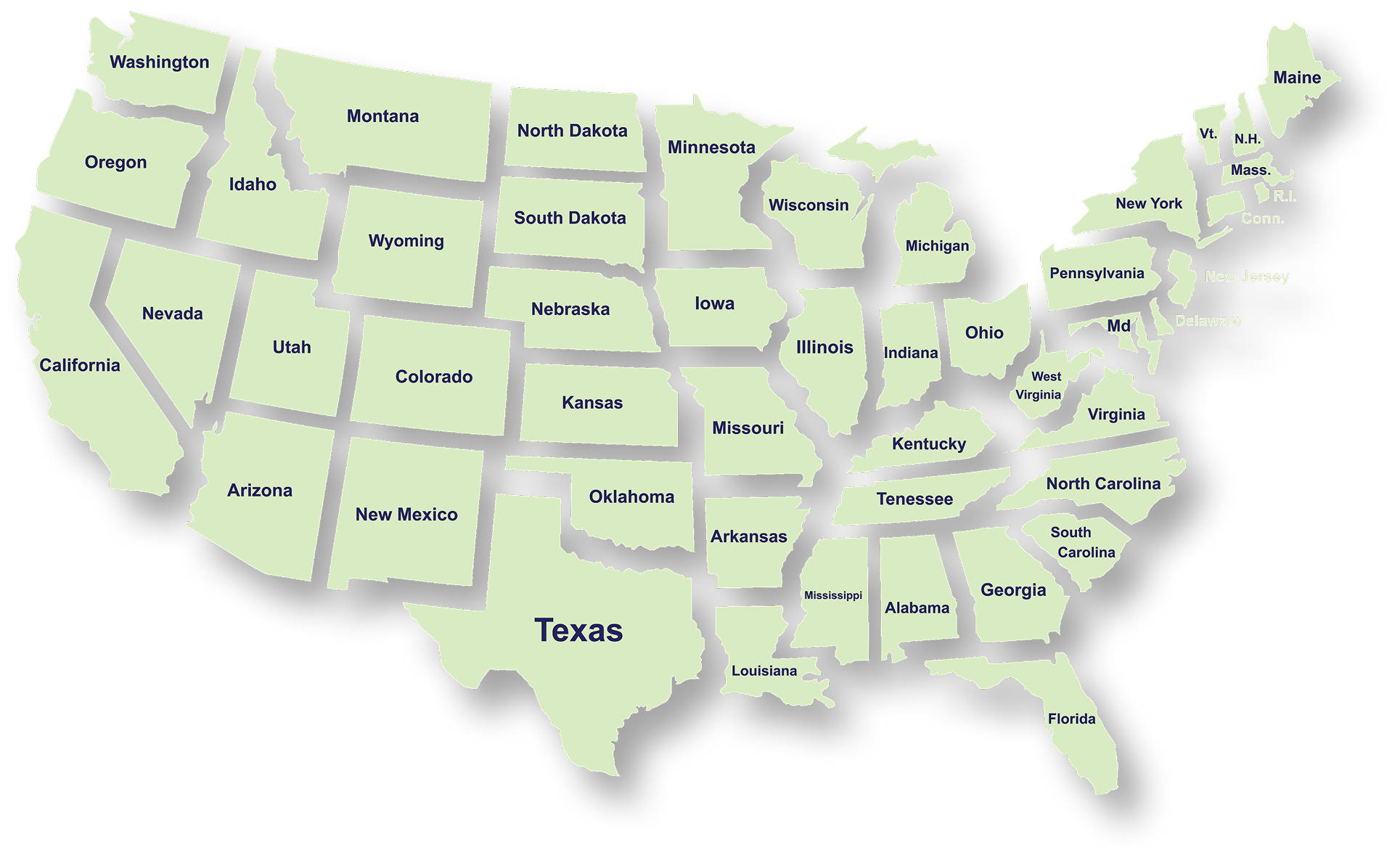
Serving Businesses & Individuals Across USA

We handle accounting, tax filing, and planning with defined timelines and accurate reporting for businesses and individuals across all states.

Frequently Asked Questions

What services does NR CPAs & Business Advisors provide?
What is tax planning and why is it important for businesses?
How can a Virtual CFO help my business?
When should a business consider IRS tax resolution services?
What financial statements does a business typically need?
How can startup advisory services help new businesses?
What is strategic business planning?
What is a Virtual Family Office and who can benefit from it?