Learning Center for Tax and Financial Insights

Stay updated with clear, actionable articles on tax rules, deadlines, deductions, and financial decisions that impact individuals and businesses.

Personal Finance

Personal Finance Tips for Recent College Graduates

Congratulations! You've worked hard on your degree and are ready to move forward with your first job and other major life decisions. While your degree and this first job don't necessarily set your life in stone, now is a crucial time to start making smart financial decisions to set you on the right course for the future. The prospect of savings can seem overwhelming when living expenses are soaring and 44.7 million Americans collectively hold $1.56 trillion in student loans — and not all college graduates are going to seamlessly jump to a well-paying job. But even if you can't act on these tips immediately depending on the type of job that you get and other circumstances you may have, keep them in mind for this critical early stage of your professional life. 1. If possible, max out your 401(k) plan contributions. The maximum allowable contribution to 401(k)s and most other retirement plans for 2019 is $19,000. That can seem like an insurmountable contribution after factoring in rent, student loans, transportation, and other necessities. But even if you can only contribute a small amount, such as $200 per biweekly paycheck, it adds up quickly to $2,600 per year. That comes nowhere near the $19,000 annual cap but the most important reason to do this taking advantage of an employer match. If the employer matches dollar-for-dollar, that's $2,600 in totally free money. You avoid taxes on the $2,600 (or other amount you contribute) and you don't have to pay tax on your employer's match. Those funds will grow over the years. Plus, if your income is low enough, you can take advantage of the Saver's Credit to get a small reward at tax time for your contribution! 2. Consider a Roth IRA if you don't have access to a retirement plan at work. Sometimes we have to take a job that doesn't offer the best benefits (or any at all) before moving on to greener pastures. But it shouldn't stop you from saving for retirement. An IRA has a cap of only $6,000 per year but is the cheapest and easiest solution when you don't have access to an employer plan. Consider a Roth IRA because you're in a low tax bracket now, but can exponentially grow this money tax-free for decades. You can double-dip with the aforementioned Saver's Credit, as most recent grads are likely to meet the income guidelines. 3. Thrifting, eBay, and similar resources can save you money on a professional wardrobe. It's a good idea to avoid spending too much on clothing, but you probably have the double-edged sword of needing professional clothing for job interviews — even if the job you get hired for winds up having a more casual dress code. You might have a significant upfront expense if you immediately land interviews and have no suitable clothes, thus you have to run out to a store and buy something right away. But if time is on your side, you can save a lot of money on professional clothing by scouring eBay, Poshmark, thredUP, and similar websites. Many even have clothing that's new with tags and in hard-to-find sizes. If you have difficulty at retail shops, this is a crucial time where you'll want to take advantage of getting that $50 blazer for $10 on eBay. If you don't have hand-me-downs from friends and family as an option, Dress For Success, Career Gear, and similar charities offer free clothing to college grads and anyone else in need of professional clothing, and some locations even offer help with resume writing and finding jobs. 4. Make a calculated decision if you have to move for a job. Moving for a job is always a highly personal decision. It may benefit you long-term to relocate if the new location has more opportunities in your industry than where you presently are. But how long do you think the job will last? Has the company been in business for a while? Moving can be an expensive disaster between lost security deposits, travel and hauling expenses, and loss of friends, family, and support networks which has both a financial and emotional impact. Even if you're not traveling far, the average interstate move costs $2,300. If you expect to move often for jobs, this can lead to credit card debt that spirals out of control or continual moving for progressively better jobs. Carefully consider this decision each time since job security is not as much of a given as it once was. And, remember moving expenses for jobs are no longer tax-deductible thanks to the 2018 tax reform. As a recent college graduate entering the “real world” for the first time, it can be overwhelming trying to set yourself up for financial success in the long-term. If you have any questions about other personal finance or tax planning tips, please contact our office.

Explore More
No items found.

September 2019 Business Due Dates

September 16 - S Corporations File a 2018 calendar year income tax return (Form 1120S) and pay any tax due. This due date applies only if you requested an automatic 6-month extension. Provide each shareholder with a copy of K-1 (Form 1120S) or a substitute Schedule K-1. September 16 - Corporations Deposit the third installment of estimated income tax for 2019 for calendar year September 16 - Social Security, Medicare and withheld income tax If the monthly deposit rule applies, deposit the tax for payments in August. September 16 - Nonpayroll Withholding/

Explore More
No items found.

September 2019 Individual Due Dates

September 1 - 2019 Fall and 2020Tax Planning Contact this office to schedule a consultation appointment. September 10 - Report Tips to Employer If you are an employee who works for tips and received more than $20 in tips during August, you are required to report them to your employer on IRS Form 4070 no later than September 10. Your employer is required to withhold FICA taxes and income tax withholding for these tips from your regular wages. If your regular wages are insufficient to cover the FICA and tax withholding, the employer will report the amount of the uncollected withholding in box 12 of your W-2 for the year. You will be required to pay the uncollected withholding when your return for the year is filed.September 16 - Estimated Tax Payment Due The third installment of 2019 individual estimated taxes is due. Our tax system is a “pay-as-you-earn” system. To facilitate that concept, the government has provided several means of assisting taxpayers in meeting the “pay-as-you-earn” requirement. These include: Payroll withholding for employees; Pension withholding for retirees; and Estimated tax payments for self-employed individuals and those with other sources of income not covered by withholding. When a taxpayer fails to prepay a safe harbor (minimum) amount, they can be subject to the underpayment penalty. This penalty is equal to the federal short-term rate plus 3 percentage points, and the penalty is computed on a quarter-by-quarter basis. Federal tax law does provide ways to avoid the underpayment penalty. If the underpayment is less than $1,000 (the de minimis amount), no penalty is assessed. In addition, the law provides "safe harbor" prepayments. There are two safe harbors: The first safe harbor is based on the tax owed in the current year. If your payments equal or exceed 90% of what is owed in the current year, you can escape a penalty. The second safe harbor is based on the tax owed in the immediately preceding tax year. This safe harbor is generally 100% of the prior year’s tax liability. However, for taxpayers whose AGI exceeds $150,000 ($75,000 for married taxpayers filing separately), the prior year’s safe harbor is 110%.

Explore More
No items found.

Foreign Account Reporting Requirements (FBAR)

Article Summary: Foreign Account Reporting Requirement Financial Crimes Enforcement Network Penalties for Failure to File Type of Accounts Affected Form 8938 Filing Requirements U.S. citizens and residents with a financial interest in or signature or other authority over any foreign financial account need to report that relationship by filing FinCEN Form 114 if the aggregate value of the accounts exceeds $10,000 at any time during the year. The due for 2018’s report was April 15, 2019, with an automatic 6-month extension to October 15, 2019. Failure to file can result in draconian penalties. Form 114 is filed electronically with the Treasury Department’s Financial Crimes Enforcement Network (FinCEN) BSA E-Filing System and not as part of the individual’s income tax filing with the IRS. Keep in mind that “financial account” includes securities, brokerage, savings, checking, deposit, time deposit, or other accounts at a financial institution. Commodity futures and options accounts, mutual funds, and even non-monetary assets such as gold are also included. It becomes a “foreign financial account” if the financial institution is located in a foreign country. If you own shares of a foreign stock or a mutual fund that invests in foreign stocks, and the stock or fund is held in an account at a financial institution or brokerage located in the U.S., this is not considered a foreign financial account, and the FBAR rules don’t apply to it. An account maintained with the branch of a foreign bank physically located in the U.S. also is not a foreign financial account.

Explore More
No items found.

Receiving Tips Can Be Taxing

Article Highlights: Collecting Tips Tip Splitting Service Charges Record Keeping Employer Reporting Allocated Tips Anyone who collects tips must include those tips in their taxable income. This requirement is not limited to waiters and waitresses; it applies to anyone who collects tips, including taxicab, Uber, Lyft, and similar drivers; beauticians; porters; concierges; and delivery people. Tips are amounts freely given by a customer to a person providing a service. They are generally given as cash but also include tips made on a credit or debit card or as part of a tip-sharing arrangement. Tips can also be in the form of non-traditional gifts such as tickets to events, wine, and other items of value. If you receive $20 or more in tips in any month, you should report all of your tips to your employer, with these exceptions: Tip-splitting – Tips you give to others under a tip-splitting arrangement are not subject to the reporting requirement by you (the employee initially receiving them). You should report only the net tips you received to your employer. Service (cover) charges – These are charges arbitrarily added by the business establishment (employer) – for example, a specific percentage of the bill for parties exceeding X in number – and are excluded from the tip-reporting requirements. If your employer collects service charges from customers, your share of these charges, as determined by your employer, is taxable to you and should already be included as part of your wages. Keep a running daily log of tip income – Tips are a frequently audited item, and it is a good practice to keep a daily log of your tips. The IRS provides a log in Publication 1244 that includes the Employee's Daily Record of Tips and the Report to Employer for recording your tip income. Report tips to your employer – If you receive $20 or more in tips in any month, you should report all of your tips to your employer. Your employer is required to withhold federal income, Social Security, and Medicare taxes. State taxes may have to be withheld as well. If the tips received are less than $20 in any month, don’t think you are off the hook; although they need not be reported to the employer, these tips are still taxable and must be reported on your tax return, as they are subject to income, Medicare, and Social Security taxes.

Explore More
No items found.

The Checklist Every Small Business Owner Needs for New Hires

Growing your business to the point that you need to start hiring employees is exciting. It’s also rife with administrative burdens that you don’t want to be unprepared for. When taking on a new hire, you need more than 1) the assurance your cash flow is sufficient to support your payroll expenses and 2) that the talent is the right fit for the role. There are governmental obligations to consider, as well as fitting your new employee into your existing schedule and structure. Small businesses face additional challenges when it comes to compliance, cash flow, and keeping operations on track. Follow this checklist to make the onboarding process run as smoothly as possible. 1. Get the new hire's ID, work eligibility, and tax withholding forms in order before you do anything else. Make a copy of the employee's government-issued photo ID and confirm that the new hire is eligible to work in the United States. This requires filling out an I-9 form and checking with the government database that it's valid. Neglecting to collect an I-9 at the time of onboarding can result in fines worth $375-$16,000 per violation, with another $100-$1,100 per violation if you fail to produce a valid I-9 for each employee at the time of inspection. In order to make sure that the employee's paychecks are calculated correctly from the first payroll period onward, you will need to collect a Form W-4. If your state and/or city has income taxes, you will also need state and local withholding forms. This is particularly important if your organization hires talent from multiple states, such as the greater New York City and Philadelphia areas. This is also the ideal time to get direct deposit forms filled out. 2. Order a background check. Depending on the scope of the work performed, you may be held liable for your employees' actions and deemed negligent in the hiring process if it turns out that they committed crimes in the past that are relevant to the job (such as larceny if hiring an inventory manager). Note: a nonviolent drug offense is less likely to have bearing on their lives nowadays. You may not need every piece of information that comes up in a background check or find it relevant to the position, but it can help ensure the safety and security of your clients, staff, and other stakeholders. 3. Enroll the employee in any benefit programs offered. Even if there's a grace period involved, it's best to get a new hire onboarded into any benefit programs immediately so that neither of you has to be inconvenienced by manual enrollment in the future. Health insurance and retirement benefits are the most crucial benefits for immediate enrollment, but if you offer any other programs like pre-tax transit passes, flex accounts, and wellness plans (e.g. gym memberships), you also need to get the new hire enrolled or leave instructions on how to do so. 4. Walk the new hire through your business processes, policies and procedures. Once all of the relevant government and payroll forms have been filled out and you’re ready to proceed, getting new employees familiar with the business environment and organizational culture is the next integral step of the onboarding process. If you have an employee handbook, provide them with one. Outline the most critical policies that are most relevant to the job and maintaining an efficient and safe workplace such as code of conduct, dress code, guidelines for remote work and total hours worked, parking rules and other policies and procedures they need to be immediately aware of. If your workplace uses badges or employee IDs, arrange to have one made right away, and if necessary, get business cards with the employee's name printed on them. 5. Arrange the new hire's workspace. Does your new hire have a desk and chair, a properly set up computer and any other tools that may be necessary? Or, if the position is not a desk job, do you have the required uniforms in the correct size, along with tools and any other occupational gear your new hire will need? Is the area properly furnished (if you recently expanded your workplace to make room for new hires)? Other important aspects of readying the workspace that shouldn't be overlooked include employee IDs (and updating any registries if located within a building or complex), keys, filing cabinets, employee e-mail addresses and intranet, and furnishing devices (if this is your policy). 6. Integrate new employees into the workplace. Arrange for any meetings or lunches with the appropriate managers, clients, or key employees that new hires need to get to know better. Have them tour the workplace to get familiar with how it operates and make arrangements for training or additional resources that may be required. Make sure that the new hires also understand the required job duties and how they fit within the department or overall organization. Encourage questions and comments throughout the entire process. Onboarding can be a stressful time for smaller organizations that are just starting to grow. But if you follow this checklist and get those critical forms out of the way first, transitioning a new hire can go smoothly.

Explore More
No results found.
Thank you! Your submission has been received!
Oops! Something went wrong while submitting the form.

Want tax & accounting tips & insights?Sign up for our newsletter.

Thank you! Your submission has been received!
Oops! Something went wrong while submitting the form.

Why Work With Us?

We combine deep tax expertise, financial strategy, and practical business insight to help you manage complexity, stay compliant, and make confident financial decisions.
A dollar sign, representing financial advice or discussion at NR CPAs & Business Advisors.

Experienced CPA and Enrolled Agent Leadership

Guidance led by licensed professionals with deep expertise in tax strategy, compliance, and complex financial matters.
White bar chart with an upward arrow on green circular background representing growth or progress at NR CPAs &. Business Advisors

Support for Growing Businesses and Startups

We understand the financial challenges of growth stage businesses and provide structured guidance to support expansion.
A white hand holding a dollar symbol and ascending bar chart on a green circular background representing financial growth or investment at NR CPAs & Business Advisors..

Strategic Financial Advisory

Our team helps you evaluate financial decisions with greater clarity, supported by practical insights and long term planning.

Fractional CFO Support

Access experienced financial leadership without the commitment and cost of hiring a full time Chief Financial Officer.

Proactive Tax Planning Approach

We focus on identifying tax opportunities throughout the year rather than reacting only during filing season.

Clear and Reliable Financial Reporting

Accurate financial statements and reporting that help you better understand performance and make informed decisions.
White IRS building icon with pillars and a dollar sign above on a green circular background.

Professional IRS Representation

Experienced support in resolving IRS notices, disputes, and compliance matters while protecting your financial interests.

Personalized Client Focus

Every client receives thoughtful attention and tailored financial solutions based on their specific needs and business goals.
Financial matters often involve important decisions. Working with experienced advisors can help you approach them with greater clarity and confidence in your choices.

Need Help With Your Tax or Financial Decisions?

Discuss your situation with our advisors to get clear guidance on tax planning, IRS matters, and the financial decisions ahead.
Business consulting at NR CPAs & Business Advisors.

Request Your Consultation

Fill out the form to discuss your tax concerns, financial questions, or advisory needs with our team. We will review your details and respond shortly.

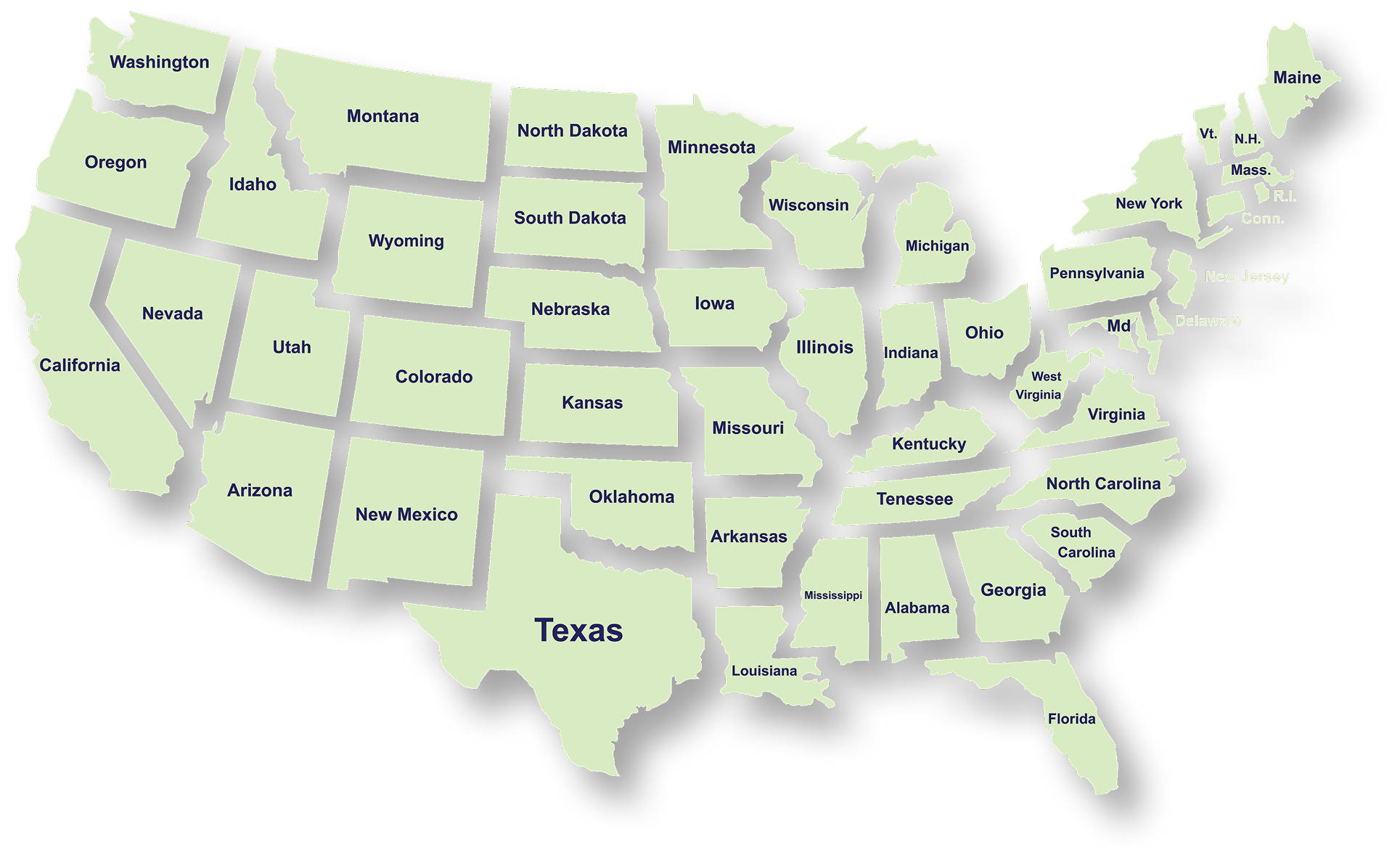
Serving Businesses & Individuals Across USA

We handle accounting, tax filing, and planning with defined timelines and accurate reporting for businesses and individuals across all states.

Frequently Asked Questions

What services does NR CPAs & Business Advisors provide?
What is tax planning and why is it important for businesses?
How can a Virtual CFO help my business?
When should a business consider IRS tax resolution services?
What financial statements does a business typically need?
How can startup advisory services help new businesses?
What is strategic business planning?
What is a Virtual Family Office and who can benefit from it?