Learning Center for Tax and Financial Insights

Stay updated with clear, actionable articles on tax rules, deadlines, deductions, and financial decisions that impact individuals and businesses.

No items found.

July 2023 Individual Due Dates

July 3 - Time for a Mid-Year Tax Check UpTime to review your 2023 year-to-date income and expenses to ensure estimated tax payments and withholding are adequate to avoid underpayment penalties.July 10 - Report Tips to EmployerIf you are an employee who works for tips and received more than $20 in tips during June, you are required to report them to your employer on IRS Form 4070 no later than July 10. Your employer is required to withhold FICA taxes and income tax withholding for these tips from your regular wages. If your regular wages are insufficient to cover the FICA and tax withholding, the employer will report the amount of the uncollected withholding in box 12 of your W-2 for the year. You will be required to pay the uncollected withholding when your return for the year is filed.Weekends & Holidays:If a due date falls on a Saturday, Sunday or legal holiday, the due date is automatically extended until the next business day that is not itself a legal holiday.

Explore More
No items found.

July 2023 Business Due Dates

July 1 - Self-Employed Individuals with Pension PlansIf you have a pension or profit-sharing plan, you may need to file a Form 5500 or 5500-EZ for the calendar year 2022. Even though the forms do not need to be filed until July 31, you should contact this office now to see if you have a filing requirement, and if you do, allow time to prepare the return.July 17 - Non-Payroll WithholdingIf the monthly deposit rule applies, deposit the tax for payments in June.July 17 - Social Security, Medicare and Withheld Income TaxIf the monthly deposit rule applies, deposit the tax for payments in June.July 31 - Self-Employed Individuals with Pension Plans If you have a pension or profit-sharing plan, this is the final due date for filing Form 5500 or 5500-EZ for calendar year 2022.July 31 - Social Security, Medicare and Withheld Income TaxFile Form 941 for the second quarter of 2023. Deposit or pay any undeposited tax under the accuracy of deposit rules. If your tax liability is less than $2,500, you can pay it in full with a timely filed return. If you deposited the tax for the quarter in full and on time, you have until August 10 to file the return.July 31 - Certain Small EmployersDeposit any undeposited tax if your tax liability is $2,500 or more for 2023 but less than $2,500 for the second quarter.July 31 - Federal Unemployment TaxDeposit the tax owed through June if more than $500.July 31 - All EmployersIf you maintain an employee benefit plan, such as a pension, profit-sharing, or stock bonus plan, file Form 5500 or 5500-EZ for calendar year 2022. If you use a fiscal year as your plan year, file the form by the last day of the seventh month after the plan year ends.Weekends & Holidays:

Explore More
No items found.

Tax Breaks for Hiring Your Children in Your Family Business

Article Highlights:Child Under the Age of 19 or a Student Under the Age of 24Kiddie TaxTax on a Child’s Earned IncomeDeduction for the BusinessEmployment TaxesIRAs and Retirement PlansYou might consider hiring your children to help in your business. Financially, it makes more sense to keep the family employed rather than hiring strangers, provided, of course, that the family member is suitable for the job.Rather than helping to support your children with your after-tax dollars, you can instead hire them in your business and pay them with tax-deductible dollars. Of course, the employment must be legitimate and the pay commensurate with the hours and the job worked. The following are typical situations encountered when hiring family members.Employing a Child – A reasonable salary paid to a child reduces the self-employment income and tax of the parents (business owners) by shifting income to the child.For 2023, when a child under the age of 19 or a student under the age of 24 is claimed as a dependent of the parents, the child is generally subject to the kiddie tax rules if their investment income is upward of $2,500. Under these rules, the child’s investment income is taxed at the same rate as the parent’s top marginal rate using a lower $1,250 standard deduction. However, earned income (income from working) is taxed at the child’s marginal rate, and the earned income is reduced by the lesser of the earned income plus $400 or the regular standard deduction for the year, which is $13,850. If a child has no other income, the child could be paid $13,850 and incur no income tax. If the child is paid more, the next $11,000 he or she earns is taxed at 10%.Example: You are in the 22% tax bracket and own an unincorporated business. You hire your child (who has no investment income) and pay the child $16,500 for the year. You reduce your income by $16,500, which saves you $3,630 of income tax (22% of $16,500), and your child has a taxable income of $2,650, $16,500 less the $13,850 standard deduction) on which the tax is $265 (10% of $2,650).The net income tax saved by the family is $3,365 ($3,630 - $265).If the business is unincorporated and the wages are paid to a child under age 18, he or she will not be subject to FICA – Social Security and Hospital Insurance (HI, aka Medicare) – taxes since employment for FICA tax purposes doesn’t include services performed by a child under the age of 18 while employed by a parent. Thus, the child will not be required to pay the employee’s share of the FICA taxes, and the business won’t have to pay its half either. In addition, by paying the child and thus reducing the business’s net income, the parent’s self-employment tax payable on net self-employment income is also reduced.Use the same example from above. Assuming your business profits are $130,000, by paying your child $16,500, you not only reduce your self-employment income for income tax purposes, but you also reduce your self-employment tax (HI portion) by $442 (2.9% of $16,500 times the SE factor of 92.35%). But if your net profits for the year were less than the maximum SE income $160,200 for 2023) that is subject to Social Security tax, then the savings would include the 12.4% Social Security portion in addition to the 2.9% HI portion.

Explore More
No items found.

Video Tips: You Might Consider a Health Savings Account

Tax-favored health savings accounts (HSAs) can only be established by eligible individuals who are covered by a high-deductible health plan (HDHP) and not covered under any other health plan which is not an HDHP, unless the other coverage is permitted insurance or coverage for accidents, disability, dental care, vision care, or long-term care. Eligible individuals may, subject to statutory limits, make contributions to HSAs, and employers, as well as other persons (e.g., family members), also may contribute on behalf of eligible individuals. (Code Sec. 106, Code Sec. 223)

Explore More
No items found.

5 Ways QuickBooks Online Can Make You More Profitable

QuickBooks Online can enhance your company’s bottom line by improving your cash flow, customer relationships, inventory balance, and your future.QuickBooks Online is really good at a lot of things. It helps you create and manage contact records and sales forms. It can keep you apprised of your online account transactions and balances and help you pay your bills. It simplifies customer payments and provides easy-to-use templates for reports.But it’s much more than just an online bookkeeper. It can get the numbers right, but it can also help get them headed in the right direction by providing tools in several areas. When you take advantage of them, you’ll see the positive impact they can have on your company’s financial health.Preparing for Positive ChangeMaybe you already know about some or all of these tools but just haven’t incorporated them into your regular workflow. Most of them are actions you can take on your own, though you may want our help on at least one of them. Set a goal to try these for three months, and you’ll see whether they help your company experience:Improved Cash FlowYou know you should be doing what you can to maximize income and minimize expenses. But do you know you can achieve at least modest improvements in these areas without a great deal of effort? To do so, you just have to be very aware of what you’re bringing in and purchasing.Click Get paid & pay, then Customers. The colored bars at the top show you unfinished business: unresolved estimates, unbilled activity, and overdue and open invoices. Related transactions appear when you click on one. You’ll probably discover that you have some money just sitting there, waiting to be processed by, for example, sending reminders and statements. The Customers page displays transactions that need additional attention to bring in the money you’re owed. Next, go to Bookkeeping | Transactions | Expenses. Filter your account register so you only see Expenses, then do the same for Bills. Assign a Category to any that are blank. Now when you run reports, you’ll be able to see where your spending needs to be reined in. Taxes and reports will be more accurate – and more useful.Smart Inventory LevelsDoes your business sell products? If so, you know what a balancing act it is to maintain a stable level of inventory. You may have seen what happens when you run out of a particular product unexpectedly. Not only did you lose the sale, but you might have lost the customer completely. And if you carry too much stock that isn’t selling, you’re tying up money unnecessarily.QuickBooks Online allows you to create detailed inventory records that include the number of items you have on hand initially and your self-imposed reorder point. When you look at an item record, you’ll see how many are currently in your possession and when you need to reorder based on how sales have reduced inventory. Reports that might be helpful here include Physical Inventory Worksheet and Sales by Product/Service Detail.Faster Customer PaymentsIn addition to the action described above, there are a number of reports you can run to see whether customers are late with invoice payments. These include Open Invoices, Unbilled Time, and Accounts Receivable Aging Detail. You’ll find these under Who owes you. If you learn that some customers are paying late, consider setting up a merchant account through QuickBooks Payments so you can accept credit and debit cards and ACH payments. You may find that customers pay faster when it’s more convenient to do so.

Explore More
No items found.

Divorced, Separated, Married or Widowed This Year? Unpleasant Surprises May Await You at Tax Time

Article Highlights:Separated TaxpayersDivorced TaxpayersRecently Married TaxpayersWidowed TaxpayersFiling StatusJoint and Several LiabilityWho Claims the ChildrenAlimonyCommunity Property StatesAffordable Care ActTaxpayers are frequently blindsided when their filing status changes because of a life event such as marriage, divorce, separation or the death of a spouse. These occasions can be stressful or ecstatic times, and the last thing most people will be thinking about are the tax ramifications. But the ramifications are real and need to be considered to avoid unpleasant surprises. The following are some of the major tax complications for each situation.Separated – Separating from a spouse is probably the most complicated life event and is certainly stressful for the family involved. For taxes, a separated couple can file jointly, because they are still married, or file separately.Filing Status – If the couple has lived apart from each other for the last 6 months of the year, either or both of them can file as head of household (HH) provided that the spouse(s) claiming HH status paid over half the cost of maintaining a household for a dependent child, stepchild or foster child. A spouse not qualifying for HH status must file as a married person filing separately if the couple chooses not to file a joint return. The married filing separate status is subject to a host of restrictions to keep married couples from filing separately to take unintended advantage of the tax laws.In most cases, a joint return results in less tax than two returns filed as married separate. However, when married taxpayers file joint returns, both spouses are responsible for the tax on that return (referred to as joint and several liability). What this means is that one spouse may be held liable for all of the tax due on a return, even if the other spouse earned all of the income on that return. This holds true even if the couple later divorces, so when deciding whether to file a joint return or separate returns, taxpayers who are separated and possibly on the path to a divorce should consider the risk of potential future tax liability on any joint returns they file.Children – Who claims the children can be a contentious issue between separated spouses. If they cannot agree, the one with custody for the greater part of the year is entitled to claim the child as a dependent along with all of the associated tax benefits. When determining who had custody for the greater part of the year, the IRS goes by the number of nights the child spent at each parent’s home and ignores the actual hours spent there in a day.Alimony – Alimony is the term for payments made by one spouse to the other spouse for the support of the latter spouse. Under tax law prior to tax reform, the recipient of the alimony includes it as income, and the payer deducts it as an above-the-line expense, on their respective separate returns. The tax reform rule is thatalimony is non-taxable to the recipient if it is received from divorce agreements entered into after December 31, 2018, or pre-existingagreements that are modified after that date to treat alimony as non-taxable. Therefore, post-2018 agreement alimony cannot be treated by the recipient as earned income for purposes of an IRA contribution and can’t be deducted by the payer.A payment for the support of children is not alimony. To be treated as alimony by separated spouses, the payments must be designated and required in a written separation agreement. Voluntary payments do not count as alimony.Community Property – Nine U.S. states – Arizona, California, Idaho, Louisiana, Nevada, New Mexico, Texas, Washington and Wisconsin – are community property states. Generally, community income must be split 50–50 between spouses according to their resident state’s community property law. This often complicates the allocation of income between spouses, and they generally cannot file based upon just their own income.

Explore More
No results found.
Thank you! Your submission has been received!
Oops! Something went wrong while submitting the form.

Want tax & accounting tips & insights?Sign up for our newsletter.

Thank you! Your submission has been received!
Oops! Something went wrong while submitting the form.

Why Work With Us?

We combine deep tax expertise, financial strategy, and practical business insight to help you manage complexity, stay compliant, and make confident financial decisions.
A dollar sign, representing financial advice or discussion at NR CPAs & Business Advisors.

Experienced CPA and Enrolled Agent Leadership

Guidance led by licensed professionals with deep expertise in tax strategy, compliance, and complex financial matters.
White bar chart with an upward arrow on green circular background representing growth or progress at NR CPAs &. Business Advisors

Support for Growing Businesses and Startups

We understand the financial challenges of growth stage businesses and provide structured guidance to support expansion.
A white hand holding a dollar symbol and ascending bar chart on a green circular background representing financial growth or investment at NR CPAs & Business Advisors..

Strategic Financial Advisory

Our team helps you evaluate financial decisions with greater clarity, supported by practical insights and long term planning.

Fractional CFO Support

Access experienced financial leadership without the commitment and cost of hiring a full time Chief Financial Officer.

Proactive Tax Planning Approach

We focus on identifying tax opportunities throughout the year rather than reacting only during filing season.

Clear and Reliable Financial Reporting

Accurate financial statements and reporting that help you better understand performance and make informed decisions.
White IRS building icon with pillars and a dollar sign above on a green circular background.

Professional IRS Representation

Experienced support in resolving IRS notices, disputes, and compliance matters while protecting your financial interests.

Personalized Client Focus

Every client receives thoughtful attention and tailored financial solutions based on their specific needs and business goals.
Financial matters often involve important decisions. Working with experienced advisors can help you approach them with greater clarity and confidence in your choices.

Need Help With Your Tax or Financial Decisions?

Discuss your situation with our advisors to get clear guidance on tax planning, IRS matters, and the financial decisions ahead.
Business consulting at NR CPAs & Business Advisors.

Request Your Consultation

Fill out the form to discuss your tax concerns, financial questions, or advisory needs with our team. We will review your details and respond shortly.

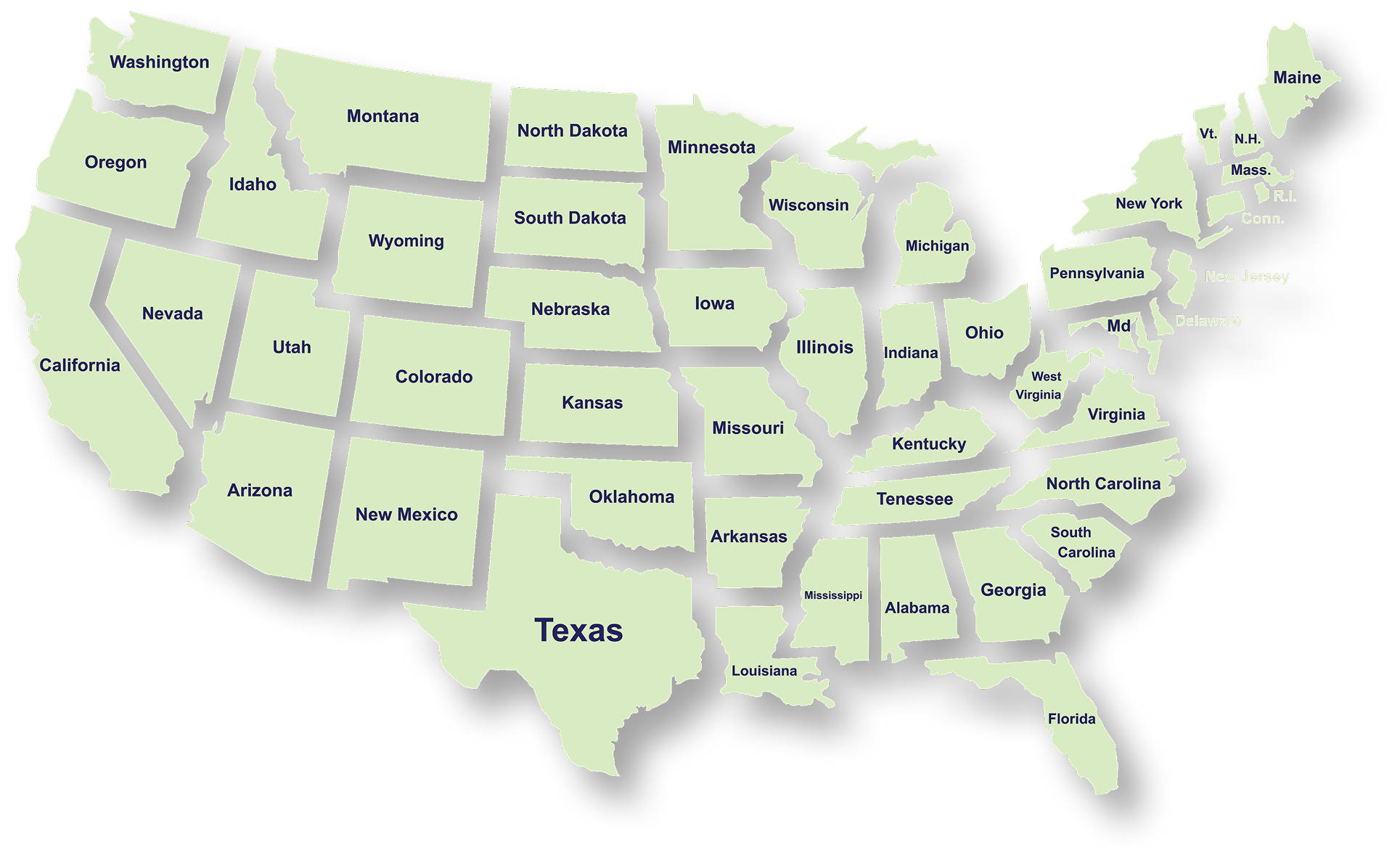
Serving Businesses & Individuals Across USA

We handle accounting, tax filing, and planning with defined timelines and accurate reporting for businesses and individuals across all states.

Frequently Asked Questions

What services does NR CPAs & Business Advisors provide?
What is tax planning and why is it important for businesses?
How can a Virtual CFO help my business?
When should a business consider IRS tax resolution services?
What financial statements does a business typically need?
How can startup advisory services help new businesses?
What is strategic business planning?
What is a Virtual Family Office and who can benefit from it?