Learning Center for Tax and Financial Insights

Stay updated with clear, actionable articles on tax rules, deadlines, deductions, and financial decisions that impact individuals and businesses.

No items found.

Not All Interest Is Deductible for Taxes

Article Highlights: Interest CategoriesCategory Deductibility Interest Tracing Rules A frequent question that arises when borrowing money is whether or not the interest will be tax deductible. That can be a complicated question, and unfortunately not all interest an individual pays is deductible. The rules for deducting interest vary, depending on whether the loan proceeds are used for personal, investment, or business activities. Interest expense can fall into any of the following categories:Personal interest – is not deductible. Typically this includes interest from personal credit card debt, personal car loan interest, home appliance purchases, etc. Investment interest – this is interest paid on debt incurred to purchase investments such as land, stocks, mutual funds, etc. However, interest on debt to acquire or carry tax-free investments is not deductible at all. The annual investment interest deduction is limited to “net investment income,” which is the total taxable investment income reduced by investment expenses (other than expenses related to investments that produce non-taxable income). The investment interest deduction is only allowed to taxpayers who itemize their deductions. Home mortgage interest – includes the interest on debt to purchase, construct or substantially improve a taxpayer’s principal home or second home. This type of loan is referred to as acquisition debt. For the interest to be deductible the debt must be secured by the home purchased, constructed, or substantially improved. A secured debt is one in which the taxpayer signs a mortgage, deed of trust, or land contract that makes their ownership in a qualified home security for payment of the debt; provides, in case of default, that the home could satisfy the debt; and is recorded under any state or local law that applies. In other words, if the taxpayer can't pay the debt, their home can then serve as payment to the lender to satisfy the debt.o For Debt Incurred Before 12/16/2017 - the debt for which the interest is deductible is limited to $1,000,000 ($500,000 for married separate).o For Debt Incurred After 12/15/2017 - the debt for which the interest is deductible is limited to $750,000 ($375,000 for married separate).Passive activity interest – includes interest on debt that's for business or income-producing activities in which the taxpayer doesn’t “materially participate” and is generally deductible only if income from passive activities exceeds expenses from those activities. The most common passive activities are probably real estate rentals. For rental real estate activities, there is a special passive loss allowance of up to $25,000 for taxpayers who are active but not necessarily material participants in the rental. The $25,000 phases out for taxpayers with adjusted gross income between $100,000 and $150,000.Trade or business interest – includes interest on debts that are for activities in which a taxpayer materially participates. This type of interest can generally be deducted in full as a business expense.

Explore More
No items found.

Take Tax Advantage of a Low-Income Year

Article Highlights:Exercise Stock OptionsConvert a Traditional IRA to a Roth IRAMaximize IRA DistributionsSell Appreciated StockDelay Business ExpendituresRelease DependencyDelay Personal Deductible ExpendituresPeople generally assume that tax planning only applies to individuals with the big bucks. But think again, as some tax moves benefit lower-income taxpayers and those who are having a lower-than-normal income year. So, if 2022 is not producing a lot of income for you, or your income will be substantially lower this year than it usually is, you may be surprised to know that you actually might be able to take advantage of some tax-planning opportunities. Implementing some of these ideas will require action on your part before the close of the year. Here are some possibilities to consider.Exercise Stock Options – If you are an employee of a corporation, the company may offer you the option to purchase shares of it at a fixed price at some future date, so that you can benefit from your commitment to the company’s success by sharing in the company’s growth through the increase in stock value. If those options are non-qualified, then you must report the difference between your preferential option price and the stock’s value when you exercise the option as income. This income will be included in your wages on your year-end W-2 form. In a low-income year, this may give you the chance to exercise some or all of your options without any or with minimal income tax liability. Convert a Traditional IRA to a Roth IRA – Roth IRA accounts provide the benefits of tax-free accumulation and, once you reach retirement age, tax-free distributions. This is why many taxpayers convert their traditional IRA account to a Roth IRA. However, to do so, you must generally pay tax on the converted amount. Many taxpayers overlook some great opportunities to make conversions, such as in years when their income is unusually low or a year when their income might even be negative due to abnormal deductions or business losses. The current standard deduction is higher than ever before, which may offer a taxpayer the opportunity to convert some or all their traditional IRA to a Roth IRA without any conversion tax. If you are in any of these circumstances this year, you should consider converting some or all of your traditional IRA to a Roth IRA before the end of the year.Maximize IRA Distributions – If you are retired and taking IRA distributions, make sure that you are maximizing your withdrawals with respect to your tax bracket. With the robust standard deduction and a lower-than-normal income, it may be tax-effective to actually withdraw more than the minimum required by law. In fact, you may even be able to take a distribution from your IRA with no tax liability. Presented with this situation, you would certainly want to take advantage of it before year’s end, even if you do not need the funds, which you could bank for the future. Sell Appreciated Stock – Income tax rates increase as a taxpayer’s taxable income increases. The regular tax rates start at 10% and then increase in step amounts as one’s taxable income increases, reaching a maximum rate of 37%. However, long-term capital gains are given special treatment and only have three tax rates: 0%, 15%, and 20%. The 0% tax rate applies for taxpayers with taxable incomes up to the following amounts for 2022:

Explore More
No items found.

Video Tips: Protect Yourself from Charity Scams

Donating to a charity is a great way to give back to the community and help those in need. However, it's important to be aware of potential scams before giving your hard-earned money to a charitable organization. By taking some simple precautions presented in this video, you can ensure that your donation goes to a worthy cause.

Explore More
No items found.

Best Practices for Establishing an Effective Employee Bonus Pool

If you had to make a list of some of the most valuable resources that businesses have when it comes to attracting and retaining top talent, an employee bonus pool would undoubtedly be right at the top.Despite the fact that unemployment is on the decline and things are getting "back to normal" in the wake of the COVID-19 pandemic, there's still a labor shortage in just about every industry you can name. Businesses are having a hard time filling available positions and if they do find someone with the appropriate skill set, it's difficult to keep them in the fold permanently before they wind up leaving for greener pastures. Things have gotten to the point where most job seekers say that they look at bonuses with more weight than they do even their starting salary - that's how important of a concept this is.Thankfully, all hope is not lost. If you're an organizational leader who wants to make sure that your business is remaining as competitive as possible, there are a number of essential things that you'll want to keep in mind.Establishing an Effective Employee Bonus Pool: Breaking Things DownBy far, the most important step that you should take when it comes to establishing an effective employee bonus pool involves building a budget to get a better idea of how things need to play out before you actually start the process in earnest.Obviously, we'd all love to be able to promise any new hire the proverbial moon - whatever they're looking for is what we're willing to give them to see that person join the organization. But a certain amount of realism also has to enter the equation. What is the maximum amount you can afford to put into a collective employee bonus pool and how many people does that need to cover? What do you need to offer on a position-by-position basis in order to remain competitive? These are all questions that you need to answer before the start of the process so that you can make better and more informed choices moving forward.Another best practice that most people should follow when establishing an effective employee bonus pool has less to do with the pool itself and is more about what happens in the weeks and months ahead.

Explore More
No items found.

What an Economic Slowdown Means for Your Small Business

If you pay attention to the financial news, you’ve likely heard that we may — or may not — be in the midst of a recession. While experts argue over whether or not two consecutive periods of falling gross domestic period necessarily confirm an overall decline in economic activity, small business owners have more pressing questions, like, “How is a recession going to affect my business?” and “What can I do to make sure my business survives?” What is a recession and how will it impact my business? Economies swing from periods of expansion to periods of contraction. A recession is a period when consumers stop spending, and this leads to an overall negative impact on some — but not all — businesses. Those that survive and thrive in a recession share certain traits: They generally have adequate cash reserves and access to capital, and they are often private companies that can quickly shift their business strategies without fear of rebellion from shareholders.What you most need to know about a recession is that it tends to make customers cut their spending, so you need to be prepared to respond in a way that keeps your business available to them, keeps you top of mind, and keeps your quality as high as possible despite reduced profits. It’s a challenge, but it’s not impossible. Can I make my business recession-proof?Protecting your business against the worst impacts of recession requires some planning and a commitment to resisting panic. The planning part may feel like it’s too late if we’re already in a recession, but that’s not necessarily true. It certainly helps to have deep cash reserves or access to credit, but even businesses without those advantages can find ways to cut back and make adjustments without changing their commitment to quality and customer service. Cut back on unnecessary spending – You may feel like your expenses aren’t out of line, but taking the time to review the last few months’ worths of credit card and bank statements tend to reveal areas where fat can be trimmed. Are you spending money on subscriptions or memberships that you don’t really need? Are you paying fees for equipment that you aren’t using anymore, or for support services that you arranged for early in your business’ life that you no longer need? Sometimes expenses are actually habits rather than necessities, and businesses — and individuals too — can usually realize some savings when they conduct a quick self-audit.Maximize your business expenditures – If your business places regular orders with the same suppliers over and over again, there’s a good chance that you can negotiate an additional discount or start buying in bigger bulk to reduce your costs. A lot of businesses are concerned about cash flow and are more open to bartering or arranging some kind of deal in order to keep a good customer in business. Reduce your inventory – You don’t want your clients to get a sense that the cupboards are bare, but if you’re in the habit of ordering several months’ worth of supplies, you can quickly cut your expenses by shifting to a three-month strategy. Alternatively, if your suppliers are hesitant about your ordering cutback, try arranging for reduced prices for long-term orders, or locking in your prices to avoid increases.

Explore More
No items found.

What Does The Inflation Reduction Act Mean To You?

Article Highlights: Increased Internal Revenue Service (IRS) Funding Drug Pricing Affordable Care Act Insurance Premiums Corporate Minimum Tax Excise Tax on Corporate Stock Buybacks Home Solar Energy Credit Extended and Increased Credit For Energy Efficient Home Modifications Clean Vehicle Credit Credit For Previously Owned Clean Vehicles Credit For Qualified Commercial Clean Vehicles Research Credit On August 16, 2022, President Biden signed into law the Inflation Reduction Act of 2022 which is a scaled-back version of the prior Biden administration proposals originally included in the Build Back Better Act. The legislation includes a variety of provisions, including substantial green energy incentives, reduction of Affordable Care Act insurance premiums, IRS funding, corporate minimum tax, and more. This article will explore how these provisions will impact individual taxpayers. Increased Internal Revenue Service (IRS) Funding – The IRS has been underfunded for years resulting in inadequate customer service causing extensive waits to speak with an agent to solve issues with the IRS, and substantially reduced enforcement activities. Although some of the $79.6 billion supplemental appropriations will go towards improving customer service, the bulk of the appropriation will go towards increased enforcement, according to the Congressional Research Service. However, Treasury Secretary Janet Yellen has indicated the additional funds will not be used to increase audits of people making less than $400,000 above historic levels. Drug Pricing - The legislation permits Medicare to negotiate lower drug prices (up to 10 drugs in 2026, another 15 in 2027 and 2028, and another 20 annually starting in 2029) and puts a cap on annual out-of-pocket costs at $2,000. Affordable Care Act Insurance Premiums – The previously enacted American Rescue Plan temporally included enhanced subsidies for people buying their own health coverage on the Affordable Care Act Marketplaces for the years 2021 and 2022. The Inflation Reduction Act has extended those subsidies for three years, through 2025. These enhanced subsidies increase the amount of financial help for low and middle-income individuals, many of whom were previously priced out of health insurance coverage. Corporate Minimum Tax – As a fundraiser to help pay for the other provisions, the legislation includes a new corporate minimum tax of 15% that would be imposed on corporations with an average book income of over $1 billion. This provision is projected to raise $258 billion over 10 years. Excise Tax on Corporate Stock Buybacks – Stock Buybacks are when a company purchases its own shares, resulting in fewer outstanding shares. This tends to benefit corporate executives rather than raising worker wages, research and development, and other productivity-boosting investments. The legislation imposes a 1% tax on stock buybacks. This provision is projected to raise $74 billion over 10 years. Home Solar Energy Credit Extended and Increased – Before the passage of the Inflation Reduction Act, a resident of a home was entitled to a non-refundable tax credit for the use of solar electric panels, solar hot water, fuel cells, small wind energy, geothermal heat pumps, and biomass fuel property they had installed for the residence. However, that credit was in the process of being phased out by slowly reducing the credit percentage from 30% to 22%, and the credit was scheduled to end after 2023. With this law change, the credit retroactively returns to 30% for the years 2022 through 2032 when it again begins to phase out and ends after 2034. This means those who qualify for the credit in 2022 benefit from a 30% credit rather than the expected 26% under prior law. Credit For Energy Efficient Home Modifications – This provision provides a non-refundable tax credit for certain energy-saving improvements to a taxpayer’s home. The credit previously expired at the end of 2021, but under the Inflation Reduction Act has been extended and modified through 2032. The previous lifetime credit limit of $500 has been replaced with an annual maximum credit of $1,200, and the credit percentage increased from 10% to 30%. Although not a complete list, the following are credit limits that apply to various energy-efficient improvements: $600 for credits with respect to residential energy property expenditures, windows, and skylights. $250 for any exterior door ($500 total for all exterior doors). $300 for residential qualified energy property expenses Notwithstanding these limitations, a $2,000 annual limit applies with respect to amounts paid or incurred for specified heat pumps, heat pump water heaters, and biomass stoves and boilers. The $1,200 credit amount increased by up to $150 for a home energy audit. A home energy audit is an inspection and written report with respect to a dwelling unit located in the United States and owned or used by the taxpayer as the taxpayer's principal residence, which identifies the most significant and cost-effective energy efficiency improvements with respect to such dwelling unit. The new law eliminates treatment of roofs as creditable after 2022 The new law adds Air sealing insulation as a creditable expense. Under the new law, the one making the improvements and claiming the credit need only be a resident of the home and not necessarily the owner. Clean Vehicle Credit – After 2022 and through 2032, this credit replaces the current plug-in electric vehicle credit and makes significant changes. Transition Rule: A taxpayer who, after December 31, 2021, and before August 16, 2022, purchased, or entered a written binding contract to purchase, a new electric vehicle and placed that vehicle in service on or after the date of enactment, may elect to treat the vehicle as being placed in service before the date of enactment of the Act. This transition rule allows a taxpayer to apply the prior law to the vehicle. This allows a taxpayer to avoid the modified AGI (income), vehicle price, and other restrictions under the new law. Credit Amount – Is based upon two amounts (certified by the qualified manufacturer): Critical Minerals – This portion of the credit is $3,750 and is based upon the percentage of the value of the applicable critical minerals contained in the battery that were: (i) Extracted or processed in the United States or in any country with which the United States has a free trade agreement in effect, or (ii) Recycled in North America Is equal to or greater than the applicable percentage (see applicable percentage below). Battery Component Requirement - This portion of the credit is $3,750 based upon the percentage of the value of the components contained in the battery that is used in the vehicle that were manufactured or assembled in North America is equal to or greater than the applicable percentage (see applicable percentage below). Applicable Percentage – The applicable percentages for each year are included in the following table: APPLICABLE PERCENTAGES Year 2023 2024-2025 2026 2027 2028 Later Years Percentage 50 60 70 80 90 100 Final Assembly Requirement - The Act also requires that final assembly of the vehicle occurs in North America. "Final assembly" means the process by which a manufacturer produces a new clean vehicle at, or through the use of, a plant, factory, or other place from which the vehicle is delivered to a dealer or importer with all component parts necessary for the mechanical operation of the vehicle included with the vehicle, whether the component parts are permanently installed in or on the vehicle. The final assembly requirement applies to vehicles sold after the date of enactment, August 16, 2022. Not all Vehicles Will Continue to Qualify – Because of the critical mineral, battery, and final assembly requirements, only some of the currently available vehicles will continue to qualify for the new credit.

Explore More
No results found.
Thank you! Your submission has been received!
Oops! Something went wrong while submitting the form.

Want tax & accounting tips & insights?Sign up for our newsletter.

Thank you! Your submission has been received!
Oops! Something went wrong while submitting the form.

Why Work With Us?

We combine deep tax expertise, financial strategy, and practical business insight to help you manage complexity, stay compliant, and make confident financial decisions.
A dollar sign, representing financial advice or discussion at NR CPAs & Business Advisors.

Experienced CPA and Enrolled Agent Leadership

Guidance led by licensed professionals with deep expertise in tax strategy, compliance, and complex financial matters.
White bar chart with an upward arrow on green circular background representing growth or progress at NR CPAs &. Business Advisors

Support for Growing Businesses and Startups

We understand the financial challenges of growth stage businesses and provide structured guidance to support expansion.
A white hand holding a dollar symbol and ascending bar chart on a green circular background representing financial growth or investment at NR CPAs & Business Advisors..

Strategic Financial Advisory

Our team helps you evaluate financial decisions with greater clarity, supported by practical insights and long term planning.

Fractional CFO Support

Access experienced financial leadership without the commitment and cost of hiring a full time Chief Financial Officer.

Proactive Tax Planning Approach

We focus on identifying tax opportunities throughout the year rather than reacting only during filing season.

Clear and Reliable Financial Reporting

Accurate financial statements and reporting that help you better understand performance and make informed decisions.
White IRS building icon with pillars and a dollar sign above on a green circular background.

Professional IRS Representation

Experienced support in resolving IRS notices, disputes, and compliance matters while protecting your financial interests.

Personalized Client Focus

Every client receives thoughtful attention and tailored financial solutions based on their specific needs and business goals.
Financial matters often involve important decisions. Working with experienced advisors can help you approach them with greater clarity and confidence in your choices.

Need Help With Your Tax or Financial Decisions?

Discuss your situation with our advisors to get clear guidance on tax planning, IRS matters, and the financial decisions ahead.
Business consulting at NR CPAs & Business Advisors.

Request Your Consultation

Fill out the form to discuss your tax concerns, financial questions, or advisory needs with our team. We will review your details and respond shortly.

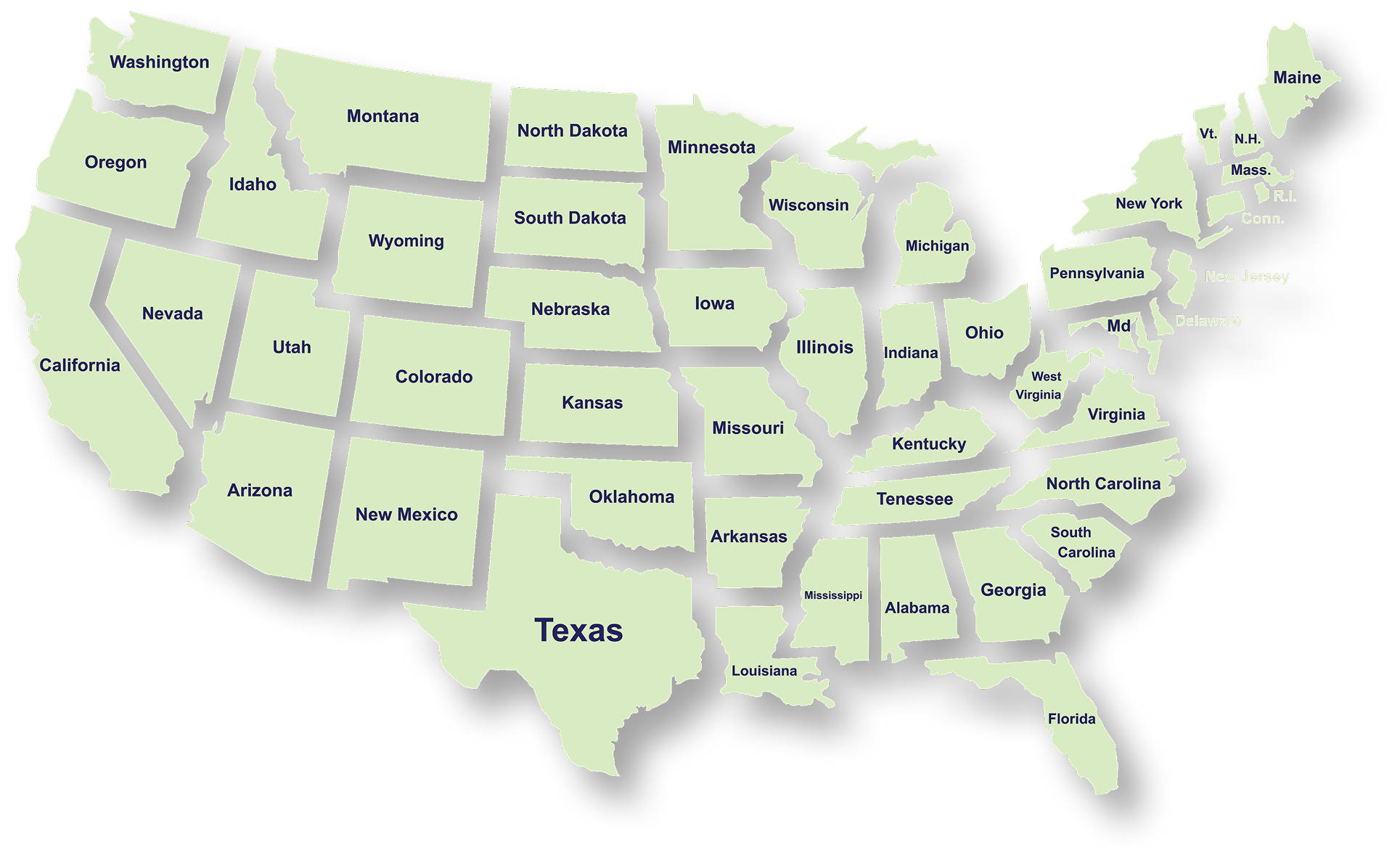
Serving Businesses & Individuals Across USA

We handle accounting, tax filing, and planning with defined timelines and accurate reporting for businesses and individuals across all states.

Frequently Asked Questions

What services does NR CPAs & Business Advisors provide?
What is tax planning and why is it important for businesses?
How can a Virtual CFO help my business?
When should a business consider IRS tax resolution services?
What financial statements does a business typically need?
How can startup advisory services help new businesses?
What is strategic business planning?
What is a Virtual Family Office and who can benefit from it?