Learning Center for Tax and Financial Insights

Stay updated with clear, actionable articles on tax rules, deadlines, deductions, and financial decisions that impact individuals and businesses.

No items found.

Tax Benefits for People with Disabilities

Article Highlights: ABLE AccountsDisabled Spouse or Dependent Care CreditMedical DeductionsHome ModificationsSpecial SchoolingNursing Services Impairment-related Work ExpensesIndividuals with disabilities, as well as parents of disabled children, are eligible for several income tax benefits. This article explains some of these tax breaks.ABLE Accounts – A federal law allows states to offer specially designed, tax-favored ABLE accounts to people with disabilities. Qualified ABLE programs provide the means for individuals and families to contribute and save to support individuals who became blind or severely disabled before turning age 26 in maintaining their health, independence, and quality of life.The states run the ABLE programs authorized by the federal tax statute. A state that has established an ABLE account program can offer its residents the option of setting up one of these accounts or contracts with another state that offers ABLE accounts. Contributions totaling up to the annual gift tax exclusion amount, currently $16,000, can be made to an ABLE account each year, and distributions are tax-free if used to pay qualified disability expenses.Through 2025, a tax provision allows the beneficiary of the ABLE account (i.e., the disabled person) to contribute a maximum additional amount each year, equal to the lesser of:The beneficiary’s taxable compensation for the year, orThe prior year’s inflation-adjusted poverty level (so using the 2021 poverty level amounts for a one-person household, the 2022 ABLE beneficiary’s contribution could be up to $12,880. The equivalent amount for residents of Hawaii is $14,820 and $16,090 for Alaska. However, the extra contribution isn’t allowed if the beneficiary’s employer contributes to a qualified retirement plan on the beneficiary’s behalf. The beneficiary’s additional contribution qualifies for the non-refundable saver’s tax credit, which, depending on the beneficiary’s actual income, can be 10%, 20%, or even as much as 50% of up to the first $2,000 contributed, for a maximum credit of $1,000.Disabled Spouse or Dependent Care Credit – A tax credit is available to individuals who incur childcare expenses for children under the age of 13 at the time the care is provided. This credit is also available for the care of the taxpayer’s spouse or of a dependent of any age who is physically or mentally unable to care for himself or herself and lived with the taxpayer for more than half the year. This is also true for individuals who would have been dependents except for the fact that they earned $4,400 or more (2022) or filed a joint return with their spouse. The credit ranges from 20% to 35%, with lower-income taxpayers benefiting from the higher percentage and those with an adjusted gross income of $43,000 or more receiving only 20%. The care expenses qualifying for the credit are limited to $3,000 for one and $6,000 for two or more qualifying individuals. Note that for 2021 only, the credit rate and care expenses allowed were significantly higher and the credit was refundable. Medical Expense Deductions – In addition to the “normal” medical expenses, individuals with disabilities can incur other unusual deductible expenses. However, to gain a tax benefit, an eligible taxpayer must itemize his or her deductions on Schedule A, and the taxpayer’s total medical expenses must exceed 7.5% of their adjusted gross income. Eligible expenses include:ProsthesesVision Aids – Contact lenses and eyeglassesHearing Aids – Including the costs and repair of special telephone equipment for people who are deaf or hard of hearingWheelchair – Costs and maintenanceService Dog – Costs and care of a guide dog or service animal. The IRS has stated that “the costs of buying, training, and maintaining a service animal to assist an individual with mental disabilities may qualify as medical care if the taxpayer can establish that the taxpayer is using the service animal primarily for medical care to alleviate a mental defect or illness and that the taxpayer would not have paid the expenses but for the disease or illness.”Transportation – Modifications or special equipment added to vehicles to accommodate a disabilityImpairment-Related Capital Expenses – Amounts paid for special equipment installed in the home or for improvements may be included as medical expenses, if their main purpose is medical care for the taxpayer, the spouse, or a dependent. The costs of permanent improvements that increase the property’s value may be partly included as a medical expense. The costs of the improvement are reduced by the increase in the property’s value. The difference is a medical expense. If the improvement does not increase the property’s value, the entire cost is included as a medical expense. Certain improvements made to accommodate a home to a taxpayer’s disabled condition, or to that of the spouse or dependents who live with the taxpayer, do not usually increase the home’s value, so the costs can be included in full as medical expenses. A few examples of full-cost medical expenses include constructing entrance or exit ramps for the home; widening entrance and exit doorways, hallways, and interior doorways; installing railings, support bars, or other modifications; and adding handrails or grab bars.Learning Disability – Tuition fees paid to a special school for a child who has severe learning disabilities caused by mental or physical impairments, including nervous system disorders, can be included as medical expenses. A doctor must recommend that the child attend the school. Fees for tutoring from a teacher who is specially trained and qualified to work with children with severe learning disabilities may also be included if the tutoring is recommended by a doctor. Special Schooling – Medical care includes the costs of attending a special school designed to compensate for or overcome a physical handicap to qualify the individual for future normal education or for normal living. This includes a school that teaches braille or lip reading. The principal reason for attending the school must be its special resources for alleviating the student’s handicap. The tuition for ordinary education that is incidental to the special services provided at the school, as well as the costs of meals and lodging supplied by the school, are also included as medical expenses. Nursing Services – Wages and other amounts paid for nursing services can be included as medical expenses. Services need not be performed by a nurse if the services are of a kind generally performed by a nurse. This includes services connected with caring for the patient’s condition, such as giving medication, changing dressings, and bathing and grooming the patient. These services can be provided in the home or another care facility. Generally, only the amount spent for nursing services is a medical expense. If the attendant also provides personal and household services, these amounts must be divided between the time spent performing household and personal services and the time spent on nursing services. Impairment-related Work Expenses – An employed individual with physical or mental disabilities may claim a deduction for impairment-related work expenses for attendant care at the individual’s place of employment or for other expenses at the job location that enable the individual to work. Those with a physical or mental disability that limits their being employed, or substantially limits one or more major life activities, such as performing manual tasks, walking, speaking, breathing, learning, and working are eligible to deduct their impairment-related work expenses if they itemize deductions. These expenses are claimed as a miscellaneous itemized deduction on Schedule A, not as a medical expense.

Explore More
No items found.

Shark Tank Investor Daymond John: His Story So Far

If you had to make a list of some of the more popular reality television shows these days, Shark Tank would undoubtedly be right at the top.Originally premiering in 2009, it's a program that has captured the imagination of people worldwide. A panel of investors - otherwise known as "sharks" - listens to people pitch their idea for new products or inventions, and they bid against one another for who gets to invest in any particular idea.One of those sharks is Daymond John, a man who worked his way to the top in more ways than one. His story is truly inspiring, and it's certainly worth exploring.Photo credit: Dimitrios Kambouris/Getty Images Entertainment via Getty ImagesDaymond John: An Entrepreneurial InspirationBelieve it or not, when Daymond John was in high school he actually worked a job at Red Lobster. It's a far cry from the television presence that he is currently known as.He worked that job full-time while also attending school on an alternating weekly basis. Then, upon graduation, he set out on his path as an entrepreneur. First by creating his own commuter van service, then by entering into the clothing market.If you've heard of the brand FUBU, you have Daymond John to thank for it. He launched the brand out of his mother's apartment. One of the keys to his success was his eye for marketing. He began donating many of the line's clothing to rappers in and around the New York City area, eventually leading to a commercial featuring LL Cool J.

Explore More
No items found.

How QuickBooks Online Tracks Products and Services

What products and services does your company sell? Do you have enough to fulfill existing and future orders? QuickBooks Online can tell you.Most small businesses maintain a changing inventory of multiple products. Even if you sell one-of-a-kind goods, you need to know what you’ve sold and what’s available. And if your company sells services, you also have to keep track of what you’re able to offer customers.QuickBooks Online can meet these needs. It allows you to create detailed records for both products and services. If you carry inventory, it can make sure that you always know what’s available to sell. When you enter sales and purchase transactions, the site draws on the records you’ve created to help you complete invoices, sales receipts, purchase orders, etc., without having to leave the form you’re working on.Creating your records initially can take some time. And your products and services require regular monitoring and maintenance. But if you’re conscientious about these tasks, you’re not likely to run short on inventory or have too much money tied up in products that aren’t selling fast enough.Preparing QuickBooks OnlineBefore you begin creating records and tracking inventory, you need to make sure that QuickBooks Online is set up correctly. Click the gear icon in the upper right. Under Your Company, click Account and settings. Click the Sales tab in the toolbar. You’ll see the Products and services section near the middle of the screen. Make sure you’ve turned on the Products and services features you’re going to need.Toggle the slider buttons on and off by clicking on them, and be sure to save your changes when you’re done. One option allows you to turn on price rules. This is still classified as a beta feature, but it’s live on the site. It’s also quite complicated to set up and can create confusion for your customers and revenue loss for you if it’s not done correctly. Let us help if you want to use this tool.Creating Your Product and Service RecordsYour first task, of course, is to build your product and service records. Hover your mouse over Sales in the left vertical toolbar on the home page and select Products and Services. The screen that opens is your home base for dealing with inventory and services. Eventually, it will contain a detailed table containing information about both. Two large buttons at the top of the page warn you when you have Low Stock or you’re Out of Stock.

Explore More
No items found.

August 2022 Individual Due Dates

August 10 - Report Tips to EmployerIf you are an employee who works for tips and received more than $20 in tips during July, you are required to report them to your employer on IRS Form 4070 no later than August 10. Your employer is required to withhold FICA taxes and income tax withholding for these tips from your regular wages. If your regular wages are insufficient to cover the FICA and tax withholding, the employer will report the amount of the uncollected withholding in box 12 of your W-2 for the year. You will be required to pay the uncollected withholding when your return for the year is filed.

Explore More
No items found.

August 2022 Business Due Dates

August 1 - Social Security, Medicare, and Withheld Income TaxFile Form 941 for the second quarter of 2022. Deposit or pay any undeposited tax under the accuracy of deposit rules. If your tax liability is less than $2,500, you can pay it in full with a timely filed return. If you deposited the tax for the quarter in full and on time, you have until August 10 to file the return.August 1 - Self-Employed Individuals with Pension PlansIf you have a pension or profit-sharing plan, this is the final due date for filing Form 5500 or 5500-EZ for calendar year 2021.August 1 - All EmployersIf you maintain an employee benefit plan, such as a pension, profit sharing, or stock bonus plan, file Form 5500 or 5500-EZ for calendar year 2021. If you use a fiscal year as your plan year, file the form by the last day of the seventh month after the plan year ends.

Explore More
No items found.

Video Tips: Tax Breaks for People with Disabilities

Tax time can be stressful for any family, but it can be especially challenging for families with disabilities. In addition to the usual paperwork and deadlines, there are a number of tax credits and deductions that can be very helpful for families dealing with medical expenses and other costs related to disability. Taking advantage of these tax breaks can bring tremendous help to people with disabilities and their families.

Explore More
No results found.
Thank you! Your submission has been received!
Oops! Something went wrong while submitting the form.

Want tax & accounting tips & insights?Sign up for our newsletter.

Thank you! Your submission has been received!
Oops! Something went wrong while submitting the form.

Why Work With Us?

We combine deep tax expertise, financial strategy, and practical business insight to help you manage complexity, stay compliant, and make confident financial decisions.
A dollar sign, representing financial advice or discussion at NR CPAs & Business Advisors.

Experienced CPA and Enrolled Agent Leadership

Guidance led by licensed professionals with deep expertise in tax strategy, compliance, and complex financial matters.
White bar chart with an upward arrow on green circular background representing growth or progress at NR CPAs &. Business Advisors

Support for Growing Businesses and Startups

We understand the financial challenges of growth stage businesses and provide structured guidance to support expansion.
A white hand holding a dollar symbol and ascending bar chart on a green circular background representing financial growth or investment at NR CPAs & Business Advisors..

Strategic Financial Advisory

Our team helps you evaluate financial decisions with greater clarity, supported by practical insights and long term planning.

Fractional CFO Support

Access experienced financial leadership without the commitment and cost of hiring a full time Chief Financial Officer.

Proactive Tax Planning Approach

We focus on identifying tax opportunities throughout the year rather than reacting only during filing season.

Clear and Reliable Financial Reporting

Accurate financial statements and reporting that help you better understand performance and make informed decisions.
White IRS building icon with pillars and a dollar sign above on a green circular background.

Professional IRS Representation

Experienced support in resolving IRS notices, disputes, and compliance matters while protecting your financial interests.

Personalized Client Focus

Every client receives thoughtful attention and tailored financial solutions based on their specific needs and business goals.
Financial matters often involve important decisions. Working with experienced advisors can help you approach them with greater clarity and confidence in your choices.

Need Help With Your Tax or Financial Decisions?

Discuss your situation with our advisors to get clear guidance on tax planning, IRS matters, and the financial decisions ahead.
Business consulting at NR CPAs & Business Advisors.

Request Your Consultation

Fill out the form to discuss your tax concerns, financial questions, or advisory needs with our team. We will review your details and respond shortly.

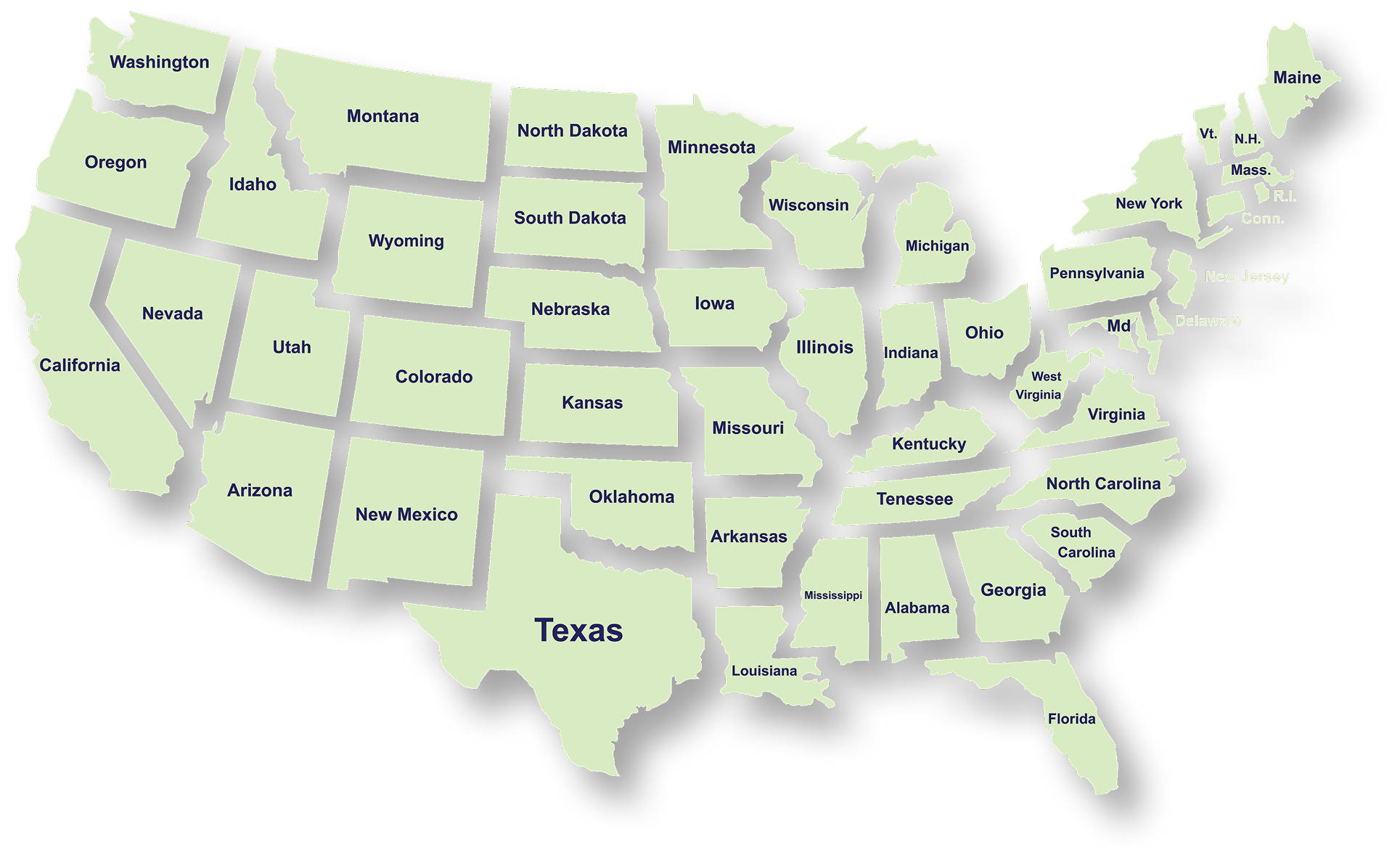
Serving Businesses & Individuals Across USA

We handle accounting, tax filing, and planning with defined timelines and accurate reporting for businesses and individuals across all states.

Frequently Asked Questions

What services does NR CPAs & Business Advisors provide?
What is tax planning and why is it important for businesses?
How can a Virtual CFO help my business?
When should a business consider IRS tax resolution services?
What financial statements does a business typically need?
How can startup advisory services help new businesses?
What is strategic business planning?
What is a Virtual Family Office and who can benefit from it?